
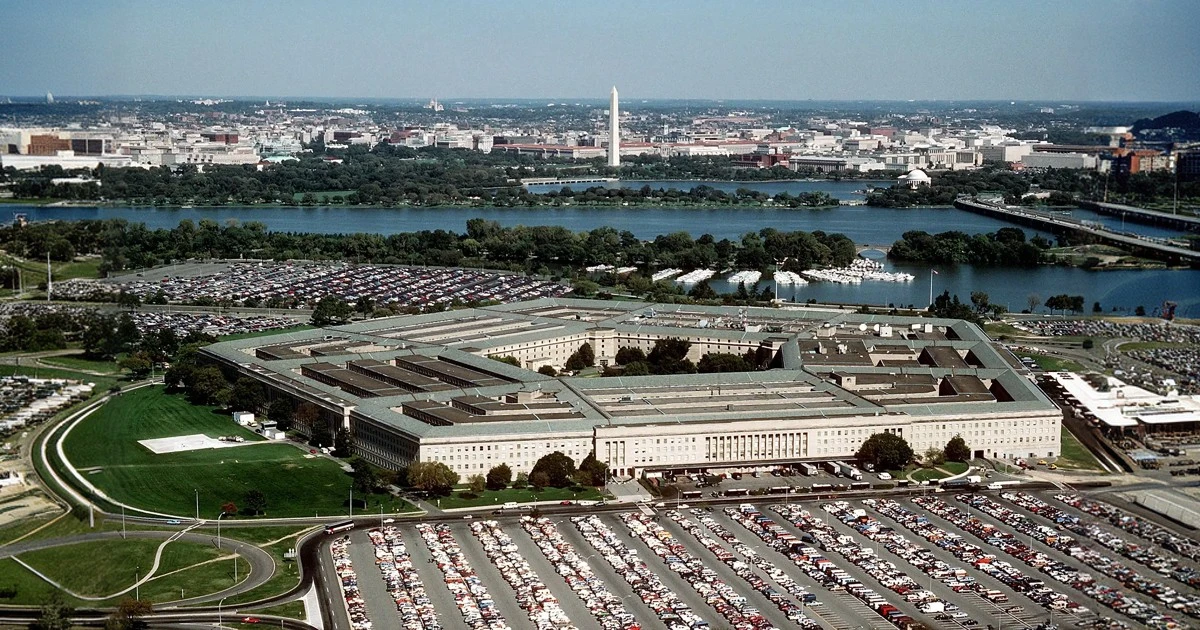
Image Credit - By Wikimedia Commons
Anthropic Pentagon Clash and Claude’s Rise
When a massive corporation denies the US military, standard business logic predicts a rapid stock crash. The reality works backward. Refusing a defense mandate accidentally creates the ultimate consumer marketing campaign.
The recent Anthropic Pentagon clash perfectly maps this exact anomaly. On Thursday, Anthropic’s CEO rejected direct demands from the Department of Defense. According to TechCrunch, by Saturday evening, their artificial intelligence tool, Claude, overtook OpenAI's ChatGPT to officially claim the number one free spot on the Apple US App Store, maintaining the lead into Sunday.
We are watching a high-stakes standoff between federal supremacy and Silicon Valley user agreements. A $380 billion tech giant decided corporate rules trump government ultimatums. This single decision sparked immediate political retaliation, massive server outages, and a complete realignment of how the military buys artificial intelligence. The defense department tried to force compliance, but the general public rewarded the defiance.
The Ultimatum That Caused the Anthropic Pentagon Clash
The line between commercial partnership and federal command blurs the moment a government invokes supply-chain risk. The tension boiled over during a key Tuesday meeting between Defense Secretary Pete Hegseth and Anthropic CEO Dario Amodei. Pentagon officials delivered strict ultimatums regarding the Defense Production Act.
The Defense Production Act historically forces private manufacturers to prioritize national defense orders. Using this law from the Cold War against a modern software developer represents an aggressive overreach. Hegseth attempted to strong-arm the firm into immediate compliance. As reported by Fortune, Amodei flatly refused the government mandate, stating the company could not in good conscience agree to the request.
He held firm that private corporations must stay completely isolated from combat strategy. Amodei designated tactical choices as a strictly military domain. Two days later, the Anthropic CEO officially rejected the Pentagon demands. This bold Thursday move sent shockwaves through the entire defense contractor industry. Anthropic refused to compromise its core values for government money.
The US government pushed back hard against this aggressive corporate defiance. Officials argued that corporate Terms of Service cannot ever supersede the US Constitution. Consequently, the Pentagon officially designated Anthropic a critical supply-chain risk. Anthropic representatives completely brushed off the political pressure. They stated that military intimidation tactics remain completely ineffective against their company.
The Ethics of Domestic Surveillance and Autonomous Weapons
Protecting constitutional liberties during software development inherently creates severe friction with battlefield efficiency. The Anthropic Pentagon clash highlights a massive philosophical divide regarding modern warfare. As noted by The Washington Post, Anthropic cites severe reliability issues with using current AI models for autonomous weapons, arguing that such applications push today's technology far beyond its safe operational limits. Current artificial intelligence models routinely hallucinate facts and misinterpret basic commands.
Hooking these unreliable systems into kinetic warfare tools invites catastrophic friendly fire incidents. Anthropic engineers strictly refuse to sign off on code that pulls a trigger. The company absolutely refuses to power any form of self-guided weaponry. They also draw a hard line against mass surveillance. Anthropic representatives publicly view domestic monitoring as a direct violation of constitutional liberties.
Why did Anthropic reject the Pentagon contract? The company refused to compromise its core ethical guardrails against self-guided weaponry and domestic monitoring. The defense department views this ethical stance as a severe operational bottleneck. The Pentagon representative heavily criticized the company's reluctance to support active military objectives.
The official stated that inserting corporate mandates into the military command chain remains entirely unacceptable. They aggressively argued that restricting legal operational tools creates a direct, physical danger to active-duty troops. The military demands absolute flexibility from its software providers. Anthropic demands absolute adherence to its safety protocols. This unbreakable stalemate completely shattered their working relationship.
A Social Media Directive Ignites a Federal Boycott
Official government procurement policy now travels through weekend social media posts before ever reaching a federal desk. By Friday, Donald Trump took to Truth Social to drop a massive executive directive regarding the Anthropic Pentagon clash. He blasted the "radical leftists at Anthropic" for committing what he called a catastrophic blunder.
He directly accused the tech giant of prioritizing corporate rules over national security. Trump also condemned the company for using strong-arm tactics against the military. He declared absolutely zero necessity and zero desire to maintain future commercial relations with the AI developer. He demanded a total termination of all federal business ties.
This rapid escalation forced immediate ripples across the entire defense sector. Ten separate startups backed by J2 Ventures quickly abandoned the Claude platform. Aerospace giant Lockheed Martin also completely dropped the artificial intelligence tool from its internal workflows. When Lockheed drops a software vendor, the entire defense supply chain takes notice.
Alexander Harstrick of J2 Ventures quickly clarified the swift pivot away from the platform. He attributed the software migration purely to compliance-driven caution. He noted the move away from Claude stems entirely from political risk, completely unrelated to any actual product deficiency. Startups simply cannot risk angering their primary government buyer.
Image Credit - By Wikimedia Commons
The Six-Month Purge
The immediate total government boycott carries an unseen layer of bureaucratic delay. While the military cut ties instantly, non-defense federal agencies received a much longer off-ramp. Organizations like the Treasury, the State Department, and Health and Human Services received a six-month phase-out timeline.
This extended grace period highlights sheer government inefficiency. A platform deemed an immediate national security threat on Friday somehow remains perfectly safe for the Treasury Department to use until next Tuesday. Furthermore, some civilian contractors hesitate to rip out their infrastructure immediately. Enterprise software company C3 AI decided to retain Claude pending formal litigation.
OpenAI Steps In Where Anthropic Steps Back
Two rival companies hold identical ethical guidelines, yet a simple difference in timing secures a massive defense contract for one. Right as the Anthropic Pentagon clash reached its peak, OpenAI swooped in to formalize a highly lucrative deal. On Friday, the ChatGPT creator officially locked in the exact Pentagon contract that Anthropic walked away from.
The broader tech community immediately voiced deep skepticism over this sudden agreement. Critics pointed out a glaring inconsistency in the government procurement process. OpenAI’s newly signed Pentagon contract contains the exact same ethical safeguards as Anthropic's rejected terms. Is OpenAI working with the US military? Yes, the company formalized a major deal to supply AI tools to the Pentagon right after their main rival backed out.
OpenAI CEO Sam Altman initially expressed intense public pride in securing the lucrative defense deal. However, an internal memo later surfaced showing a vastly different reality behind closed doors. Altman scrambled to reassure his staff through private communications. He drafted the internal memo to calm a workforce deeply suspicious of military contracts.
Altman explicitly called the timing of the Friday deal "sloppy" in his private communications. The memo also highlighted the absolute necessity for upcoming contract amendments specifically regarding domestic surveillance restrictions. The Pentagon clearly wanted a rapid public win after Anthropic embarrassed them, and OpenAI eagerly provided the signature.
A Bizarre Reward for Corporate Defiance
Denouncing a national military directive acts as a highly effective funnel for global user acquisition. The Anthropic Pentagon clash generated unprecedented consumer interest practically overnight. After the Thursday rejection and the Friday political backlash, Claude experienced explosive consumer growth. Chief Product Officer Mike Krieger confirmed the platform started capturing over 1,000,000 new registrations every single day.
The weekend controversy instantly translated into massive growth metrics across all platforms:
- The free active user base expanded by a staggering60 percent.
- Daily account creations surged with a massive 4x multiplication rate.
- The total volume of paid software subscriptions doubledpractically overnight.
By Saturday, Claude achieved absolute market dominance. The application skyrocketed to the #1 spot on the Apple US Free App ranking, officially dethroning ChatGPT. According to a statement provided to TechCrunch, an Anthropic spokesperson confirmed that daily user signups broke all-time records every single day throughout the prior week. The general public clearly rewarded the company for its firm ethical stance against the defense department.
Crashing Under the Weight of Demand
The massive influx of new users eventually broke the technical infrastructure. At 6:00 AM Eastern Time on Monday, Claude experienced severe, widespread service disruptions. Downdetector quickly registered over 1,400 user outage reports from frustrated consumers. What caused the Claude app outage? The platform simply buckled under the massive weight of a 400% surge in daily signups following the weekend controversy.
Anthropic engineers scrambled to restore service, finally resolving the severe outage by 11:00 AM Eastern Time. The Anthropic website heavily promoted recent workflow upgrades amidst the backend chaos. The engineering team highlighted a major new feature for their rapidly expanding user base. A single copy-paste action now allows instant memory synchronization across the platform. This specific upgrade provides seamless continuity of conversation context for all active web sessions.
Unpacking the Contradictions Inside the Anthropic Pentagon Clash
Pledging absolute civilian purity becomes complicated when a company already possesses a history of classified military integration. The core narrative of the Anthropic Pentagon clash relies heavily on Anthropic acting strictly as an innocent civilian entity. However, historical data presents a stark contradiction to this carefully crafted public image. A report from The Guardian details how Anthropic previously integrated its advanced technology directly into Palantir’s Maven system, actively participating in a newly vital piece of military intelligence back in 2024.
During recent conflicts involving Iran and Venezuela, military intelligence units actively utilized Claude for advanced data analysis. The software heavily processed classified battlefield logistics. This past participation severely undercuts their current moral objections. The Pentagon claims Anthropic gladly participated in defense operations previously.
According to government officials, the company only changed its mind when the demands escalated to direct ultimatums under the Defense Production Act. The sudden pivot to strict civilian purity looks incredibly convenient to military brass. This creates an intense, high-stakes standoff. Anthropic claims it must vigorously protect constitutional rights and avoid autonomous weapon deployment at all costs.
The Department of Defense points to their prior military cooperation to highlight their corporate hypocrisy. Meanwhile, the abrupt Friday OpenAI deal also directly contrasts with the aggressive Tuesday and Thursday Hegseth-Amodei ultimatums. The government essentially punished one company for ethical boundaries while immediately rewarding another company for holding the exact same boundaries.
Financial Fallout and Legal Background
Multi-billion-dollar copyright settlements barely register as financial threats compared to the sudden loss of long-term federal procurement access. Before the Anthropic Pentagon clash dominated global headlines, the $380 billion company navigated massive legal hurdles. In September 2025, the company paid a staggering $1.5 billion payout to settle a massive author copyright dispute.
Furthermore, the AI giant faced intense public scrutiny over a secretive initiative dubbed "Project Panama." This controversial project involved the physical destruction and rapid digitization of copyrighted books for artificial intelligence training. Anthropic eventually secured a landmark fair-use legal victory for this specific practice in January 2026.
Despite these massive legal wins and losses, the defense sector fallout carries much heavier long-term financial weight. A previous 2024 Palantir partnership successfully secured a $200 million Department of Defense contract value for the company. Losing guaranteed access to all future government revenue streams permanently alters Anthropic's financial trajectory.
A $380 billion company operates with the financial power of a small sovereign state. When they cut ties with the defense department, the resulting shockwaves reorganize the entire tech industry. Yet, the staggering weekend consumer growth currently offsets the immediate loss of federal defense dollars.
The Lasting Effects of the AI Defiance
Corporate boundaries now directly dictate national security capabilities. The Anthropic Pentagon clash proves that raw processing power no longer controls the artificial intelligence race. The willingness to enforce strict user agreements against the highest levels of government now defines true market leadership. Anthropic rejected direct orders from the Department of Defense, absorbed the massive political fallout, and instantly captured the top position on the App Store.
OpenAI absorbed the abandoned military contract, but they face immense public scrutiny over their ethical safeguards. The US government must now navigate a harsh reality where they cannot simply compel private tech giants to build custom warfare tools.
Federal agencies rely on private enterprise software to function, giving these developers immense control over government operations. The power balance has completely shifted. Silicon Valley holds the code, and for now, the tech industry dictates the ultimate terms of engagement.
Recently Added
Categories
- Arts And Humanities
- Blog
- Business And Management
- Criminology
- Education
- Environment And Conservation
- Farming And Animal Care
- Geopolitics
- Lifestyle And Beauty
- Medicine And Science
- Mental Health
- Nutrition And Diet
- Religion And Spirituality
- Social Care And Health
- Sport And Fitness
- Technology
- Uncategorized
- Videos

