
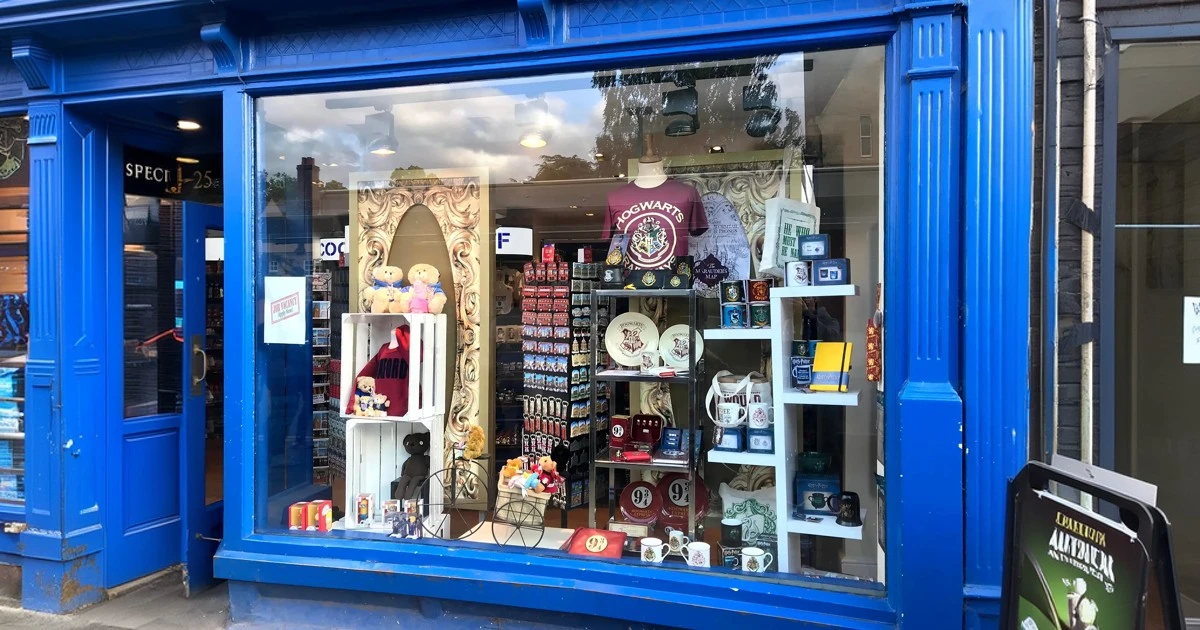
Image Credit - By wuppertaler, Wikimedia Commons
Harry Potter Shop Set to Open on Oxford Street
City planners often rescue failing retail districts by importing multibillion-dollar fantasy worlds. Local governments use global entertainment brands to completely rewrite the foot traffic patterns of a dying high street. Shoppers think they randomly find a new flagship store, but major corporations deliberately place these retail anchors in specific urban bottlenecks to capture and control tourist spending.
Brands replace empty storefronts and aggressive unauthorized vendors with heavily sanitized, officially licensed commercial hubs. This strategy forces competing pop-up shops out of the neighborhood entirely. Real estate developers then use this corporate influx to justify massive pedestrian renovations and street closures.
A high-profile retail opening acts as an urban reset button. The arrival of a beloved franchise forces the surrounding blocks to modernize rapidly. Tourists pour into the newly cleared zones, spending cash at the flagship location while simultaneously funding the broader revival of the entire commercial district. The upcoming Harry Potter shop Oxford Street perfectly executes this exact corporate and civic strategy.
The Urban Strategy Behind the Harry Potter Shop Oxford Street
Corporations weaponize nostalgia to push unauthorized street vendors out of prime commercial real estate. Warner Bros uses its official retail presence to divert massive tourist crowds away from opportunistic, unofficial merchandise stalls crowding the sidewalks. This strategic corporate move directly supports broader neighborhood revival efforts across the city.
You might wonder, when will the Harry Potter shop Oxford Street open? According to a March 2026 announcement on the official Harry Potter website, Warner Bros schedules the grand opening for Autumn 2026, dropping the new retail giant right in the middle of a massive city renovation. The official brand influx displaces vacant candy outlets and forces unauthorized sellers to abandon the district.
Mayor Sadiq Khan pushes an aggressive urban planning initiative alongside this retail launch. The city plans a 0.7-mile pedestrian zone stretching from Oxford Circus to Marble Arch. Roadway construction begins in the summer, and the government aims to establish a completely vehicle-free segment by the end of the year.
Half a million daily visitors currently navigate this bustling corridor. The city expects these numbers to rise as official flagship stores clean up the neighborhood profile. Other major brands also participate in this high street revival. According to the IKEA newsroom, the furniture retailer will open its highly anticipated Oxford Street store on May 1st, while the Evening Standard reports that the Pocket Planet miniature indoor world now occupies the former New Look site.
Sizing Up the Harry Potter Shop Oxford Street
Massive entertainment brands lease giant office buildings to disguise standard merchandising as a luxury cultural event. Real estate developers previously housed the Scandal nightclub at the 134-140 intersection bordering Tottenham Court Road. As detailed in a CBRE project description, the ORMS design firm reshapes this site into a 140,000-square-foot mixed-use commercial structure known as The Ribbon.
Shoppers frequently ask, how big is the new Harry Potter store in London? The retail space spans 21,000 square feet across two levels, matching the massive footprint of the New York flagship. Internal planning documents list the 21,000 square feet measurement, while European property records translate this metric to roughly 1,950 to 2,000 square meters.
Construction crews finalize the 2025 building phase to accommodate a massive operational scale. The total property footprint supports an 80,000 square foot office capacity and provides a sprawling 26,374 square foot retail frontage. The Harry Potter shop Oxford Street claims a massive chunk of this street-level visibility.
Company executives recognize the power of this specific intersection. Karl Durrant notes that this prominent setting offers loyal fans a fresh pathway to engage with the mystical universe right inside a bustling modern metropolis. The sheer size of the dual-level flagship store forces every passing tourist to notice the brand.
Timing the 25-Year Franchise Grand Plan
Media conglomerates coordinate theater changes and television launches to dictate long-term fan spending habits. Warner Bros times the debut of the Harry Potter shop Oxford Street to perfectly align with the 25-year anniversary of the cinematic franchise. Every major branch of the entertainment property shifts simultaneously to maximize consumer interest.
The live theater division restructures its entire business model this year. The Cursed Child stage show ends its long-running two-part format on September 20. The production immediately shifts into a streamlined single-part format starting October 6. This rapid pivot caters to tourists who refuse to buy two separate theater tickets.
Fans regularly ask, is there a new Harry Potter TV show coming? As reported by Deadline, HBO's top executive Casey Bloys says the network is eyeing early 2027 to premiere a brand-new television adaptation, resetting the original story for a modern audience. The retail division requires a massive physical store in London to sell the upcoming wave of new television merchandise.
The base financial data proves the necessity of this coordinated grand plan. The original film franchise generated $7.7 billion in total box office revenue, securing its position as the fourth highest-earning cinematic universe globally. Meanwhile, publishers report a global book circulation exceeding 600 million copies as of February 2023.
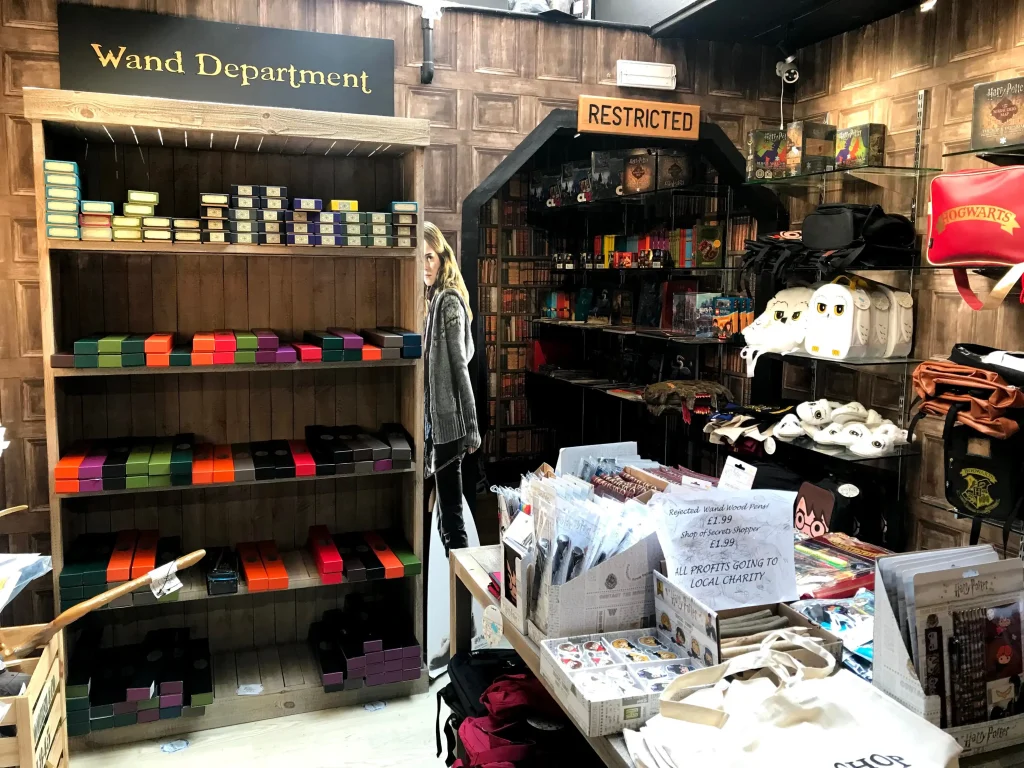
Image Credit - By wuppertaler, Wikimedia Commons
Expanding the Global Merchandising Map
Global retail dominance requires planting physical anchors in high-traffic international tourist hubs to capture local wealth. A single flagship store rarely sustains a brand of this magnitude. Warner Bros operates an aggressive global retail network to ensure fans empty their wallets regardless of their geographic location.
The company strategically targets distinct districts in major international cities. Tokyo currently hosts official merchandise locations in both the Harajuku and Akasaka neighborhoods. The brand also maintains a dominant presence across the United States with dedicated stores in Chicago and New York. The new London flagship joins this established international portfolio as a joint-largest location.
Theme park operations multiply this physical retail dominance. Universal Studios manages six dedicated global theme park zones featuring fully realized magical villages. These massive footprint zones condition fans to expect highly detailed physical environments whenever they interact with the franchise.
Consumers demand more than simple shelves and cash registers. The brand must deliver an overwhelming sensory experience to justify high merchandise prices. International retail locations rely heavily on regional exclusivity to drive sales, forcing hardcore collectors to visit multiple countries to complete their personal collections.
Designing Retail as Immersive Theater
Designers build modern retail stores to function exactly like stage sets, blurring the line between shopping and entertainment. The physical retail design deliberately bridges the gap between high-end tourist attractions and basic merchandise consumption. The brand refuses to let shoppers remember they exist inside a standard commercial building.
The company heavily references its past retail successes to inform the new location. The existing King's Cross shop utilizes a Jack Wills-inspired aesthetic to project a specific academic mood. Construction crews install timber floors and wood-paneled walls to mimic historical boarding schools and old-world British architecture.
Corporate leadership demands a strict adherence to these established design rules. Karl Durrant emphasizes that the store relies on deep narrative foundations rooted in British folklore. The brand builds a novel commercial encounter that guarantees absolute joy and amusement for visiting enthusiasts.
The physical space actively distracts the consumer from the financial transaction. Mood lighting, detailed prop replicas, and custom musical scores disorient the shopper just enough to encourage impulse purchases. The retail environment completely immerses the visitor, making a basic plastic wand feel like a necessary artifact from a living world.
Funneling Tourists Toward High-Value Excursions
Flagship stores operate as intake valves, capturing casual tourists and redirecting them toward expensive external ticketing ventures. The Harry Potter shop Oxford Street functions as a highly visible advertisement for the brand's premium, off-site experiences. Staff members naturally encourage retail shoppers to book extensive day trips outside the city center.
The Leavesden Studio Tour captures these highly motivated fans with premium upgrades. The studio runs a specialized "Making The Magic" workshop for visitors willing to pay extra. This 45-minute wardrobe creation session involves hands-on fabric pinning and detailed mood boards, elevating the standard studio walkthrough into a specialized craft class.
The brand partners with external logistics companies to create entirely new product categories. Rail Events Inc operates the Hogwarts Express Adventure, turning standard railway transit into a lucrative asset. This immersive moving train excursion combines scenic travel with premium themed dining.
These massive side attractions require a constant stream of new customers to remain profitable. The free-to-enter flagship store acts as the perfect top-of-funnel marketing tool. Tourists wander in from the street to look at cheap merchandise and eventually leave with expensive reservations for premium off-street excursions.
Forcing a High Street Revival
Local governments utilize corporate giants to force pedestrian-friendly makeovers onto congested city streets. The massive daily foot traffic generated by a blockbuster retail store gives city planners the political leverage to completely tear up existing roadways. Bureaucrats use the corporate arrival to finalize their most aggressive urban transformation goals.
The 0.7-mile stretch from Oxford Circus to Marble Arch historically suffered from heavy pollution and aggressive taxi congestion. The planned vehicle-free segment completely alters how half a million daily visitors interact with the neighborhood storefronts. Retailers demand wider sidewalks to accommodate the massive lines forming outside their doors.
Empty real estate physically depresses a commercial district. The former New Look site sat vacant before the Pocket Planet tourist attraction secured the lease. Ikea previously anchored the neighborhood earlier in the summer, proving that massive corporate investments stabilize failing commercial blocks.
The Oxford Street regeneration relies entirely on these massive brands committing to long-term leases. The city creates the pedestrian space, and the corporations fill that space with eager, spending tourists. This symbiotic relationship permanently changes the physical reality of the neighborhood.
Securing Retail Dominance
Cities trade their traditional commercial identities to host highly profitable fantasy worlds. Real estate developers and local politicians rely on beloved entertainment brands to physically rebuild failing neighborhoods. A single massive store forces an entire metropolitan grid to adapt to its operational needs.
The Harry Potter shop Oxford Street guarantees a massive influx of international cash while actively pushing out unsanctioned street vendors. Warner Bros synchronizes this physical expansion with theatrical changes and television launches to dominate fan attention across every possible medium. Entertainment properties build these massive physical anchors to ensure fans never escape the consumer cycle. The brand turns basic merchandise into a mandatory cultural event, proving that retail dominance always requires total physical immersion.
Recently Added
Categories
- Arts And Humanities
- Blog
- Business And Management
- Criminology
- Education
- Environment And Conservation
- Farming And Animal Care
- Geopolitics
- Lifestyle And Beauty
- Medicine And Science
- Mental Health
- Nutrition And Diet
- Religion And Spirituality
- Social Care And Health
- Sport And Fitness
- Technology
- Uncategorized
- Videos