
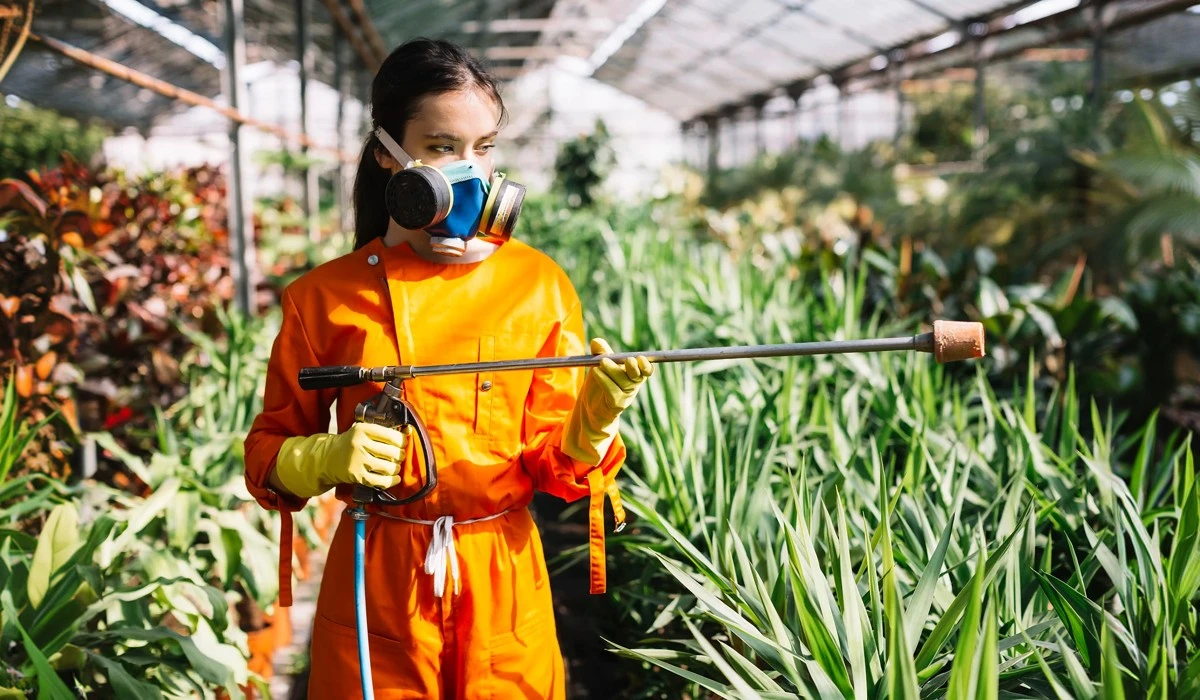
Cut Pesticide Use With Regenerative Agriculture
Most farmers believe a clean field represents a healthy business. They see a weed or a bug and reach for a chemical fix immediately. This creates a trap. When you spray to wipe out one problem, you also wipe out the insects that eat that problem. The pests return faster because their natural enemies no longer exist in that space. You spend more money every year to get the same results. This cycle of dependency breaks your bank account and your land.
Regenerative Agriculture offers a way out of this expensive spiral. Adopting no-till farming practices means you stop fighting nature and start letting it perform the heavy lifting for you. This approach restores a balance that keeps pests in check without a heavy price tag. You can grow high-value crops while spending less on synthetic inputs. Farmers should view the soil as a living workforce instead of mere dirt. Achieving high yields while slashing input costs requires biological cooperation.
The Core Philosophy: Why Regenerative Agriculture Works Without Chemicals
The biological world operates on a simple rule: everything is either eating or being eaten. In a conventional field, heavy tillage and chemicals remove the predators. This leaves the "prey"—the pests—free to multiply without any resistance. Building a diverse biological community ensures no single pest can dominate the field.
Restoring the Soil Food Web
Healthy soil creates its own natural defenses. Think of it as a security team for your crops. When the soil stays healthy, it supports fungi and bacteria that actually fight off pathogens. According to Farmers on the Rock, there are five pillars of soil health: maintaining soil armor, minimizing soil disturbance, ensuring plant diversity, keeping living roots in the ground year-round, and integrating livestock. These principles work together to build a subterranean environment where crops thrive, and pests struggle.
Biological health depends on glomalin-producing arbuscular mycorrhizal fungi. As noted in research published in PMC, these fungi initiate "mycorrhiza-induced resistance" (MIR), which provides systemic protection against a wide range of attackers and shares traits with systemic acquired resistance (SAR). This strength helps the plant ward off pathogens before they can take hold. Without this fungal support, the plant remains vulnerable and dependent on external sprays.
Breaking the Monoculture Trap
Monocultures are an all-you-can-eat buffet for specific pests. If you plant 1,000 acres of corn, every corn-loving bug in the county will find your farm. Diversity disrupts these life cycles. Mixing different plants confuses pests and makes it harder for them to find their host.
Data published in PubMed indicate that pests are ten times more abundant in conventional insecticide-treated corn fields than in insecticide-free regenerative systems. The study suggests that farmers who proactively design pest-resilient food systems outperform those who react to pests chemically. Diversifying your rotations breaks the reproductive cycle of the insects. The pest population collapses because it cannot find a consistent food source year after year.
Strengthening Your Soil with No-Till Farming Practices

Every time a plow turns the earth, it destroys a city. It crushes the tunnels and homes of the very creatures that protect your profit margins. No-till farming practices keep these biological cities intact. This stability allows beneficial populations to grow large enough to provide real-world pest control.
The Habitat Benefit of Undisturbed Soil
Tilling destroys the homes of the "good guys" like ground beetles, spiders, and beneficial fungi. Ground beetles are the ultimate pest hunters. Some species consume their body weight in weed seeds and soft-bodied pests like aphids every single day. A study published in Frontiers in Sustainable Food Systems suggests that reduced tillage aids in pest management by increasing populations of natural enemies. This practice preserves the surface residue and soil structure required for beneficial predatory insects to thrive and hunt crop-destroying larvae.
When you leave the soil alone, these predators build permanent residences. They stay in your field through the winter. This means they are ready to hunt the moment spring pests arrive. In a tilled field, these predators must migrate back in from the edges, often arriving too late to stop the first wave of damage.
Keeping Predator Populations Stable
Stability breeds success in nature. Cornell University reports that undisturbed soils harbor high concentrations of Beauveria bassiana and Metarhizium, natural fungi that infect and kill over 700 species of insect pests, including the corn borer. These fungi persist in the soil for years when you avoid tillage.
Maintaining these populations creates a permanent biological barrier. You no longer need to buy a "rescue" chemical because the soil already contains the solution. This year-to-year continuity ensures that the predators are always one step ahead of the pests.
Utilizing Predator-Prey Dynamics in Regenerative Agriculture
Nature provides a free labor force if you provide the right housing. Adopting Regenerative Agriculture means managing your farm like a nature reserve that also happens to produce food. You want to invite the most aggressive predators to live right next to your crops.
Creating "Beetle Banks" and Hedgerows
Practical infrastructure makes biological control possible. According to the Xerces Society, beetle banks are linear strips of native perennial bunch grasses that provide overwintering shelter for predatory spiders and beetles. These strips provide a safe haven for hoverflies as well. During the growing season, these insects move from the grass strips into your crops to hunt.
These banks act as a staging ground. Instead of predators having to travel from the far fence line, they are already in the center of the action. This reduces the time it takes for nature to respond to a pest outbreak.
High-Functioning Natural Pest Suppression Systems
A balanced environment reaches an equilibrium where no single pest becomes an outbreak. In these systems, you might see a few aphids, but you will also see ladybugs eating them. The Government of Manitoba notes that if natural enemy populations are high enough, they can keep aphids below the "economic threshold" for damage. As defined by the Government of Saskatchewan, this threshold is the point where the value of the destroyed crop exceeds the cost of controlling the pest.
This natural suppression saves you the cost of the chemical and the cost of the tractor pass. It also prevents the "pest resurgence" that happens when chemicals kill everything but the most resistant bugs. You keep the balance in your favor.
The Economic Reality: Moving Beyond the Chemical Treadmill
Profit per acre stands as a more important metric than yield per acre. Conventional farming focuses on hitting the highest possible yield, even if the cost of pesticides and fertilizers eats up the entire profit. Regenerative Agriculture flips this priority.
Calculating the Cost of Input Dependency
Pesticide costs often consume the margin that should be your take-home pay. Research from the European Alliance for Regenerative Agriculture shows that between 2020 and 2023, regenerative farmers achieved nearly identical yields while using 76% less pesticide and 62% less nitrogen.
When you stop buying expensive jugs of chemicals, your break-even point drops significantly. You don't need a record-breaking crop to make money when your input costs are near zero. This financial freedom makes your farm more resilient to market price swings.
Yield Stability vs. Peak Output
A study published in PubMed reveals that regenerative systems generated 78% higher profits despite a 29% lower grain yield in some years. This happens because the reduction in expenses far outweighs the slight dip in total volume. Many farmers wonder, does regenerative agriculture use pesticides? While it is not strictly organic, the goal is to build soil health so resilient that synthetic chemicals become an unnecessary expense rather than a requirement.
You gain stability. Healthy soil holds more water and supports stronger plants. This means you don't lose your shirt during a dry year. You trade the risky "peak" yield for a consistent, profitable baseline.
Using Cover Crops as Biological Shields
Plants can defend themselves and each other. Cover crops provide benefits beyond erosion prevention; they act as a living shield that blocks weeds and confuses insects. Integrating them into no-till farming practices creates a layered defense system.
Allelopathic Effects and Weed Suppression
Some plants are naturally "territorial." Cereal rye is a famous example. According to research in the Agronomy Journal and ScienceDirect, this plant releases allelopathic compounds, including phenolic acids and benzoxazinoids, as it grows and decays. These natural chemicals stop the seeds of small weeds, like pigweed and waterhemp, from germinating.
Using rye as a cover crop provides a natural herbicide effect. You get the weed control you need without the chemical residue. This saves money and keeps your soil biology healthy for the next cash crop.
Multi-Species Mixes for Maximum Defense
There is power in numbers. A mix of eight or ten different cover crops provides better protection than a single species. Brassicas like mustard can act as bio-fumigants. They release glucosinolates into the soil, which naturally kill parasitic nematodes.
Meanwhile, legumes in the mix add nitrogen, and grasses build carbon. This variety ensures that no matter what the weather does, something is growing and protecting the soil. It makes the environment hostile to pests but welcoming to your crops.
Managing Nutrient Density to Discourage Pathogens
Pests are nature's "garbage collectors." They are designed to eat weak, unhealthy plants. If your crops are nutritionally dense and healthy, many pests literally cannot digest them. Regenerative Agriculture focuses on this internal resistance.
The Connection Between Plant Brix and Pest Resistance
Pests are simple organisms with simple digestive tracts. They love plants filled with "free" nitrogen and simple sugars. This happens when you overapply synthetic fertilizers. However, when a plant is healthy, it converts those sugars into long-chain carbohydrates and proteins.
Farmers use a refractometer to measure "Brix," which is the sugar and mineral content of the plant sap. A plant with a Brix reading of 12 or higher is usually ignored by pests like aphids and mites. The bugs can't handle the composition of the healthy plant sap. It actually makes them sick.
Why Healthy Plants Don't Need Rescue Chemistry
Healthy plants grown in high-quality soil possess a form of "passive immunity." Their cell walls are thicker and harder for insects to pierce. They produce secondary metabolites that act as natural repellents.
When the plant has everything it needs from the soil, it doesn't send out the chemical "stress signals" that attract pests. You stop the problem before it starts. You aren't "rescuing" the crop with chemicals because the crop never needed saving in the first place.
Shifting Safely to Regenerative Agriculture Systems
The soil needs time to wake up. Shifting requires a strategic approach to ensure you don't suffer a "yield crash" while the biology recovers.
Managing the 3-Year "Detox" Period
Think of this as a biological reboot. During the first few years of no-till farming practices, your soil is recovering from years of disturbance. You might see some weed pressure or nutrient lags as the fungi and bacteria re-establish their networks.
Patience pays off. By year three, insect predation on crop-destroying caterpillars often jumps from 25% to 75%. The system begins to balance itself out. You must manage your expectations and keep the long-term profit goal in mind during this phase.
Monitoring Indicators of Success
Observation is your most valuable tool. You need to see if your no-till farming practices are actually changing the land. Look for earthworm casts. Count the number of beneficial insects you see in a square foot.
Check your water infiltration. Data from the NRDC indicates that regenerative fields can hold an extra 20,000 gallons of water per acre for every 1% increase in organic matter. If your soil is soaking up rain rather than letting it run off, you know your system is working. These physical signs tell you that the biology is taking over the work of the chemicals.
Moving away from pesticide dependency is a smart business move. It ends the "chemical treadmill" where you spend more every year for less return. Focusing on soil health and biological diversity leads to a farm that can survive without expensive outside help.
The shift to Regenerative Agriculture requires a shift in mindset. This shift involves moving from a mindset of elimination to one of managing a living system. This path leads to lower costs, higher margins, and a legacy of healthy land. Your soil has the natural resilience to protect your crops and your bank account. It is time to let it work.
Recently Added
Categories
- Arts And Humanities
- Blog
- Business And Management
- Criminology
- Education
- Environment And Conservation
- Farming And Animal Care
- Geopolitics
- Lifestyle And Beauty
- Medicine And Science
- Mental Health
- Nutrition And Diet
- Religion And Spirituality
- Social Care And Health
- Sport And Fitness
- Technology
- Uncategorized
- Videos

