
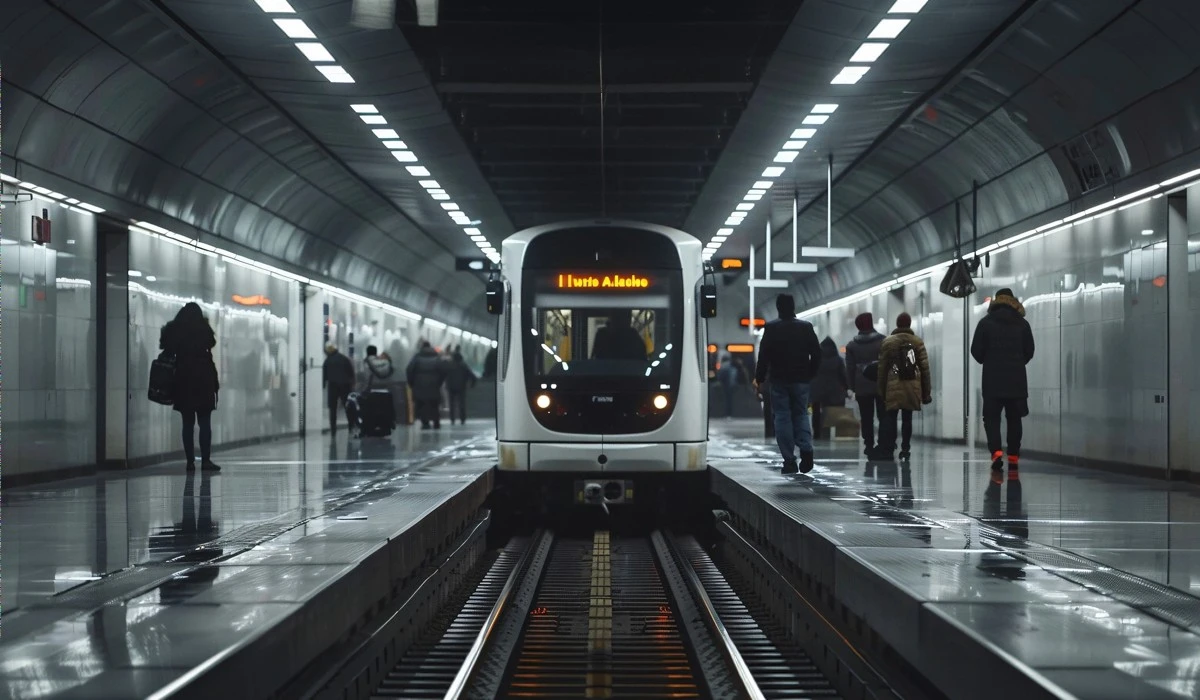
The Railway CCTV Domes Are Only For Decoration
When you step onto a train car and see a black glass dome on the ceiling, you assume it is recording your every move. You believe that if a crime occurs, the police can simply download the proof and catch the perpetrator. This belief creates a false sense of security that millions of commuters rely on daily. In reality, as reported by File on 4 Investigates, the police patrolling the tracks do not own the cameras watching them. Private train operators control the footage, and often, those black domes are nothing more than decoration. This disconnect between public expectation and technical reality leaves thousands of passengers vulnerable every day.
The British Transport Police (BTP) jurisdiction covers over 10,000 miles of track and more than 3,000 stations. They are the ones tasked with keeping the network safe. However, the surveillance equipment that serves as their primary investigative tool belongs to commercial rail companies. As indicated by TfL privacy guidance, there is no central switch the police can flip to view a crime in progress. Instead, they must submit requests for data. Frequently, the data does not exist. Railway CCTV failures operate as more than technical glitches; they constitute a systemic gap in the justice process that allows offenders to walk free.
The Ownership Gap Between Police and Operators
Justice relies on evidence, but in the rail network, the people investigating crimes have zero control over the tools needed to solve them. This structural flaw creates a bureaucratic hurdle that slows down investigations and often halts them entirely. The British Transport Police must ask private companies to retrieve footage. The companies, focused on running trains rather than preserving forensic data, manage these systems with varying levels of competence.
Data from a Freedom of Information (FOI) request highlights the severity of this disconnect. Out of more than 560 reports where BTP officers requested CCTV footage, the system failed the victims in over 250 cases. These failures were not minor. They included incidents where the footage was not recorded, the system had a fault, the quality was unusable, or the data had already been overwritten.
This high failure rate creates a safe haven for predators. While the government has poured £17 million into station CCTV access and increased the BTP budget by £481 million over three years, this money does not solve the core ownership issue. The police can have all the funding in the world, but if the private operator’s camera is broken, the money is useless. Railway CCTV failures continue to undercut the effectiveness of these financial investments.
The Legal Loophole Protecting Broken Systems
You might expect strict laws to mandate safety equipment on public transport, yet the rulebook contains a glaring omission regarding surveillance. Train operators face no statutory obligation to maintain working CCTV on their fleets. They can legally run a service with cameras that have been broken for months.
This lack of regulation leads to staggering periods of downtime. In 2025, one major train company had cameras out of action for a total exceeding 81,000 hours. That is an immense amount of unmonitored time where passengers traveled without the digital protection they thought they had. In the worst recorded case, a single camera remained broken for 152 continuous days.
If a serious assault happens on day 100 of that outage, the investigation hits a dead end immediately. The lack of legal compulsion means operators face little consequence for these lapses. They prioritize punctuality and ticket sales over the maintenance of recording devices. Without a law forcing compliance, railway CCTV failures will remain a common feature of the commute.
The 48-Hour Deletion Trap
Time acts as a quiet destroyer of evidence when corporate policies prioritize server space over victim justice. Even when cameras work, the retention policies of rail companies often work against the victim. Some operators set their systems to delete footage after just 48 hours to save on data storage costs.
This tight timeframe clashes violently with the reality of trauma. Victims of sexual offenses often need time to process what happened before they feel ready to approach the police. If a victim waits three days to report an assault, the evidence is likely already gone. The computer system automatically overwrites the old files with new ones.

The Disconnect in Retention Policies
While some parts of the network are improving, others lag behind. The London Underground, for example, recently changed its retention policy from 72 hours to 21 days. This is a positive step. However, on the broader national rail network, inconsistent policies persist.
Common causes for lost evidence:
- Rapid Overwriting: Footage deleted in as little as 48 hours.
- System Faults: Recorders that simply fail to save data.
- Quality Issues: Images too blurry to identify suspects.
Many passengers ask, how long do trains keep CCTV footage? The answer varies wildly by operator, but in some cases, it can be as short as two days, meaning evidence vanishes before police even ask for it.
Escalation Risk and the Minor Offense Myth
Ignoring small infractions creates a permissive environment where offenders practice and perfect more dangerous behaviors. There is a dangerous tendency to view "minor" offenses like staring, catcalling, or indecent exposure as nuisances rather than threats. Professor Katrin Hohl, an adviser on the subject, points out that these unchecked offenses often serve as precursors to severe violence.
When a perpetrator exposes themselves or gropes a passenger and faces no consequence due to railway CCTV failures, they learn that the train is a low-risk environment. This emboldens them. The leap from exposure to rape is a terrifyingly real progression. The statistics paint a worrying picture. Data collected by the BBC and other official sources confirms that reports of sexual assaults and harassment on trains have risen by over 33% in the last ten years.
The BTP has a solve rate of roughly 20% for sex offenses and nearly 22% for rape. While this is significantly higher than the national average of 2.8%, it still means that four out of five offenders on the railway evade justice. Every unsolved case represents a predator who remains free to escalate their behavior.
The Disappearing Evidence Epidemic
A perfect investigation protocol falls apart when the digital witness turns out to be blind or corrupt. Victims often do everything right. They follow the reporting protocols, they contact the police immediately, and they provide detailed statements. Yet, the technical failure of the surveillance system renders their efforts futile.
Beth Wright’s case illustrates this devastation. She was a victim who followed all the rules. She reported the crime, but the police could not trace the suspects. Why? The cameras in the carriage were absent, and the station camera was broken. Identification became impossible. The system promised her safety, but when she needed it, it offered nothing.
The Reality of "Unusable Quality"
Even when a file exists, it often fails to meet the standard required for a courtroom. TfL has admitted that aged fleets on specific lines are incompatible with prosecution-standard video. The footage might show a figure, but if the resolution is too low to prove identity beyond a reasonable doubt, the Crown Prosecution Service cannot charge the suspect.
Rebecca Horne, another victim, faced a similar heartbreak. She was assaulted on a train home from a Parliament event on International Women's Day. The irony is sharp. Despite the empathy of the officers and the detailed statement she provided, the critical evidence was unavailable. The emotional toll of reliving the trauma during interviews ended up being for nothing. Railway CCTV failures turned her quest for justice into a dead end.
Geographic Blind Spots in the Capital
Modern cities project an image of total coverage, yet specific transit arteries remain technically stuck in the past. London is one of the most surveilled cities on earth, yet the Tube network contains significant blind spots. Three major London Tube lines still run old trains that have either no CCTV coverage or inadequate systems.
This geographic inconsistency concentrates risk. Predators who know the system can exploit these specific lines. Statistics show that the London Underground accounts for one-third of all BTP sex offenses. More than 40% of offenses on TfL services happen here. The operators know this. TfL has stated that upgrades and new stock are in progress, but for the passengers riding those lines today, that promise offers no protection.
Claire Waxman, the Victims Commissioner, argues that mandatory operational CCTV is essential. She states that public transport safety is compromised without enforcement. Until every line has modern, working cameras, these blind spots will remain hunting grounds for offenders.
The Psychological Toll of False Security
Seeing a camera offers reassurance, but discovering it was broken after an attack deepens the trauma of the event itself. The presence of a camera changes how a passenger feels. It suggests that someone is watching, that help is available, or at least that justice is possible. When that promise is broken, the psychological damage is severe.
Academic studies show that 61.2% of victims feel anxious or stressed for up to two years post-incident. The knowledge that the system failed them exacerbates this pain. It validates the fear that they are on their own.
The Power of Reassurance
Interestingly, the system can mitigate this harm even without a conviction. Experiments with callback protocols show that when police provide reassurance calls, victims report a 68% higher feeling of support and a 19% higher perception of safety. Victims desire empathetic communication. They need to know the police care, even if the railway CCTV failures make prosecution impossible.
However, the current reality often delivers the opposite. Victims like Zan Moon report that public reactions are humiliating. Bystanders ignore abuse or find it amusing. When this social rejection combines with a technical failure, the victim feels entirely abandoned.

Bystanders and the Illusion of Crowd Safety
We assume safety in numbers, but crowded carriages often breed passivity rather than protection. A train car full of people seems like a safe place. If someone starts trouble, surely a fellow passenger will step in. The data suggests otherwise. Bystander behavior patterns play a cruel trick on victims.
According to academic reviews and BTP-commissioned surveys, in 6 out of 10 incidents, witnesses either ignored the harassment or watched from a distance. Only about 17% of people actively intervened. This creates a terrifying isolation for the victim, even in a crowd.
Zan Moon’s experience highlights this. During her ordeal, onlookers laughed while the perpetrator used crude language and gestures. Rosie, another victim, was photographed by an offender via a window reflection. She feared moving would escalate the situation, so she hid in a restroom.
Passengers often wonder, do other people help during an assault? Statistics show that most witnesses do not intervene, leaving victims to fend for themselves until they can reach safety.
Defining the Scope of Harm
Language often minimizes the reality of the victim's experience by categorizing fear as a "lesser" problem. The academic definition of Unwanted Sexual Behaviors (USB) covers a broad spectrum, from staring and catcalling to physical assault. These behaviors fall under the umbrella of Violence Against Women and Girls (VAWG).
While the law might distinguish between a stare and a touch, the psychological harm is often a continuum. Anna, a victim, experienced verbal harassment regarding her body parts and unwanted propositions. This eventually escalated to physical contact.
The main article reporting on these issues tends to focus on criminal assault. However, academic papers argue that we must broaden our view to include all USBs. These "lesser harms" cause severe trauma and restrict women's freedom of movement. If railway CCTV failures prevent the policing of minor offenses, the environment remains hostile, regardless of whether a "crime" technically occurred in every instance.
The Rush Hour Risk Factor
Predictability is a tool for commuters, but it is also a tool for those looking to exploit them. The temporal risk of these incidents is not random. Academic data pinpoints the highest risk window between 5 PM and 9 PM on weekdays.
This corresponds with rush hour. The crowding provides cover. It limits the ability of victims to move away. It makes physical contact harder to distinguish from accidental bumping—until it persists. Offenders use the density of the crowd to their advantage.
Det Supt Sarah White from the BTP views the recent statistical increase in reports as a positive sign of higher reporting confidence. She asserts zero tolerance for rail network predation and has deployed plain clothes patrols. This human element is vital, especially when the technical eyes of the network—the cameras—are blinking out.
Security by Hope, Not Law: The Illusion of Railway Safety
The railway network suffers from a fractured approach to safety. We have a dedicated police force without ownership of the surveillance tools, and private operators without a legal mandate to keep those tools working. While the government invests millions in station upgrades, the lack of statutory enforcement means that railway CCTV failures continue to jeopardize investigations. The current system relies on luck rather than law—hoping the camera is on, hoping the disk isn't full, and hoping the footage is clear. For the thousands of passengers who travel daily, hope is not a valid security strategy. Until the law compels operators to maintain these systems, the black domes on the ceiling will remain a dangerous illusion.
Recently Added
Categories
- Arts And Humanities
- Blog
- Business And Management
- Criminology
- Education
- Environment And Conservation
- Farming And Animal Care
- Geopolitics
- Lifestyle And Beauty
- Medicine And Science
- Mental Health
- Nutrition And Diet
- Religion And Spirituality
- Social Care And Health
- Sport And Fitness
- Technology
- Uncategorized
- Videos

