
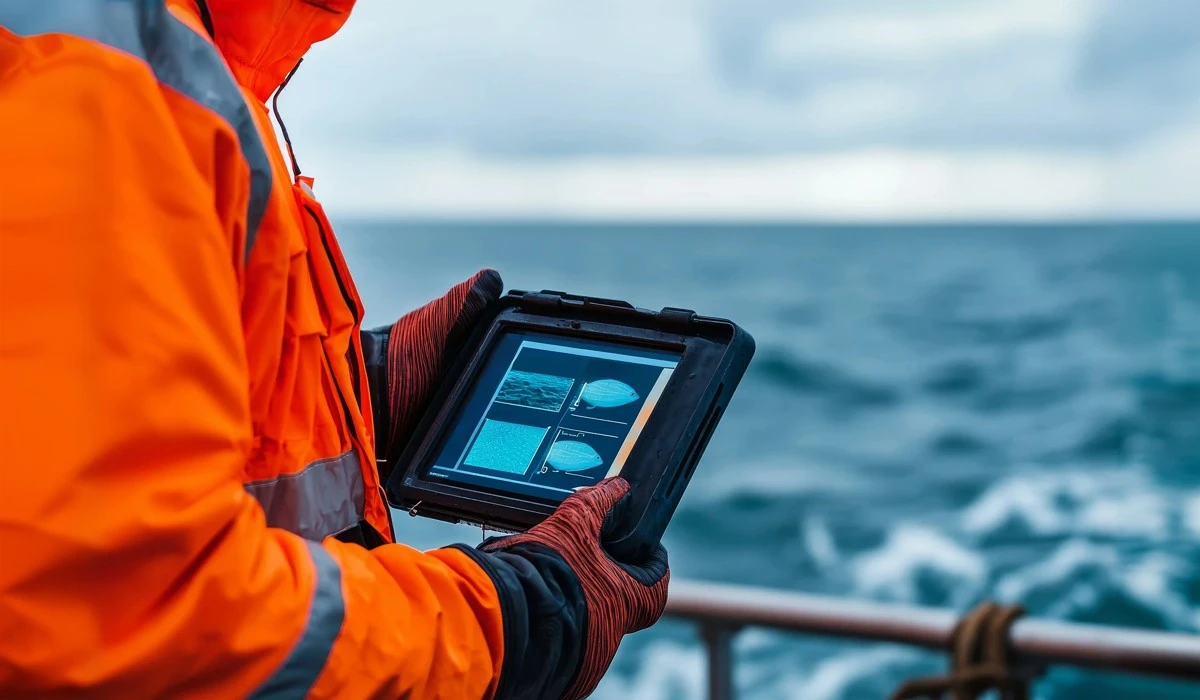
Why Hydrography Is Vital For All Global Trade
A massive cargo ship carries twenty thousand steel containers across the ocean. The captain trusts a screen to show deep water, yet only a few feet of liquid separate the heavy hull from jagged granite. According to the National Oceanic and Atmospheric Administration, many people assume the seafloor is static and that a decade-old map remains reliable. However, the agency notes that shifting sandbars, varying tides, and seasonal ice significantly alter waterways, which necessitate frequent revisions to navigational channels. In reality, moving sands, decaying shipwrecks, and volcanic growth constantly rewrite the world beneath the waves. One small error in depth measurement leads to a billion-dollar disaster. Hydrography solves this through the mapping of the physical features of the underwater world with total precision.
Modern shipping relies on these maps to stay afloat. Without regular nautical chart surveying, trade would grind to a halt. Captains would fear every coastline. They would wait for high tides that might never come. This field provides the hard data needed for ships to move safely and quickly. It provides a connection between a dangerous, unknown seabed and a clear path for global commerce. Every measurement ensures that what the captain sees on the screen matches the reality of the salt water.
The Core Principles of Modern Hydrography
Precision begins with an understanding of how sound moves through water. Surveyors no longer rely on dropping a simple weighted string; instead, as described by Britannica, they utilize echo sounding techniques where an acoustic pulse travels from the vessel to the ocean floor, reflects, and then returns. However, the ocean often tricks these sounds. Temperature and salt levels change how fast the pulse travels. If a surveyor ignores these changes, the depth reading fails. Research in the International Hydrographic Review indicates that while surveyors calculate sound velocity profiles periodically, doing so only every few hours may not be sufficient to account for large refraction errors caused by tides.
Understanding Bathymetry and Water Column Physicality
The National Ocean Service defines bathymetry as the study of the beds or floors of various water bodies, including oceans, rivers, and lakes. It serves as the basis for all nautical chart surveying efforts. Water density and pressure create layers in the ocean that bend sonar beams. According to Discovery of Sound in the Sea, sound waves undergo refraction or bending whenever they hit changes in sound speed, which can distort a flat seafloor into a bowl shape. Engineers use sensors to measure conductivity and temperature at different depths. These tools ensure the sonar beam travels in a predictable path and provide an honest picture of the ground below.
The Shift from Lead Lines to Digital Twins
The Woods Hole Oceanographic Institution explains that in the 1840s, Matthew Fontaine Maury compiled information from ship logs. He recognized these records as a valuable resource and, through the compilation of records from many ships, he was able to identify patterns. Today, the industry builds digital twins of the seabed. The field has moved from guessing the depth to creating a 3D model that updates in real-time. This evolution allows us to see every rock and ridge. Thomas Jefferson started the first US agency for this work in 1807 because he knew trade required certainty. Now, that certainty comes from billions of digital data points.
How Hydrography Eliminates Concealed Navigation Risks
Ships grow larger every year, making the margin for error smaller. A single submerged shipping container or a forgotten anchor can rip open a hull. Hydrography finds these objects before they cause a crisis. Surveyors scan busy harbor entrances to clear paths for oil tankers and cruise ships. Why is hydrography important for navigation? It provides the precise data needed to prevent groundings and collisions through the mapping of underwater hazards that are hard to detect from the surface.
These maps provide information beyond simple depth measurements; they identify the texture of the bottom, distinguishing between soft mud and hard rock. This info helps captains decide where to drop anchor safely. Meanwhile, shifting sandbars in river mouths require constant monitoring. A channel that was safe last month might be a trap today. Regular nautical chart surveying catches these changes early, which protects lives and prevents environmental leaks.
Essential Tools Used in Nautical Chart Surveying
Technical hardware determines the quality of the final map. High-tech sensors allow teams to "see" through murky water. Modern vessels use a suite of tools that work together to paint a complete picture. Each tool handles a specific challenge, from deep trenches to shallow coastlines.
Multibeam Echosounders (MBES)
The Multibeam Echosounder changed the industry. As noted by Ocean Science Technology, older single-beam systems measure the depth specifically below the vessel, making them effective for precision in a single location but limited in scope. This left large gaps in the map where a rock could hide. The MBES emits a wide fan of acoustic beams. This "swath" covers the entire seafloor in a single pass. It provides 100% coverage, leaving no stone unmapped. This tool creates the high-resolution density needed for modern shipping lanes.
Side Scan Sonar and LiDAR Integration
Side scan sonar works differently from depth sounders. It sends pulses sideways to create a picture of the seafloor texture. It highlights shadows and shapes, making it effective for finding shipwrecks or downed planes. According to NOAA Ocean Explorer, side scan sonar is frequently used to map cultural sites like shipwrecks and define seafloor composition. The agency adds that this system also assists biologists in identifying specific habitats for marine life. For very shallow water, teams use LiDAR from airplanes. This system uses green lasers to map the bottom when a boat cannot get close to the shore. These tools complement hydrography through the provision of clear images of both the terrain and the obstacles within it.
Achieving Millimeter Precision in Hydrography
Data is only useful if it is accurate. A boat constantly moves on the waves, which complicates every measurement. If the boat tilts left while the sonar fires, the depth reading will be wrong. Surveyors must remove this "noise" to get a clean result. They use advanced math and specialized sensors to keep the data steady even in rough seas.
Correcting for Motion and Tides
Inertial Navigation Systems (INS) track the boat’s every move. These devices use gyroscopes to measure heave, pitch, and roll. Guidelines from the NOAA Hydrographic Surveys Specifications and Deliverables manual state that software performs motion compensation to remove errors caused by heave, roll, pitch, and timing delays. What does a hydrographic surveyor do? They collect and analyze marine data to measure the depth and morphology of the ocean floor while ensuring all environmental variables are accounted for. This process creates a stable map regardless of the weather.
The Influence of Accurate Nautical Chart Surveying on Global Trade
Money drives the need for perfect charts. Data from the United Nations Conference on Trade and Development shows that maritime transport serves as the primary artery of global commerce, accounting for more than 80% of the world's trade volume, and every inch of water counts. If a chart says a harbor is forty feet deep, the captain will load the ship to thirty-eight feet. If the chart is off by two feet, the ship hits the mud. Accuracy directly affects how much cargo a vessel can carry.
Optimizing Under-Keel Clearance for Massive Vessels
Extra depth equals extra profit. Adding just one more foot of draft allows a ship to carry thousands of tons of additional cargo. In the US, this single foot can increase a ship’s profit by nearly $300,000 per trip. Precise nautical chart surveying gives port authorities the confidence to allow deeper loads. This effectiveness keeps prices lower for consumers and reduces the number of trips needed to move goods.
Port Development and Dredging Effectiveness
Dredging costs millions of dollars per year. Cities must dig out harbors to keep them deep enough for big ships. Hydrography shows exactly where the mud is thickest. This prevents companies from digging in the wrong places, which saves fuel and time. Pre-dredge and post-dredge surveys prove that the work was done correctly. These maps ensure that tax dollars go toward actual safety improvements rather than wasted effort.
Data Management Standards in Professional Hydrography
Global trade requires a common language. A map made in Japan must work for a captain from Norway. The International Hydrographic Organization (IHO) sets these rules. These standards define how accurate a survey must be to earn a specific rating. This consistency keeps the entire world’s fleet moving on the same set of facts.
Adhering to IHO S-44 Standards
The S-44 standard is the rulebook for the industry. It breaks surveys into different "Orders" based on risk. A "Special Order" survey requires 100% seafloor search for areas where ships have very little room under their hulls. This rigor ensures that the most dangerous areas get the most attention. How accurate are nautical charts? While they are highly reliable, their accuracy depends on the date of the last survey and the technology used at that time. Following these standards keeps the data trustworthy for years.
The Future of Hydrography and Autonomous Mapping
Technology is moving away from large, manned ships. The next period of mapping uses smaller, smarter tools to reach difficult places. These innovations speed up the time it takes to turn raw data into a finished chart. The removal of the human element from dangerous areas results in better data with less risk.
Uncrewed Surface Vessels (USVs) and AI
Uncrewed boats now perform nautical chart surveying in shallow or rocky zones. These robots follow a programmed path with perfect discipline. Meanwhile, artificial intelligence helps process the massive amounts of data these boats collect. AI can spot errors or identify hazards faster than a human eye. This combination reduces the "ping to chart" timeline, getting vital safety information to mariners in days instead of months.
Why Hydrography Remains the Compass of the Sea
The ocean never stays the same, so the work of mapping it never ends. As ships grow to the size of skyscrapers, the need for flawless nautical chart surveying only increases. Every safe arrival in a port is a victory for the surveyors who found the path. We rely on this data to fuel our economy and protect our environment. Hydrography provides the clarity needed to navigate a world that is always in motion. Precision remains the only way to ensure that the wonders of the deep stay beneath the ship rather than inside the hull.
Recently Added
Categories
- Arts And Humanities
- Blog
- Business And Management
- Criminology
- Education
- Environment And Conservation
- Farming And Animal Care
- Geopolitics
- Lifestyle And Beauty
- Medicine And Science
- Mental Health
- Nutrition And Diet
- Religion And Spirituality
- Social Care And Health
- Sport And Fitness
- Technology
- Uncategorized
- Videos

