
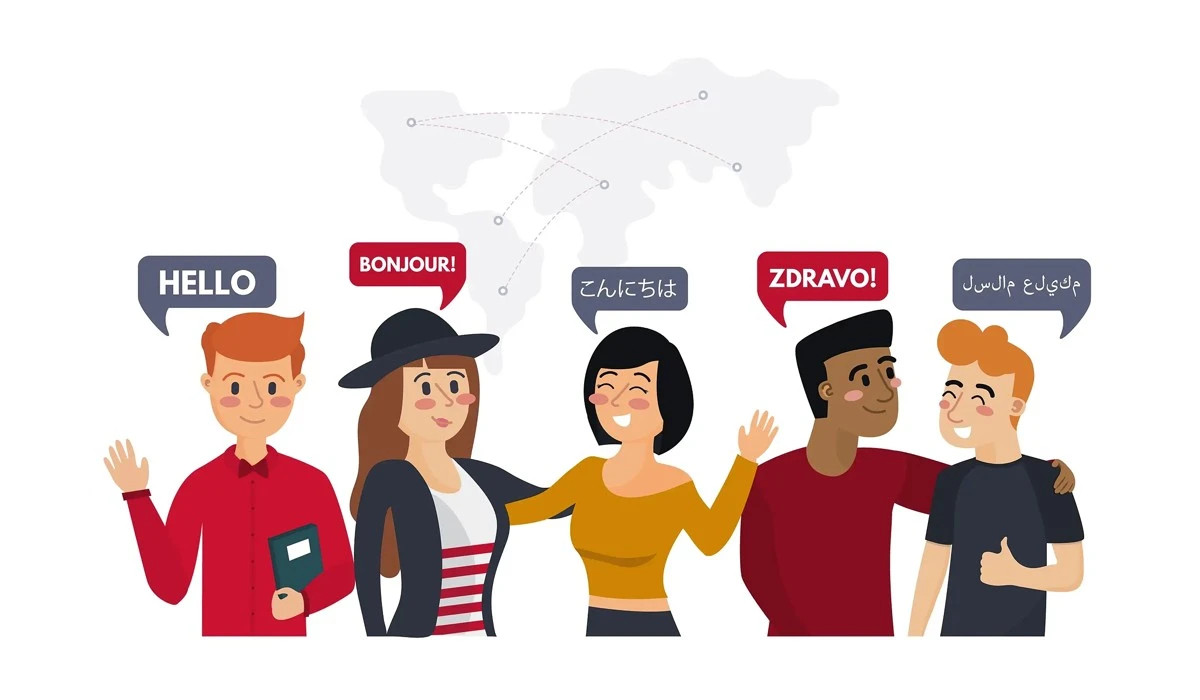
Intercultural Communication: Read The Room!
Imagine sitting in a sleek Tokyo boardroom. You present your proposal with confidence. Your counterparts nod and say "yes" throughout the entire presentation. You fly home convinced the deal is secure. Weeks pass without a signed contract. Eventually, you learn they actually rejected your offer during that very meeting. You missed the cues because you only listened to the words. You focused on the literal speech and ignored the context of the room.
This happens every day in global business. Most people think they communicate clearly when they actually speak past each other. A grasp of Intercultural Communication changes how you see these moments. This skill allows you to find the real meaning behind a polite smile or a long pause. When you learn to read the room, you stop guessing and start succeeding. Succeeding internationally takes greater effort than using a translation app. A strong grasp of how different people share information is necessary.
The Concealed Dimension of Intercultural Communication
Culture dictates how we process every piece of information. It acts like a background program on a computer. You do not see the code, but it determines how the screen looks. Every person carries this internal program from birth. It tells them when to speak and when to stay quiet. This internal guide shapes every part of Intercultural Communication.
If you only learn a foreign language, you only learn the raw data. You must also learn the rules that govern that data. According to a report by EBSCO Research Starters, anthropologist Edward T. Hall formalized this idea in 1976, using the terms high-context and low-context cultures to classify how different societies communicate. Hall realized that some people focus on the words while others focus on the setting. An article from EBSCO Research Starters indicates that countries like Germany, Switzerland, and the United States prioritize direct, verbal communication where clarity is vital.
Decoding High Context vs Low Context Cultures
We can divide the world into two main styles of sharing information. These styles affect everything from business deals to family dinners. Knowing which style your partner uses saves you months of frustration.
The Explicit Nature of Low Context Cultures
Research from United Language Group indicates that low-context cultures favor written communications because the message exists almost entirely within the words. People say exactly what they mean without hiding their intent. If a report contains errors, a manager in a low-context culture calls it "unacceptable."
These cultures prioritize transparency and productivity. They want to "get to the point" as quickly as possible. This style often evolves in places with diverse, migrant populations. When people do not share a long history, they must use explicit rules to function together. As explained by New Learning Online, these groups use "elaborated codes," which are speech codes that control access to meanings that are relatively independent of the immediate context.
The Implicit Web of High Context Cultures

Countries like Japan, China, and Saudi Arabia operate differently. EBSCO Research Starters highlights that in these high-context environments, much of the meaning is derived from the physical setting and relationship history, which can make understanding challenging for outsiders. Reading a transcript of the words alone is insufficient to understand the message. You must look at who sits at the head of the table. You must notice the length of the pauses between sentences.
In these societies, people use "restricted codes." This is a communicative shorthand developed over centuries of shared history. A "yes" might only mean "I am listening" rather than "I agree." This protects the social bond and keeps the peace within the group.
Navigating the Indirect Communication Style
Indirect communication prioritizes the relationship over the task. In many parts of the world, being too blunt creates social risk. It makes you look aggressive or unrefined. People in these cultures work hard to "save face." This means they avoid public embarrassment at all costs.
You might wonder, what is an example of high context communication? An example is when a manager suggests a proposal "might be difficult" rather than saying "no" to avoid hurting the relationship. This subtle cue signals a rejection while maintaining social harmony. Understanding this helps you avoid pushing for a deal that is already dead. Meanwhile, it keeps your reputation intact.
Stella Ting-Toomey’s Face-Negotiation Theory explains this well. High-context cultures view a direct "no" as a slap in the face. They use metaphors or stories to deliver bad news gently. This keeps the bond strong even when the business is tough. Ironically, trying to be "honest" in these cultures often makes you look untrustworthy.
Strategic Tools for Better Intercultural Communication
Achieving proficiency in Intercultural Communication requires active effort. You cannot simply wait for others to adapt to your style. You must develop a "Global Mindset" to bridge the gap.
The Power of Active Observation
Stop looking only at your presentation slides. Look at the people in the room. Observe the proxemics, or how people use physical space. Notice who speaks last in a discussion, as that person often holds the most power. These physical details tell you more than the spoken words.
According to the Cultural Atlas, silence in Japanese communication is often understood as reflecting politeness and respect. In places like Finland or Japan, a long pause means the other person is giving your words serious thought. If you interrupt that quietness, you signal impatience and a lack of respect. The Cultural Atlas also notes that interjections, known as aizuchi, are very common in Japanese communication and indicate to the speaker that their counterpart is actively listening rather than interrupting.
Adjusting Your Directness Dial
You must change your style based on your audience. If you speak to a German team, provide specific data and clear bullet points. They value "monochronic" time, where tasks happen one after the other in a linear path. They want facts, not a long story about your flight.
If you speak to a Brazilian or Arab team, share a meal first. As noted by Hall’s research on eCampusOntario, these groups often follow "polychronic" time, where people and relationships are more important than strict schedules. Being "on time" matters less than finishing a meaningful conversation. The development of Intercultural Communication skills means knowing when to speed up and when to slow down.
Bridging the Gap in Professional Settings
The workplace often highlights the friction between high context vs low context cultures. Emails cause the most frequent trouble. Research published in Legal Management points out that while a short, direct email appears productive to a professional in New York, it can seem cold or abrupt to colleagues in Mexico City or Seoul because directly introducing oneself without pleasantries is viewed negatively in those cultures.
People often ask, how do you communicate with low-context cultures? The best approach is to be as explicit as possible through the use of clear bullet points and the following up of verbal agreements with written summaries to ensure nothing is left to interpretation. This prevents confusion later on. In low-context settings, a contract marks the definitive end of a negotiation. In high-context settings, a contract is just the beginning of a long-term relationship.
Avoiding Common Pitfalls and Blunders
We often fall into the trap of "cultural myopia." This happens when we assume our way of talking is the only logical way. We label direct people as "rude" or indirect people as "dishonest." In reality, both sides simply follow different sets of rules.
Many professionals ask, can culture affect communication styles? Yes, culture dictates whether a person prioritizes the literal message or the basic relationship, which fundamentally changes how they interpret instructions and feedback. Misunderstanding these roots leads to lost deals and broken trust.
A report available through the SHRM website mentions that poor intercultural communication has led to a significant drop in productivity for global teams. Teams fail when members assume everyone shares their communication "software." You must recognize that your "common sense" is actually a cultural product.
Advancing Your Gaining proficiency in Intercultural Communication
Great leaders act as cultural translators. They do not just deliver information; they ensure the recipient receives the intended meaning. As noted in research from ScienceDirect, Cultural Intelligence (CQ) is defined as an individual’s ability to function and manage productively in culturally diverse settings.
Gaining proficiency in Intercultural Communication provides a massive competitive advantage. It makes you the person who can close deals in any city on earth. You become a bridge between different worlds. This skill leads to more innovative and profitable international collaborations. It turns every interaction into an opportunity for growth rather than a potential conflict.
Learning the Quiet Language
Words provide a starting point, but the real story happens in the context. You now have the tools to see what others miss. You understand that "yes" has many meanings and that quietness carries its own weight. Every global interaction offers a chance to practice these skills.
When you start hearing the culture behind the words, you access a new level of success. Stop just listening to the speech and start observing the environment. Intercultural Communication turns every conversation into a strategic win. Use these insights to navigate your next global meeting with confidence and clarity.
Recently Added
Categories
- Arts And Humanities
- Blog
- Business And Management
- Criminology
- Education
- Environment And Conservation
- Farming And Animal Care
- Geopolitics
- Lifestyle And Beauty
- Medicine And Science
- Mental Health
- Nutrition And Diet
- Religion And Spirituality
- Social Care And Health
- Sport And Fitness
- Technology
- Uncategorized
- Videos

