

Wildlife DNA Forensics End Major Poaching Run
A criminal’s best defense is often a simple lie about history. For decades, poachers caught with lion claws or teeth relied on a legal blind spot: they simply claimed the items were antiques or found naturally in the bush. Without a way to connect a specific bone to a specific animal, prosecutors hit a wall, and the suspects walked free. This legal loophole turned possession into a reliable safety net for the illegal trade. That safety net just broke in Zimbabwe.
In May 2024, a male lion disappeared from Hwange National Park, starting a chain of events that would change how courts handle environmental crime. Investigators did not rely solely on tracks or witness testimony. They utilized wildlife DNA forensics to shatter the standard excuses used by poaching syndicates. Matching seized body parts to a pre-existing genetic profile proved the items came from a lion alive just days earlier. This breakthrough bypasses the old "heirloom" defense and forces the evidence to speak for itself.
A Signal Goes Dark
Technology often fails exactly when human interference begins. The first sign of trouble in Hwange National Park appeared as a sudden lack of data rather than a gunshot. According to a report by AfricaOTR, authorities in Hwange National Park became concerned when a male lion's radio collar stopped working in May 2024. While equipment sometimes malfunctions, a complete signal loss often suggests the device was destroyed to hide a location. Rangers launched an immediate investigation. As detailed by Ozarab Media, investigators traced the device's final coordinates and discovered a snare with lion fur attached. The trail from the snare directed the team toward a nearby village. This mission evolved from a search for a missing animal into a race to find physical proof before suspects sold or hid it.
The "Found It" Defense
Possession of contraband rarely equals a conviction in court. When investigators searched the suspects' property, they found undeniable evidence: three sacks of meat, sixteen claws, and four teeth. In the past, this discovery would have meant very little legally. Defense lawyers frequently argue that such items are old ornaments or scavenged from an animal that died of natural causes. This creates "reasonable doubt." Without a way to link the claws to a fresh kill, the law treats the poacher as a scavenger rather than a killer. To secure a guilty verdict, the prosecution needed to prove these parts belonged to the specific male lion that vanished days earlier.
The Science of the Individual
Knowing the species is useless if you cannot identify the victim. Traditional testing could confirm that a bone belonged to a lion, but it could not say which lion. This general identification left room for the "antique" lie. The breakthrough came when the team applied wildlife DNA forensics to the seized parts. A TRAFFIC report explains that the genetic profile from the claws and meat matched exactly with biological material collected from the lion before its death. This confirmed the biological material did not come from a random carcass or an old trinket.
How does DNA convict poachers?
Wildlife DNA forensics matches seized body parts to a specific animal's unique genetic profile stored in a database, proving exactly when and where the animal lived.
The Eight-Year Preparation
Success in the courtroom often relies on work finished years before the crime occurs. This conviction was not a lucky break; it was the result of a massive data project started eight years ago. According to TRAFFIC, the University of Edinburgh developed the specific SNP DNA profiling technique used in the case. The Victoria Falls Wildlife Trust (VFWT) and other groups spent nearly a decade building the genetic database necessary for this comparison. As reported by 2OceansVibe, the Victoria Falls Wildlife Trust (VFWT) received approximately £250,000 from the UK People’s Postcode Lottery over eight years to build the necessary genetic database. Without this pre-existing map of the population, the blood sample from the Hwange lion would have had nothing to match against.
A New Legal Standard
Courts change their behavior only when presented with undeniable facts. The presentation of the DNA evidence on the tenth day of the trial removed any space for the defense to maneuver. The matching profiles served as scientific proof that the suspects possessed parts of a recently protected animal. The same TRAFFIC report notes that the judge convicted both men, handing down 24-month prison sentences. While the lion was valued at $20,000, the legal precedent is worth far more. TRAFFIC highlighted this as a global first, where DNA forensics successfully secured a conviction by linking a seized product to a specific individual animal. The verdict signals that the "antique" excuse is no longer a valid shield.
From Survival to Syndicates
Motives for killing wildlife have shifted from protecting livestock to fueling an international industry. While some lions are killed in retaliation for attacking cattle, a growing number are targeted specifically for their body parts. Organized crime groups have moved into the lion trade as a way to supply the Asian market. Poachers now harvest bones and teeth to sell as substitutes for tiger products in traditional medicine and decor. This demand drives a transition from solitary hunters to sophisticated networks. These gangs link the lion trade to established routes for rhino horn and ivory trafficking.
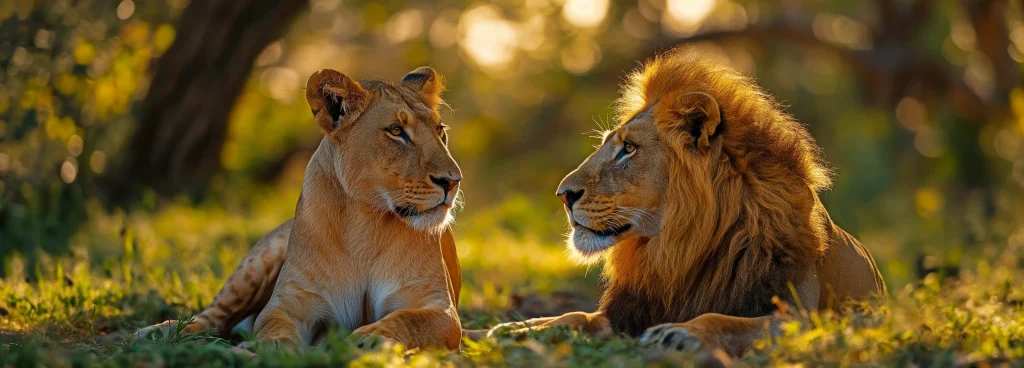
Why are lion bones poached?
Criminal syndicates process and sell lion bones in Asia as cheaper substitutes for rare tiger parts used in traditional medicine and luxury decor.
The Chemical Trap
Efficiency in killing often leads to total environmental destruction. Poachers have moved away from loud rifles and toward quiet, mass-casualty methods like poisoning. Poachers lace a giraffe carcass with toxic chemicals to wipe out an entire pride of lions with zero risk of a gunfight. This method destroys the target and surrounding wildlife alike. Research published in the Wiley Online Library documents a 2019 incident where a single poisoned carcass killed four lions, along with 70 white-backed vultures, a jackal, and an eagle. The damage spreads through the food chain, killing any animal that feeds on the dead. This approach indicates a high level of planning and disregard for the broader terrain.
Crime Scene Hygiene
A laboratory match is impossible if the evidence is ruined in the dirt. The accuracy of wildlife DNA forensics depends entirely on how rangers handle the scene the moment they arrive. If a first responder touches a sample without gloves or mixes items, the DNA becomes contaminated. TRAFFIC emphasizes that proper training for frontline officers strengthens the chain of custody, ensuring forensic evidence is not compromised by improper handling. Defense attorneys know to attack the "chain of custody." If they can prove the sample was mishandled, the DNA evidence gets thrown out. Training rangers to treat the bush like a crime scene is just as important as the lab work itself.
What ruins wildlife crime scenes?
Improper handling by first responders often contaminates genetic samples and breaks the legal chain of custody, making the evidence useless in court.
The Collapse of the Population
Current trends point toward a future where wild spaces fall quiet. The wild lion population now stands between 20,000 and 30,000. This is a staggering drop from the 200,000 that roamed the continent a century ago. In just the last 20 years, the world has lost one-third of its lions. They are now extinct in 80% of their historic range. The pressure comes from all sides: habitat loss, human conflict, and now, the targeted extraction of body parts for trade.
Conclusion: Closing the Loophole
The Hwange verdict proves that the era of vague excuses is ending. Criminals can no longer rely on the gap between possession and proof of origin. Wildlife DNA forensics has turned biological data into a witness that cannot be intimidated or confused. Linking a specific bone to a specific animal removes the safety net that allowed poachers to hide in plain sight. This case demonstrates that when field skills, academic research, and legal persistence align, even the most sophisticated smuggling networks can be dismantled. The technology identifies the dead while protecting the living by ensuring that the next time a collar signal dies, the law will be ready to speak.
Recently Added
Categories
- Arts And Humanities
- Blog
- Business And Management
- Criminology
- Education
- Environment And Conservation
- Farming And Animal Care
- Geopolitics
- Lifestyle And Beauty
- Medicine And Science
- Mental Health
- Nutrition And Diet
- Religion And Spirituality
- Social Care And Health
- Sport And Fitness
- Technology
- Uncategorized
- Videos

