
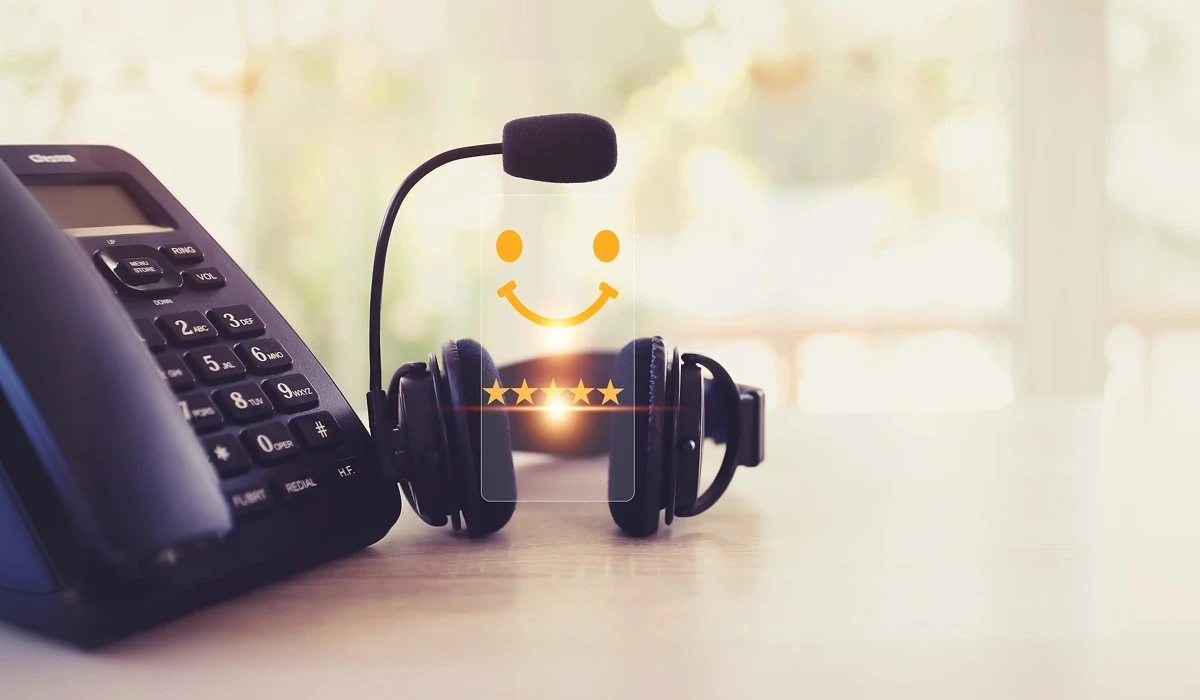
Double Retention Rates With Positive Customer Care
Most companies spend their entire budget chasing strangers. They pour capital into digital ads and cold calls to fill a bucket that has holes in the bottom. While leadership stares at acquisition charts, the actual money walks out the back door because the front-line staff ignores the emotional state of current buyers. This neglect creates a situation where you pay to replace customers you already have.
True growth happens when you stop looking for new faces and start looking at the people already paying you. When a company ignores positive customer care, it effectively taxes its own future. Profitability comes from the fourth, fifth, and tenth interactions. You cannot build a stable house on a foundation of one-time transactions. Real wealth sits in the relationships you nurture today.
Success requires a shift in focus. Research from Bain & Company shows that increasing retention by just 5% can boost profits by 25% to 95%. You must view your current client list as your most valuable asset. Every interaction either strengthens that asset or devalues it.
Why Positive Customer Care is Your Secret Growth Engine
Many leaders treat support as a cost to minimize. They see a help desk as a place where money disappears. In reality, every support ticket offers a chance to secure a lifelong advocate. You earn growth when your service makes people want to talk about you.
Shifting from Reactive to Proactive Support
Reactive support means waiting for the phone to ring. When a customer finally reaches out, frustration has usually already set in. You must act before the customer finds a reason to complain. Proactive outreach proves that you value the relationship more than the transaction.
Identify potential friction points in the user path. Reach out with a tutorial or a check-in call before they get stuck. Does positive customer care increase loyalty? Yes, studies consistently show that customers who experience positive interactions are significantly more likely to remain loyal and ignore competitor offers.
The Psychological Effect of Feeling Valued
People stay where they feel respected. Nobel laureate Daniel Kahneman developed the Peak-End Rule, which explains that people remember the most intense point of an experience and the way it ended. If you end every call on a high note, the customer remembers the entire brand fondly.
A human connection outweighs a technical fix every time. Even when a product fails, an empathetic response can save the relationship. Research published by the National Center for Biotechnology Information indicates that successful service recovery can lead to higher satisfaction levels than if the service had been performed correctly initially.
Building a Framework for Service Excellence
Consistency creates trust. You cannot leave the quality of your client interactions to chance or the mood of an employee. You need a rigorous structure that ensures every person receives the same high level of attention.
Defining Your Unique Service Standards
Establish non-negotiable benchmarks for your team. According to a guide from Service Performance, you should use the SERVQUAL model to direct your efforts, as it focuses on the appearance of facilities, reliability, assurance, empathy, and responsiveness. When you meet these five criteria, you achieve service excellence in the eyes of your client.
Define what a "win" looks like for every department. As noted by the Disney Institute, staff follow a strict priority list of safety, courtesy, show, and productivity to aid decision-making. They never sacrifice courtesy for the sake of a fast transaction. Your team must know exactly which values take priority during a busy shift.
Training Teams for High-EQ Interactions
While technical skills are important, emotional intelligence keeps customers coming back. Your team must practice active listening. This means hearing the frustration behind the words and acknowledging the human on the other side.
Empathy is a skill you can teach. Use role-playing exercises to help staff handle difficult conversations. As stated by the Ritz-Carlton Leadership Center, employees use a sincere greeting and a warm goodbye to frame every interaction. These small social cues signal that the company views the customer as a guest rather than a number.
Proactive Strategies for Positive Customer Care
Most businesses react to the market. Winners lead the market through their influence on how customers feel. You must implement strategies that actively build a wall around your client base.
Personalization at Scale
Generic emails end up in the trash. Use your CRM data to speak to the specific needs of each client. McKinsey reports that 71% of consumers expect personalized interactions. They want you to remember their preferences and their history with your brand.
Address your clients by name and reference their past purchases. Mention their specific goals during your check-ins. This level of detail makes it harder for them to leave for a competitor who sees them as a blank slate. Personalization directly fuels client retention by creating a sense of belonging.
The Power of the Unexpected "Extra"
Surprise your clients with value they didn't ask for. This could be a handwritten note, a free month of service, or an exclusive piece of content. These gestures create a "WOW" moment that disrupts the standard business-as-usual feeling.
How do you improve client retention? You can improve retention through a focus on consistent value delivery and the maintenance of open, transparent communication channels with your clients. A report from Business Insider highlights that Zappos once kept a customer on a support call for over ten hours to ensure they felt fully assisted. That level of dedication creates a story the customer tells for years.
Metrics That Matter: Measuring Retention Success
You cannot manage what you do not measure. You must track specific data points to see if your efforts actually change behavior. If the numbers don't move, your strategy needs an adjustment.
Tracking Churn and Customer Lifetime Value (LTV)
Investopedia defines churn as the rate at which customers or subscribers end their relationship with a business over a specific time frame. It is the most direct indicator of your service quality. High churn means your positive customer care efforts are failing to land.
Wall Street Prep recommends comparing your Customer Lifetime Value to your Acquisition Cost to measure the relationship between value and spend. According to Chargebee, a healthy business usually sees a ratio above three, whereas a ratio below one indicates issues with keeping customers. If your LTV is low, you are running on a treadmill and going nowhere. Focus on keeping people longer to increase the total value of your business.
Net Promoter Score (NPS) and Feedback Loops

Bain & Company explains that the Net Promoter Score asks how likely a person is to recommend a product or company to a friend. The firm notes that this metric separates customers into three groups, promoters, passives, and detractors, to identify fans and critics. Use the feedback from your detractors to fix the systemic issues in your service.
Regularly poll your clients using the Customer Effort Score. As described by Qualtrics, the Customer Effort Score is a metric that measures the amount of work a customer must perform to resolve an issue or complete a purchase. Research from Gartner found that 96% of customers who have a high-effort experience become disloyal. Simplify your processes to keep your clients happy and quiet.
Using Service Excellence for Long-Term Partnerships
While a vendor provides a product, a partner provides a result. You want your clients to view you as an extension of their own team. This shift makes your service an essential part of their life or business.
Moving from Vendor to Strategic Partner
Share your expertise freely. If you see a client struggling in an area where you have knowledge, offer advice without a price tag. This builds a debt of gratitude and establishes your authority.
When you contribute to their success, they cannot afford to lose you. Proactively send them industry reports or news that affects their bottom line. This level of service excellence shows you are invested in their long-term growth rather than focusing only on your own monthly invoice.
The Role of Transparency in Building Brand Trust
Mistakes will happen. When they do, own them immediately. Transparency builds more trust than a perfect record ever could. Clients respect a company that admits a fault and explains how they will fix it.
What is the best way to handle customer complaints? The most effective method is to acknowledge the issue immediately with empathy and provide a clear, time-bound resolution plan. Honest communication during a crisis proves that you value the truth over your ego. This honesty often leads to higher client retention because the client knows they can trust your word.
Overcoming Common Barriers to Quality Care
Even the best teams face obstacles. Burnout, scaling issues, and difficult personalities can all degrade the quality of your service. You must prepare for these challenges before they influence your clients.
Managing High-Stress Client Situations
De-escalation is an art form. When a client is shouting, they are usually expressing a fear of loss or failure. Your team must remain calm and focused on the solution. Avoid getting defensive, as this only fuels the fire.
Use a standard procedure for complaints. Listen without interrupting, validate their feelings, and then move to a resolution. Turning a furious customer into a calm one is the ultimate test of positive customer care. Those who feel supported during a crisis often become your most loyal advocates.
Maintaining Quality Standards During Rapid Scaling
Growth often kills quality. When you add more clients, your team might feel overwhelmed. You must automate the routine tasks so your staff can focus on the human interactions that require empathy.
Use technology to handle simple password resets or tracking updates. This frees up your best people to handle difficult problems. Never let your service excellence slide just because you are busy. Hire ahead of the curve to ensure your support levels stay high as the company grows.
Designing a Sustainable Retention Roadmap
Retention does not happen by accident. You must design a path that keeps the client engaged from the first day to the fifth year. This requires a long-term vision and regular touchpoints.
Rewarding Loyalty Through Engagement Programs
Create a VIP experience for your longest-tenured clients. Give them early access to new features or invite them to exclusive events. People love to feel like they belong to an elite group.
The practice of rewarding loyalty is cheaper than buying new leads. A simple loyalty program can increase retention by double digits. When customers feel like they are earning something through their stay, they are less likely to look at a competitor's offer.
Quarterly Business Reviews (QBRs) that Prove ROI
For B2B companies, the QBR is a vital tool. Salesforce suggests using this time to show the client exactly how much money or time you have saved them through the highlighting of key metrics and big wins. Remind them of the value you provide on a regular basis.
Focus on their future goals during these meetings. Ask them what they want to achieve in the next six months. This keeps the relationship forward-looking and ensures future client retention. It turns a service into a strategy.
The Long-Term ROI of Positive Customer Care
Winning in business requires more than a secret formula or a complicated trick, specifically a level of respect for current customers that competitors refuse to provide. When you commit to service excellence, you stop fighting for every dollar and start building a community that supports your brand.
Real profit lives in the long-term relationship. Every time you choose empathy over productivity, you make a deposit into your company’s future. Audit your current support culture and look for the gaps where you have lost the human touch. Fix those gaps, and you will see your client retention numbers climb.
Ultimately, positive customer care is the only sustainable competitive advantage. Competitors can copy your features and undercut your price, but they cannot easily replicate the way you make your clients feel. Invest in your people, listen to your customers, and build a business that people never want to leave.
Recently Added
Categories
- Arts And Humanities
- Blog
- Business And Management
- Criminology
- Education
- Environment And Conservation
- Farming And Animal Care
- Geopolitics
- Lifestyle And Beauty
- Medicine And Science
- Mental Health
- Nutrition And Diet
- Religion And Spirituality
- Social Care And Health
- Sport And Fitness
- Technology
- Uncategorized
- Videos

