
Why Your Money Bouquet Could Land You In Jail
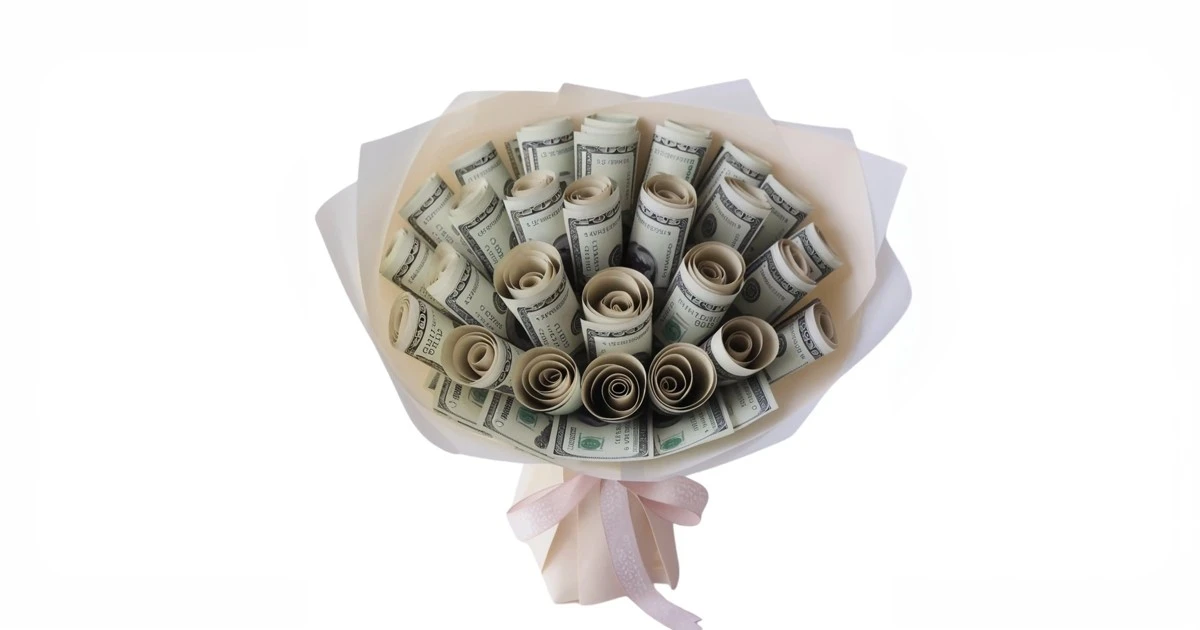
You pin a thousand-shilling note to a rose stem to impress your partner, but you actually commit vandalism against your own economy. The trend of folding, pinning, and gluing banknotes into floral arrangements has taken over Valentine’s Day in Kenya. It looks like a grand romantic gesture. In reality, it forces the Central Bank of Kenya (CBK) to spend millions replacing damaged currency.
According to a press release by the Central Bank of Kenya (CBK), there is a growing trend of using banknotes for decorations, prompting a strict warning just days before the holiday. As reported by Africa News, officials threatened imprisonment of up to seven years for anyone tampering with legal tender. This crackdown reveals a conflict between modern social pressure and national economic stability. A money bouquet solves the problem of what to buy a picky partner. However, it creates a massive headache for the banking system. Every stapled note jams an ATM or gets rejected by a counting machine. This article explores how a viral gift trend turned into a crime scene.
The Price of Viral Love
Social media turns private affection into a public bidding war. The rise of the money bouquet comes directly from influencers and celebrities showing off cash instead of petals. A red rose dies in three days, but a thousand shillings pays the electric bill. This logic drives a major shift in gift-giving culture.
Florists report handling between 15 and 20 orders daily leading up to Valentine’s Day. Angela Muthoni, a florist at the Gift and Flowers shop in central Nairobi, states via MyJoyOnline that the cash value in these arrangements ranges from 1,000 KES ($8) all the way to 1,000,000 KES. The sheer volume of currency leaving circulation to sit in a vase is staggering. People see these images online and feel inadequate with a standard box of chocolates. Student Austin notes that social pressure drives this behavior. The focus shifts from the sentiment of the relationship to the monetary value of the photo posted on Instagram. Materialism eclipses the romance. The gift acts as a receipt of affection instead of a symbol.
When Romance Meets Regulation
Banks usually ignore bad taste, but they strictly punish wastefulness. The Central Bank of Kenya issued an official warning on the Monday before Valentine’s Day, and as reported by The Star, while the bank acknowledges that cash gifts are acceptable, they emphasized that currency must not be defaced. They did not ban the act of gifting cash. They banned the method of delivery. The CBK opposes any physical alteration of the note.
Florists often use glue, wires, and staples to force paper bills into the shape of rosebuds. This process harms the structural condition of the note. The bank views this as a direct attack on the currency's lifespan. Is it illegal to spray money in Kenya? Yes, laws prohibiting the defacement of currency apply to spraying, trampling, or stapling notes, similar to crackdowns seen in Nigeria and Ghana. The CBK’s stance is clear. You can give money, but you cannot destroy it in the process. This warning disrupted the plans of hundreds of florists and lovers expecting a cash-filled holiday.
Why a Folded Note is a Broken Note
A stapler instantly turns a valuable financial asset into trash. The core issue for the Central Bank concerns the machinery rather than the romance. Modern banking relies on high-speed counting machines and ATMs to circulate cash. These machines demand smooth, crisp notes.
A bill from a money bouquet often comes back to the bank full of holes, sticky residue, or permanent creases. The machine rejects it. Humans must then sort these damaged notes manually. The bank withdraws the note from circulation permanently. This forces the government to print a replacement. The cost of printing new money falls on the taxpayer. The romantic gesture of one couple becomes a financial burden for the entire country. The CBK statement highlighted that adhesives and pins compromise the note’s usability. Premature replacement costs money that could go elsewhere.
The Confusion Over Punishment
Strict laws lose their power when the penalty is unclear. The consequences for ignoring the CBK warning vary wildly depending on which source you believe. This creates a dangerous game of roulette for florists and gifters.
Africa News reports that the penalty for damaging currency reaches up to seven years in jail. This severe sentence would terrify anyone out of making a money bouquet. However, other sources cite the Penal Code directly, suggesting a much lighter sentence of three months imprisonment or a fine of 2,000 KES. The gap between three months and seven years is massive. This confusion leaves the public unsure of the real risk. A florist might risk a small fine to satisfy a high-paying customer. They would likely refuse if they knew it meant seven years behind bars. This contradiction in legal messaging complicates enforcement.
Kenya’s Flower Export Paradox
The world demands Kenya’s roses, yet Kenyans increasingly prefer the paper used to buy them. Data from the OEC and Xinhua indicates that Kenya holds the title of a top global producer of cut flowers, with the industry generating roughly $780 million to $835 million in value as of 2024. A report by Colead and KenTrade adds that flowers rank as the country's third-largest export, sitting right behind tea and petroleum.
The irony is sharp. Kenya grows the very symbol of romance that the rest of the world covets. Yet, inside the country, the cultural preference is shifting away from these natural blooms. Economist Ramogi argues that flowers are often viewed as a Western concept. The local population leans toward practical resources. A money bouquet bridges the gap. It mimics the Western tradition of flowers but delivers the local necessity of cash. The economy relies on exporting nature, while the locals import the concept of cash gifting. This disconnect highlights a clash between national identity and economic reality.

Social Pressure and Decision Fatigue
Giving cash often stems from laziness rather than generosity. Choosing the perfect gift requires knowing your partner intimately. It takes time, effort, and risk. Cash removes the risk.
Muthoni, a florist, observes that cash gifting reduces stress for the giver. It eliminates "decision fatigue." You do not have to worry if she likes the perfume or if the dress fits. You simply hand over the value and let her decide. However, this convenience comes with a social cost. Student Nambwaya argues that monetary expectations harm relationships. It introduces a transactional element to dating. If a partner expects a money bouquet, a simple heartfelt letter feels like a failure. This financial strain creates tension. The focus moves from "I love you" to "I can afford you."
The Gender Divide
The ban sparked different reactions from men and women. Public sentiment shows a distinct split. Many women expressed disappointment. They expected the cash. The ban ruined the anticipation of a viral social media moment. Men, on the other hand, largely felt relieved. The regulation gave them a valid excuse to avoid an expensive trend. They can now return to traditional, cheaper floral options without looking stingy. The law accidentally acted as a shield for men's wallets.
A Tale of Two Currencies
In some economies, a crisp paper bill is rarer and more precious than the rose itself. The trend of using cash for bouquets is not unique to Kenya. Zimbabwe faces a similar phenomenon, but with much higher stakes due to currency instability.
Zimbabweans primarily use the US Dollar for these arrangements. The demand for "clean" notes is so high that it spawned a black market. "War veterans" and street traders charge a commission to swap dirty bills for crisp ones suitable for gifting. A user might pay a $1 commission for every $100 just to get clean notes. Why is the US dollar used in bouquets? Zimbabweans prefer US dollars because the local currency is unstable and foreign currency retains its value better over time. A money bouquet there represents survival as much as romance.
The cost factors also differ. In Zimbabwe, a cash bouquet containing $10 might actually be cheaper than buying a fresh bouquet of roses, which can cost $40. In this context, cash is the budget option. The florist in Zimbabwe notes that currency adds intensity to the gesture. It implies financial survival. The practicality outweighs the luxury of flowers that will wilt.
Adaptation and Evasion
Business owners always find a path around the wall. Kenyan florists did not stop making money bouquets after the ban; they just changed their engineering. The demand remained too high to ignore.
To avoid the "defacement" charge, florists started using transparent plastic pockets. They slide the note inside the plastic and then attach the plastic to the stem. The glue and staples never touch the currency. This loophole allows them to continue selling the product while technically obeying the law. Others have switched to using foreign currency, like the US Dollar, to bypass local laws regarding the Kenyan Shilling. The market adapts faster than the regulator. The desire to display wealth creates new methods of display as soon as the old ones become illegal.
Sustainable Alternatives to Cash
Permanent affection sometimes resembles recycled scrap instead of wilting currency. As the backlash against fresh flowers and damaged notes grows, other art forms emerge.
In Zimbabwe, artists like Simbi create bouquets from scrap metal and recycled car parts. These items offer permanence. A fresh flower ends up in a landfill within days. A metal rose lasts forever. Artisan Charlton argues that recycled art tells a better story. It transforms waste into beauty. This contrasts sharply with the money bouquet, which transforms value into waste. The metal alternative supports sustainability. It creates a keepsake without wrecking the financial system. What are the environmental effects of flower gifts? Fresh cut flowers generate significant landfill waste and carbon emissions from transport, making recycled art a greener alternative.
The Real Cost of Romance
The money bouquet trend exposes a deep conflict between personal desires and public responsibility. People want to show love through value, but their method destroys the very value they try to give. The Central Bank of Kenya fights to protect the tools of the economy. Florists and lovers fight to express affection in a way that feels modern and substantial.
The solution likely lies in the middle. The shift to transparent pockets shows that the trend will survive the ban. However, the warning serves as a necessary reminder. Money functions as a tool for trade rather than a craft supply. When you take a note out of circulation to glue it into a flower, you force the taxpayer to foot the bill for your romance. The cost of fixing the mess left behind exceeds the value of the cash on the stem. The primary keyword for this Valentine’s season should be "responsibility," alongside money bouquet. Love might be blind, but the banking system sees everything.
Recently Added
Categories
- Arts And Humanities
- Blog
- Business And Management
- Criminology
- Education
- Environment And Conservation
- Farming And Animal Care
- Geopolitics
- Lifestyle And Beauty
- Medicine And Science
- Mental Health
- Nutrition And Diet
- Religion And Spirituality
- Social Care And Health
- Sport And Fitness
- Technology
- Uncategorized
- Videos

