
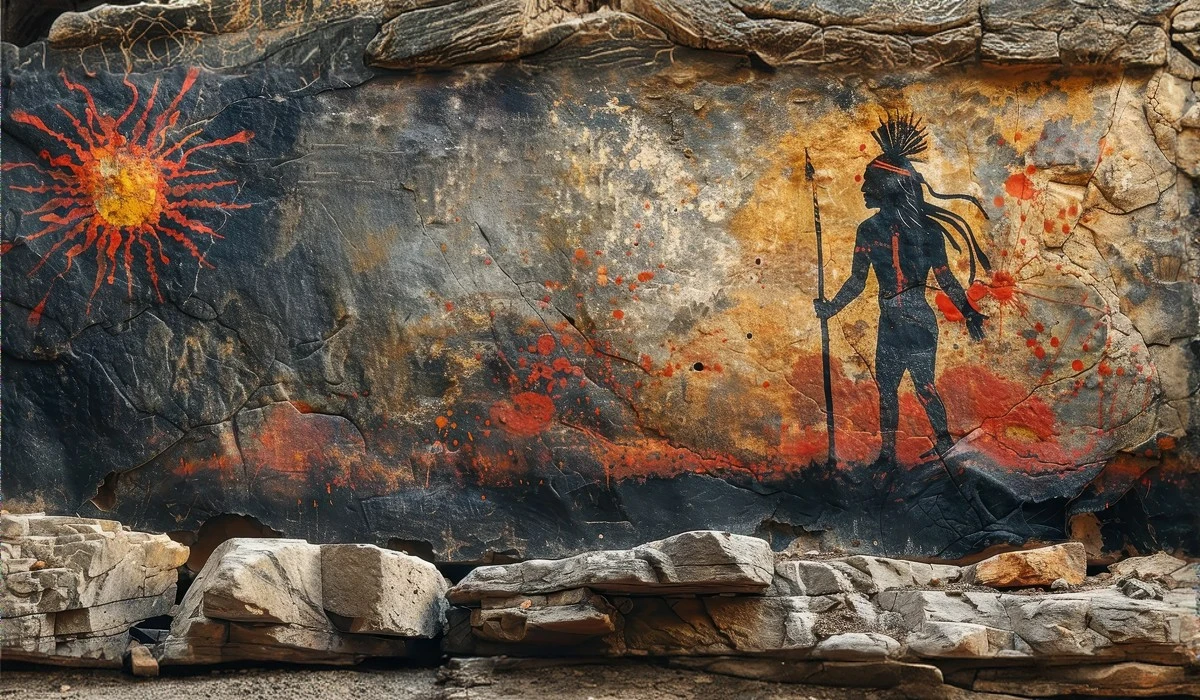
Oldest Cave Art Found In Indonesia Is 67k Years
We often assume that civilization begins with buildings, laws, or farming. We act as if creativity is a luxury that only arrives once survival is guaranteed. The reality differs. The urge to leave a mark predates our ability to build permanent homes. Humans figured out how to paint visions on walls long before they figured out how to sow seeds. A massive find in Indonesia recently proved this. Archaeologists unearthed on Muna Island, the world's oldest cave art. This finding forces us to rethink the timeline of human intelligence.
Nature published that for decades, the academic world looked to Europe as the origin of artistic thought, believing the creative spark ignited there around 40,800 years ago. This new evidence shifts focus. The same Nature report highlights that red hand stencils in the limestone karst of Sulawesi provide a minimum 67,800 years of age. This date precedes previous European records by thousands of years. It tells us that the earliest people who migrated across Asia lived as storytellers who successfully moved through harsh environments. These findings report that the capacity for detailed, symbolic thought is an innate human trait, born in Africa and carried across the globe.
Shattering the European Myth
Textbooks have long placed the birth of human imagination in the frozen caves of Europe Ice Age, but geography tells a different story. The academic world spent the 1990s focused on a "creative boom" in countries like Spain and France. They called it a "human revolution." The theory stated that humans suddenly became smart and artistic around 40,000 years ago in Europe. The Muna Island findings break that timeline. Adam Brumm from Griffith University argues that this Eurocentric model is now invalid.
The creative "awakening" happened across the globe well before the West. According to the Nature report, the Muna Island's hand stencil is at least 67,800 years old. That is roughly 28,000 years older than previous findings in the nearby Sulawesi region. It also beats the controversial Neanderthal art in Spain by about 1,100 years. This gap represents a rewriting of history, not a margin of error. We can no longer claim Europe was the center of the artistic world. The evidence shows that people in Southeast Asia created detailed images while Europe was still largely frozen.
The Science Behind the Date
Rock paintings do not rot, which makes them nearly impossible to date directly. The Nature study explains that standard radiocarbon dating fails on red ochre pigment because it lacks organic carbon. Scientists instead derived earliest confirmed age for the images when they dated calcite materials that settled directly atop the artwork. The study clarifies that this technique establishes an earliest confirmed age by dating the rock layer covering the pigment. This means the art is as old as the mineral layer. When the laser analyzed the "cave popcorn" covering the Muna Island stencil, the result showed the earliest confirmed age of 67,800 years. The actual painting likely dates back thousands of years further. This precise technique confirms the status of this cave as the oldest currently known to science.
Reading the Red Hand Stencils
A handprint looks like a simple signature, but these artists turned their identities into something different. The stencils present in Liang Metanduno represent careful, intentional creations. A report from Reuters states that the artist made the image when they blew pigment blown across a hand resting on the stone surface. They spat the pigment from their mouths to form a mist. The process creates a "negative" image where the rock around the hand is red, while the hand itself remains the color of the stone.
However, the fingers in these stencils do not look like normal human hands. They appear thin, elongated, and tapered. Maxime Aubert told Reuters that the artists carefully reshaped the fingertips so that it looked pointed. Research suggests this represented a specific cultural code. The hands resemble animal claws. Adam Brumm suggests this "claw motif" signals an elaborate identity and a spiritual connection between the human and animal worlds. The artists intentionally manipulated reality to convey a specific message rather than simply recording their presence. This finding identifies the art as a piece of graphic communication.
Rewriting the Migration Map
Early humans treated oceans as highways rather than barriers. Research published by the National Center for Biotechnology Information (NCBI) notes that Muna Island and Sulawesi sit in the Wallacea zone, a group of islands that never connected to continental shelves and required sea crossings to reach. This presence here means humans settled on these islands 67,800 years ago.
The Nature study identifies this find as the farthest-east-dated rock art in Wallacea and places it along the migration route northern to the ancient Sahul continent. This location supports traces of human activity colonizing Sahul—the continent combining Australia, Tasmania, and New Guinea—by approximately 65,000 years ago. As Helen Farr from the University of Southampton told Reuters, this find supports genetic research showing an entry into Australia about 60,000 years ago. It proves seafaring technology was an essential part of the human toolkit early in our history.
A Cognitive Leap in the Jungle
Drawing what you see is observation, but drawing what you imagine is the spark of humanity. The creation of the claw-hand motif represents a massive jump in brain power. A hand that looks like a claw provides symbolic evidence. It requires the artist to hold an abstract concept in their mind and execute it in the physical world. This supports the theory that symbolic thinking is innate. Humans carried this capacity with them out of Africa rather than learning it in Europe. Maxime Aubert argues that this symbolic capacity existed before the exodus from Africa.
Humans created art the moment they stepped into new lands. The Reuters report notes that the stencil fingertips were deliberately altered to resemble animal claws, which connects the art to "therianthropes," or figures that combine human and animal traits. We see these in later art, like the 51,200-year-old narrative pig painting found nearby. The Muna stencil shows that this tradition of blending human and animal identities started very early. The oldest cave art proves that the human mind was already capable of advanced fiction and spiritual thought during the Ice Age.
The Muna Island Connection
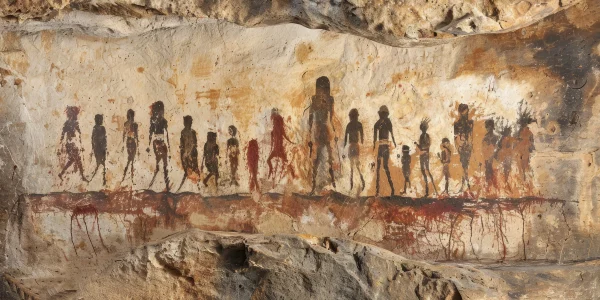
Isolation usually creates unique habits, yet these islands shared a visual language. Muna Island is a satellite island off the coast of Sulawesi. Finding the claw motif here proves that this artistic style was a widespread cultural tradition rather than an experiment by one tribe. The artists on Muna and Sulawesi shared the same techniques. They used red ochre and the negative stencil method. They shared the specific desire to reshape their fingers into claws. This implies a shared culture that spanned across the water gaps. Oktaviana points out that this supports population flow. People moved and communicated across these islands, carrying their art and beliefs with them. This cave art provides evidence of a connected society living in the tropical karst terrain. They were likely the earliest ancestors of Aboriginal Australians, moving through the island chain and leaving their mark.
Comparison with Neanderthal Art
We want to be the only storytellers in history, but the evidence is getting messy. There has always been a long debate about whether Neanderthals made art. A cave in Maltravieso, Spain, contains red markings that date to roughly 66,700 years ago. Some scientists attribute this to Neanderthals because modern humans had not reached Europe yet. Nonetheless, the Spain dating remains controversial. The margins of error are high, and the origin of the art is debated. In contrast, the Muna Island find is definitively Homo sapiens.
The context, the style, and the skeletal evidence in this region all point to humans of recent era. Furthermore, Neanderthal art tends to be static, involving simple lines or dots. The Muna art involves elaborate stenciling and physical alteration of the image. Adam Brumm notes that this finger alteration represents a human desire to change how others perceive us. While Neanderthals might have dabbled in pigment, the art with clear symbolic intent belongs to our species. We brought a different level of obsession to the cave walls.
Questions People Ask
Many people wonder about the specifics of these ancient finds. Archaeologists found the oldest confirmed cave in the Liang Metanduno cave in Indonesia. The age of these paintings often confuses people used to historical records. Scientists dated the stencil to at least 67,800 years old. There is also curiosity about who else might have painted in caves. Some evidence suggests Neanderthals made markings around 65,000 years ago in Spain, but the findings remain controversial compared to the Indonesian finds.
The Growth of Technique
Progress is rarely a straight line, but in Sulawesi, we see the skills sharpening over millennia. The Muna find is the anchor for a massive timeline of art. We see the simple hand stencils at 67,800 years, followed by narrative scenes. The Nature study concludes that Sulawesi hosted a vibrant artistic culture during the Late Pleistocene for at least 35,000 years.
A painting of human figures and a pig in Sulawesi dates to 51,200 years ago, while a hunting scene dates to 44,000 years ago. This shows clear progression. The artists started with stencils and symbols and moved toward storytelling over roughly 15,000 to 20,000 years. They began to draw involved scenes of interaction. This creates a steady lineage of art. Later Austronesian cultures added their own art—boats, warriors, and black pigments—on the same panels thousands of years later. The cave art was the first chapter in a library that humans kept adding to for millennia.
The Significance of "Cave Popcorn"
Nature often destroys history, but sometimes it accidentally preserves it in a vault of stone. The Nature report notes that water seeps through Sulawesi's limestone caves and forms calcium carbonate layers, or "cave popcorn," which seal the art. These mineral deposits act as a time capsule. Without this popcorn, we would never know the art's true timespan. The environment is perfect for this. Water carries dissolved minerals and leaves them behind when it evaporates on the wall.
This process is slow and takes thousands of years to build up a measurable layer. This geological luck is the only reason we found the cave art here. In other parts of the world, paintings might have washed away or faded. In Sulawesi, the land itself sealed the art. Maxime Aubert’s use of laser ablation allows us to peek inside that seal without destroying the painting. It is a perfect marriage of ancient geology and modern technology.
A Global Phenomenon
We usually think of culture as local, but the urge to create appears global. The find in Indonesia parallels the findings in Europe, but with a massive time gap. It proves that humans did not need a cold climate or the struggle of the Ice Age to spark their imagination. They created art in the tropical heat of the equator while island hopping. This universality suggests that art is a reaction to being human rather than a reaction to the environment. This shows that as soon as we had the tools, we used them to express ourselves. This challenges the idea that culture spreads from a single center. Instead, it suggests that culture blooms wherever humans are. The potential for undiscovered art on other islands between Flores and Sulawesi is high. We have only scratched the surface of this region.
The Future of Ancient Finds
The jungle eats evidence faster than caves preserve it, creating a race against time. The limestone caves in Indonesia are deteriorating. The Nature report warns that climate change and industrial activity threaten these ancient sites as rock surfaces exfoliate and destroy the art. When the rock peels, the art goes with it. Archaeologists like Oktaviana are racing to document these sites. There are likely even older paintings waiting to be found. The Southern Route of migration—from Sumatra to Java—might hold similar treasures. We just haven't looked hard enough yet. Finding the oldest cave art serves as a wake-up call. It tells us that human history goes further and reaches wider than previously believed. It also warns us that this history is fragile. We are losing the pages of our own story just as we are learning how to read them.
The Legacy of the Oldest Cave Art
The red hand on Muna records a specific person and serves as a testament to the durability of the human spirit. It proves that our ancestors were experts in abstract thought long before they settled down to build cities. They were sailors, explorers, and artists who carried their traditions across the open ocean. This find moves the center of human history away from Europe and into the islands of Asia. It confirms that the desire to leave a mark is innate to our species. This cave art reminds us that we have always been storytellers, trying to reach across time to say, "We were here."
Recently Added
Categories
- Arts And Humanities
- Blog
- Business And Management
- Criminology
- Education
- Environment And Conservation
- Farming And Animal Care
- Geopolitics
- Lifestyle And Beauty
- Medicine And Science
- Mental Health
- Nutrition And Diet
- Religion And Spirituality
- Social Care And Health
- Sport And Fitness
- Technology
- Uncategorized
- Videos

