

Child Psychology Insights to Heal Sibling Bonds
When you walk into a room and find your children screaming over a plastic truck, you see a mess. You see a lack of manners or a need for discipline. However, your children see something entirely different. They see a high-stakes race for survival. Every time you smile at one child, the other child’s brain registers a potential loss of safety. This survival instinct drives most children's behavior problems in the home.
Utilizing Child Psychology allows parents to look past the noise and reveal the real reason kids are fighting. You stop acting like a referee and start acting like a coach. This shift changes the way your children treat each other for the rest of their lives.
Why Sibling Conflict Arises from a Child Psychology Perspective
Conflict between siblings often starts long before the first punch is thrown. In the 1920s, Alfred Adler developed the Birth Order Theory. According to a report in the Pakistan Journal of Psychological Research (PJPR), firstborn children often feel dethroned and neglected when a second sibling arrives, as they are no longer the focal point of parental attention. The researchers argue that this feeling leads every child to fight for a unique place within the family.
Evolution and Resource Competition
As described in research published via ResearchGate, Robert Trivers introduced the concept of Parent-Offspring Conflict in 1974. The publication explains how evolutionary conflict arises from differences in optimal parental investment. Your child wants 100% of your time and energy. They only want to give 50% to their sibling. Recognizing this biological drive reveals that sharing feels like a threat to their well-being; their greed is actually a primal need for security.
The Resource Dilution Model supports this idea. As you add more children to the family, your "resources"—like money, time, and hugs—get spread thinner. Children sense this dilution immediately. They act out to ensure they don't get left behind. Their behavior signals that they need to know they still matter to you.
Temperament and Personality Clashes

In 1977, researchers Chess and Thomas studied nine specific traits of temperament. These include how active a child is and how they react to new things. Sometimes, two children simply have "clashing" temperaments. One child might love high-energy play, while the other needs quiet space.
When these styles rub against each other, friction occurs. Child Psychology calls the solution to this "Goodness of Fit." This means you adjust your parenting to match each child’s unique nature. You don't treat them the same; you treat them in a way that fits their specific personality. This reduces the daily grinding of gears between siblings.
Identifying Common Child Behavior Problems in Siblings
Identifying the "why" behind a fight helps you fix the "how." Most parents focus on the hitting or the yelling. If you only fix the surface, the problem will return in a different form. You must look at the specific way the conflict manifests.
Physical Aggression and Dominance
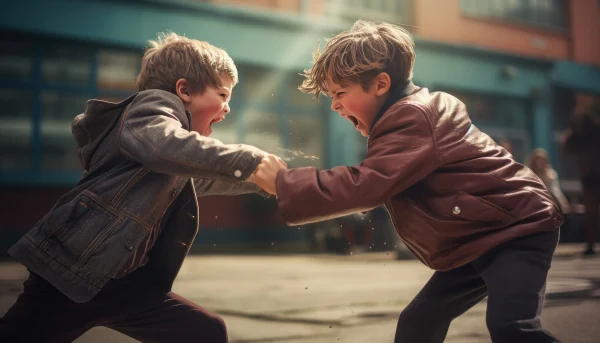
Data from the University of New Hampshire shows that sibling aggression occurs in about 32% of homes. This includes hitting, pushing, or taking toys by force. Often, these children's behavior problems come from poor impulse control. Research hosted by the National Center for Biotechnology Information (NCBI) states that the prefrontal cortex is among the final brain regions to reach maturity, with growth continuing into adolescence. A study in Frontiers in Human Neuroscience further notes that this area is responsible for logic, decision-making, and inhibitory control.
Why do my kids fight over everything? This behavior usually stems from a developmental stage where children are still learning to share finite resources like toys or time. Without a fully formed "Theory of Mind," a toddler literally cannot understand that their brother feels pain or sadness. They only see the toy they want. They use force because they lack the words to negotiate.
Verbal Sabotage and Emotional Manipulation
As children grow older, their tactics change. They move from hitting to "hostile attribution bias." This is a psychological term for assuming the worst about someone else. If a sister accidentally bumps her brother, the brother assumes she did it on purpose. He might start a rumor or hide her favorite book as "payback."
These unseen fights erode the bond more than a quick scuffle does. Children use these methods to lower their siblings’ standing in your eyes. They want to be the "good child" while making the other look like the "bad child." Recognizing this move allows you to stop the manipulation before it turns into a permanent grudge.
Using Child Psychology to De-escalate Heated Confrontations
When a fight breaks out, your first instinct is to find out who started it. This often makes things worse. Research in Frontiers in Psychology indicates that an inconsistent parenting style, such as an irregular focus on finding the culprit, is positively linked to higher levels of sibling conflict. This forces one child to lie and the other to feel like a victim. Instead, use clinical techniques to cool the room.
The "No Blame" Intervention
The "No Blame" approach shifts the focus from the crime to the harm. Instead of asking "Who hit whom?", you focus on the child who is crying. You say, "Your brother is hurt. Let's help him feel better." This prevents the aggressor from getting the "attention reward" they wanted from the fight.
Ironically, punishing the aggressor often creates more resentment. The child thinks, "Mom chose him over me again." Focusing on the hurt teaches empathy. You show that the result of the action—pain—is more important than the rules of the house. This method builds a sense of responsibility rather than a fear of getting caught.
Teaching Active Listening Between Kids
Lev Vygotsky introduced the idea of "scaffolding." This means you give children the social tools they haven't built yet. During a fight, you provide the "scripts" they need. You might say, "Tell your sister, 'I feel frustrated when you take my Legos without asking.'"
Rather than simply telling them to stop, you are showing them how to resolve the issue. Over time, they start using these scripts without your help. They learn that listening to each other actually gets them what they want faster than screaming does.
Proactive Strategies for Long-Term Harmony in Child Psychology
You cannot just wait for a fight to happen. You must build a foundation of peace during the quiet moments. Proactive parenting changes the atmosphere of the home. It makes the "default" state of the house one of cooperation rather than competition.
Modeling Emotional Regulation
Research from IGNTU Amarkantak on Bandura’s Social Learning Theory highlights that children learn by observing the behaviors and emotional reactions of others. A study in SpringerLink adds that parental rejection or negative interactions can lead to higher levels of aggressive behavior in children. As explained in a text from Pressbooks, parental modeling acts as an environmental factor that shapes a child's own behavior and cognition.
Managing your own emotions provides children with a visual guide. You can even talk through your process out loud. Say, "I am feeling very frustrated right now, so I am going to take three deep breaths." This simple act teaches them that emotions are manageable. It gives them the power to stop their own "amygdala hijack" before it turns into a physical fight.
Establishing a "Family Constitution"
Clear rules provide safety. When children know exactly what happens when they break a rule, their anxiety drops. A "Family Constitution" should list the most important values, like "We use kind words" or "We ask before touching others' things."
Is sibling rivalry normal? Yes, it is a healthy part of development that allows children to practice negotiation and boundaries within a safe environment. However, having a set of predictable rules ensures that the rivalry stays within safe bounds. It prevents the competition from turning into a toxic environment. When everyone knows the rules, you spend less time explaining and more time connecting.
Cultivating Individual Identities to Reduce Envy
Envy is the fuel for almost all children's behavior problems. If a child feels they are just "the younger brother," they will act out to find their own identity. You must help each child feel like a unique individual rather than just a member of a group.
The Importance of Special Time
A report by Manavata indicates that when parents use positive reinforcement and monitor behavior, they can focus on beneficial interactions. The report suggests that this dedicated time satisfies a child's need for attention and lessens the urge to compete. Patterson and Forgatch found that just 10 to 15 minutes of one-on-one time per day can change a child’s behavior. They call this "Special Time." During this window, you follow the child’s lead. You don't give instructions or corrections. You simply enjoy their company.
This "fills their cup" of attention. When a child feels fully seen by you, they don't feel the need to steal attention away from their sibling. It reduces the biological urge to compete for your presence. They know their turn is coming, so they can relax while you spend time with their brother or sister.
Avoiding the Comparison Trap
Psychopedia Journals notes that sibling rivalry often surfaces when children feel that their treatment relative to their siblings is unfair. The research suggests that prioritizing equity over strict equality improves relationships by ensuring each child's specific needs are met. If one child needs a new pair of shoes, you don't have to buy shoes for everyone.
The Niche-Picking Hypothesis shows that siblings will intentionally choose opposite hobbies to avoid competing. Support this. Don't ask, "Why can't you sit still like your sister?" This creates a "Comparison Trap" that leads to deep-seated resentment. Instead, celebrate their differences. This makes them feel like allies on different paths rather than competitors on the same track.
Recognizing Serious Children's Behavior Problems
Sometimes, normal rivalry crosses a line. You must know when the situation requires more than just better parenting scripts. Some behaviors indicate that the bond has broken and needs professional repair.
Red Flags in Sibling Relationships
Look for signs of persistent fear. If one child constantly avoids the other or seems "on edge" when their sibling enters the room, you have a problem. This is called hyper-vigilance. It suggests that the conflict has moved from "rivalry" to "abuse."
Other red flags include intentional property destruction or cruelty to pets. These signs indicate more than just a typical stage; they suggest the child is struggling with deep emotional pain. Catching these signs early prevents long-term psychological scars.
The Role of Play Therapy
Professional Child Psychology interventions, like Filial Therapy, train parents to conduct special play sessions. This method uses play—the natural language of children—to heal the bond. A therapist helps you understand what your child is expressing through their toys and games.
How can I stop my children from arguing? Consistent boundaries, teaching empathy, and ensuring each child feels uniquely valued are the most effective long-term solutions. If these don't work, a play therapist can help reveal concealed traumas or developmental delays. They provide a safe space for the children to process their feelings without the fear of getting in trouble.
Applying Child Psychology to Everyday Parenting
The goal is to move from a 1:1 ratio of positive and negative interactions to a 5:1 ratio. This means for every one correction or "no," you should have five positive interactions. This "emotional bank account" makes the difficult moments easier to handle.
Building Sibling Teams
Use Narrative Therapy to change how your kids see each other. Instead of saying, "You two are always fighting," talk about "The Grumpies" that occasionally visit the house. Ask your children how they can team up to kick "The Grumpies" out. This turns the sibling into a teammate rather than an opponent.
When they successfully share a toy or solve a problem, label it immediately. Say, "You two worked together like a great team to build that tower." This reinforces their identity as allies. It shows them that cooperating is more rewarding than competing.
The Path to Lasting Connection
You have the power to transform a chaotic household into a space of growth. Understanding Child Psychology means seeing the heart behind the behavior. Your children are not merely acting out; they are attempting to find their place in the world and ensure they are safe in your love.
When you provide them with the right scripts and the right support, they stop seeing each other as obstacles. They begin to see each other as lifelong allies. While sibling fights are inevitable, they are also valuable learning moments. Applying these principles helps children move past behavior problems toward a relationship built on mutual respect. Peace in your home starts with how you interpret their struggles. Choosing to lead with empathy and science turns today’s rivals into tomorrow’s best friends. This is the lasting effect of Child Psychology.
Recently Added
Categories
- Arts And Humanities
- Blog
- Business And Management
- Criminology
- Education
- Environment And Conservation
- Farming And Animal Care
- Geopolitics
- Lifestyle And Beauty
- Medicine And Science
- Mental Health
- Nutrition And Diet
- Religion And Spirituality
- Social Care And Health
- Sport And Fitness
- Technology
- Uncategorized
- Videos

