
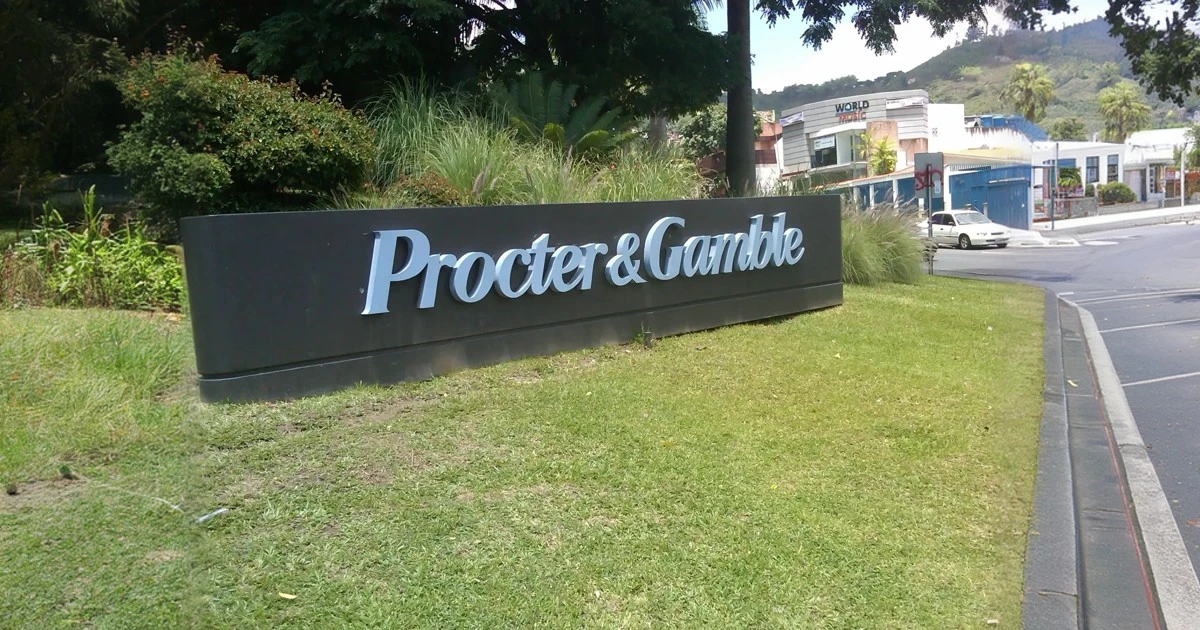
Image by Veronidae, CC BY-SA 3.0
Procter & Gamble Major Restructure
Procter & Gamble Undertakes Major Restructuring: Job Cuts and Strategic Pivots in Response to Tariffs and Shifting Consumer Sentiment
Procter & Gamble, a dominant entity in the worldwide consumer goods market, is currently navigating substantial economic challenges. The corporation is embarking on a widespread reorganisation initiative. This strategy entails eliminating several thousand jobs across its global operations as it wrestles with persistent cost issues related to import duties and adjustments in spending by an increasingly apprehensive international customer base.
The Cincinnati-based international company, famed for producing well-regarded household staples like Pampers, Tide, and Gillette, is in a period of profound change. Escalating operational costs, directly linked to global trade tariffs, combined with observable shifts in consumer purchasing patterns, have compelled the business to initiate a fundamental reassessment of its operational approach. This corporate reorganisation is designed to improve efficiency and successfully steer through the demanding commercial conditions anticipated over the forthcoming years. These moves are indicative of broader anxieties spreading across the international economy, impacting large global corporations in addition to the financial situations of ordinary households.
Restructuring Plan Unveiled
A considerable reduction in its workforce was detailed by Procter & Gamble leadership. This forms a key element of its reorganisation plan set to run for multiple years. The company intends to decrease its international employee count by as many as seven thousand people. This quantity is roughly six percent of its entire global staffing. Andre Schulten, the company's head of finance, confirmed these measures. He clarified that the personnel cuts would predominantly influence the segment of the workforce not directly involved in manufacturing products. This affects around fifteen percent of such roles. The news was disclosed in Paris during a consumer conference hosted by Deutsche Bank. This reorganisation is scheduled for implementation within the next couple of years.
Mr Schulten presented this reorganisation as a pivotal action. The company is striving to ensure its capability to meet its extended objectives during the upcoming two or three years. He conceded, however, that this specific initiative does not resolve the immediate difficulties the enterprise is presently confronting. As of June 2024, Procter & Gamble maintained a global workforce of approximately one hundred eight thousand individuals. The financial charges anticipated due to this reorganisation are estimated to range from $1 billion to $1.6 billion before the deduction of taxes.
Economic Pressures Mounting
Procter & Gamble's decision to reorganise is founded on a convergence of difficult economic circumstances. Unrelenting costs associated with tariffs exert a significant strain on the company's financial well-being. Furthermore, an increasing unease among consumers concerning the overall economic future is influencing their purchasing choices. A large number of shoppers, particularly in more affluent countries, are expressing heightened concern about their outgoings. They remain watchful of the ongoing consequences of rising prices on their household finances. This kind of cautious behaviour directly impacts sales volumes for many businesses operating in the consumer goods sector. Leaders at P&G noted that the volatile global political situation contributes to increased uncertainty for consumers.
The enterprise expects a pre-tax financial effect of roughly $600 million within its 2026 fiscal year, should current tariff levels persist. These trade-related charges have already resulted in notable increases in expenses and diminished sales for numerous companies. P&G announced in April its plan to elevate the prices of specific items to counteract the impact of tariffs. Mr Schulten had previously identified adjustments to pricing and strategies to reduce costs as principal methods for addressing these financial pressures. The reorganisation endeavours to simplify the company's internal structure, which will lead to more expansive job responsibilities and smaller, more focused teams.
Consumer Confidence Falters
Across the United States, the general feeling of consumers regarding the state of the economy has displayed worrying trends. A keenly observed measure of consumer sentiment, compiled by the University of Michigan, registered a minor decrease in May 2025. This marked the fifth consecutive month of decline. This sustained downward movement came as a surprise to many market analysts. The initial data for May showed a 2.7 percent fall compared to the prior month, landing at 50.8. This reading is the second most downbeat across the survey's almost seventy-five-year existence. The sole instance of a lower score occurred in June of 2022. Commencing in January 2025, overall positive sentiment has dropped significantly, by almost thirty percent.
Nevertheless, a subsequent May report indicated that sentiment held steady with the April level of 52.2, after an improvement observed mid-month. The Director of Surveys of Consumers, Joanne Hsu, mentioned that sentiment had initially declined but then showed indications of a turnaround. This was partly attributed to a temporary suspension of certain import charges on goods from China. In spite of this marginal upturn, individuals continue to be anxious about what the future holds. Forecasts for inflation over the next year increased to 6.6%, while expectations for long-term inflation saw a slight decrease to 4.2%. This enduring apprehension influences consumer spending patterns, thereby affecting companies such as Procter & Gamble.
The Intricacies of Tariffs
An analysis concerning extensive tariff proposals was recently issued by the Congressional Budget Office (CBO). The CBO projected that these kinds of import duties could potentially reduce US federal budget deficits by $2.8 trillion over a ten-year timeframe. However, the identical study also warned that such measures would likely lead to a contraction of the economy. Furthermore, the CBO anticipates a rise in the inflation figure. Consequently, it is probable that consumers would generally experience a reduction in their capacity to purchase goods and services.
Included in the CBO's findings is a forecast: American families will, in the end, purchase a reduced quantity of goods from nations impacted by these additional import levies. This governmental agency projected that these import duties would cause inflation's yearly average to rise by approximately 0.4 percentage units over the course of 2025 and 2026. This upward pressure on prices introduces further complications for businesses involved in selling consumer goods. These enterprises face a choice: either absorb these additional costs themselves or pass them on to customers who are already experiencing financial strain. The CBO also pointed out that heightened uncertainty surrounding future trade regulations might lead to delays in investment.
Supply Chain Strains
Procter & Gamble has openly stated the considerable influence of United States tariffs on its business activities. During an April conference call, the corporation specified that raw materials, packaging items, and certain finished merchandise originating from China experienced the most significant effects. This acknowledgement underscores the intricate nature of global supply networks for large multinational companies. In reaction, Procter & Gamble announced its intention to investigate alternative sourcing locations. The company also aims to improve productivity to help alleviate the financial burden created by these import duties.
Despite these efforts to soften the impact, the company acknowledged that increasing prices on certain merchandise might become unavoidable. CFO Andre Schulten has remarked that implementing substantial changes to the supply network necessitates certainty regarding the long-term trade environment, a condition that is currently absent. The corporation has invested significantly in American production facilities over time to be geographically closer to its customer base. Nevertheless, the sheer scale of the current tariff effects makes further adjustments essential. The primary difficulty lies in striking a balance between controlling costs and upholding product quality and availability for consumers.
Broader Industry Warnings
The apprehensions articulated by Procter & Gamble find resonance across the wider consumer brands industry. The Consumer Brands Association is an organization that acts on behalf of major food corporations like General Mills and Coca-Cola, in addition to manufacturers of consumer products, including those from Procter & Gamble, and has also issued its own cautionary statements. This group highlighted a significant problem: even though its member companies produce the majority of their products within the US, they are currently confronted with import duties on essential raw materials. Such materials, which include items like wood fibre used to make toilet paper, or the spice cinnamon, often need to be imported from other countries due to insufficient domestic supply.
This predicament creates a difficult situation for manufacturers. They are faced with rising costs for indispensable components, which can potentially disrupt production and diminish their profit margins. The warning from the association emphasises the interconnectedness of international trade. Import duties intended to protect domestic industries can, paradoxically, inflict harm upon those very industries by elevating the cost of necessary imported inputs. This ultimately has repercussions for the availability and pricing of products for the final consumer, thereby exacerbating existing inflationary trends.
P&G's Financial Performance
Recent financial disclosures from Procter & Gamble provide an insight into its operational results amidst these challenging circumstances. For the second quarter of its 2025 fiscal year, the company declared net sales reaching $21.9 billion. This amount signified a two percent increase when contrasted with the preceding year. Organic sales, a metric that excludes the effects of foreign currency fluctuations and corporate acquisitions or divestitures, expanded by three percent. Diluted net earnings per share demonstrated a substantial rise to $1.88. This represented an increase of 34 percent, primarily attributable to an impairment charge recorded in the base year related to the Gillette brand. Core earnings per share grew by two percent, attaining $1.88.
The corporation reaffirmed its fiscal 2025 projection for growth in core earnings per share, maintaining it within the five to seven percent range. Nonetheless, P&G also flagged an anticipated adverse impact from commodity costs, estimated at roughly $200 million after tax for the 2025 fiscal year. Unfavourable shifts in foreign exchange rates are expected to create a financial impediment of approximately $300 million after tax. Financial market analysts generally anticipate modest growth in adjusted earnings per share throughout the fiscal periods of 2025 and also 2026.
Navigating the UK Market
The market within the United Kingdom presents Procter & Gamble with a distinctive combination of challenges and opportunities. Consumers in Britain, much like their counterparts in America, are contending with a significant rise in the cost of living. Escalating prices and increased energy expenses have constrained household finances, prompting shoppers to become more price-conscious. This economic climate necessitates meticulous pricing strategies and a strong emphasis on providing value from companies operating in the FMCG sector. P&G has previously indicated its intention to use price adjustments as a means of managing rising input costs on a global scale, a strategy that would also be applicable in the UK.
The FMCG market in the UK itself is poised for expansion. A compound annual growth rate (CAGR) of roughly 5.04% is projected for the period between 2025 and 2033. Key developments shaping this market include a greater reliance on e-commerce and an increasing consumer focus on health and wellness. P&G will need to adapt its product offerings and marketing approaches to align with these evolving preferences of British consumers. This could involve highlighting the sustainable attributes of products or options that represent good value for money.
FMCG Sector in Transformation
The Fast-Moving Consumer Goods (FMCG) sector is presently undergoing a phase of substantial global evolution. Changing consumer demands, rapid advancements in digital technology, and a heightened focus on sustainability are the primary catalysts for this transformation. Businesses operating within this industry must adapt quickly to maintain their competitiveness. Health and wellness are emerging as paramount concerns for shoppers. They are increasingly seeking out products that are natural, organic, and provide functional advantages. This trend influences purchasing decisions across various categories, including food, beverages, and personal care items.
Sustainability has transitioned from being a niche interest to a fundamental expectation for many contemporary consumers. They insist on packaging that is more environmentally sound, ingredients that are sourced through ethical means, and operational practices that are carbon-neutral from the brands they patronise. The digital revolution continues to reshape the operational methods of FMCG companies. This spans from managing supply chains using Al and automation to delivering personalised customer experiences and formulating e-commerce strategies. Brand loyalty is also being subjected to new scrutiny as individuals weigh considerations of quality, price, and ethics more carefully.

Image Credit - Wikimedia Commons
P&G's Sustainability Ambitions
Procter & Gamble has publicly articulated its commitment to environmental stewardship. The corporation incorporates sustainability into its everyday business activities, regarding it as an essential component of how it conceives and delivers its products and services. P&G concentrates its initiatives on four principal pillars: Climate, Waste, Water, and Nature. The company holds the belief that these are the areas in which it can achieve the most significant positive influence. The enterprise has set a target to attain net-zero greenhouse gas emissions throughout its entire supply chain and operational processes, from the acquisition of raw materials to the point of sale to the retailer, by the year 2040.
To guide its advancement towards the 2040 net-zero objective, Procter & Gamble has established provisional, science-informed targets as components of its Ambition 2030 goals. This encompasses a pledge to decrease Scope 1 and 2 emissions at its facilities by 65% by the year 2030, using 2010 as the baseline for comparison. The company is also actively working on creating more circular systems for materials like plastics. The intention is to ensure these materials remain in use rather than becoming waste. Furthermore, P&G dedicates resources to the development of ingredient solutions that have lower carbon footprints for its cleaning products.
Challenges in Sourcing Sustainable Materials
Even with its ambitious sustainability objectives, Procter & Gamble faces obstacles, a situation common to many large-scale manufacturers. This is particularly evident when attempting to secure raw materials that are verifiably sustainable. Although the company reports that a substantial portion of its palm oil and wood pulp procurements carry certifications from organisations such as the RSPO (Roundtable on Sustainable Palm Oil) and the FSC (Forest Stewardship Council) or PEFC (Programme for the Endorsement of Forest Certification), the actual efficacy and inherent limitations of these certification frameworks have themselves come under critical examination. Ensuring comprehensive traceability and genuine sustainability throughout complex international supply networks remains a persistent undertaking.
The enterprise acknowledges that fulfilling its environmental aspirations, such as achieving net-zero emissions, demands collaborative efforts across its entire value chain and within various industries. The development and scaling up of new technologies for low-carbon materials and circular packaging solutions require considerable financial investment and the overcoming of existing infrastructural and market-related hurdles. Striking a balance between these long-term sustainability investments and more immediate economic pressures, including the impact of tariffs and fluctuating commodity prices, represents an ongoing strategic test for the consumer goods conglomerate.
Adapting Product Portfolios
As a component of its more extensive reorganisation initiatives, Procter & Gamble has indicated its intention to conduct a reassessment of its product offerings. This undertaking will entail the discontinuation of certain product lines or the withdrawal of specific brands from selected markets. While comprehensive details concerning these product and market adjustments are expected to be disclosed at a later date, this action aligns with a strategic approach aimed at concentrating resources on core, high-performing brands and product categories. Such optimisation of the product portfolio is designed to streamline operations and improve profitability within an increasingly competitive market environment.
This particular approach is not entirely novel for P&G. Throughout the years, the company has divested various brands to more effectively concentrate on its most renowned and profitable names, including Tide, Pampers, and Gillette. The prevailing economic conditions are likely to expedite this process. The corporation will undertake a meticulous evaluation to determine which products offer the most promising prospects for growth and profitability. This will especially consider shifts in consumer preferences towards attributes such as value, sustainability, or specific health and wellness characteristics. These decisions will also play a role in adjusting the supply chain to achieve cost reductions.
The Digital Shift in Consumer Engagement
The manner in which Procter & Gamble, alongside other FMCG enterprises, interacts with consumers is profoundly influenced by the ongoing digital transformation. E-commerce platforms continue to ascend in importance. This necessitates the development of robust online sales strategies and user-friendly digital interfaces. P&G is channelling investments into its digital capabilities to enrich the consumer experience, encompassing everything from online product discovery and purchase to post-transaction engagement. This involves the utilisation of data analytics to gain a more comprehensive understanding of consumer behaviour and to personalise marketing initiatives and product suggestions.
Beyond direct sales transactions, digital platforms are indispensable for brand cultivation and communication. Social media personalities, online advertising campaigns, and content-driven marketing strategies play pivotal roles in shaping consumer perceptions and cultivating brand loyalty. The corporation is also actively investigating how technologies like Artificial Intelligence (AI) and automation can optimise diverse facets of its operations. These range from supply chain management to customer service, with the aim of rendering processes more efficient and responsive to consumer requirements. This focus on digital technology is crucial for maintaining relevance in a rapidly evolving marketplace.
Inflationary Pressures and Pricing Strategies
Consumer goods companies, including Procter & Gamble, find persistent global inflation to be a considerable challenge. Escalating costs for raw materials, energy, and transportation directly affect production expenditures. P&G has indicated its use of strategic pricing as a mechanism to mitigate these inflationary effects and protect its profit margins. This frequently involves transferring a portion of the increased costs to consumers through higher retail prices. This approach, however, necessitates extremely careful implementation.
Consumers, especially those contending with a cost-of-living squeeze, are exhibiting increased price sensitivity. Excessive price increases can prompt shoppers to switch to more affordable private-label alternatives or to reduce their overall consumption of certain branded items. Consequently, Procter & Gamble endeavours to strike a balance between implementing price increases and undertaking initiatives that demonstrate the value that its brands offer. This might be achieved through product innovation, improved formulations, or by highlighting the superior performance of its brands. The company also maintains its focus on enhancing productivity and implementing cost-cutting measures internally to help counteract some of the inflationary impact.
Geopolitical Uncertainty and Trade Dynamics
The prevailing global political climate introduces an additional layer of intricacy for multinational corporations such as Procter & Gamble. Evolving trade policies, international tensions, and unforeseen global occurrences can disrupt supply chains, modify market access, and generate substantial economic unpredictability. The ongoing tariff dispute between the United States and China serves as a prominent illustration, directly influencing P&G's expenditures on imported materials and certain finished goods.
Enterprises must maintain agility and formulate contingency plans to navigate these unpredictable circumstances. This could entail diversifying sourcing locations, exploring alternative logistical pathways, or employing hedging strategies against currency fluctuations. Andre Schulten and Shailesh Jejurikar, who respectively head finance and operations at P&G, have explicitly acknowledged this "unpredictable" global political environment and the resultant "greater uncertainty" faced by consumers. This situation necessitates a cautious yet adaptable approach to long-range strategic planning and investment decisions. The potential for abrupt alterations in trade agreements or the imposition of new tariffs requires constant vigilance.
Future Outlook and Strategic Priorities
Looking forward, Procter & Gamble anticipates a period that will demand careful stewardship. The company's leadership underscores that the current reorganisation represents a deliberate quickening of its established strategy. This approach aims to broaden P&G's competitive advantage by prioritising product excellence, supported by enhanced productivity. The objective is to compete effectively within an increasingly demanding global marketplace. Key objectives include streamlining the organisational framework to create more comprehensive job roles and smaller, more efficient teams.
Further investment in digital tools and optimisation of the supply chain are central to P&G's future initiatives. The corporation also intends to uphold its commitment to sustainable business practices. Product innovation remains a fundamental element of its approach, with the goal of meeting evolving consumer needs and preferences. While the immediate challenges associated with tariffs, inflation, and fluctuating consumer confidence are undoubtedly significant, P&G's long-term vision is centred on leveraging its robust brand portfolio and operational scale to achieve consistent growth and shareholder value. Success will be contingent upon its capacity to adapt to a rapidly changing global landscape.
Recently Added
Categories
- Arts And Humanities
- Blog
- Business And Management
- Criminology
- Education
- Environment And Conservation
- Farming And Animal Care
- Geopolitics
- Lifestyle And Beauty
- Medicine And Science
- Mental Health
- Nutrition And Diet
- Religion And Spirituality
- Social Care And Health
- Sport And Fitness
- Technology
- Uncategorized
- Videos

