Subtotal:
£199.00

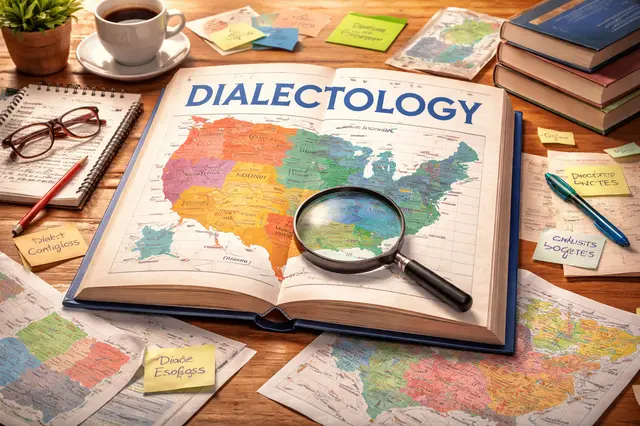
The Dialectology course offers a focused and contemporary way to understand how language changes across place, society, and time, while fitting smoothly into an online learning routine. From the outset, the course places language variation at the centre of human interaction. It explains how everyday speech reflects history, identity, migration, power, and innovation. Therefore, learners gain insight into why people speak differently, how those differences emerge, and what they reveal about communities. Because the course runs fully online, it allows you to study flexibly, revisit concepts easily, and learn at your own pace without losing academic depth.
At the start, the Dialectology course introduces the fundamental concepts of language variation in a clear and structured way. It explains how dialects differ from accents, registers, and styles, and why variation exists even within small geographic areas. At the same time, it connects linguistic patterns to social life, which helps learners recognise dialects as living systems rather than static forms. As a result, you begin to notice variation in everyday conversations, media, and digital communication. This awareness builds steadily as the course progresses through interactive online lessons and guided explanations.
Next, the course explores the methodology and evolution of dialect geography. It explains how early researchers mapped speech patterns and how those practices shaped modern dialect studies. Then, it moves forward to show how new tools and digital methods have refined linguistic mapping. Because the Dialectology online course presents these ideas through an online format, learners can visualise dialect boundaries, compare regions, and follow spatial patterns with clarity. Consequently, theory links directly to practice, which strengthens understanding.
As learning continues, the Dialectology course introduces key theoretical frameworks in dialect analysis. These frameworks help explain why certain linguistic features persist while others disappear. Moreover, the course demonstrates how theory supports interpretation rather than abstract debate. By studying these perspectives online, learners can pause, review, and connect ideas more effectively. Therefore, complex linguistic models become accessible and relevant to real-world language use.
The course then turns attention to the emergence of urban dialectology. Cities act as powerful centres of linguistic innovation, and this section explains why urban speech often leads change. At the same time, it highlights the influence of mobility, contact, and social networks. Because this Dialectology online course integrates examples from modern cities, learners see how urbanisation reshapes language rapidly. As a result, dialectology appears dynamic and closely tied to contemporary life.
Following this, the course addresses social differentiation and linguistic variation. It shows how class, age, gender, ethnicity, and occupation influence speech choices. Rather than treating variation as random, the course explains systematic patterns supported by research. Therefore, learners understand how language reflects social positioning and identity. This perspective proves essential for anyone interested in linguistics, education, communication, or cultural studies.
The Dialectology course also examines markers of innovation and change. It explains how new linguistic features arise and spread through communities. Then, it connects these changes to broader social forces such as migration, technology, and cultural exchange. Because the course runs online, learners can explore examples across regions and contexts without constraint. Consequently, patterns of change become easier to recognise and analyse.
Another key focus lies in the cartography of dialect boundaries and the structure of linguistic transition zones. Instead of sharp divisions, the course explains how gradual shifts occur across regions. It shows how transition zones challenge simple classifications. Therefore, learners gain a nuanced understanding of dialect continua. Through the Dialectology online course format, maps, explanations, and examples come together clearly and logically.
As learning deepens, the course explores the structural analysis of variation and the dynamics of innovation and diffusion. It explains how linguistic features move through space and social groups. Then, it examines the spatial mechanics of diffusion, showing why some changes spread widely while others remain local. This analytical approach strengthens critical thinking and supports independent linguistic observation.
Later, the course brings together the unification of dialect studies. It explains how geography, sociology, and linguistics interact to create a complete picture of variation. As a result, learners see dialectology as an integrated field rather than a collection of isolated ideas. This broad perspective supports academic progression and professional application.
Throughout the Dialectology course, the online structure supports consistent engagement. Short lessons, clear explanations, and structured progression help learners maintain momentum. Furthermore, the digital format allows repeated access to materials, which supports revision and long-term understanding. Because of this design, the Dialectology online course suits both beginners and those with prior linguistic knowledge.
Each unit concludes with a multiple-choice examination. This exercise will help you recall the major aspects covered in the unit and help you ensure that you have not missed anything important in the unit. The results are readily available, which will help you see your mistakes and look at the topic once again. If the result is satisfactory, it is a green light for you to proceed to the next chapter. This assessment structure supports confidence and steady progress in an online setting.
The Dialectology course suits learners who seek flexible, rigorous, and engaging study. It supports independent learning while maintaining academic clarity. Moreover, it connects theory to everyday language use, which makes learning meaningful. For those seeking formal credentials, the Dialectology Diploma course adds value through certification and documented achievement.
In conclusion, the Dialectology online course offers a comprehensive and accessible way to understand language variation. It combines theory, methodology, and application within a fully online structure. Therefore, learners gain insight, skills, and recognition without compromising flexibility. Whether for academic interest or professional development, the Dialectology course delivers a strong foundation in the study of dialects and linguistic change.
1:Fundamental Concepts of Language Variation
2:The Methodology and Evolution of Dialect Geography
3:Theoretical Frameworks in Dialect Analysis
4:The Emergence of Urban Dialectology
5:Social Differentiation and Linguistic Variation
6:Markers of Innovation and Change
7:The Cartography of Dialect Boundaries
8:The Structure of Linguistic Transition Zones
9:The Structural Analysis of Variation
10:The Dynamics of Innovation and Diffusion
11:The Spatial Mechanics of Diffusion
12:The Unification of Dialect Studies

After completing the course, you will receive a diploma certificate and an academic transcript from Elearn college.
Each unit concludes with a multiple-choice examination. This exercise will help you recall the major aspects covered in the unit and help you ensure that you have not missed anything important in the unit. The results are readily available, which will help you see your mistakes and look at the topic once again. If the result is satisfactory, it is a green light for you to proceed to the next chapter.
Elearn College is a registered Ed-tech company under the UK Register of Learning( Ref No:10062668). After completing a course, you will be able to download the certificate and the transcript of the course from the website. For the learners who require a hard copy of the certificate and transcript, we will post it for them for an additional charge.