


Subtotal:
£199.00

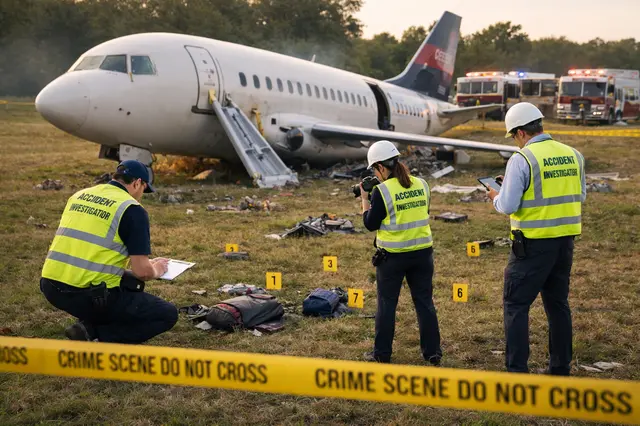
Aircraft Accident Investigation course offers a rigorous and engaging pathway into one of the most fascinating areas of aviation safety. Air travel connects the modern world. However, every flight depends on complex engineering, strict procedures, and precise decision-making. When an accident occurs, investigators must understand every detail. They must examine evidence carefully. They must reconstruct events accurately. They must also translate technical findings into lessons that protect future passengers and crews.
This Aircraft Accident Investigation course introduces learners to that investigative world. The programme explores the scientific, operational, and procedural foundations that guide aviation accident analysis. Through structured digital lessons, learners develop a clear understanding of how investigators uncover causes, interpret evidence, and produce authoritative accident reports.
Online learning offers flexibility and depth. Therefore, the Aircraft Accident Investigation online course allows you to progress at your own pace while engaging with professional investigative techniques. Each lesson presents clear explanations, practical scenarios, and analytical thinking exercises. As a result, you build investigative awareness step by step while studying from any location with internet access.
The programme begins with the regulatory and jurisdictional structure that governs aviation investigations worldwide. Aviation accidents often involve several authorities. National aviation regulators, international organisations, and investigative agencies all play roles. Therefore, investigators must understand legal authority and procedural responsibility before they begin technical analysis. The Aircraft Accident Investigation course explains how regulatory frameworks coordinate investigations and protect the integrity of evidence.
Next, the course explores the earliest phase of investigation. Investigators must secure the accident scene quickly and document evidence thoroughly. Accurate documentation forms the backbone of the investigation. Consequently, learners examine field techniques such as site mapping, wreckage positioning, and photographic recording. These methods help investigators capture vital details before environmental conditions change the scene.
Furthermore, the Aircraft Accident Investigation online course explains how investigators reconstruct events through visual and structural evidence. Investigators analyse wreckage patterns carefully. They examine deformation, impact angles, and structural failures. These physical clues often reveal the sequence of events that occurred during the accident. Through guided examples, learners understand how structural evidence tells a story about aircraft performance and final moments of flight.
Equally important, propulsion systems receive detailed attention. Engines operate under extreme mechanical stress. Therefore, investigators must determine whether engine malfunction contributed to an accident or occurred as a consequence of impact. The Aircraft Accident Investigation course explains how specialists examine turbine blades, combustion chambers, and fuel systems. These technical assessments allow investigators to identify possible power loss or mechanical breakdown.
Another important investigative task involves internal aircraft hardware. Flight control systems, cockpit instrumentation, and avionics equipment all influence aircraft behaviour. Consequently, investigators inspect control linkages, instrument readings, and onboard electronics. Through the Aircraft Accident Investigation Diploma course, learners discover how investigators interpret these components and determine whether mechanical issues or operational decisions contributed to an event.
In addition, the programme explores aircraft ground motion and collision analysis. Aircraft accidents do not occur only in the air. Incidents also occur during taxiing, landing rollout, or runway operations. Therefore, investigators analyse ground movement patterns, braking performance, and runway conditions. These evaluations reveal whether operational errors, mechanical limitations, or environmental conditions influenced the event.
Radar data and operational records also play a vital role in modern investigations. Radar tracking reveals aircraft speed, altitude, and trajectory during flight. Investigators combine this information with communication records and flight data. Consequently, they reconstruct the final minutes of a flight with remarkable precision. The Aircraft Accident Investigation online course explains how investigators interpret radar and operational evidence to understand aircraft behaviour before impact.
Environmental conditions add another layer of complexity. Weather patterns, terrain, visibility, and atmospheric turbulence can dramatically influence aircraft performance. Meanwhile, human decision-making also shapes outcomes during critical moments. Therefore, the Aircraft Accident Investigation course examines environmental factors alongside human variables. Learners explore how investigators evaluate weather data, pilot workload, and situational awareness when analysing accidents.
Rotary-wing aircraft present additional investigative challenges. Helicopters operate under different aerodynamic principles than fixed-wing aircraft. Loss of lift, rotor dynamics, and complex flight envelopes require specialised knowledge. Through the Aircraft Accident Investigation Diploma course, learners explore how investigators analyse helicopter incidents and determine whether aerodynamic limitations or mechanical factors influenced the event.
Aerodynamic disruptions also affect aircraft during ground handling and flight transitions. Crosswinds, unstable airflow, and mechanical interference may disturb aerodynamic stability. Consequently, investigators must examine aircraft configuration, control inputs, and aerodynamic stresses. The Aircraft Accident Investigation course guides learners through these investigative techniques and shows how aerodynamic analysis clarifies accident causes.
Extreme flight environments further challenge aircraft structures. High altitude conditions, severe turbulence, icing, and rapid temperature changes all place stress on aircraft materials. Investigators therefore inspect structural integrity carefully. They analyse fracture patterns, metal fatigue, and structural overload. Through the Aircraft Accident Investigation online course, learners gain insight into how investigators interpret structural evidence and determine whether environmental forces weakened the aircraft.
Survivability analysis forms another critical element of aviation safety investigation. Investigators study passenger protection systems, cabin structures, and emergency response conditions. Their goal focuses on improving survival outcomes in future accidents. Therefore, the Aircraft Accident Investigation course examines evacuation procedures, impact survivability factors, and emergency equipment performance. These analyses contribute directly to improved aircraft design and safety standards.
Finally, investigators must communicate their findings clearly. Accident reports translate technical data into actionable recommendations. These reports guide aviation authorities, airlines, and manufacturers toward safety improvements. The Aircraft Accident Investigation Diploma course explains how investigators structure final reports, present evidence logically, and recommend preventive measures that strengthen aviation safety worldwide.
Online study strengthens accessibility and flexibility for learners. The Aircraft Accident Investigation online course allows participants to access lectures, resources, and assessments through a dedicated digital learning platform. Learners may revisit lessons whenever necessary. They may also progress steadily according to their own schedule. This structure supports both independent learners and working professionals who seek to expand their aviation knowledge.
Each unit concludes with a multiple-choice examination. This exercise will help you recall the major aspects covered in the unit and help you ensure that you have not missed anything important in the unit. The results are readily available, which will help you see your mistakes and look at the topic once again. If the result is satisfactory, it is a green light for you to proceed to the next chapter.
The Aircraft Accident Investigation course therefore encourages continuous learning and reflection. Immediate feedback reinforces key concepts. At the same time, learners gain confidence as they progress through each investigative topic.
e Aircraft Accident Investigation Diploma course therefore provides both academic recognition and practical investigative insight. Graduates leave the programme with a deeper understanding of aviation safety, investigative methodology, and accident analysis. Furthermore, the Aircraft Accident Investigation online course supports individuals who wish to explore aviation investigation professionally or simply understand the complex science behind aviation safety.
Aviation continues to evolve rapidly. Aircraft technology grows more sophisticated. Global air traffic expands every year. Consequently, the demand for informed safety analysis grows equally strong. The Aircraft Accident Investigation course equips learners with the knowledge required to understand how investigators analyse accidents, interpret technical evidence, and transform tragedy into improved safety.
1:The Regulatory and Jurisdictional Framework
2:Initial On-Site Analysis and Documentation
3:Visual Reconstruction and Structural Clues
4:Propulsion System Failure Analysis
5:Evaluating Internal Aircraft Hardware
6:Aircraft Ground Motion and Collision Analysis
7:Radar Tracking and Aircraft Operational Investigation
8:External Environment and Human Variables
9:Rotary-Wing Operations and In-Flight Loss of Lift
10:Aerodynamic Disruptions and Ground Handling Risks
11:Extreme Flight Environments and Structural Integrity
12:Accident Survivability Analysis and Final Reporting

After completing the course, you will receive a diploma certificate and an academic transcript from Elearn college.
Each unit concludes with a multiple-choice examination. This exercise will help you recall the major aspects covered in the unit and help you ensure that you have not missed anything important in the unit. The results are readily available, which will help you see your mistakes and look at the topic once again. If the result is satisfactory, it is a green light for you to proceed to the next chapter.
Elearn College is a registered Ed-tech company under the UK Register of Learning( Ref No:10062668). After completing a course, you will be able to download the certificate and the transcript of the course from the website. For the learners who require a hard copy of the certificate and transcript, we will post it for them for an additional charge.


£199.00

£199.00


