
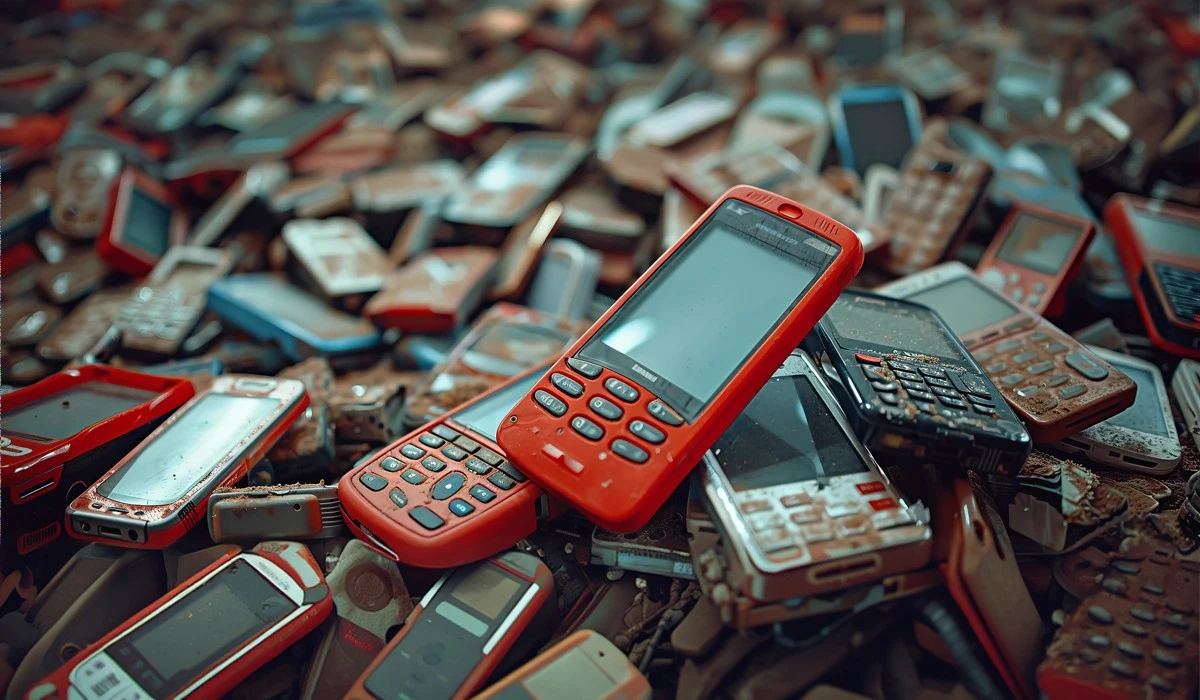
The Dumbphone Boom Rejects the “Always On” Life
Constant availability creates an obligation to respond that never ends. Every notification forces a choice between social debt and mental peace. This pressure pushes people toward a simpler reality. Modern connectivity demands your attention every second, leaving no room for original thought. You carry a device that harvests your time for profit. The Dumbphone Boom signals a refusal to participate in this trade. The Guardian reports that people increasingly choose devices with fewer features to live more fully. The report explains that users trade infinite scrolls for limited functions to avoid attention-harvesting. This shift marks a change in how the world views success and connectivity. People want to own their time again. They see the cost of being "always on" and decide the price is too high.
The New Status Symbol of Boredom
Modern luxury used to mean having every app at your fingertips. Now, the real status symbol is the ability to walk away from the screen. HMD, the company behind the Nokia relaunch, stated that its flip phone sales doubled by April 2023. This surge comes from a desire to escape the constant pull of the internet. During Milan Design Week, the industry saw the release of "The Boring Phone." This device does exactly what the name suggests. It provides a basic interface that encourages users to look at the world around them instead of a glowing rectangle.
The Guardian also notes that three in five Gen Z members actually want less digital connectivity. While older generations assume young people love tech, these younger users actually desire a break from the digital world. They are the only generation to show a decline in social media usage time since 2021. They recognize that social platforms use designs that keep them trapped. Why are people switching to dumbphones? Many people switch to reduce screen time and reclaim their attention from addictive apps. They want to focus on the physical world rather than digital notifications.
This movement aligns with the "Newtro" trend. People are reviving retro objects like vinyl records, cassettes, and 8-bit games. The dumbphone fits perfectly into this world. A physical button feels more real than a touch screen. It offers a tactile experience that modern smartphones lack. This preference for the physical over the digital helps people feel grounded in their daily lives.
How The Dumbphone Reclaims Your Time
Your phone tracks your life to keep you scrolling. Swapping a glass screen for buttons breaks the cycle of mindless tapping. The average person touches their phone over 2,600 times every single day. This adds up to more than 70 days per year spent looking at a screen. Harvard studies show that social media activates the same neural pathways as addictive substances. When you put down the smartphone, you stop feeding that addiction.
Luke Martin, a teenager who made the switch, saw his screen time drop from five hours a day to just 20 minutes. He found that the design of social platforms created a constant Fear of Missing Out (FOMO). Instagram specifically led him into a negative spiral. He switched to a simpler device and gained hours of his life back every day.
Lars Silberbauer from HMD notes that people often feel anxiety during the initial detox phase. However, this feeling soon gives way to improved focus. Old habits like reading or observing surroundings emerge again. People find they can think more clearly without the constant buzz of a pocket computer. They realize that most notifications do not matter.
The High Price of Simple Technology
Vox points out that cutting-edge tech remains cheap because your data pays for it, following the logic that users become the product when they do not pay for a service. A device that protects your privacy costs more because you are the customer, not the product. In the current market, prices vary wildly. You can find a basic Nokia 3310 for a low price, but premium minimalist phones cost much more. The Punkt MP02 retails for $299, while the Light Phone III reaches $699. These higher prices reflect a different business model. These companies do not sell your data to advertisers. They sell a tool that performs a specific job.
What is a minimalist phone? A minimalist phone uses a simple interface, often with an E-ink screen, to discourage mindless scrolling. These devices focus on essential tools like calling and texting while excluding social media. Some of these devices, like the Mudita Kompakt, feature a physical "Offline+" switch. This switch provides a hardware-level cutoff for all wireless signals. It gives the user total control over their connectivity. According to The Verge, the Minimal Phone represents the first Android device to combine an E-ink screen with a physical QWERTY keyboard. It keeps the experience focused while providing necessary tools. The Wisephone II takes this further by using a text-based UI with zero icons. It includes useful tools like Uber but bans all social media. These manufacturers bet that people will pay a premium to be left alone by the attention economy.
Navigating the Friction of a Digital World
Society builds its entire infrastructure on the assumption that everyone carries a smartphone. Choosing buttons over apps turns simple tasks like ordering food or seeing a doctor into a logistical battle. The world no longer accommodates people without apps. Healthcare, education, and government services like universal credit now rely on online systems. Hannah Whelan from the Data Poverty Lab points out that this shift puts non-smartphone users at a disadvantage. Many restaurants and venues require QR codes for menus or entry. This creates a barrier for those participating in The Dumbphone Boom.
Social friction also plays a large role. The ubiquity of WhatsApp makes it the default for group chats and work updates. Piers Garrett tried an app-free device for six months but eventually returned to a smartphone. He found that the necessity of WhatsApp made a total switch impossible. He now practices strict notification control to maintain mental clarity.
Can you still use WhatsApp on a dumbphone? Most basic feature phones do not support WhatsApp, though some premium minimalist devices include a limited version of the app. This lack of messaging apps often creates a barrier for new users who need to stay in touch with family or work. The reliance on digital tools creates a form of "digital poverty" for the 2.4 million households in the UK without mobile contracts.
The Nostalgia Driving The Dumbphone Boom
People buy old tech to feel the tactile limits of the physical world again. A plastic button provides a certainty that a glowing pixel cannot match. As The Guardian highlights, the 2017 relaunch of the Nokia 3310—the "brick" phone famous for its long battery life—triggered a wave of nostalgia. It reminded people of a time when phones lasted for days and didn't demand constant attention. During late 2022, students in New York City formed the "Luddite Club." These teenagers favored flip phones over iPhones to escape the pressure of social media. This grassroots movement helped spark the wider US dumbphone boom in early 2023.
Yahoo reports that TikTok influencers popularized the hashtag #bringbackflipphones, which garnered over 24 million views and introduced a new generation to retro tech. They viewed these devices as fashion statements and tools for mental health rather than outdated junk. The global feature phone market reached $3.2 billion in 2023, with 210 million units sold. Regional sales show high interest in the West. North America saw 1.7 million units sold, while Europe reached 12 million units. This growth suggests that people in highly connected societies feel the most fatigue. They want to return to a time when a phone was just a phone. The trend represents a "quiet revolution" against the complications of modern life.
Redefining Child Safety in the App Age
Handing a child a smartphone gives them access to the entire world before they know how to walk across the street. Parents are looking for tools that offer safety without total surveillance. In the UK, about 25% of children aged 5 to 7 already own a smartphone. Parents like Lizzy Broughton are beginning to rethink this habit. She realized that giving a child a smartphone resembles handing them the entire world without giving them any navigation tools. Parents are now choosing feature phones to keep their children safe while staying in touch.
Manufacturers are responding with specific tech for kids. The HMD Fuse focuses on child safety using "HarmBlock" AI. This software detects nudity and can lock the camera to prevent risky behavior. It offers a middle ground between no tech and too much tech. These devices allow children to be reachable without exposing them to the dangers of unregulated social media.
Chris Kaspar from Techless notes that branding matters for younger users. If a simple device looks "cool" or "Apple-esque," kids feel less shame using it. They want a sophisticated tool that avoids ruining their mental health rather than carrying a "baby phone." This shift in design helps teenagers adopt digital minimalism without feeling like social outcasts.
The Future of the Attention Economy
Big tech companies earn billions by keeping you glued to your screen. Niche manufacturers are betting that people will eventually pay to be left alone. The current market share still favors smartphones, which hold 90% of the market. However, a massive industry shift happens beneath the surface. Adam Ferguson from HMD believes widespread consumer discontent will drive more people toward simpler devices. The current business model of most apps relies on harvesting human attention. When you use a dumbphone, you break that model.
Kaiwei Tang, the creator of the Light Phone, says his goal involves creating a "boring" user experience. He wants users to use the tool briefly and then return to their lives. This philosophy directly opposes the goals of Silicon Valley giants. The $3.2 billion market for feature phones shows that this represents a legitimate lifestyle choice rather than a tiny hobby. While big tech has no incentive to simplify, niche players are winning over customers who are tired of being manipulated. They offer a future where technology serves the human, rather than the human serving the technology.
Finding a Happy Medium in Connectivity
Most users want to control their reachability rather than live in a cave. Owning two devices allows for a clean break between professional noise and personal quiet. Some people choose to abandon smartphones entirely. Others adopt a "Happy Medium" strategy. They might use a smartphone for work during the day and switch to a dumbphone for evenings and weekends. This creates a physical boundary between the "online" self and the "offline" self.
Surya Sen uses burner phones as a consistent refuge from the world. He expresses disdain for the expectation of universal availability. He believes that the pressure to respond immediately to every message is problematic. He uses a device with limited functions to regain his autonomy. He chooses when to be available and when to be private.
Petter Neby from Punkt argues for balance over total bans. He acknowledges that school and work infrastructure often depend on being online. Total withdrawal is difficult for most people. Instead, the goal should be intentional tech reduction. Users choose a device with a text-based interface or an E-ink screen to reduce the pull of the digital world. They find mental clarity by removing the constant noise of notifications.
The Return to Reality
The rise of the dumbphone proves that people value their focus more than their apps. We are seeing a major shift in how society views the "always-on" lifestyle. Constant connectivity once looked like progress, but many now see it as a burden. Users choose simpler devices and reclaim their ability to think, observe, and engage with the real world. This movement rejects business models that profit from distraction rather than technology itself. Whether through a vintage Nokia or a high-end minimalist device, people are finally choosing to hang up and look up.
Recently Added
Categories
- Arts And Humanities
- Blog
- Business And Management
- Criminology
- Education
- Environment And Conservation
- Farming And Animal Care
- Geopolitics
- Lifestyle And Beauty
- Medicine And Science
- Mental Health
- Nutrition And Diet
- Religion And Spirituality
- Social Care And Health
- Sport And Fitness
- Technology
- Uncategorized
- Videos

