
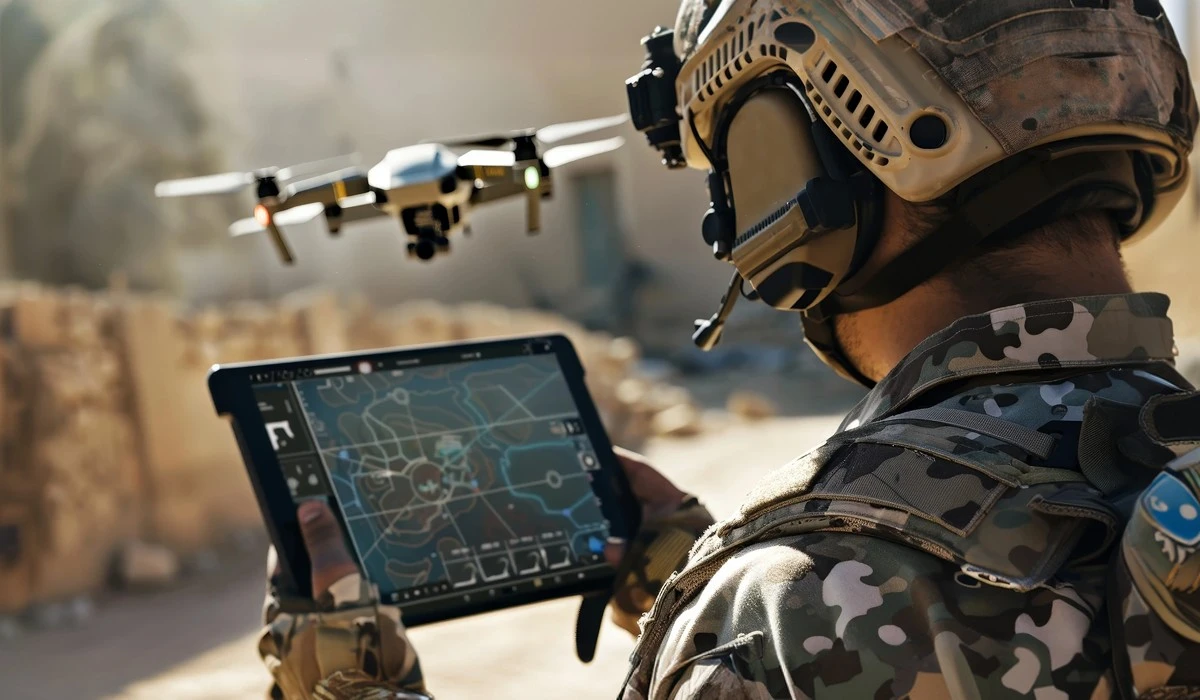
Why Rely On Advanced Guided Weapon Systems
During the 1940s, military commanders viewed warfare as a game of high-stakes math and luck. They sent hundreds of planes to drop thousands of bombs over a single city, hoping a few might strike a factory. Most of those bombs fell on empty fields, parks, or homes. This massive waste defined how nations fought for decades. Today, that reality has vanished.
According to research published in Sage Journals, more accurate bombs require fewer sorties to fulfill their missions, meaning one pilot now flies a mission that once required an entire air wing. Modern technology allows a single projectile to find a specific air vent from thirty miles away.
These Guided Weapon Systems turn raw force into a surgical tool. A report by the Congressional Research Service explains that precision munitions are intended to hit a specific point target and minimize collateral damage. The document further notes that a guided munition can change its flight trajectory to improve the likelihood of hitting a target. Commanders no longer guess where their strikes land. They choose the exact spot. This shift creates a massive advantage on the battlefield.
The Evolution of Accuracy in Modern Warfare
Historical combat relied on volume. If you wanted to destroy a bridge, you threw everything you had at it. This approach wasted money, fuel, and lives.
From Carpet Bombing to Surgical Precision
In 1943, the German Fritz X became the first real guided bomb. According to Spartacus Educational, the bomb was managed through a radio link that helped a bombardier steer it toward a target. This single weapon sank the Italian battleship Roma with one shot. This event proved that a small, smart weapon beat a large, dumb one. Before this, pilots needed 9,000 bombs to hit a 60x100-foot building. By the Vietnam War, things changed again. The US military introduced laser-guided Paveway bombs. These reduced the requirement from thousands of bombs to just 10 or 15. High-density information now allows for much cleaner tactical outcomes.
Why Precision is the New Military Standard
The Gulf War in 1991 served as a major turning point for the world. During this conflict, only 7% of the bombs used were precision munitions. Despite that low number, those smart bombs destroyed 75% of the most important strategic targets. Commanders realized they no longer needed to blanket a map in fire. They could use one well-placed strike to disable a power grid or a command center. This shift minimizes waste and increases the effect on high-value targets. Today, accuracy acts as the ultimate standard for any modern military force.
How Guided Weapon Systems Redefine the Battlefield
Modern warfare focuses on speed and effectiveness. Large armies used to win simply because they had more soldiers. Now, smaller forces win because they have better tools.
Guided Weapon Systems allow a small team to punch far above its weight class. A single drone operator can disable an entire tank column from a remote office. This creates a force multiplier where every shot counts. How do guided weapons actually find their targets? These systems use a combination of onboard sensors, such as GPS or infrared seekers, to constantly calculate their position relative to the objective. This constant calculation ensures the weapon stays on course even if the wind blows or the target moves. This technology gives small nations or specialized units the power to defend themselves against much larger threats.
The Mechanics Behind Effective Missile Targeting
A smart weapon needs a brain to function. This brain consists of advanced electronics that process data faster than any human pilot.
Navigation and Guidance Subsystems
Most weapons start with an Inertial Navigation System (INS). This system uses Ring Laser Gyros to track movement. Think of it like walking across a dark room while counting your steps. The weapon knows exactly where it started and how far it has traveled. It measures every turn and every burst of speed. This allows the weapon to stay on a general path even without a satellite signal. Modern units use Micro-Electro-Mechanical Systems to keep these sensors small and light. This allows even small rockets to have advanced navigation.
The Role of Sensors in Changing Environments
Effective missile targeting requires the weapon to see the world around it. Active Radar Homing systems, like those in the AIM-120 AMRAAM, send out radar pulses to find targets. This gives the weapon fire-and-forget capability. The pilot pulls the trigger and moves away while the missile does the hunting. Other systems use Semi-Active Laser seekers. A soldier on the ground paints a target with a laser beam. The missile then looks for the reflection of that light and dives toward it. This flexibility allows the military to hit moving targets in bad weather or thick smoke.
Maximizing Results with Advanced Precision Munitions
War expenses include both lives and monetary supplies. Smart weapons help save both.
Reducing the Logistics Tail
One precision munition can do the job of fifty old-fashioned bombs. This change drastically reduces the strain on supply lines. In the past, a general needed ten cargo planes to carry enough bombs for a single mission. Now, one C-17 transport plane carries enough smart weapons to handle multiple objectives. The Joint Direct Attack Munition (JDAM) is a great example. It is a tail kit that costs about $25,000. It attaches to a cheap, unguided bomb and turns it into a GPS-guided powerhouse, and this makes old inventory useful again.
What is the difference between a missile and a precision munition? While missiles are self-propelled, the term precision munitions often includes smart bombs that use guidance kits to steer toward a target using gravity. Both types focus on hitting a specific point with extreme accuracy. With the M982 Excalibur artillery shell, soldiers can hit a target 40 kilometers away within two meters of the mark. This level of control makes every mission more effective and less expensive.
Data Coordination within Guided Weapon Systems
Information acts as the fuel for modern strikes. A weapon is only as good as the data it receives before and during flight.
Real-Time Data Links and Mid-Course Corrections
Modern Guided Weapon Systems use a network called Link 16. This network lets ships, planes, and ground troops talk to each other in real time. If a target moves after a missile is fired, the weapon receives an update. The Tomahawk Block IV missile can even circle a target area while waiting for new instructions. The operator can change the target while the missile is already in the air. This collaboration between different units ensures that the military never hits an empty spot or an outdated location.
The Integration of AI and Target Recognition
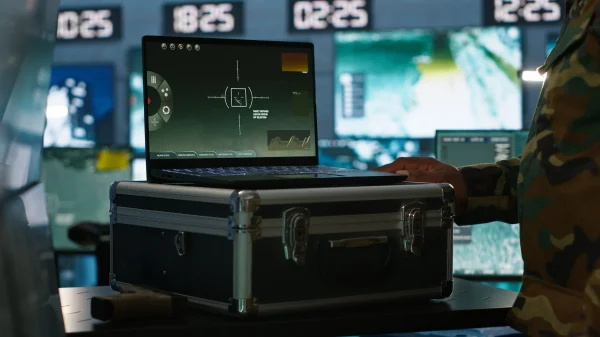
Artificial intelligence now helps weapons tell the difference between a tank and a school bus. Automatic Target Recognition (ATR) software processes thermal images at high speeds. It looks for specific shapes and heat signatures. This technology helps the system ignore decoys or civilian vehicles. When a pilot flies over a crowded battlefield, the software highlights the most dangerous threats. This helps the pilot make better decisions under pressure. It also ensures the weapon strikes the intended enemy rather than an innocent bystander.
Ethical Advantages and Collateral Damage Control
Accuracy helps win battles and protects the innocent. Modern missile targeting focuses on reducing the footprint of every explosion.
Protecting Non-Combatant Lives
In the past, urban warfare meant destroying entire city blocks. Today, the military uses the AGM-114R9X Ninja Missile for high-stakes missions. This weapon has no explosives. Instead, it uses six internal blades to strike a target. This allows the military to eliminate a threat in a car without hurting the people in the car next to it. Military planners also use software like FAST-CD to predict the blast radius of precision munitions. They simulate how a bomb will affect different building materials before they ever pull the trigger.
Are guided weapon systems 100% accurate? No technology is perfect, as environmental factors or electronic countermeasures can sometimes interfere with a weapon’s ability to lock onto its final destination. However, the risk is much lower than it was fifty years ago. Because these weapons hit exactly where they are aimed, commanders can operate in crowded cities with much less fear of harming civilians. This level of control changes the moral setting of modern conflict.
Future Trends in Precision Munitions Technology
The race for better technology never stops. Engineers are currently working on ways to make weapons even faster and harder to stop.
The Rise of Hypersonic and Swarming Tech
Speed is the next big goal for precision munitions. Hypersonic weapons, like the AGM-183 ARRW, travel more than five times the speed of sound. They maneuver within the atmosphere to dodge defense systems. Meanwhile, Project Golden Horde focuses on swarming. This technology lets a group of small missiles talk to each other. If the enemy shoots one down, the others automatically re-assign targets to finish the job. These systems work together like a flock of birds to overwhelm the enemy.
Resilience Against Electronic Warfare
The biggest threat to smart weapons is signal jamming. Enemies try to block GPS signals to make weapons go off course. When engineers build weapons that can think and see for themselves, they ensure their defenses remain strong even in the most difficult environments. To fight this, the next generation of Guided Weapon Systems uses M-Code GPS. This is a powerful, encrypted signal that is much harder to jam. Engineers also use anti-radiation seekers. These sensors find the source of the jamming signal and fly straight into it.
Understanding the Future with Guided Weapon Systems
Precision defines the modern period of defense. We have moved past the days of guessing and hoping for the best. Today, tactical success depends on the intelligent application of force. Guided Weapon Systems provide the accuracy needed to win missions while protecting lives and resources. They represent a massive leap forward in how humans handle conflict. As technology continues to improve, these tools will become even more focused and reliable. The goal remains clear: hit the right target, at the right time, with no wasted effort. This command of accuracy ensures a safer and more effective future for everyone involved.
Recently Added
Categories
- Arts And Humanities
- Blog
- Business And Management
- Criminology
- Education
- Environment And Conservation
- Farming And Animal Care
- Geopolitics
- Lifestyle And Beauty
- Medicine And Science
- Mental Health
- Nutrition And Diet
- Religion And Spirituality
- Social Care And Health
- Sport And Fitness
- Technology
- Uncategorized
- Videos

