

Why Cybersecurity And Artificial Intelligence Win
Your computer faces a threat that changes its appearance every few seconds. According to a study on ResearchGate, conventional defense methods often use static lists of known patterns, resembling a bouncer with a banned list, which makes it hard to stop unknown threats. If a troublemaker isn't on that list, they walk right through the front door. Today, hackers write code that rewrites itself constantly. This makes your old list of bad files useless because the "face" of the threat changes before the list even updates. To succeed, we must examine file behavior rather than file appearance. This shift toward Cybersecurity and Artificial Intelligence changes the rules of the game. It allows your network to learn the difference between a routine update and a thief stealing your data.
The Evolution of Malware in the Age of Cybersecurity and Artificial Intelligence
In the early days, security experts relied on "signatures." A signature is like a digital fingerprint. If a virus had a specific fingerprint, the computer blocked it. However, legacy systems now fail to catch about 30% of new malware because signatures cannot keep up with the 350,000 new threats released every single day. Research in ResearchGate indicates that polymorphic malware uses mutation techniques to bypass old-fashioned signature systems. This code uses a mutation engine to change its decryption routine for every new infection. By the time a security company finds one version, the hacker has already released a thousand more.
From Signature-Based Lists to Behavioral Intelligence
As stated in an arXiv paper, behavior-based detection improves performance by analyzing activity patterns instead of just static signatures. Defense now focuses on the intent of the code rather than its name. How does AI transform cyberattacks? Attackers use AI to automate the creation of polymorphic code that changes its signature with every infection, making traditional detection useless. As noted in Frontiers in Computer Science, machine learning algorithms examine large datasets to find detailed patterns, helping systems adjust to changing dangers.
A study published in Springer adds that using AI in security is a necessity for defending against current, advanced threats. Through the use of Cybersecurity and Artificial Intelligence, defenders can spot these shifting patterns based on suspicious behavior rather than a fixed digital fingerprint. This means the system watches for "Living off the Land" attacks. These attacks use your own computer's tools, like PowerShell, to do harm. Only an intelligent observer can tell when a trusted tool starts acting like a weapon.
Neutralizing Polymorphic and Metamorphic Viruses
Metamorphic viruses take things a step further by completely rewriting their own source code. They insert junk data and swap instructions to hide their true purpose. Cybersecurity and Artificial Intelligence look past these distractions. It identifies the "DNA" of the malware. While the exterior looks different, the core logic remains the same. Intelligent systems recognize these logical structures instantly. They see the pattern of a thief even when the thief wears a new disguise every hour. This ability turns the tide against viruses that previously stayed hidden for months.
How AI-Powered Intrusion Detection Systems Improve Defense
The real strength of a modern network lies in AI-powered intrusion detection systems. These tools do not sleep, and they do not get bored. According to the International Journal of Engineering Research & Technology (IJERT), these systems are designed to identify web attacks as they happen. While a human might miss a tiny spike in data usage, these systems see it as a red flag. As noted in the Journal of Engineering and Computer (JEC), current research focuses on using deep learning and advanced feature engineering to evaluate these methodologies. This allows the system to catch threats that have never been seen before in the wild.
Real-Time Traffic Inspection and Machine Learning
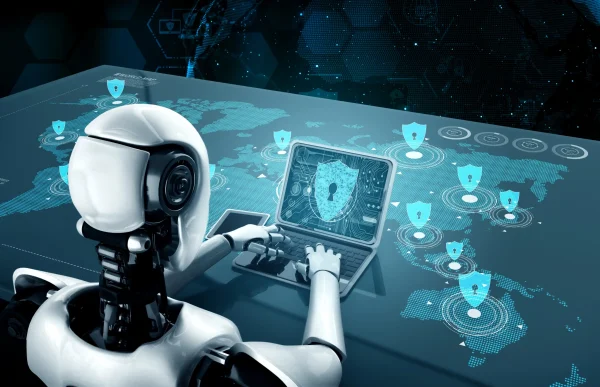
Deep packet inspection is used to slow down networks. Now, machine learning allows for lightning-fast analysis without a lag. What is the difference between traditional IDS and AI-powered systems? According to ResearchGate, older systems frequently fail to identify new attack patterns and miss novel "zero-day" exploits. Research in the Journal of Big Data adds that these technologies process data quickly to lower the number of false alarms. AI-powered intrusion detection systems use machine learning to establish a baseline of "normal" network activity and immediately flag any deviation as a potential breach. This creates a digital boundary that learns and grows stronger with every passing second.
The Role of Neural Networks in Threat Classification
Neural networks act like a digital brain. They use layers of data to make complicated choices. For example, as described in ResearchGate, Convolutional Neural Networks (CNNs) can translate binary code into image formats to spot malware patterns with 99.97% accuracy. A study in the International Journal of Innovative Research in Engineering & Management (IJIRMPS) suggests that Recurrent Neural Networks (RNNs) follow the order of events and API calls to identify attacks. They tell the "story" of an attack. They can distinguish between a harmless system update and a malware script trying to reach a foreign server. This deep classification ensures that legitimate work continues while threats hit a brick wall.
Predictive Prevention via Cybersecurity and Artificial Intelligence
We are moving away from the period of "damage control." In the past, you only knew you had a problem after your files were locked by ransomware. According to Frontiers in Computer Science, these algorithms allow systems to recognize previously unknown attack vectors and stop them early. It looks for the small signs that a hacker is testing your fences. This proactive approach stops the infection before the first file is ever encrypted. It turns your network into a fortress that repairs itself.
Predictive Analytics for Proactive Malware Blocking
AI analyzes threat intelligence from across the entire globe. McKinsey & Company reports that AI can identify strange login habits and highlight weaknesses using historical information. A report from the Times of India observes that behavior-based analysis helps catch suspicious patterns as they occur. These systems block malicious IPs and scripts before they even touch your local hard drive. Because the software predicts which vulnerabilities hackers will use next, it closes the door before the intruder even arrives.
Automated Response and Incident Containment
Speed is the most important factor when a breach occurs. If malware enters a system, it tries to jump from one computer to another. The combination of Cybersecurity and Artificial Intelligence creates "self-healing" networks. As explained by Syracuse University, these tools help protect endpoints by finding and stopping malware and ransomware through automated analysis. The system detects the infection and isolates the affected computer in a fraction of a second. This containment happens much faster than any human could click a mouse. It prevents a small glitch from turning into a company-wide disaster.
Reducing Operational Strain with AI-Powered Intrusion Detection Systems
Security teams often suffer from "alert fatigue." They receive thousands of notifications every day, and most of them are harmless. This causes humans to miss real threats because they are buried in a mountain of noise. Automation changes this by doing the heavy lifting. It filters out the garbage so the experts can focus on the real dangers. This saves time, money, and prevents burnout in the security operations center.
Solving the Crisis of Alert Fatigue
An AI-powered intrusion detection system acts as a first responder. It handles the minor issues automatically. According to a study in ScienceDirect, AI-based systems show effective results in identifying attacks more productively than older methods. Through an analysis of an event's context, AI can filter out harmless anomalies that would typically trigger a manual review. This allows AI-powered intrusion detection systems to prioritize only the most critical, high-fidelity threats for the human security team. This focus ensures that when a human does get an alert, it is something that actually requires their expertise.
Streamlining Forensic Investigations with AI Insights
After an attack, experts need to know exactly how the intruder got in. AI acts like a "flight recorder" for your network. It reconstructs the path the malware took through your systems. It provides clear reasons for its decisions, such as flagging high entropy in a specific file section. This "Explainable AI" helps human analysts understand the threat and close the hole permanently. It turns a scary event into a valuable lesson for the future.
Economic Benefits of Cybersecurity and Artificial Intelligence
Investing in high-tech defense involves both safety and financial considerations. The cost of a data breach is at an all-time high. As reported by Varonis, the average price of a data breach in the United States reached $10.22 million in 2025. These costs come from lost business, legal fees, and the massive effort required to clean up the mess. Cybersecurity and Artificial Intelligence offer a clear return on investment by preventing these costs before they happen.
Minimizing Breach Costs and System Downtime
Data shows that companies using AI save a lot of money. A report by Baker Donelson states that organizations using extensive automation saved $1.9 million per breach and finished investigations 80 days sooner. The technology reduces the "breach lifecycle" by about 80 days. This means you find the problem faster and fix it quicker. Every day of downtime costs a company thousands of dollars in lost productivity. Cybersecurity and Artificial Intelligence pay for themselves through the maintenance of machine operation.
Enhancing Regulatory Compliance and Data Trust
Laws like GDPR and CCPA require companies to protect user data. If you fail, you face massive fines. Automated systems provide ongoing monitoring that humans cannot match. They create a documented trail of security checks. This proves to regulators that you are taking every possible step to keep data safe. Beyond the law, it builds trust with your customers. People are more likely to do business with a company that has a reputation for being unhackable.
The Role of AI-Powered Intrusion Detection Systems in Zero Trust
The old way of thinking was to trust everything inside the office walls. Today, we use a "Zero Trust" model. According to the International Journal of Computer Applications, the Zero Trust model treats every request as potentially harmful, following the "never trust, always verify" rule. AI-powered intrusion detection systems are the heart of this philosophy. They treat every access request as a potential threat. Whether it is the CEO or a new intern, the system checks their behavior every single time they log in.
Continuous Verification and Lateral Movement Prevention
Malware loves to move sideways through a network. Once it gets on one laptop, it tries to find the main server. Research published in ResearchGate mentions that these systems improve security resilience through adaptive detection and automated workflows. AI-powered intrusion detection systems monitor internal traffic to stop this "lateral movement." The system stops infections from spreading like wildfire as it monitors traffic between your own servers.
Identity and Access Management Integration
AI also watches how users behave. It notices "behavioral biometrics" like how fast you type or how you move your mouse. If a hacker steals your password, they won't move the mouse the same way you do. The system detects "impossible travel," such as a login from New York and a login from London ten minutes later. Integration of AI-powered intrusion detection systems with identity management ensures that only the right people have the right access.
Future-Proofing with Cybersecurity and Artificial Intelligence
The battle between hackers and defenders is an arms race. As we get better at defending, attackers get better at attacking. They are already using AI to craft phishing emails and create fake videos. We cannot fight these high-speed threats with human reflexes alone. We need tools that evolve as fast as the threats do.
Adapting to Generative AI Threats
Generative AI can create unique malware on the fly. Tools like "BlackMamba" have shown that code can change itself while it is running on your computer. To stop this, we need Cybersecurity and Artificial Intelligence that understands the logic behind the code. Defensive AI predicts which vulnerabilities hackers will weaponize next. It closes the doors before the hackers even know they are open.
The Rise of Agentic Defense and Autonomous Security
The future of security lies in autonomous agents. These are AI programs that act like digital guards. They hunt for vulnerabilities in your system 24/7 without needing a human to tell them what to do. They scan cloud configurations for mistakes and fix them instantly. This "agentic defense" ensures that your security posture is always perfect. As we move into 2025 and beyond, these systems will become the standard for any business that wants to survive.
The Future of a Malware-Free World
Malware will always exist, but its power is fading. By combining Cybersecurity and Artificial Intelligence, we have finally built a defense that can keep up with the speed of light.
Organizations that deploy AI-powered intrusion detection systems build a living immune system for their digital life rather than just purchasing software. This system grows smarter with every attack it blocks. It protects our data, our money, and our privacy. Ultimately, the fusion of Cybersecurity and Artificial Intelligence represents the final frontier in making malware obsolete. We are moving toward a world where the bouncer doesn't just have a list—he knows every trick the troublemakers will ever try.
Recently Added
Categories
- Arts And Humanities
- Blog
- Business And Management
- Criminology
- Education
- Environment And Conservation
- Farming And Animal Care
- Geopolitics
- Lifestyle And Beauty
- Medicine And Science
- Mental Health
- Nutrition And Diet
- Religion And Spirituality
- Social Care And Health
- Sport And Fitness
- Technology
- Uncategorized
- Videos

