
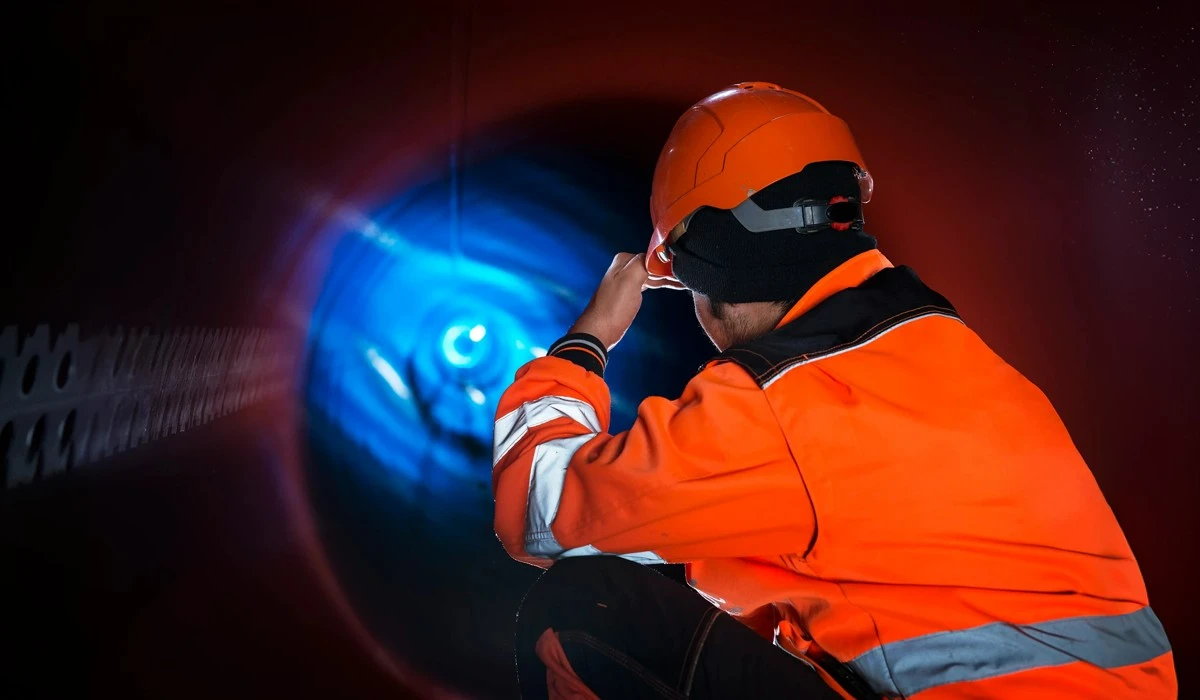
Tunnel Engineering Audits Prevent Fatal Collapses
Most people stand on a subway platform and see static concrete. They assume the ground beneath their feet is solid and unchanging. But just a few feet away, millions of tons of earth are pushing in, constantly trying to reclaim the space. The only reason that the tunnel exists is that a team of experts fought a war against geology and won.
But here is the scary part: ground conditions change. A design that works perfectly on paper can fail catastrophically when actual soil meets steel. Tunnel Engineering represents the primary support for modern subterranean infrastructure, reaching beyond the simple creation of blueprint designs.
Audits provide technical examinations of structural health and safety protocols rather than financial reviews. Regular, expert-led engineering audits are the most effective way to bridge the gap between a theoretical design and the gritty reality of underground construction safety.
The High Stakes of Subsurface Infrastructure
Digging holes is dangerous work. In fact, underground projects often face a fatality rate three times higher than general construction, according to OSHA data trends. Why is the risk so high? Because the Earth is volatile. In places like Singapore or London, crews are often digging through marine clay. This soil is tricky. It can lose its shear strength rapidly.
If engineers use the wrong calculation—specifically "Total Stress" instead of "Effective Stress"—the results are deadly. This exact calculation error contributed to the 2004 Nicoll Highway collapse. The math didn't account for how the soil would behave under specific load conditions, leading to a disaster that claimed four lives.
Water is another enemy. Unchecked groundwater creates "pore water pressure" that pushes against excavation walls. If that pressure gets too high, the wall bursts. Many project managers ask, what are the primary risks in tunnel construction? The answer lies in unpredictable ground conditions and water ingress, which can instantly destabilize excavation faces.
Auditors confirm that piezometer readings remain within safety margins to prevent concealed water pressure from creating lethal conditions; as described by Geo-observations, these tools measure pore pressures in the ground.
Defining the Scope of Tunnel Engineering Audits
An audit creates a specific scope to catch errors before they become disasters. It is a reality check that ensures the project is adhering to the standards of Tunnel Engineering.
Geotechnical Baseline Reviews
Every project starts with a Geotechnical Baseline Report (GBR). This is the "contractual reality" of the ground. But nature doesn't read contracts. Auditors review soil and rock data to see if the current ground conditions match the initial report. They check the "Q-system value," which rates the quality of the rock mass. If the rock is softer or more fractured than the bid documents assumed, the support plan must change immediately. This review prevents contractors from building a tunnel designed for solid rock in an area full of loose gravel.
Structural Integrity Verification

Next, auditors look at the tunnel lining itself, whether it is shotcrete or pre-cast segments. According to Bentley, software programs like Plaxis enable the simulation of structural and soil interaction under stress. The tool enables auditors to identify concerns in the model, such as predicted deformation exceeding 1% of the tunnel diameter.
MDPI research notes that auditors also employ Non-Destructive Testing (NDT) such as Ground Penetrating Radar (GPR) and Ultrasonic Tomography to inspect concrete walls. A study in ScienceDirect highlights that these techniques identify internal air pockets, gaps, or delamination behind the wall without the need for drilling.
The Pre-Construction Audit Phase
Safety starts way before the digging begins. This phase is about checking the battle plan. A major focus is on machinery. Auditors review the Tunnel Boring Machine (TBM) specifications. Does the face pressure match the soil permeability? Guidelines from DAUB specify that projects in high-water-pressure zones require an Earth Pressure Balance (EPB) shield to stabilize the tunnel face against ground and water pressures.
The selection of an incorrect machine invites a cave-in. If the TBM cannot balance the pressure of the earth and water at the face of the tunnel, the ground will collapse into the machine.
Materials get checked strictly, too. Reports on the 2006 Boston Big Dig ceiling collapse indicate that incorrect epoxy caused the tragedy. As noted in the New York Times, auditors now confirm chemical formulations to ensure that "Standard Set" epoxy is used because the study found "Fast Set" varieties have a history of failing over time.
Finally, they review the layout for underground construction safety. They check escape routes against regulations like NFPA 130. In rail tunnels, walking distances to cross-passages usually cannot exceed 244 meters (800 feet). If the design places them 300 meters apart, the audit flags it immediately. Ventilation planning happens here to ensure fans can push enough air to clear smoke in an emergency.
How Tunnel Engineering Dictates Real-Time Monitoring
Once construction starts, the focus shifts to data. Tunnel Engineering isn't static; it lives in the readings coming from the ground during the build.
Instrumentation and Sensor Data
You cannot manage what you cannot measure. As described by Detektia, engineers install inclinometers to calculate lateral ground movements. A critical audit point is checking the depth of these installations. These sensors must go deep enough to hit "stable ground" below the excavation zone to provide an accurate fixed reference point. If they don't, the data is useless.
Equipment manuals from Sisgeo state that auditors also check extensometers, which are used to monitor convergence as tunnel walls squeeze inward. Stakeholders often wonder, how is tunnel stability monitored during construction? Engineers rely on real-time geotechnical sensors that detect even millimeter-level ground movements to set off early warnings. If wall movement speeds up (acceleration) instead of slowing down over time, it indicates imminent failure.
TBM Parameter Checks
The machine talks to the engineers, too. Auditors analyze TBM logs for spikes in "Thrust Force" or "Cutterhead Torque." A sudden drop in torque is usually bad news. It often means the cutterhead has hit a void or a soft pocket of earth. If the crew keeps pushing forward without stopping to grout (fill) that void, the ground above could sink, causing settlement damage to buildings on the surface.
Critical Protocols for Underground Construction Safety
Safety protocols address risks from both falling rocks and the necessity of keeping workers alive in hazardous environments. Modern Tunnel Engineering protocols extend beyond structural mechanics to the very air that workers breathe.
Ventilation is the first priority. The OSHA standard 1926.800 demands at least 200 cubic feet of fresh air per minute (cfm) for every employee underground. OSHA regulations also require that air move at a minimum velocity of 30 feet per minute (fpm) to displace blasting fumes and dust from the bore. Furthermore, Oregon OSHA documentation explains that auditors must confirm that ventilation fans have reversible airflow to remove smoke during fires.
During logistical planning, we have to consider the safety requirements for underground work. Comprehensive requirements include constant air quality monitoring, emergency lighting, and clear evacuation pathways for all personnel. Fire suppression is also key. Storage areas within 100 feet of an opening must have a fire resistance rating of at least one hour.
Finally, auditors check the headcount system. Whether it is a physical "brass tag" system or a digital badge tracker, the designated "Competent Person" must know exactly who is down there at all times. In an emergency, an accurate headcount is the difference between a rescue and a recovery mission.
Utilizing Technology for Expanded Insights
Clipboards are being replaced by code. Modern audits use heavy tech to see things humans miss, increasing the information density of every report.
Digital Twins and AI
According to IBM, engineers now construct a Digital Twin, which is a virtual representation of the physical tunnel. The company explains that this model updates using real-time data to accurately reflect the behavior of the real-world counterpart. Engineers can run "What If" simulations. For example, "What if water pressure doubles tomorrow?" The model predicts where the cracks will form.
Artificial Intelligence takes it further. AI algorithms scan thousands of sensor inputs to detect "micro-tremors" or acoustic emissions in rock bolts. These subtle vibrations can predict a bolt snap weeks before it actually happens, allowing crews to reinforce the wall early.
LiDAR and Drone Inspections
Sending a person into an unsupported or damaged tunnel section is dangerous. Now, we send drones. Drones utilize SLAM (Simultaneous Localization and Mapping) technology to navigate dark, GPS-denied zones while mapping the environment, as explained by MathWorks. According to FARO, these drones use LiDAR lasers to generate 3D point clouds, which consist of large sets of points captured during scanning. This captures heat maps of wall thickness and identifies "fallouts" (collapsed areas). This technology removes human error from measurement and keeps inspectors out of the line of fire.
Learning from the Past: Audit Success Stories
History teaches us expensive lessons. The 1994 Heathrow Express collapse in London serves as an example of oversight failure; a report by Cross-Safety notes the project utilized the New Austrian Tunnelling Method (NATM) in clay soil. However, the audit regime failed to catch substandard grout repairs in the tunnel invert (floor).
As documented by rockmass.net, the recovery exceeded £150 million, although the incident resulted in no deaths or injuries. A rigorous audit of the grout quality would have caught the flaw for a fraction of that cost.
Compare that to the "Observational Method," a successful concept used in Tunnel Engineering. Here, the design is reviewed and modified during construction based on audit data. If an audit triggers an "Amber Alert" on ground movement, the construction team stops. They install heavier steel ribs immediately. This responsiveness prevents disasters before they make the news.
Elevating Standards in Tunnel Engineering
Safety is an investment, not an expense. A comprehensive audit usually costs less than 1% of the total project budget. Yet, it safeguards against catastrophic failures that can cost billions and destroy reputations.
The preservation of safety during underground construction stems from constant, expert engineering oversight rather than luck. As our cities get denser, we need to dig deeper and closer to existing buildings. A settlement trough of just 10-15mm can crack a foundation on the surface.
The margin for error is shrinking. The future of our urban infrastructure relies entirely on the precision and integrity of Tunnel Engineering.
Recently Added
Categories
- Arts And Humanities
- Blog
- Business And Management
- Criminology
- Education
- Environment And Conservation
- Farming And Animal Care
- Geopolitics
- Lifestyle And Beauty
- Medicine And Science
- Mental Health
- Nutrition And Diet
- Religion And Spirituality
- Social Care And Health
- Sport And Fitness
- Technology
- Uncategorized
- Videos

