
Image Credit - Wikimedia Commons
Hyundai Robot Humanoid Built As New Worker
According to an announcement from Boston Dynamics, Hyundai Motor Group purchased a controlling interest in the mobile robot firm for $1.1 billion to redefine the role of the factory worker. For decades, car manufacturing relied on stationary arms bolted to the floor, doing one thing forever. That period is ending because the real power shift comes from how these machines learn to navigate the messy reality of a shop floor.
The industry turns a factory into a giant computer that trains its own limbs, pushing toward a reality where software dictates the speed of physical labor. This change creates a strange tension between the need for high-tech experts and the political borders that often keep them out. Hyundai’s humanoid robot now serves as the center of a multibillion-dollar bet on how things will be built in the next decade. The struggle centers on how fast the world can adapt to a workforce that never gets tired and never forgets a line of code.
The Conflict Between Borders and Innovation
The push for advanced automation often hits a wall when the people building the systems cannot stay in the country where the factories sit. Reuters reports that federal agents arrested 300 South Korean citizens at a Georgia battery site in September 2025, disrupting a major industrial expansion. This event forced a high-level executive apology and a personal White House phone call to the Hyundai CEO to smooth over the disruption. José Muñoz, the CEO, warned that such enforcement actions threaten the future of where overseas capital is spent. If specialists can't be on the ground to set up these advanced plants, foreign companies might think twice about investing in US soil.
President Donald Trump eventually weighed in, expressing opposition to the tactics used in the raid. He noted that there is a global consensus on the need for expert migration, especially when it comes to specialists required for high-tech manufacturing. The goal remains to educate local workers, but the immediate setup of these facilities requires international knowledge. How many people were arrested in the Hyundai raid? The 2025 enforcement action resulted in the arrest of hundreds of workers, mostly specialists from South Korea who were essential for factory development. This event highlighted a major friction point: the desire for domestic manufacturing growth versus the reality of a global talent pool.
The Technical Specs of the New Atlas
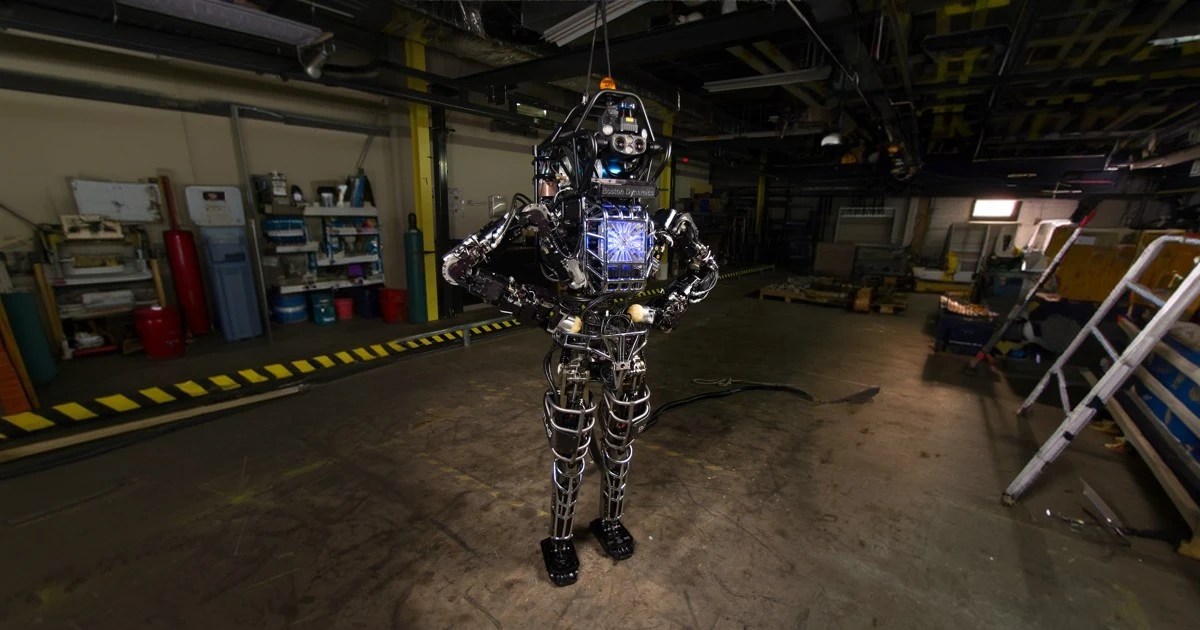
As reported by Reuters, Hyundai unveiled the production version of Atlas during a January 5, 2026, keynote at CES in Las Vegas. This machine handles the grime and heat of a real-world assembly line instead of performing backflips for YouTube. With 56 degrees of freedom, the robot has a range of motion that rivals a human, allowing it to reach into tight spaces and handle tools with high precision. It features tactile sensing hands that can feel the difference between a metal bolt and a plastic clip. This level of physical intelligence separates a modern humanoid from the clunky machines of the past.
The hardware is designed to survive in environments ranging from -4°F to 104°F, meaning it can work in unconditioned warehouses or near hot forge presses without failing. How much can the Hyundai robot lift? The latest production version of the Atlas robot is capable of lifting up to 110 pounds (50 kg), which covers the majority of heavy lifting tasks that currently cause injury to human workers. This lift capacity, combined with its industrial climate resilience, makes it a viable candidate for heavy-duty manufacturing. It represents a shift toward general industrial use instead of specialized, single-purpose automation.
Software-Defined Factories and Physical Intelligence
The real change is happening in the logic centers of these industrial sites, where the focus has moved from hardware-led design to data-driven operations. Hyundai is moving toward "Software-Defined Factories" (SDF), where the facility itself acts like an operating system. Instead of rebuilding a line to change a car model, managers can simply push a software update to the entire fleet of robots. This allows for extreme agility, as knowledge gained in one factory can be instantly distributed across global nodes. As noted by Technology.org, the company will open Robot Metaplant Application Centers (RMAC) in 2026 to serve as training grounds for human-robot collaboration and lift-and-turn validation.
A news release from NVIDIA reveals that Hyundai is investing $3 billion alongside NVIDIA to develop a physical AI cluster in South Korea. The goal is to move beyond pilot-stage sequencing and into difficult assembly clusters where robots can make decisions in real-time. Through AI simulation and high-performance computing, the robots practice millions of hours in a virtual world before they ever step onto a real floor. This fusion of general-purpose cognition with a versatile physical form is the core of the Boston Dynamics and Google DeepMind partnership. They are trying to solve difficult real-world problems that go far beyond simple manufacturing tasks.
The Looming Labor Shift
There is a growing gap between the corporate promise of "co-working" and the fears of the people currently on the assembly line. Jaehoon Chang, the Vice Chair, argues that automation is a necessity for growth but insists that human oversight will always be required. In this view, humans move into roles involving instruction, upkeep, and the management of these robotic fleets. The idea is to create novel employment categories that don't exist today, focusing on the cooperation between man and machine. This model suggests that Hyundai’s robot will act as a supportive partner rather than a total replacement.
However, the labor unions aren't convinced that the shift will be so smooth. The Kia labor union has already begun demanding protections against potential rights violations in the AI period. They are concerned that "Physical AI" will eventually lead to a massive reduction in the need for human workers, regardless of what the corporate press releases say. While the company talks about reducing physical strain and safety enhancement through high-risk task delegation, the workers see a threat to their job security. This tension will likely define the relationship between management and labor for the next decade.
Strategic Alliances in the AI Age
No company can build this future alone, leading to a web of corporate cooperation and external alliances. Hyundai Mobis handles the actuators and components, while Hyundai Glovis manages the logistics and supply chain side of the robotic rollout. Beyond the internal group, the partnership with Google DeepMind integrates Gemini AI to give the robots better reasoning capabilities. Meanwhile, NVIDIA provides the simulation power needed to train these machines safely. Even competitors are teaming up, as seen in the humanoid development partnership between Hyundai and Toyota.
Case studies from Boston Dynamics confirm that companies like Nestlé, DHL, and Maersk already deploy Spot and Stretch models for logistics and warehouse management. This proves that the market for mobile, intelligent robots is already maturing. Are humanoid robots being used in factories now? Currently, robots like Spot and Stretch are handling logistics, but the full-scale deployment of humanoid assembly workers like Atlas is scheduled to begin in 2028. This gradual rollout allows companies to test the technology in controlled environments before moving to the high-stakes car assembly line.

Image by Harrison Keely, CC BY 4.0
Roadmap to 2030
The Hyundai Newsroom states that the company will invest $26 billion in the U.S. through 2028 to support domestic manufacturing and robotics. Following the Atlas debut in 2026, the actual factory rollout is scheduled to commence in 2028. This will start with the integration of robots across the global network, including the high-profile Georgia plant. In the early stages, these humanoid robots will be tasked with component sequencing—the process of organizing parts so they can be easily accessed during assembly. This is a task that requires precision and constant movement but is less difficult than full vehicle construction.
By 2030, the duty expansion will move into difficult assembly operations. This is the year Hyundai aims to hit an annual vehicle sales goal of 9.8 million units. To reach that number, the company believes it must have a fleet of robots capable of working alongside humans in every major facility. Reuters also reports that the group aims to manufacture 30,000 humanoid units per year by 2028, ensuring there are enough "digital workers" to meet the demand. This roadmap focuses on a defense against industry obsolescence. If Hyundai doesn't perfect this technology, someone else will.
The Financial Reality of Industrial AI
Financial reports from Goldman Sachs and Morgan Stanley project a $38 billion humanoid market by 2035 and a $5 trillion sector by 2050, respectively. Elon Musk has even claimed that the Tesla Optimus could become the most significant product in history, potentially making up the majority of a company's future worth. Hyundai is positioning itself to be a leader in this space, using its massive capital injection to align with federal manufacturing objectives in the United States.
Executive Chair Chung Euisun has made it a New Year mandate to embrace "frontier intelligence" to prevent a competitive decline. The shift toward logic-centered industrial sites is a survival tactic. The company focuses on software updates and knowledge distribution to remain agile in a market that is changing faster than ever. This initiative builds the infrastructure that will make everything else in the future instead of just making cars. The validation for this entire move will come through authentic factory trials, where the machines must prove they can handle the daily grind of a 24-hour production cycle.
The Next Industrial Standard
High-tech automation shifts how the industry values human labor on the factory floor. The industry leans into the capabilities of Hyundai’s humanoid robot to solve the problem of physical burnout while racing to stay ahead of global competitors. This change brings a new set of challenges, from the political friction of expert migration to the legitimate fears of labor unions worried about their future. However, the roadmap to 2030 shows that the shift is already well underway, backed by billions of dollars and the world's most advanced AI partnerships. Intelligent, walking systems that learn a new task as easily as downloading a file will define the factory of the future, replacing the heavy machinery bolted to the floor. Success in this new period will belong to the companies that can balance this technological leap with the human element that still sits at the heart of manufacturing.
Recently Added
Categories
- Arts And Humanities
- Blog
- Business And Management
- Criminology
- Education
- Environment And Conservation
- Farming And Animal Care
- Geopolitics
- Lifestyle And Beauty
- Medicine And Science
- Mental Health
- Nutrition And Diet
- Religion And Spirituality
- Social Care And Health
- Sport And Fitness
- Technology
- Uncategorized
- Videos

