
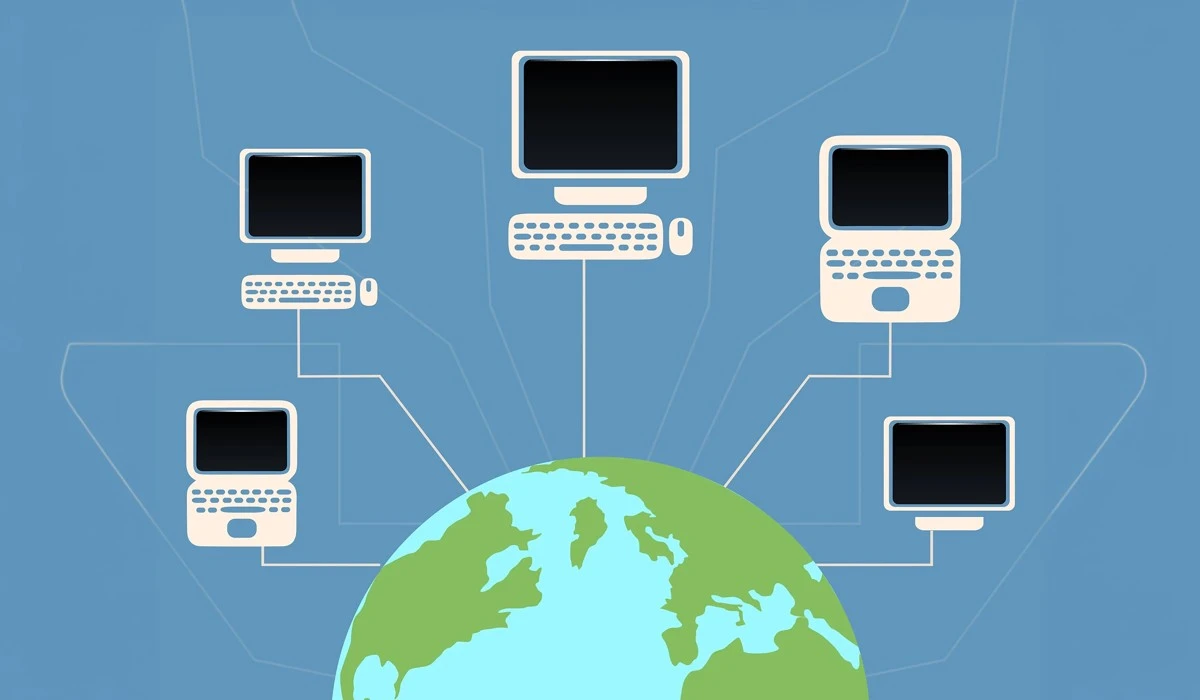
ARPANET Led The History Of Information Networks
Before the 1830s, information moved only as fast as a physical object. If a merchant in London wanted to send a price list to New York, the paper traveled on a wooden ship across a vast ocean. Distance dictated the reach of knowledge before the 1830s. The History of Information Networks tracks the moment we broke this physical tie.
This change began with the clicking keys of early telegraphy. It eventually grew into the elaborate ARPANET origins that power our digital lives today. We traded the speed of a galloping horse for the speed of light. This shift didn’t just happen overnight. It required decades of trial, error, and radical thinking from people who imagined a reality without borders.
The Foundation of Speed via Early Telegraphy
The 19th century changed everything for human communication. For the first time, people sent thoughts through copper wires using sparks of electricity. This period proved that humans could separate information from the person carrying it. It provided the foundation for every digital tool we use today.
Mechanical Pulses and the Morse Revolution
Samuel Morse and Alfred Vail developed a system that used dots and dashes to represent letters. As stated by Britannica, this was the first practical use of binary logic in the History of Information Networks. Operators tapped out these pulses, and someone on the other end decoded them instantly. How did the telegraph influence the internet? The telegraph established binary-style logic and proved that a global grid of wires could transmit data near-instantaneously.
This invention broke the "speed of a horse" barrier forever. By 1858, engineers laid the first Transatlantic Cable. According to records on the Atlantic Cable website, the message transfer rate was limited to about 0.1 words per minute. Although slow, it changed the scale of human interaction. We stopped thinking in terms of miles and started thinking in terms of minutes.
Limitations of Circuit Switching in Early Grids
Britannica states that early telegraphy relied on a methodology called circuit switching, which requires a fixed physical line to be maintained for the duration of the contact. As TechTarget explains, this method meant the communication channel was restricted solely to the two endpoints involved. No one else could use that specific wire until you finished your message.
This stage is necessary to understand the History of Information Networks because it highlights a fatal flaw. If a single wire broke, the whole connection died. Britannica also mentions that in the 19th century, technicians used Gutta-percha, a natural latex, to insulate underwater cables. When this material degraded, the network failed. We needed a system that didn't rely on a single, fragile thread.
The Conceptual Framework of ARPANET Origins
By the 1960s, the world needed something more durable than the old telegraph grids. Computers were large, expensive, and isolated. Researchers wanted a way to share these massive resources without buying a new machine for every university.
J.C.R. Licklider and the Galactic Network
J.C.R. Licklider worked for the Advanced Research Projects Agency (ARPA). An oral history from the Computer History Museum notes that J.C.R. Licklider, while at ARPA, authored a 1963 memo discussing an "Intergalactic Computer Network." He didn't want a central computer controlling everything. Instead, he envisioned a network where any computer could talk to any other computer.
His vision moved away from the old top-down systems. He believed that connecting people and machines would spark a new era of human creativity. This idea formed the heart of arpanet origins. It pushed scientists to look for ways to make different brands of hardware speak the same language.
Theoretical Packet Switching vs. Traditional Lines
Records from the Computer History Museum mention that Paul Baran provided early conceptual ideas to solve the bottleneck problem, while Donald Davies introduced the term "packet" in 1965 to describe how data was broken down. They proposed breaking data into small chunks. Rather than sending a whole letter at once, the system would chop it up. Each piece would find its own path to the destination and reassemble upon arrival.
This changed the History of Information Networks because it allowed multiple people to share the same wire. If one path was busy, the packet just took another route. This logic replaced the old store-and-forward methods of the telegraph, which often caused long delays.
Why ARPANET Shaped the Modern History of Information Networks
The move from theory to reality happened during the height of the Cold War. The military wanted a communication system that could survive a disaster. They funded researchers to build a network that had no "head" to cut off.
Survivability and the Cold War Context
According to the RAND Corporation, U.S. officials considered ways to maintain communication following a potential nuclear strike. Traditional telephone lines were too vulnerable. Why was ARPANET created during the Cold War? A research memorandum from RAND indicates that it was designed as a decentralized communication system that could maintain operational status even if various nodes and links were destroyed.
This decentralized approach ensured that if one city disappeared, the rest of the network would automatically reroute the data. This focus on survival created the "distributed" topology we use today. It made the network reliable and nearly impossible to shut down completely. This durability remains a hallmark of the History of Information Networks.
Bridging Diverse Hardware across Universities
Documents from the Computer History Museum emphasize that the origins of ARPANET also focused on "resource sharing." In the 1960s, computers like the IBM 360 or the PDP-10 were incredibly expensive. The government didn't want to buy one for every researcher. They wanted a researcher in Utah to use the processing power of a computer in California.
This required a common language. Because different manufacturers built these machines, they didn't naturally "talk" to each other. ARPANET acted as the bridge. It proved that a unified network could host various types of hardware, creating a collaborative environment for the world's best minds.
The Birth of the First Interface Message Processors
Building this network required a new kind of machine. In 1969, a company called BBN won the contract to build the hardware. They created the Interface Message Processor, or IMP. These machines acted as the ancestors of the modern router.
UCLA and the First Node Connection
The Computer History Museum highlights that the initial connection occurred on October 29, 1969, between Charley Kline at UCLA and Bill Duvall at SRI. The museum’s account explains that Kline successfully transmitted the letters "L" and "O" before the system encountered a bug and stopped working. Those two characters became the first data packets sent in the History of Information Networks.
Despite the crash, the test proved that packet switching worked. The UCLA computer (a Sigma 7) and the SRI computer (an SDS 940) had successfully shared data. This moment marked the practical beginning of the digital age.
Evolution of the IMP as the First Router
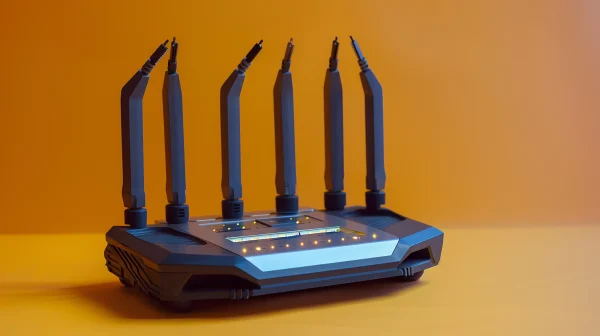
Based on technical records from the Computer History Museum, the Interface Message Processor was a modified version of the Honeywell DDP-516 minicomputer. It had only 12,000 words of memory, which is tiny compared to a modern smartphone. However, it performed the necessary task of handling the network traffic so the main computers didn't have to.
These machines took the burden off the expensive host computers. They managed the packets, checked for errors, and ensured the data reached the right spot. This move separated the "work" of the computer from the "work" of the network. This distinction remains a core principle in how we build networks today.
Navigating the Evolution of the History of Information Networks
As the network grew, it faced new challenges. More universities joined, and eventually, other countries wanted in. The original rules of the network began to show their age, leading to a massive upgrade in the 1970s and 80s.
The Protocol War and the Victory of TCP/IP
The original protocol, known as NCP, was too limited. Vint Cerf and Bob Kahn realized the world needed a way to connect different types of networks together. They developed TCP/IP, which allows "internetting." Who invented ARPANET? While many contributed, it was primarily developed by researchers at ARPA led by Larry Roberts, with essential protocol work by Vint Cerf and Robert Kahn.
On January 1, 1983, the network had a "Flag Day." Every computer had to switch to TCP/IP or get kicked off the network. This event is the true birthday of the modern Internet. It allowed the History of Information Networks to expand beyond a few research labs and into a global standard.
Expanding the Node Map through the 1970s
The network grew from four nodes in 1969 to dozens by the mid-1970s. A timeline provided by the Computer History Museum shows that satellite links connected ARPANET to Norway and London in 1973. This expansion proved that packet switching could work over long distances and via different media, like radio and satellite.
This timeline also credits Ray Tomlinson with sending the first network email; he employed the "@" symbol to separate the user from the host machine. This simple choice created a new way for humans to interact. It shifted the network from a tool for sharing computer power to a tool for sharing human thoughts.
The Shift from ARPANET to the Global Internet
By the end of the 1980s, the original ARPANET had done its job. It was no longer the fastest or the best network available. Newer, faster backbones like the NSFNET began to take over the heavy lifting of data traffic.
Decommissioning the Pioneer
As documented in transcripts from the Computer History Museum, ARPANET officially retired in 1990. It had served as the testing ground for twenty years. During its life, it split into two parts: MILNET for the military and a smaller research version. This split allowed the civilian side to grow without the strict security requirements of the Department of Defense.
The decommissioning didn't mean the end of the ideas. Instead, it meant the ideas had become so successful that the original hardware couldn't keep up. The History of Information Networks moved into a commercial phase where private companies began providing access to the public.
From ARPANET Origins to World Wide Web Integration
Many people confuse the Internet with the World Wide Web. Arpanet origins provided the "pipes" and the rules for moving data. The World Wide Web, created by Tim Berners-Lee, provided the "pages" we look at. The Internet is the tracks, and the Web is the train.
This distinction is vital. Without the base network built in 1969, the Web would have no place to live. The NSFNET eventually provided a 45 Mbps backbone, which was nearly a thousand times faster than the original ARPANET lines. This speed made the visual Web possible for everyday users.
Enduring Influence on the History of Information Networks
The decisions made by a handful of scientists in the 1960s still rule our lives. When you send a text or watch a video, you are using the logic born from ARPANET origins. These principles ensure that information remains free and accessible.
Decentralization as a Core Internet Philosophy
One of the most important legacies is the "End-to-End" principle. This means the intelligence of the network stays at the edges—in your phone or your computer. The network itself is "dumb" and just moves packets. This prevents a central authority from easily controlling everything that happens online.
This philosophy allows for constant innovation. Because the network doesn't care what is inside the packets, anyone can invent a new app or service without asking for permission from the network owners. This open nature is the greatest gift of the History of Information Networks.
Lessons Learned from Early Telegraphy to Fiber Optics
We have come a long way from the copper wires and Gutta-percha of early telegraphy. Today, we use fiber optics to send data using pulses of light. However, the goal remains the same: to connect people across any distance.
The jump from the telegraph's 0.1 words per minute to the gigabit speeds of today shows our obsession with connection. We have moved from physical mechanical pulses to a world where our entire culture exists in a digital space. Each step in this pathway was built on the one before it.
The Lasting Legacy of the History of Information Networks
The pathway from the first click of a telegraph key to the high-speed packets of today is a story of human ingenuity. We started by trying to send simple signals through a wire and ended up building a global brain. While early telegraphy provided the initial spark, the specific ARPANET origins provided the framework for the modern world.
The History of Information Networks is an ongoing story. We are still finding new ways to share data, from 5G mobile networks to satellite constellations in space. ARPANET remains the most significant chapter in this quest because it taught us how to build a system that belongs to everyone. As we look to the future, we still rely on those first packets sent in a small lab in 1969 to keep our world connected.
Recently Added
Categories
- Arts And Humanities
- Blog
- Business And Management
- Criminology
- Education
- Environment And Conservation
- Farming And Animal Care
- Geopolitics
- Lifestyle And Beauty
- Medicine And Science
- Mental Health
- Nutrition And Diet
- Religion And Spirituality
- Social Care And Health
- Sport And Fitness
- Technology
- Uncategorized
- Videos

