
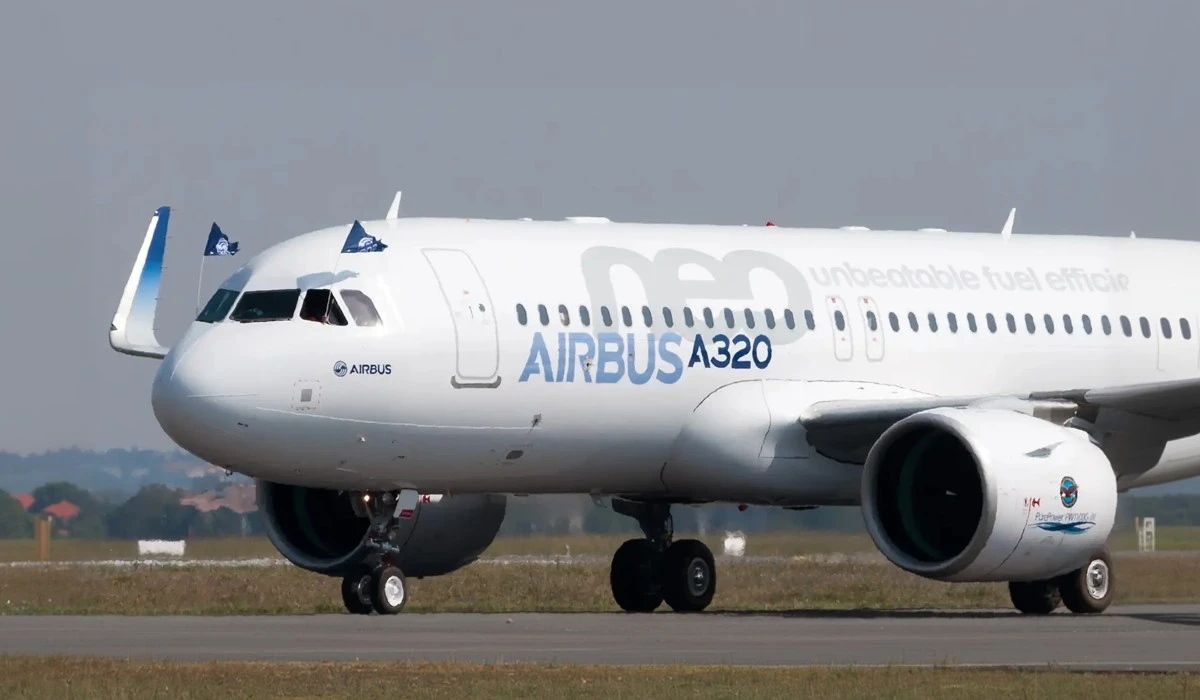
Image Credit - by Don-vip, CC BY-SA 4.0, via Wikimedia Commons
Airbus A320 Solar Radiation Fix: The Invisible Trigger
Microscopic particles traverse the atmosphere and interact with the fragile logic of digital memory. A single subatomic strike carries enough energy to flip a binary switch from zero to one. This silent inversion overrides pilot inputs and forces physical changes upon the aircraft. Thousands of commercial airliners currently operate with this latent digital vulnerability.
The aviation industry now confronts a challenge where cosmic energy directly intersects with flight control systems. An invisible atmospheric interaction corrupted data within onboard computers. This corruption forced the nose of a passenger jet toward the ground. According to an emergency directive from the European Union Aviation Safety Agency (EASA), regulators identified the specific intersection of hardware sensitivity and software logic responsible for this error. A global effort to neutralize this microscopic threat is currently underway.
The JetBlue Incident and the Invisible Hand
Sudden kinetic shifts in steady flight reveal the presence of underlying system errors. A standard journey from Cancun to Newark abruptly transformed into an emergency scenario on October 30, 2025. Reporting from India Today confirms that the Airbus A320, operated by JetBlue, experienced an uncommanded pitch-down event. Gravity took hold as the nose dropped without pilot input. The crew regained control and performed an emergency landing in Tampa.
The physical impact on the cabin paralleled the digital chaos in the computer. The Guardian notes that the sudden motion injured at least 15 passengers. These injuries remained non-life-threatening. However, the event triggered an immediate investigation into the aircraft's control systems. Experts looked beyond mechanical failure. They hunted for a flaw in the digital instructions guiding the plane.
Common queries arise regarding the cause of such sudden movements. What caused the JetBlue pitch down? Reuters states that investigators link the event to corrupted data in the flight control computer triggered by external radiation.
This specific incident serves as the anchor for a worldwide safety reaction. The investigation uncovered a link to a phenomenon previously considered extremely rare. The flight path, altitude, and electronic sensitivity converged to create a critical failure. This event forced the industry to acknowledge the tangible power of invisible particles.
The Mechanism: Bit Flips and Cosmic Interventions
Binary code relies on absolute physical stability to maintain the distinction between true and false. High-altitude environments expose this delicate stability to thermal neutrons and cosmic particles. As described by scientific resources like Wikipedia, these particles bombard the aircraft frame constantly. Occasionally, a particle strikes a memory cell within the computer with precise energy. This strike alters the state of the cell.
Engineers refer to this phenomenon as a "bit flip." A zero becomes a one, or a one becomes a zero. The computer accepts this altered digit as a valid command. The Guardian further details that in the case of the A320, this corruption occurred within the Elevator Aileron Computer, specifically the ELAC B unit. This unit transmits pilot commands to the elevators. It controls the pitch and the angle of the nose.
A corrupted signal in this unit dictates a new flight path. The computer believes it is correcting the aircraft's orientation. In reality, it forces the plane into a dive. The system acts on false logic generated by a subatomic collision.
Travelers often wonder about the frequency of these events. Can solar flares affect airplanes? Educational publications such as Science in School explain that studies indicate thermal neutrons from cosmic radiation possess the potential to cause bit flips in these specific systems.
The risk increases at higher altitudes and latitudes. The atmosphere provides less protection in these zones. Absorption of particles decreases, and the density of the radiation field increases. The hardware becomes a target for a force existing entirely outside the realm of aerodynamics.
The Software Paradox: L104 vs. L103+
Safety systems designed to enhance protection sometimes introduce unforeseen fragilities. FlightGlobal identifies that the root of this specific vulnerability lies in a software version known as Standard L104. Airbus originally designed this software to mimic the advanced capabilities of the A350. The initiative aimed to provide "Safety Beyond Standard."
This software controls the ELAC B unit. It manages the fly-by-wire responses. However, Standard L104 holds a specific incompatibility with the ELAC B hardware under radiation stress. The software lacks the resilience to handle the data corruption caused by the bit flip. It interprets the flipped bit as a command rather than an error.
The solution requires a retreat rather than an advance. The aviation outlet continues to explain that airlines must revert their systems to an earlier version, Standard L103+. This previous version possesses the necessary stability. It ignores the phantom commands generated by particle strikes. The "update" in this context creates a paradox. The older code provides the superior safety net.
Passengers frequently ask about the nature of the repair. How do airlines fix the Airbus glitch? Maintenance teams replace the problematic L104 software with the older, more resilient L103+ version.
Engineers face a complex reality. The attempt to upgrade the system created the opening for the error. The fix involves undoing the work intended to improve the aircraft. Safety now depends on looking backward to a proven standard.
The Scale of the Global Response
Supply chains strain when digital errors demand physical remedies across thousands of assets. The directive affects approximately 6,000 aircraft. Reuters estimates that this number represents half of the global fleet of this type. The sheer volume of work presents a logistical mountain for airlines and maintenance crews.
The European Union Aviation Safety Agency (EASA) issued an emergency airworthiness directive on November 28, 2025. This legal order mandates the fix. The French Transport Minister confirmed the necessity of over 5,000 repairs on November 29, 2025. The timeline for compliance is tight, and the operational impact is immediate.
The majority of the fleet requires a software-only solution. According to analysis by Aerotime, technicians need approximately three hours per plane to overwrite the L104 software with L103+. This process applies to roughly 5,100 aircraft. The work takes place on the tarmac or in hangars. It requires specialized equipment to interface with the flight control computers.
Specific carriers face disproportionate impacts. Reuters highlights that American Airlines must address issues in 340 of its planes. Meanwhile, The Guardian reported that Jetstar cancelled 90 flights as the directive grounded one-third of its fleet. The United Kingdom Civil Aviation Authority warned of disruptions and cancellations. Airbus acknowledged the operational difficulty for its customers.

Image by Pedro Aragão, CC BY-SA 3.0 GFDL, via Wikimedia Commons
Hardware Obstacles and Legacy Units
Physical components occasionally lack the capacity to accept digital corrections. A significant portion of the affected fleet cannot simply revert to the safer software. Approximately 900 older aircraft possess ELAC B units incompatible with the L103+ rollback. These units lack the architecture to run the safe version of the code.
These aircraft require hardware replacement. Airlines must strip out the existing ELAC B units. They must install newer units capable of accepting the software fix. This requirement adds a layer of complexity to the recall. Sourcing, shipping, and installing 900 computer units demands significant time and resources.
This hardware limitation creates a two-tiered recovery process. Newer planes receive a quick software flash. Older planes undergo physical maintenance. The age of the aircraft dictates the severity of the disruption. The interaction between the legacy hardware and the "Safety Beyond Standard" software created a dead end that only physical replacement can resolve.
Fly-by-Wire: The Electronic Tether
Electronic signals replace steel cables and introduce abstract risks into physical maneuvering. The Airbus A320 launched in 1984 as the first commercial aircraft to utilize digital fly-by-wire technology. This design removed the direct mechanical link between the pilot’s hands and the flight control surfaces.
A pilot moves a side stick. A computer processes this input. The computer sends an electrical signal to the actuators at the wings and tail. This system saves weight and improves efficiency. It allows for advanced flight envelope protection. The computer prevents the pilot from making dangerous maneuvers.
However, this reliance on signal processing creates the vulnerability exploited by the bit flip. A mechanical cable cannot misinterpret a zero for a one. A computer processing a stream of binary data can. The A320 stands as the main competitor to the Boeing 737 MAX. Its reliance on software is its defining strength and its current liability.
Historical Patterns and Precedents
Patterns emerge from data scattered across decades of flight logs. The JetBlue incident is not a solitary anomaly. A similar event occurred in October 2008 involving a Qantas A330. That aircraft also experienced a sudden, uncommanded pitch-down.
Investigators linked the Qantas event to a cosmic particle strike. Background data from the Australian Transport Safety Bureau indicates that the single-event effect theory gained traction then. The industry understood the theoretical risk. However, the specific combination of the L104 software and the A320 ELAC B hardware created a new, widespread susceptibility.
These events demonstrate that the atmosphere remains a hostile environment for microelectronics. The protective layers of the earth do not extend to cruising altitude. Aviation safety standards evolve by reacting to these rare intersections of physics and code.
Conclusion: The Digital Ceiling
The resolution of the Airbus A320 Solar Radiation Fix highlights the delicate balance between innovation and elemental forces. A subatomic particle exposed a flaw in a system designed to provide superior safety. The industry now reverts to proven code to shield against invisible energy. Flight crews and passengers rely on the integrity of these digital systems. The fix restores the barrier between the chaotic radiation of the upper atmosphere and the orderly logic of the flight computer. This massive logistical mobilization ensures that binary code remains the servant of the pilot, regardless of the invisible storms raging outside the fuselage.
Recently Added
Categories
- Arts And Humanities
- Blog
- Business And Management
- Criminology
- Education
- Environment And Conservation
- Farming And Animal Care
- Geopolitics
- Lifestyle And Beauty
- Medicine And Science
- Mental Health
- Nutrition And Diet
- Religion And Spirituality
- Social Care And Health
- Sport And Fitness
- Technology
- Uncategorized
- Videos

