
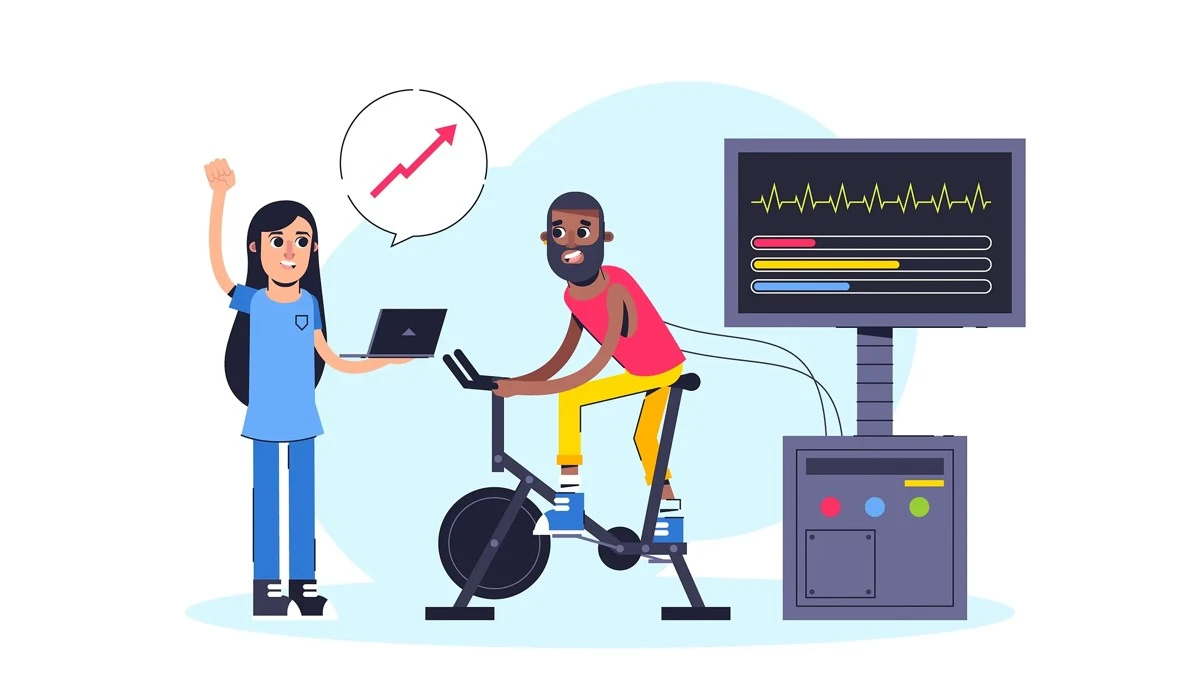
Track Recovery Gain: Force Plate Performance Testing
Coaches often watch an athlete sprint and think they look fresh. In reality, the body conceals deep exhaustion by using different muscles to do the same job. You cannot see this change with your eyes. An athlete might feel motivated and energetic while their nervous system struggles to fire correctly. This concealed state leads to poor performance and sudden injuries. According to a scoping review in the International Journal of Sports Physical Therapy, team sports frequently evaluate this neuromuscular fatigue using vertical jumps performed on force platforms.
Modern Sports Science provides a way to see through these physical disguises. Rather than guessing, we use force plate performance testing to evaluate how an athlete interacts with the ground. As stated in research published in PMC10693479, force platforms are widely utilized in biomechanics to evaluate ground reaction forces across movements such as running, balance, and vertical jumping. A study in MDPI indicates that these assessments analyze both performance and movement strategies, making them ideal for characterizing and tracking an athlete's physical capabilities. These tools provide a clear window into the body’s readiness. They catch fatigue before it ruins a season. The measurement of ground reaction forces provides the hard numbers needed to make smart training choices every single day.
Moving Beyond Subjective Feedback in Sports Science
The "how do you feel" question fails elite athletes. Many high performers possess a mental drive that overrides physical warning signs. They tell you they are ready because they want to play. In reality, their bodies are redlining. According to Frontiers in Sports and Active Living, force plate systems remain a gold standard for testing because they provide accurate force-time data across numerous metrics. Sports Science addresses this issue through the removal of human bias from the recovery equation.
The Limitations of Perceived Exertion
Adrenaline and caffeine mask internal fatigue. An athlete might report a high readiness score because they had a good breakfast or feel excited for a big game. Ironically, their central nervous system might still be recovering from a heavy lifting session two days ago. Relying on feelings alone creates a dangerous gap between perceived ability and actual capacity.
Why Objective Data Wins in High-Performance Environments
Objective data provides a consistent baseline. As noted in PMC10561863, these tools are now standard for exercise professionals to identify predispositions to injury risk. Elite Labs shifted from old clinical gait analysis to modern sensors for this exact reason. Piezoelectric sensors and strain gauges now measure electrical changes with extreme precision. These devices capture 1,000 data points every second. This level of detail allows coaches to see exactly how much force an athlete produces without relying on a subjective conversation.
How Force Plate Performance Testing Tracks Neuromuscular Fatigue
Understanding recovery requires a look at the physics of movement. When an athlete jumps, they exert force against a plate. The plate pushes back with equal force. This interaction tells a story about the nervous system. Work published in PMC12064041 emphasizes that using valid, reliable, and sensitive measures is essential when monitoring physical readiness and fatigue. Force plate performance testing highlights exactly where the body is slowing down.
Analyzing the Countermovement Jump (CMJ)
Research in MDPI suggests the countermovement jump is arguably the most prevalent test for checking neuromuscular status and lower limb rehabilitation. It involves six distinct phases: weighing, unweighting, braking, propulsion, flight, and landing. As described by research on kinematic coordination, the specific shape of the force-time waveform can be linked to various performance parameters. The Journal of Strength and Conditioning Research notes that analyzing the complete force-time curve for these jumps allows data to be examined in its original, full state. Each phase reveals a different piece of the recovery puzzle. For example, a shallow unweighting phase often shows that an athlete is hesitant. This hesitancy usually stems from a nervous system that is trying to protect the body from further stress.
Deciphering the Rate of Force Development (RFD)
The Rate of Force Development measures how fast an athlete can produce force. According to the International Journal of Sports Physical Therapy, this metric tracks how quickly muscles can generate or absorb force, serving as a key indicator of functional performance. It is often the first metric to drop when an athlete is overreached. The Journal of Strength and Conditioning Research also points out that differences in test methodology, such as choosing between a countermovement or squat jump, can influence how sensitive the interpretation of the force-time data is. If an athlete takes longer to reach peak force, they are fatigued even if their jump height looks normal. How do force plates detect fatigue? These devices measure subtle changes in the rate of force development and eccentric loading that indicate central nervous system fatigue long before the athlete feels physically tired.
Key Metrics for Precise Sports Science Recovery Profiles
Certain numbers matter more than others when tracking recovery. Research in PMC12194014 shows that force plate monitoring can evaluate recovery after exercise, typically showing a performance dip on the first two days, followed by full recovery on the third. Sports Science focuses on specific markers that show how the body handles stress. These metrics act as an early warning system for coaches.
The Importance of Eccentric Deceleration Impulse
The braking phase of a jump reveals muscle damage. This is called the eccentric deceleration impulse. When muscles are sore or damaged at a cellular level, they cannot "brake" productively. A decline in this impulse is a primary indicator of peripheral fatigue. It tells the coach that the athlete’s muscles need more time to repair before the next high-intensity session.
Using Flight Time to Contraction Time Ratios
The ratio of flight time to contraction time serves as a readiness score. We call this RSImod. An article by Harris and Ross explains that the Reactive Strength Index measures how productively an individual produces and redirects force, which is useful for evaluating recovery and neuromuscular health. It identifies athletes who are working harder to achieve the same result. If an athlete jumps 20 inches but takes longer to get off the ground than usual, they are showing signs of fatigue. This metric ensures that coaches don't just look at the final result but rather the "cost" of the movement.
Using Force Plate Performance Testing to Individualize Rest Cycles
Every athlete recovers at a different speed. Two players might complete the same workout, but one will be ready in 24 hours while the other needs 48. Force plate performance testing allows for a custom approach to rest.
Why Generic Rest Days Fail Elite Athletes

Generic schedules ignore biological individuality. Factors like sleep quality, nutrition, and genetics dictate recovery rates. One-size-fits-all programs lead to some athletes being undertrained and others being overtrained. Through the use of data, coaches can assign rest days only when the body actually demands them.
Data-Driven Audibles in the Weight Room
Morning test results allow for immediate changes to the training plan. As highlighted in PMC11991867, tracking high-intensity jump loads offers a more precise look at fatigue than simply measuring the length of a session. Furthermore, research in PMC11722855 found that the strongest negative links between jump loads and test results happen at higher intensity levels. If an athlete's scores are low, the coach can dial back the volume or intensity for that day. What is a good force plate score? A high-quality score is defined by staying within 5% of an athlete's established baseline, as any significant deviation suggests the body is still compensating for previous stress. This real-time adjustment keeps the athlete in the "green zone" for peak performance.
Sports Science Strategies for Injury Prevention via Load Monitoring
Availability is the most important ability for any athlete. If you are not on the field, you cannot help the team. Sports Science uses recovery data to keep athletes healthy and available for competition.
Identifying Limb Asymmetry During Recovery Phases
Fatigue often shows up as an imbalance. When one leg is tired, the other leg takes over the load. Dual-plate systems detect these bilateral asymmetries instantly. Research published on ResearchGate regarding professional soccer players shows that athletes with previous injuries often exhibit significantly higher force-time asymmetries during jumps. A variance of more than 15% between legs is a major red flag. It suggests the athlete is compensating, which significantly increases the risk of a non-contact injury like an ACL tear.
Detecting Compensation Patterns Before They Become Pathological
Athletes are experts in compensation. They will change their mechanics to hide pain or weakness. Force plate performance testing catches these changes before they lead to a snap or a strain. Through observation of the force-time curve, coaches see the "mechanical cheats" that a tired athlete uses to survive a session. Fixing these patterns early saves months of rehab later.
Integrating Force Plate Performance Testing into Your Daily Workflow
Data is only useful if you can collect it consistently. Successful programs make testing a seamless part of the daily routine. It should not feel like a chore for the athlete or the staff.
The 5-Minute Morning Assessment
Productivity is key in high-performance environments. A quick jump test in the morning provides all the necessary data without disrupting the flow of the day. As reported in PMC12638576, portable systems are now among the most common tools in strength and conditioning for tasks like monitoring fatigue and guiding return-to-play. PMC10693479 also mentions that these portable platforms allow professionals to collect data outside of a standard laboratory environment. Can force plates prevent overtraining? Yes, the identification of chronic declines in power and force production over several days allows coaches to dial back intensity before overtraining syndrome sets in.
Visualizing Data for Effective Athlete Communication
Athletes need to see their own numbers. When they see a red dip in their recovery graph, they are more likely to take their sleep and nutrition seriously. Visualizing the data creates buy-in. It turns a coach’s "suggestion" to rest into a data-backed requirement that the athlete can understand and respect.
Scaling Sports Science for Teams and High-Performance Facilities
Collecting data is just the first step. The real power of Sports Science comes from looking at the big picture over an entire season.
Moving From One-Off Tests to Seasonal Trends
A single test only gives you a snapshot. Longitudinal data shows how an athlete’s recovery capacity changes over time. You might notice that a specific player always crashes after the third game of a road trip. This information allows the coaching staff to plan ahead and adjust the schedule to keep everyone fresh for the playoffs.
The Future of Automated Recovery Protocols
The field is moving toward automation. New software now uses machine learning to tag jumps and interpret force data instantly. These systems remove the need for manual data entry. In the future, the plates will send a text to the coach’s phone as soon as an athlete jumps, suggesting exactly how much weight they should lift that afternoon based on their current state of recovery.
The Future of Recovery is Quantifiable
The days of guessing an athlete's readiness are over. We no longer have to wonder if a player is truly recovered or just hiding their fatigue behind a brave face. The use of Sports Science allows teams to see the internal state of the neuromuscular system with total clarity.
Force plate performance testing bridges the gap between effort and productivity. It ensures that every training session moves the athlete forward instead of pushing them toward a breakdown. This technology transforms the weight room from a place of blind work into a lab for precise development. In an environment where every inch and every second counts, having the right data is the only way to stay at the top. The future belongs to those who measure their progress and protect their athletes with the power of objective truth.
Recently Added
Categories
- Arts And Humanities
- Blog
- Business And Management
- Criminology
- Education
- Environment And Conservation
- Farming And Animal Care
- Geopolitics
- Lifestyle And Beauty
- Medicine And Science
- Mental Health
- Nutrition And Diet
- Religion And Spirituality
- Social Care And Health
- Sport And Fitness
- Technology
- Uncategorized
- Videos

