
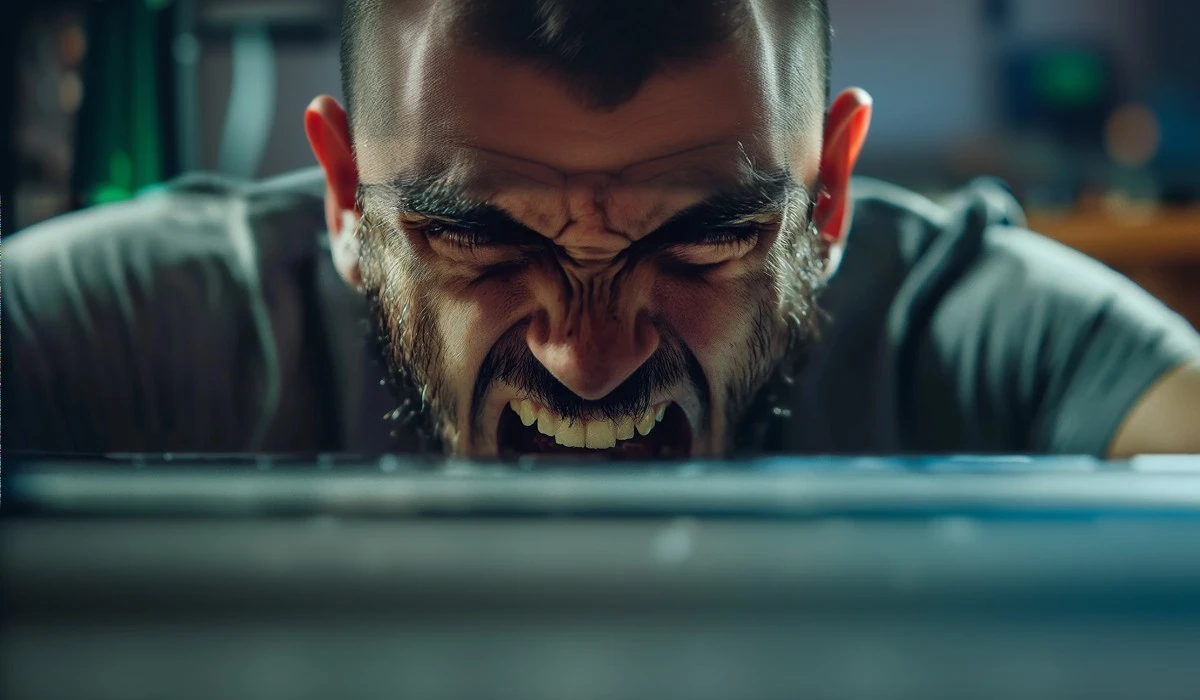
Swearing Breaks Your Internal Speed Limiter
Social rules act like a governor on a car engine. Most people go through life only using a fraction of their actual strength because the brain prioritizes "good behavior" over maximum effort. When you follow every social rule, your mind keeps your muscles in a state of constant restraint. Breaking a verbal taboo—like using a swear word—tricks the brain into dropping this guard. This sudden lapse in politeness allows your body to access power that you usually keep locked away. By ignoring the rules of polite society, you essentially give your muscles permission to stop holding back.
A research summary shared on Reddit indicates that people who use profanity during intense tasks perform significantly better than those who stay quiet or use neutral words. In experiments involving a chair push-up task, participants who swore supported their body weight for a much longer duration than those who repeated neutral terms. As noted in The Times by researcher Richard Stephens, swearing offers an easy way to help a person feel focused and confident while reducing distractions. This effect happens because the brain shifts its focus away from social consequences and toward the immediate physical goal. Swearing for physical performance provides a direct path to higher intensity without requiring more energy or special equipment. It changes the way your brain polices your movements, turning off the filters that usually prevent you from giving 100 percent.
The Surprising Data Behind Swearing for Physical Performance
Profanity acts as a direct override for the mental blocks that limit human strength. When you use a forbidden word, you signal to your brain that the current situation sits outside of normal social rules. Does swearing make you stronger during a workout? Research shows that swearing for physical performance increases strength and endurance by reducing the mental barriers that usually limit your effort. In the latest aggregate analysis of 300 participants, researchers found a clear link between vocal taboos and physical output. The Reddit summary highlights that one experiment involving 88 people and another with 94 people showed consistent gains across different types of movements. For example, people holding a chair push-up—where the arms support the body weight from a seat—lasted much longer when they swore every two seconds compared to those using neutral words.
Data published in Frontiers shows that swearing leads to an 8% gain in grip strength. The study also recorded a 4.5% boost in cycling power during high-intensity sprints compared to when participants used non-swear words. These numbers prove that the effect remains consistent whether you pull, push, or pedal. The act of using a "dirty" word changes the internal environment of the mind, allowing the body to ignore the minor pains and fatigue that usually trigger a stop response.
Why Breaking Taboos Unlocks Your Physical Capacity
Manners function as a physical brake. According to The Times, swearing allows people to throw off social constraints and push harder in different situations. When you ignore social etiquette, your muscles find extra room to move and exert force. The core of this phenomenon lies in a state called disinhibition. This happens when you stop worrying about how you appear to others. Most of the time, your brain runs a background check on your behavior to make sure you fit in. This "Behavioral Inhibition System" (BIS) keeps you calm and controlled. However, it also limits how hard you can push your body. When you swear, the "Behavioral Activation System" (BAS) takes over. The BAS focuses entirely on the goal and ignores the social "brakes" that the BIS usually applies.
Does swearing for physical performance help with pain? Yes, studies indicate that using profanity increases your pain tolerance, which allows you to push through the burning sensation in your muscles during a hard set. Richard Stephens explains in The Times that swearing acts as a reachable path toward total concentration because it helps a person feel more confident and less distracted. We often give a partial effort while believing we are giving our maximum capability. Profanity offers an assurance boost that helps you overcome the internal "no" that pops up when a task gets difficult.
The Power of Grunting Versus Swearing for Physical Performance
Vocalizations that carry a social weight provide a stronger boost than simple noises. A grunt signals effort, but a swear word signals a total break from social expectations. We see this in professional sports constantly. Tennis players are famous for grunting during serves and volleys. Data shows that grunting can increase tennis power by 19% to 26%. Shouting alone can improve grip strength by about 7%. However, swearing adds a psychological layer that simple shouting lacks. Because swear words are "forbidden," using them creates a stronger shift in the brain's state. You break a rule instead of merely making noise.
This rule-breaking creates a distraction from the physical discomfort of the task. How much does swearing improve strength compared to regular words? Studies on swearing for physical performance show that people gain significantly more power using self-selected swear words than they do using neutral words like "wooden" or "round" to describe a table. The "taboo-ness" of the word matters. The more offensive or socially forbidden the topic—such as sex-related profanity—the higher the psychological impact and the resulting performance gain.
The Evolution of Strength Research and Vocalization
Human strength has always been tied to the sounds we make. Research into this link began decades ago, looking at how extreme environments and substances change our limits. In the 1960s, researchers studied how shouting, loud noises, and even alcohol affected a person’s inhibition. They wanted to know why people seem stronger when they lose their "filter." They found that when you lower a person's social guard, their physical strength naturally rises. This paved the way for the 2018 studies on grip strength and cycling. By 2022, researchers focused on chair push-ups, finding that even humor could act as a mediator for performance, though swearing remained a more potent tool.
The 2025 study consolidated these findings into a unified theory. It looked at a model variance of 14%, explaining that performance gains come from a mix of flow, distraction, and confidence. When you swear, you enter a "flow" state more easily. You stop overthinking your form and start moving instinctively. This reduction in self-doubt creates a smoother, more powerful movement. It turns an analytical brain into a purely reactive one, which is essential for maximal effort tasks.
Understanding the Physiological Markers
Interestingly, swearing for physical performance does not seem to rely on a "fight or flight" response. Research indexed in PubMed suggests that swearing improves performance by modulating psychological responses, specifically through a state called disinhibition. Physiological markers in these studies often show a lack of significant arousal evidence during these tasks. This confirms that the boost stems from this psychological shift rather than a change in body chemistry.
Is grunting better than swearing for sports? While grunting provides a solid power boost, swearing for physical performance often yields higher results because it triggers a deeper level of social disinhibition. The brain isn't just reacting to the sound; it is reacting to the defiance of the act. This shift in the internal "state" of the person allows for intensified exertion without an increase in energy cost. It is essentially a zero-calorie, drug-free intervention that anyone can use immediately.

The Role of Confidence and Distraction
A clear mind performs better than a busy one. Swearing acts as a mental broom that sweeps away the distractions of self-criticism and social awareness. Dr. Richard Stephens points out in The Times that swearing helps reduce distraction. When you are focused on the "naughtiness" of the word or the intensity of the vocalization, you have less room to think about how much your muscles ache. This "distraction reduction" allows the brain to send stronger signals to the muscle fibers. Instead of split focus, you achieve a singular drive toward the physical goal. This is why swearing for physical performance works best on short-duration, high-intensity physical challenges.
Ironically, the effectiveness of the tool depends on its scarcity. According to The Times, the benefits of swearing appear to diminish for frequent swearers because they become desensitized to the emotional impact of the words. If you swear all day for no reason, the performance gain shrinks. You must save the strongest language for the hardest moments. This maintains the "social hazard" that makes the act effective. When you use a "double taboo" or a highly offensive word in a moment of extreme need, the brain responds with a larger drop in inhibition.
Navigating the Social Hazards of Performance Swearing
The environment dictates whether a performance tool becomes a social liability. Breaking a rule only works if you understand the consequences of the break. While swearing for physical performance is effective, Dr. Stephens warns about "contextual caution." Using profanity in a public gym or a professional setting can lead to negative social outcomes. If viewers are aware of your behavior and find it offensive, the resulting social friction might outweigh the physical benefits. You have to balance the gain in power with the potential for social backlash. This is why many athletes find ways to "internalize" the swearing or use it in private training environments.
Nicholas Washmuth, another researcher in the field, suggests that we could apply these findings to other areas of life. Future exploration may look at how "breaking the rules" of speech could help with public speaking, courtship behaviors, or conquering self-doubt. If we can use swearing to bypass the "brakes" on our muscles, we might be able to use similar tactics to bypass the "brakes" on our social anxiety. The goal is the conquest of hesitation. Whenever you feel yourself holding back, a sharp, forbidden word might be the key to moving forward.
Maximizing Your Physical Capacity Through Vocalization
True peak performance requires you to stop being your own toughest critic. Your mind often acts as a gatekeeper that prevents you from reaching your true physical capacity. Swearing for physical performance is a low-cost, immediate tool for self-help. It requires no training and no expensive supplements. It simply requires a willingness to be briefly "improper." When you abandon social boundaries, you allow for intensified exertion. This is the logic validation that many athletes have known intuitively for years. They swear when they drop a weight or miss a lift because it helps them reset and push harder on the next attempt. The science now confirms that this common-sense behavior has a solid psychological foundation.
To use this effectively, focus on the words that feel the most "forbidden" to you personally. The individual experiment data cited on Reddit shows that self-selected words work better than assigned ones. Your personal relationship with the language determines how much your brain "disinhibits" when you say it. Whether you are performing a chair push-up, a heavy squat, or a sprint, the right word at the right time can provide that 10% to 15% edge that makes the difference between success and failure.

The Future of Performance and Behavioral Activation
As we move forward, the focus on "State Disinhibition" will likely change how we train athletes and even how we treat people with movement limitations. If the brain is the primary limiter of strength, then the future of physical therapy and sports science lies in psychological overrides. We are moving away from the "fight or flight" theory and toward a more nuanced understanding of how we police ourselves.
Swearing for physical performance is just one example of how we can trick our systems into performing better. By understanding the "Behavioral Activation System," we can find other ways to turn off the "Behavioral Inhibition System." This might include music, specific types of humor, or other forms of rule-breaking that make the brain feel "safe" enough to let go of its restraints. For now, the most accessible tool we have is the language we were told never to use in public.
The Conclusion of the Strength-Taboo Link
Using profanity to boost power reveals a fundamental truth about human limits: we are often our own biggest obstacles. The brain prioritizes social harmony over raw power, which is why we rarely hit our true maximum. Swearing for physical performance provides a simple, effective way to temporarily disable those social filters. By embracing a bit of "improper" behavior, you allow your body to function at its full potential.
The data from Dr. Richard Stephens and other researchers proves that this calculated shift in the brain manages effort more effectively than a standard emotional outburst. Whether you are looking for an 8% boost in your grip strength or an 11% increase in your endurance, the key is to stop holding back. When you give yourself permission to break the rules of language, you give your muscles permission to break through their current limits. Ultimately, swearing for physical performance is about more than just "dirty words"; it is about reclaiming the strength that your polite mind usually keeps hidden.
Recently Added
Categories
- Arts And Humanities
- Blog
- Business And Management
- Criminology
- Education
- Environment And Conservation
- Farming And Animal Care
- Geopolitics
- Lifestyle And Beauty
- Medicine And Science
- Mental Health
- Nutrition And Diet
- Religion And Spirituality
- Social Care And Health
- Sport And Fitness
- Technology
- Uncategorized
- Videos

