

Sports First Aid And The On-Field Safety Shield
Fans scream when a striker hits the turf. You see the collision, but you miss the biological panic starting inside the athlete's body. Blood flow shifts. Neurons misfire. Without immediate action, a simple game turns into a medical emergency. Proper Sports First Aid acts as the primary barrier between a quick recovery and a permanent disability. Coaches often focus on drills and plays, yet the most important play happens when the whistle blows for an injury. You hold a career in your hands during those first few seconds on the grass. Protecting an athlete requires professional care that goes beyond a bag of ice and a bandage; specifically, it requires a professional standard of care that anticipates the worst while working for the best.
The Essentials of Pro Sports First Aid for Contemporary Teams
Professional responders move beyond the basics of cleaning cuts. They understand that their presence stabilizes the entire environment. When an athlete goes down, the crowd becomes frantic. Parents feel terror. Your calm demeanor dictates the energy of the field. You must follow specific protocols to ensure no detail escapes your notice. This standard of care has roots in history. Samuel E. Bilik established the first medical responsibilities for trainers in 1917 because he saw the chaos of unorganized care.
What are the four principles of sports first aid? The core principles include preserving life, preventing further injury, promoting recovery, and protecting the unconscious or vulnerable athlete. These pillars guide every decision you make on the sideline. Instead of only reacting to what you see, you follow a system that keeps the athlete safe from further harm. This proactive mindset defines Sports First Aid. You act as the bridge between the point of injury and professional medical intervention.
The Initial Survey: Staying Calm Under the Lights
The first sixty seconds determine the outcome of many injuries. According to research published in PubMed, this window, often called the "Golden Hour" in trauma care, describes the urgent necessity for the care of trauma patients. Guidance from St John Ambulance suggests that you perform the DRABC survey immediately, which involves checking for Danger, Response, Airway, Breathing, and Circulation. First, you check for Danger. You ensure no other players or equipment pose a threat to you or the injured person. Then, you check for a Response. The organization explains that asking a simple "Are you okay?" helps determine if the athlete is conscious.
Next, you clear the Airway and check for Breathing. You look for the rise and fall of the chest. Finally, you check Circulation. St John Ambulance notes that once normal breathing is established, you should look for severe bleeding that needs immediate pressure. Following this sequence keeps you focused when the adrenaline hits your system. It prevents you from missing life-threatening issues while distracted by a loud injury like a broken finger. History shows us the cost of failure. Smithsonian Magazine reports that in 1905, eighteen football players died because the game lacked these basic safety standards, while History.com adds that the 1905 football season actually resulted in 19 player deaths and 137 serious injuries. Today, we use these surveys to ensure every player stays safe.
Expertly Learning the On-Field Concussion Assessment
Head injuries demand a different level of scrutiny than a twisted ankle. Research in PMC identifies a concussion as a functional injury, meaning the brain appears normal on a standard scan despite working incorrectly at a cellular level. You cannot see the damage, so you must measure the brain's performance. An effective on-field concussion assessment relies on objective data rather than the player’s desire to keep playing.
Physical Signs vs. Cognitive Symptoms
You look for physical markers first. Watch the player’s gait as they try to stand. According to the British Journal of Sports Medicine, if they stumble or show "ataxia," their motor cortex is struggling to communicate. Look at their eyes for a vacant stare. Some players may experience a collision-related seizure. This brief twitching occurs immediately after a hit and signals high-severity trauma. These signs tell you the brain is in crisis, even if the athlete says they feel fine.
Using Standardized Tools Safely
Responders use tools like the CRT6 to guide their evaluation. These tools prevent you from forgetting vital steps under pressure. How do you check for a concussion on the field? According to the Concussion Recognition Tool 6, you perform a check through the observation of balance, orientation questions like the "Maddock’s Score," and the monitoring of physical symptoms like light sensitivity or nausea.
Ask the player where they are. Ask them who scored last. These Maddocks Questions test immediate memory and orientation. The CRT6 guidelines state that if they fail even one, you remove them from play. As explained by StatPearls, the risk of Second Impact Syndrome is too high to ignore, occurring when a second head injury happens before the first concussion heals. Research in PMC highlights that it causes the brain to swell rapidly. Your thorough on-field concussion assessment prevents this tragedy.
Integrating Tech and Data into Your Sports First Aid Strategy
Modern Sports First Aid now includes high-tech allies. As reported by Reuters, many elite teams, such as those in the Six Nations Championship, use wearable hit sensors inside mouthguards or helmets. These sensors measure the G-force of every hit. They alert the sideline when a collision exceeds a safe threshold. This data catches "sub-concussive" hits that the human eye might miss during fast play.
Sideline video review also changes the game. You can watch the process of injury in slow motion on a tablet. You see exactly how the head snapped or how the knee twisted. This visual evidence helps you perform a better on-field concussion assessment. It removes the guesswork from your decision-making process. Technology provides the objective facts that an emotional athlete might try to hide.
Acute Soft Tissue Management: Moving Beyond R.I.C.E.
For decades, trainers used R.I.C.E. (Rest, Ice, Compression, Elevation). However, science has changed. Yale Medicine reports that Dr. Gabe Mirkin, the man who created the R.I.C.E. acronym in 1978, retracted his advice in 2015. The publication explains that he discovered that ice and total rest actually slow down the healing process. Now, we use the PEACE and LOVE protocols to manage soft tissue injuries.
Why Inflammation Isn't Always the Enemy
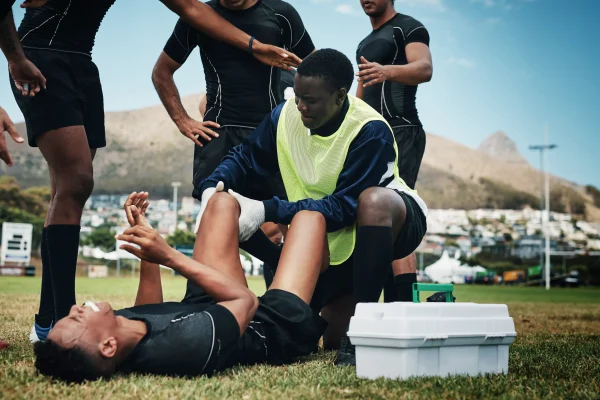
According to a study in PMC, inflammation sends white blood cells to the injury site. These cells clean up damaged tissue and start the repair process. The Annals of Joint notes that using too much ice or anti-inflammatory drugs can stop this natural signal. You effectively tell the body to stop healing. Research in PubMed indicates that professional Sports First Aid now focuses on "Optimal Loading," where the "L" in the LOVE protocol emphasizes movement. You encourage the athlete to move the limb within a pain-free range as soon as possible. This movement keeps blood flowing and helps new collagen fibers align correctly for a stronger recovery.
Common Fractures and Dislocations in High-Velocity Play
High-velocity sports often lead to skeletal trauma. When a bone breaks or a joint displaces, you must act fast to prevent nerve damage. The Mayo Clinic advises that you never try to "pop" a dislocation back into place. This can trap nerves or blood vessels between the bones. Instead, you immobilize the limb in the position you found it.
Who can provide sports first aid? Any individual with a current certification can provide initial care, though elite levels often require dedicated athletic trainers or paramedics for advanced interventions. You use tools like the SAM splint to create a rigid support. This lightweight aluminum strip molds to the shape of the athlete's arm or leg. Once you secure the limb, you check for a pulse below the injury site. If the pulse is missing, you call emergency services immediately.
The Psychological Side of Sports First Aid
The mind reacts to injury just as fast as the body. When an athlete realizes they are hurt, they often enter "Injury Shock." Their heart rate spikes. They might feel intense fear about their career or their standing on the team. Your voice becomes their anchor. Speak in a low, steady tone. Use their name often to keep them grounded.
Maintain eye contact throughout the process. This simple human connection lowers their cortisol levels and helps them stay still while you work. Ironically, an athlete’s toughness often works against them. They may try to hide pain to stay in the game. You must remain an authoritative advocate for their health. You explain the risks of playing through the injury clearly. This builds trust and ensures they follow your safety instructions.
Building a Professional Sports First Aid Kit
A professional kit looks different from a store-bought box. You need specialized gear to handle high-velocity trauma on the sideline. Include trauma shears that can cut through thick jerseys and pads in seconds. Carry electrolyte replacements to handle heat-related illnesses during summer games.
High-quality Sports First Aid kits also include diagnostic tools. You need a penlight to check pupil response during an on-field concussion assessment. You should carry a variety of tapes, including zinc oxide for joint support and kinesiology tape for movement. Keep your kit organized so you can find any item without looking. In an emergency, your speed saves the athlete from unnecessary pain and further damage.
Return-to-Play Protocols and Long-Term Athlete Safety
Your job continues long after the game ends. The recovery phase requires a "Graduated Return to Play" (GRTP) plan. This 6-stage process ensures the athlete’s brain and body can handle the stress of competition again. They start with light aerobic exercise. If they remain symptom-free for 24 hours, they move to sport-specific drills.
This slow progression protects the athlete from recurring injuries. You monitor their progress daily and record any setbacks. If symptoms like headaches or dizziness return, they drop back to the previous stage. This data-driven approach removes emotion from the decision. It ensures the player returns only when they are truly ready. Long-term safety is the ultimate goal of any Sports First Aid program.
Empowering Teams Through Sports First Aid
Preparation separates a professional from an amateur. You don't wait for an accident to happen. You build a system to handle it before the first whistle blows. Every drill and every game carries a risk, but your skills mitigate that danger. Expert knowledge of the on-field concussion assessment and staying updated on modern tissue care protects the future of your athletes. You provide more than medical help. You provide the confidence players need to perform at their peak. Your commitment to high-quality Sports First Aid ensures that every player who steps onto the field also walks off it safely.
Recently Added
Categories
- Arts And Humanities
- Blog
- Business And Management
- Criminology
- Education
- Environment And Conservation
- Farming And Animal Care
- Geopolitics
- Lifestyle And Beauty
- Medicine And Science
- Mental Health
- Nutrition And Diet
- Religion And Spirituality
- Social Care And Health
- Sport And Fitness
- Technology
- Uncategorized
- Videos

