
Olympics History: Ancient Secrets Revealed
Thousands of Greek men crowd into a small valley. They sleep in tents or on the ground for five days. They deal with heat, flies, and a lack of fresh water. They do this to watch a single footrace. In 776 BC, this event started a timeline that we now call Olympics History.
These men traveled hundreds of miles. They believed their physical effort pleased the gods. They competed for glory instead of money. This ancient reality looks nothing like our modern stadiums. However, those early games established the basis for every record broken today. Learning about these origins changes how you see the world's biggest sporting event.
The Sacred Origins of Olympics History
According to the German Archaeological Institute, the Greeks held the ancient Olympic Games to honor Zeus, the king of the gods. They built the Temple of Zeus at the center of the site. Encyclopedia Britannica notes that the temple featured a massive gold and ivory statue of the god seated on a throne. This source states that the figure reached 40 feet into the air.
Mythical Bases: From Zeus to Hercules
Legends explain why the games began. One story tells of Pelops. He wanted to marry a king’s daughter. He challenged the king to a chariot race. Pelops won because he secretly replaced the king's bronze axle pins with wax. The wax melted, the king crashed, and Pelops claimed his victory.
Another legend credits Hercules. He allegedly marked out the stadium's length. He measured the distance with 600 of his own foot lengths. This distance became the standard for the first races.
The Religious Heart of the Games
Religious rituals dictated the schedule. On the third day, officials sacrificed 100 oxen. They burned the thigh bones on a massive altar for Zeus. The rest of the meat provided a feast for the crowd.
When were the first Olympics held? Guinness World Records reports that the inaugural recorded games took place in 776 BC in the plains of Olympia, featuring a single footrace known as the stade. Research from Encyclopedia Britannica identifies Coroebus of Elis as the victor of this race. The study also highlights that he worked as a cook, making him the first name in the official records.
Inside the Arena of the Ancient Olympic Games
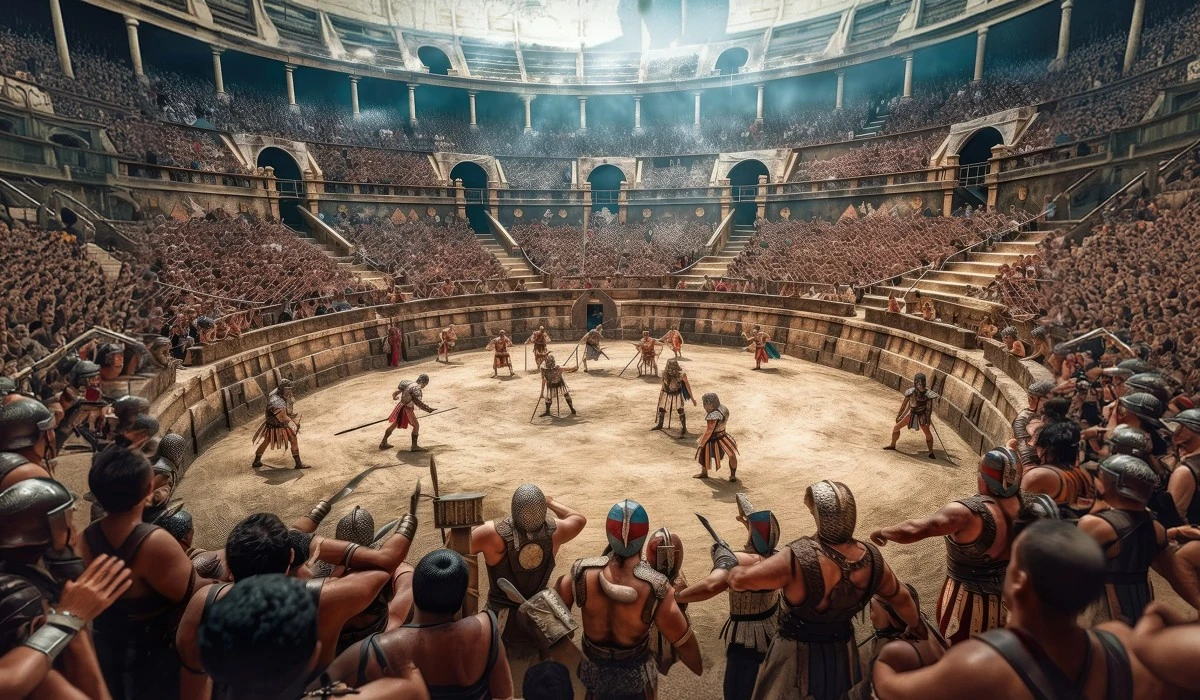
The atmosphere at the ancient Olympic Games felt electric and dangerous. Spectators stood on hillsides. They watched athletes push their bodies to the absolute limit.
The Naked Truth: Why Athletes Competed Without Clothes
Athletes competed entirely naked. This began in 720 BC when Orsippos of Megara lost his loincloth during a race. He won despite the accident. Other athletes soon followed his example.
The Greeks celebrated the human form. Oiling their skin helped them highlight their muscles. It also prevented dirt from clogging their pores. Nudity removed status symbols and focused entirely on the athlete’s skill.
Brutal Combat: Pankration and Early Combat Sports
As described by Encyclopedia Britannica, the Pankration stood out as the most violent event because it combined wrestling and boxing. In this competition, athletes could kick, choke, and break bones, with the same source noting that only biting and eye-gouging remained illegal. Britannica also documents how, in 564 BC, Arrichion of Phigalia died during the final match. After his opponent surrendered because Arrichion managed to break his ankle, the judges crowned the deceased man as the victor.
Decoding Ancient Training Secrets and Diets
Ancient athletes followed strict rules. They arrived at Olympia 30 days early. They trained under the watchful eyes of the Hellanodikai. These judges punished anyone who lacked discipline.
The Regimen of the Early Olympians
Trainers used a four-day cycle called the Tetras system. On the first day, athletes performed light exercises to prepare. The second day involved an intense, all-out effort. The third day focused on rest. On the fourth day, athletes practiced tactical drills.
Long jumpers used stone weights called halteres. They swung these 3-pound stones forward to gain momentum. As they landed, they swung them back. This physical trick added several inches to their jumps.
Fueling the Champions: Meat, Figs, and Wine
Milo of Croton became a legend for his strength. He reportedly ate 20 pounds of meat and 20 pounds of bread every day. He washed it down with 18 pints of wine.
He also pioneered progressive training. He carried a baby calf on his shoulders every day. As the calf grew into a bull, Milo’s strength grew with it. Most athletes relied on dried figs, cheese, and heavy grains to stay energized.
The Evolution of Olympic Traditions: History
We often think of modern games as a new invention. In reality, Olympic traditions show a deep connection to the past. Many of our current rules have ancient roots.
The Sacred Truce: Peace Through Sport
The "Ekecheiria" or Sacred Truce protected the games. Messengers traveled across Greece to announce the start. All wars stopped for three months. This allowed athletes and fans to travel through enemy territory safely.
Violating this truce brought heavy fines. Sparta once attacked a fortress during the games. The judges banned Sparta from the competition and charged them a massive amount of silver.
From Olive Wreaths to Gold Medals
Early winners did not receive money. They received a wreath made of olive branches. They cut these branches from a sacred tree with a golden sickle.
What did winners get in the ancient Olympics? While modern athletes receive medals, ancient victors were awarded a sacred olive branch wreath called a kotinos and often received lifetime perks in their home cities. These perks included free meals for life and front-row seats at theaters.
The Dark Ages and Rebirth in Olympics History
The games eventually faded away. For 1,500 years, the stadium at Olympia lay silent. Dirt and floods buried the once-grand temples. Olympics History almost disappeared from the world.
The Ban by Theodosius and the End of a Period
In 393 AD, Roman Emperor Theodosius I changed everything. He wanted to make the empire purely Christian. He viewed the games as pagan festivals. He officially banned the competitions, ending a tradition that had lasted over a millennium.
The site at Olympia suffered from earthquakes and floods. Eventually, the world forgot exactly where the stadium stood. It remained buried until archaeologists found it in the 18th century.
Pierre de Coubertin and the 1896 Resurrection
A French educator named Pierre de Coubertin wanted to bring the spirit back. He believed sports could promote peace between nations. In 1896, he helped launch the first modern games in Athens.
Only 14 nations participated in that first revival. They competed in just 43 events. However, this small start sparked a global movement. Modern Olympic traditions began to take shape during these early years.
Rituals That Survived the Millennia
Today’s ceremonies look familiar because they copy ancient themes. We use fire and processions to build excitement.
The Flame: A Bridge Between Worlds
The Olympic flame starts at the ruins of Hera's altar in Olympia. Women dress in ancient-style robes. They use a curved mirror to focus sunlight and light the torch. This fire travels across the world to the host city.
Why do the Olympics have five rings? Created in 1913, the rings represent the union of the five inhabited continents and the meeting of athletes from across the globe. As noted by the International Olympic Committee, the colors—blue, yellow, black, green, and red—were selected because at least one of them appears on every national flag in the world.
The Opening Ceremony: A Modern Echo of Ancient Processions
The parade of nations mirrors the ancient procession of athletes and judges. In the past, the Hellanodikai led the way. They wore purple robes and carried rods to punish rule-breakers. Today, the athletes lead with their national flags, showing global unity.
Athletes still take an oath. In the ancient world, they stood before a statue of Zeus and swore to follow the rules. Today, one athlete and one official recite the oath for everyone to hear.
The Enduring Legacy of Olympics History
The games survive because they celebrate the best parts of humanity. We still value the same traits the Greeks admired thousands of years ago.
Why Ancient Values Still Resonate Today
The Greeks chased a concept called "Arete." This word means excellence in all things. It required a balance of a strong body and a sharp mind. Modern athletes still chase this ideal when they train for years to shave a second off a race time.
We also see this in the statues of shame called Zanes. The Greeks built these statues from the fines collected from cheaters. They placed them at the stadium entrance. Modern drug testing serves the same purpose as keeping the competition fair.
Preserving the Spirit for Future Generations
The IOC works hard to keep Olympic traditions and history alive. They maintain the lighting of the flame and the opening parade. These rituals remind us that we belong to a story much larger than ourselves.
Future games will likely change their technology. We might see faster gear or better training tools. However, the core spirit remains the same as it was in the dust of Olympia.
The Timeless Spirit of the Games
The progression from a dusty footrace in 776 BC to the high-tech stadiums of today shows our shared human drive. We want to see how far we can push our limits. We want to see who stands as the fastest or the strongest.
The ancient Olympic Games focused on testing the strength of the human spirit rather than merely winning a prize. They forced rivals to put down their weapons and pick up their running shoes.
Every time a modern athlete steps onto the track, they join a long line of champions. They carry the weight of Olympics History on their shoulders. These games serve as a bridge. They connect our modern world to a time when excellence was the ultimate goal.
Recently Added
Categories
- Arts And Humanities
- Blog
- Business And Management
- Criminology
- Education
- Environment And Conservation
- Farming And Animal Care
- Geopolitics
- Lifestyle And Beauty
- Medicine And Science
- Mental Health
- Nutrition And Diet
- Religion And Spirituality
- Social Care And Health
- Sport And Fitness
- Technology
- Uncategorized
- Videos

