
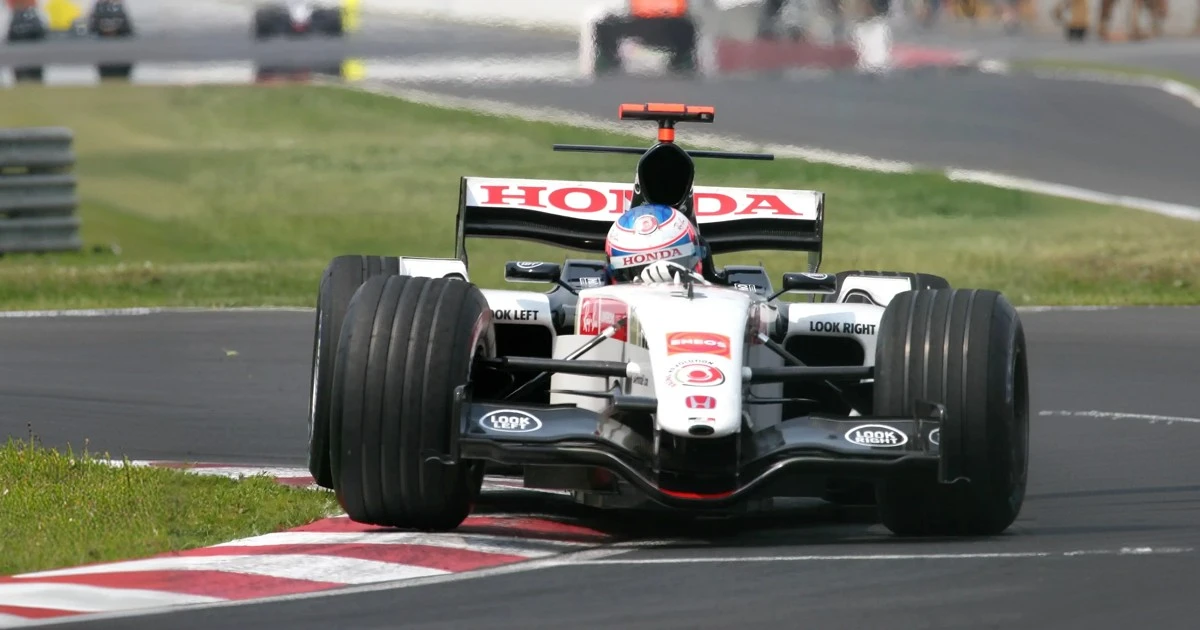
Image Credit - By Mark McArdle from Canada, Wikimedia Commons
How the 2026 F1 Season Will Change Racing
Making a race car intentionally slower creates a permanent state of high-speed panic inside the cockpit. Formula 1 executives stripped away raw downforce and forced teams to rely heavily on battery power, turning every lap into a frantic resource puzzle. The 2026 F1 season throws out the old rulebook entirely. Drivers face extreme cognitive demands while managing a completely overhauled car. Moving away from traditional aerodynamic grip forces drivers to constantly adjust wings and monitor electrical output. Teams enter this year facing unprecedented regulatory changes. The sport introduces smaller, eco-friendly chassis designs. A massive aerodynamic evolution alters how cars pass each other on the straights. Manufacturer arrivals expand the starting grid to eleven teams. Red Bull attempts to fix a glaring driver disparity, while Aston Martin struggles with severe reliability deficits. Every single team starts from zero. The engineering hurdles define the championship identity this year.
The Power Split Redefining the 2026 F1 Season
Removing one difficult engine component causes a desperate scramble for electrical energy during every lap. The FIA eliminated the MGU-H component from the powertrains. According to a report by Autosport, this removal brings back turbo-lag, so officials added an extra five seconds between the final car reaching its grid position and the start lights igniting to address safety concerns. Teams now operate under drastically different F1 engine regulations. The sport shifts to a roughly 50-50 power split between the electric motor and the internal combustion engine. Drivers still rely on a 1.6-litre V6 turbo pushing out around 400KW, or 536 brake horsepower. The electric side sees a massive upgrade. As noted by Autocar India, the MGU-K unit, which recaptures braking energy to replace the MGU-H, now generates three times more electrical power, reaching 350 kW in 2026.
The publication adds this marks a 300% power increase for the electric system, delivering around 469 brake horsepower. How much horsepower will a 2026 F1 car have? Together, the internal combustion engine and upgraded electric motor produce over 1,000 horsepower. Teams also switch to 100% non-food biomass and waste-sourced sustainable fuel. Managing this energy creates massive paddock concern. Max Verstappen compares the new cognitive demands to extreme electric racing series. He notes the massive energy management requirements the sport places on the drivers. Alex Albon agrees, stating that purely electric championship tactics now dictate race pace. Mental agility proves vital for managing these demanding systems at high speeds. Lewis Hamilton calls the new regulations overly complicated. Ironically, he also reports a distinct increase in his overall driving enjoyment.
Flat Floors and the End of the Suction Days
Stripping away downforce forces teams to shrink the physical footprint of the cars to maintain speed. F1 completely abandons the ground-effect tunnels. Designers must now utilize flat floors and extended diffusers. This major shift requires teams to run higher ride heights. The technical regulations force a massive reduction in size and weight. The Race reports that the rules force a 30-kilogram weight drop, lowering the minimum weight to 768 kilograms. The publication notes teams must build shorter cars, reducing the wheelbase from 3600 millimeters to 3400 millimeters, while shrinking the overall width by 100 millimeters and floor width by 150 millimeters.
Team-BHP details how Pirelli altered the tyre dimensions to match the 768-kilogram minimum weight limit. Their specifications indicate the front tyres lose 25 millimeters in width and the rear tyres drop 30 millimeters, while the sport retains the standard 18-inch wheel diameter. The new rulebook emphasizes a nimble chassis. In reality, drivers face an expected lap time drop of one to two seconds. Teams lose 15 to 30 percent of their total downforce. Aerodynamic drag drops by a massive 40 percent. Safety enhancements offset some of the weight savings. The FIA mandated a two-stage front crash structure and increased the roll hoop load capacity by 23 percent. Nikolas Tombazis confirms officials intentionally kept the speed deficit minimal. He explains that this baseline speed reset proves necessary for future development while maintaining top-tier racing status.
Active Aerodynamics Will Force New Passing Tactics
Handing drivers control over their wing angles turns every straightaway into a high-stakes tactical chess match. The 2026 season introduces active aerodynamics. Drivers manually adjust their wing angles on the straights to achieve maximum drag reduction. This dual-system reality features active aero for all drivers and a specific Overtake Mode for close-quarters racing. The new setup completely replaces the DRS concept. Drivers manage basic energy consumption throughout the lap while controlling three distinct tactical tools.
According to Honda, drivers access energy recovered by the Energy Recovery System through a driver-activated Boost Mode for attacking or defending. The source notes they engage Recharge Mode to gather battery power. Finally, the manufacturer explains they activate a new Overtake Mode to access additional power when running within one second of the car ahead to make a pass. Will F1 cars still use DRS in the 2026 F1 season? Traditional DRS disappears, as F1 eliminates it in favor of a manual active aerodynamics system that lets drivers adjust their wing angles on straights. Drivers must maintain a proximity gap of less than one second to activate the Overtake Mode. George Russell expects drivers to expand passing zones into unconventional corners. He notes that positional gains rely heavily on energy reserves rather than pure top speed. Lando Norris anticipates unconventional passing chances and frequent position swaps throughout the laps.
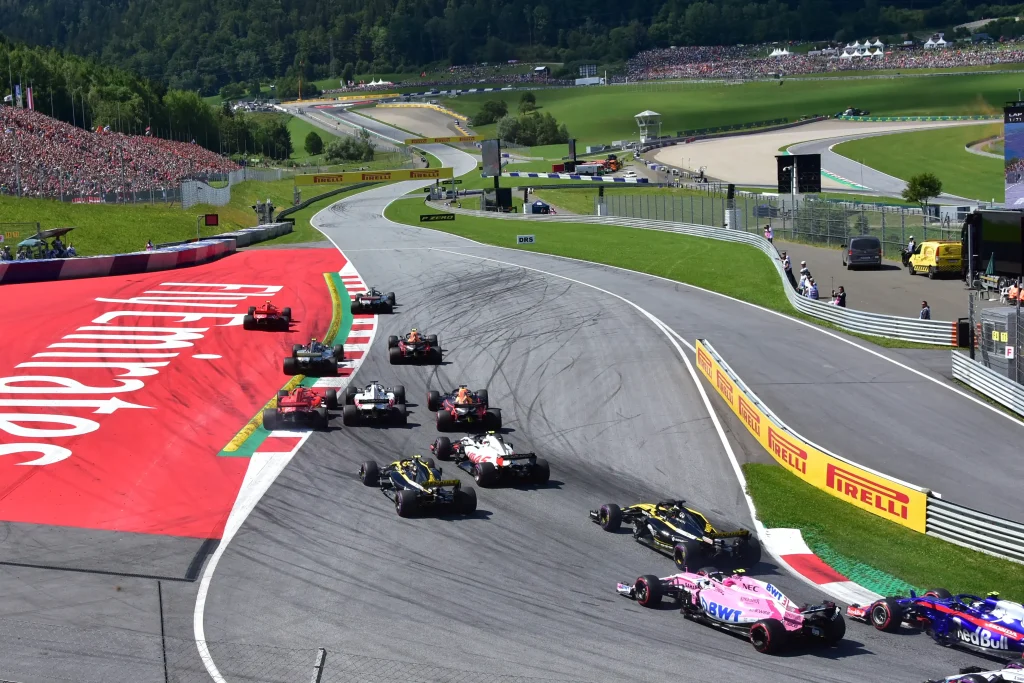
Image Credit - By Wikimedia Commons
Fresh Blood and the 11-Team Grid Expansion
Buying a spot on the starting grid requires building an entirely new foundation while relying on rivals for power. F1 welcomes its first startup entry in a decade. Formula 1's official website confirms that manufacturer arrivals expand the starting grid to eleven teams, marking a major milestone as Cadillac receives final approval to join the field. The American entry faces immediate engineering hurdles. Sky Sports reports Cadillac relies on an agreement with Ferrari for power units and gearboxes for their initial seasons. The publication adds that a General Motors proprietary engine debuts later in 2029.
Audi enters the sport with a completely different approach. The German manufacturer fields a full in-house engine operation. This influx of new F1 teams dramatically changes the paddock environment. New drivers also enter the fray. According to driver profiles on Formula 1's official website, Arvid Lindblad reaches a major age milestone on March 8, 2026. Born on August 8, 2007, he turns 18 years and 7 months old, making him the fourth youngest driver historically to enter the sport. Race reports from the same site note he previously shattered the Formula 2 record when he inherited the Jeddah Sprint Race victory. They state he became the youngest winner in that series' history at exactly 17 years and 243 days old.
Red Bull Implements a Ruthless Second-Seat Fix
Watching one driver dominate creates a massive point disparity that threatens the team championship. Max Verstappen destroyed his competition in 2025. He racked up 421 points over the year. Meanwhile, Red Bull watched Yuki Tsunoda score only 33 points. This massive driver disparity forced Red Bull management into a corner. Verstappen dominates his garage. He last lost a race to a teammate back in April 2023 at the Azerbaijan Grand Prix. Red Bull fired a succession of failed teammates who simply could not match Verstappen's pace. The team needs point sharing to secure the constructors' title. Red Bull promoted Isack Hadjar to the second seat for the 2026 F1 season. Hadjar faces intense pressure immediately. His singular target involves finishing right behind Verstappen and actively sharing the points load. He steps into the most difficult job in motorsport.
Testing Exposes Early Winners and Losers
Pre-season mileage reveals exactly which engineering departments properly solved the new rulebook. Motorsport.com details that teams operate under a strict F1 cost cap increased from $135 million to $215 million, or roughly £159.6 million. The publication explains that rather than a net spending increase, the FIA instituted this higher limit because they now include many previously exempt items to help teams manage the regulatory overhaul. Testing disparities quickly emerged; data compiled by The Race shows Audi proved their reliability immediately. Their pre-season tally details that Gabriel Bortoleto and Nico Hulkenberg combined for a massive 357 laps, covering 1932 kilometers. Red Bull and Ford also showed highly positive progress during their track sessions.
Aston Martin suffered a drastically different fate, as the team faces a severe reliability deficit with their new Honda partnership. Reports from Motorsport.com and The Race indicate Lance Stroll completed just six laps on Friday in Bahrain, a setback stemming directly from a critical engine parts shortage. Andy Cowell warns that balancing multiple engineering variables forces immediate pace trade-offs. He correctly anticipated these early reliability challenges. Frederic Vasseur calls the new season a complete reset of all technical parameters. He notes that engineering hurdles form the core championship identity, making premature criticism unwarranted. Graeme Lowdon downplays the testing results entirely. He expresses high satisfaction with his squad's progress, insisting they have a strong foundation under construction.
Calendar Shakeups and Unconventional Race Weekends
Expanding the track list introduces entirely new layouts that challenge the heavily modified cars. The Formula 1 calendar shifts dramatically to accommodate new host cities and sprint formats. Drivers face a massive test in Spain. The Madrid Grand Prix makes its official debut from September 11 to September 13. The city built a brand new 22-corner track to challenge the grid. Meanwhile, Barcelona and Spa-Francorchamps enter a unique alternation arrangement. The two historic tracks will share calendar scheduling duties until 2032.
Where is the first race of the 2026 F1 season? The opening round kicks off in Melbourne, Australia, running from March 6 to March 8. The Barcelona-Catalunya Grand Prix follows later in the summer, running from June 12 to June 14. The sport continues to push the sprint event format. Six circuits host the short-distance races this year. F1 selected Silverstone, China, Miami, Canada, Zandvoort, and Singapore for the sprint events. These tracks demand perfect energy management. Teams have zero time to recover from a bad setup during a sprint weekend.
The True Test of the New Generation
Everything comes down to mental capacity and resource management. The FIA completely rewrote the rules of engagement. Drivers can no longer rely on endless downforce and simple DRS overtakes. They must balance electrical deployment, monitor their active wings, and fight for traction on flat floors. The F1 season of 2026 forces the greatest drivers in the world to relearn their craft from scratch. Whoever solves the energy puzzle first takes the championship.
Recently Added
Categories
- Arts And Humanities
- Blog
- Business And Management
- Criminology
- Education
- Environment And Conservation
- Farming And Animal Care
- Geopolitics
- Lifestyle And Beauty
- Medicine And Science
- Mental Health
- Nutrition And Diet
- Religion And Spirituality
- Social Care And Health
- Sport And Fitness
- Technology
- Uncategorized
- Videos

