
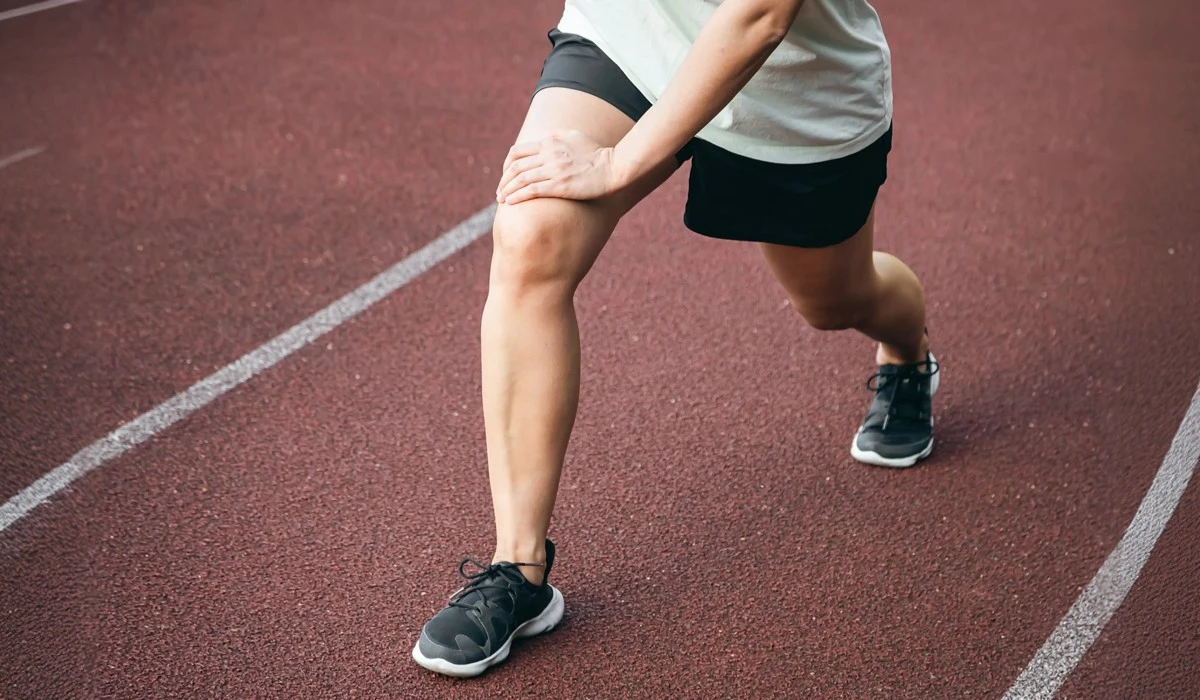
Fix Runner’s Knee With Sports Remedial Massage Therapy
You feel a sharp twinge under your kneecap three miles into your run. It feels like sandpaper rubbing against bone. Most runners assume the knee joint itself failed. In reality, your outer thigh muscles have turned into a tight cable that drags your kneecap out of place. This constant pulling creates a grind that wears down your tissue. Sports Remedial Massage Therapy targets this exact physical tug-of-war.
Relaxing the overactive muscles stops the grinding before it causes permanent damage. This approach shifts the focus from the pain site to the source of the tension. You get back to your training schedule without the clicking or the "crunch" in your joints. Sports Remedial Massage Therapy identifies the specific structural failures that lead to injury. Rather than masking the ache, it rebalances the leg to ensure the knee moves freely. Addressing the muscles that dictate joint movement helps you regain control of your stride.
The Anatomy of Patellofemoral Pain Syndrome
According to research published in the Journal of Athletic Training, Patellofemoral Pain Syndrome (PFPS) accounts for nearly 40% of all knee-related sports medicine clinic visits and represents the most common injury in the running community. The patella sits in a small groove at the end of your thigh bone. It should slide up and down like a train on a track. When your lateral muscles tighten, they pull the patella toward the outside of your leg. This creates uneven wear on the cartilage.
Why the Kneecap Deserves a Smooth Path
As explained in an article from Cureus, a high Q-angle increases the lateral pull on the joint, a condition especially common in female runners due to a wider pelvis. Writing for the British Journal of Sports Medicine, Dye suggests that when the kneecap tracks poorly, it puts pressure on the subchondral bone. He notes that this bone contains many pain-sensing nerves, which creates that familiar dull ache.
Can I still run with runner's knee? The National Center for Biotechnology Information recommends that runners stop their activity until the acute inflammation subsides to prevent long-term joint damage. Continuing to push through the pain can turn a minor tracking issue into a chronic condition. Once the inflammation drops, you can begin the work of realigning the joint through targeted therapy.
How Sports Remedial Massage Therapy Corrects Alignment
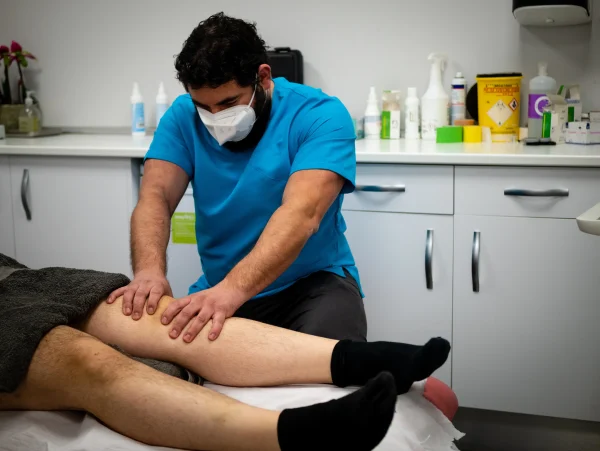
Traditional massage often ignores the structural cause of the pain. Sports Remedial Massage Therapy uses clinical assessment to find exactly which muscle fibers have shortened. The therapist looks at the balance between the inner and outer quad. If the outer quad wins the tug-of-war, the knee suffers. This therapy applies specific pressure to release the lateral tension and allow the bone to return to its groove.
Releasing the Lateral Tension
An analysis in the Journal of Physical Therapy Science highlights that the Vastus Lateralis often overpowers the Vastus Medialis Oblique (VMO), creating a permanent lateral bias in the knee. A sports remedial massage session focuses heavily on the lateral retinaculum. This thick band of connective tissue can become physically shortened. It then tethers the patella in a bad position.
The therapist uses deep transverse friction to break down adhesions between the muscle layers, a technique that the Journal of Orthopaedic & Sports Physical Therapy states restores tissue mobility. This specific muscle injury rehabilitation technique creates immediate space in the joint. It allows the kneecap to track vertically again. Runners often feel an immediate reduction in the "grinding" sensation after the lateral quadriceps lose their excessive tension.
Strategies for Comprehensive Muscle Injury Rehabilitation
Effective recovery looks at the entire kinetic chain. The knee acts as a hinge between the hip and the ankle. If either of those joints fails to stabilize, the knee absorbs the extra force. Most muscle injury rehabilitation programs fail because they only look at the spot that hurts. A comprehensive approach looks at how the hip controls the rotation of the thigh bone.
Addressing the Hip and Glute Connection
Weakness in the hips frequently causes knee pain. Data from the British Journal of Sports Medicine shows that runners with knee issues often have 26% less hip abduction strength. This weakness leads to a "hip drop" while running. This movement forces the knee to cave inward, which is called valgus stress. This caving increases the pressure on the patellar cartilage by a massive margin.
Sports Remedial Massage Therapy addresses the overactive Tensor Fasciae Latae (TFL) and gluteal muscles that contribute to this collapse. The therapist reduces tension on the IT band by loosening the TFL. This allows the hip to move through its full range without pulling the knee inward. Better hip stability means the knee joint remains neutral during every foot strike.
Technical Modalities Used in Sports Remedial Massage
Therapists utilize several specific techniques to change the state of the muscle tissue. Rather than simply rubbing the surface, they target deep fibers. These methods have roots in the work of Pehr Henrik Ling, who developed medical gymnastics in the 1800s. Today, we use these principles to treat modern athletic injuries with high precision.
Trigger Point Therapy and Myofascial Release
A study in the Annals of Rehabilitation Medicine describes how therapists use ischemic compression to deactivate hyper-irritable spots called trigger points. They apply steady pressure for 30 to 90 seconds, which creates a temporary lack of oxygen in the knot. The study also notes that when the therapist releases the pressure, fresh blood rushes back into the area, flushing out metabolic waste and bringing in the nutrients needed for repair.
Is sports massage good for knee pain? Yes, it is highly productive because it addresses the muscular imbalances and fascial restrictions that cause joint friction. When the surrounding tissue is softened, the knee can move through its full range of motion without irritation. This sports remedial massage approach ensures the fascia remains pliable and doesn't "glue" the muscle layers together.
Why Sports Remedial Massage Therapy Outperforms General Massage
A spa massage focuses on relaxation and lowering cortisol. While beneficial, it does not fix a tracking issue in the knee. Sports Remedial Massage Therapy functions as a clinical intervention. It requires an understanding of anatomy and biomechanics. The therapist acts as a structural engineer for your musculoskeletal system.
Clinical Assessment vs. Simple Relaxation
Remedial therapists use orthopedic testing to guide their hands. They measure your Range of Motion (ROM) to see where the restriction starts. They might perform a gait analysis to see if your foot over-pronates. This data determines exactly where to apply pressure. A relaxation massage might miss the tight hip flexors that are actually causing your knee to rotate improperly.
The New Yorker notes that Johann Georg Mezger standardized the terms we use today, like effleurage and petrissage, to bring massage into the medical world. Sports Remedial Massage Therapy continues this medical tradition. It uses evidence-based techniques to produce measurable changes in muscle length. This results in a permanent fix rather than a few hours of relief.
Managing Your Recovery and Return-to-Run Timeline
Research regarding wound healing published via StatPearls notes that recovery follows a biological schedule, meaning you cannot rush the growth of new collagen. However, you can ensure that the new tissue grows in a functional pattern. Muscle injury rehabilitation provides the framework for this growth. It moves you through the inflammatory phase into the strengthening phase without causing a relapse.
The Importance of Progressive Loading
According to guidance from Nationwide Children’s Hospital, the first 72 hours of an injury focus on managing swelling through icing and avoiding heat. After this, the body begins the proliferative phase. This is when fibroblasts create new collagen fibers. If you don't receive treatment, these fibers grow in a messy, disorganized clump. This creates "scar tissue" that lacks strength.
How long does it take for runner's knee to heal? The Cleveland Clinic estimates that most runners see significant improvement within 4 to 6 weeks of consistent treatment, though the exact timeline depends on how long the imbalance existed and the consistency of corrective exercises. Sports Remedial Massage Therapy helps "comb" these new fibers into a parallel alignment. This makes the muscle stronger and more flexible as it heals.
Preventing Re-injury for Peak Performance
Once the pain stops, the real work of prevention begins. You must maintain the tissue pliability achieved during your sessions. This requires a combination of professional work and home maintenance. If you return to your old habits, the lateral quad will tighten again, and the pain will return.
Self-Maintenance and Mobility Drills
Use a foam roller to maintain the interface between the IT band and the Vastus Lateralis. This prevents the tissues from sticking together. However, rolling alone is not enough. You must also perform eccentric loading exercises, like slow step-downs. These exercises strengthen the tendon while it is stretching.
Sports Remedial Massage Therapy prepares the tissue for this strengthening work. It removes the "knots" that would otherwise prevent the muscle from firing correctly. A combination of regular sports, remedial massage, and targeted strength work builds a knee joint that can withstand 3 to 5 times your body weight. Findings in the Journal of Orthopaedic & Sports Physical Therapy show that this is the force generated during a standard running stride.
Regaining Your Stride with Sports Remedial Massage Therapy
You don't have to live with the fear that every run might be your last for the month. Rather than being a permanent sentence to the elliptical machine, runner's knee signals that your leg muscles have lost their balance. Addressing the specific tension in the lateral quadriceps and the weakness in the hips fixes the root cause of the grind.
Sports Remedial Massage Therapy provides the clinical roadmap to get you back on the road. It changes your recovery from a waiting game into a focused, active process. You regain the ability to run long distances without the nagging ache under your kneecap. Your body possesses an incredible capacity to heal when you provide the right structural support through professional muscle injury rehabilitation. Take the first step toward a pain-free stride today.
Recently Added
Categories
- Arts And Humanities
- Blog
- Business And Management
- Criminology
- Education
- Environment And Conservation
- Farming And Animal Care
- Geopolitics
- Lifestyle And Beauty
- Medicine And Science
- Mental Health
- Nutrition And Diet
- Religion And Spirituality
- Social Care And Health
- Sport And Fitness
- Technology
- Uncategorized
- Videos

