
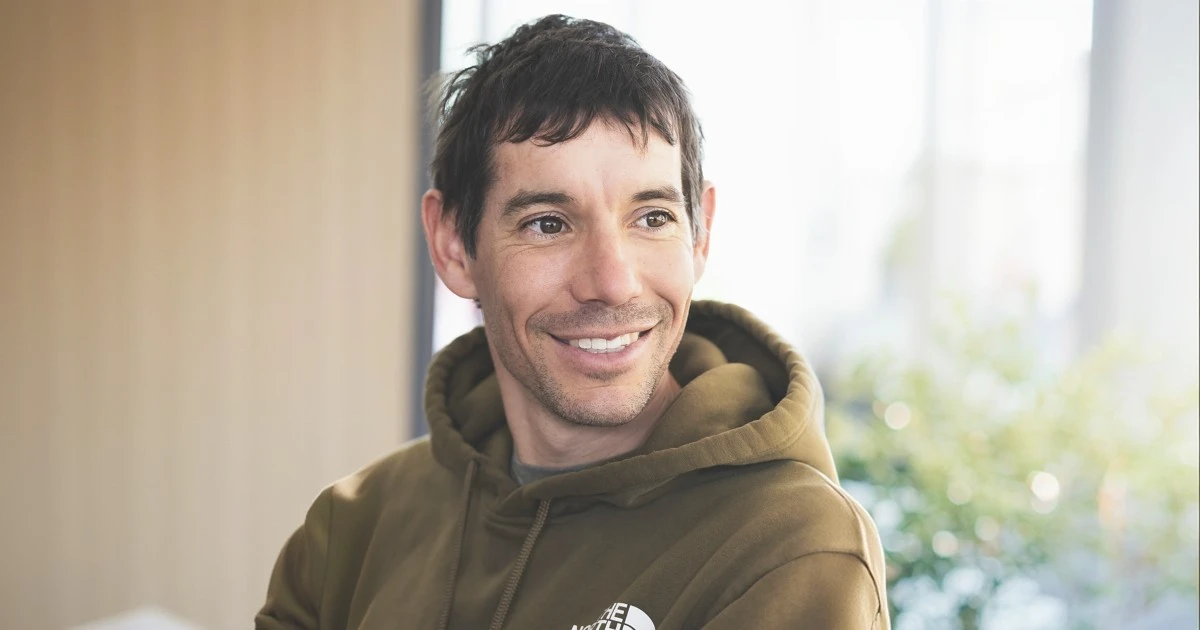
Image Credit - By Christopher Michel, Wikimedia Commons
Alex Honnold Climbs Taipei 101 In 91 Minutes
We assume live television provides an unfiltered window into reality, but broadcast networks actually engineer a layer of separation to protect themselves from liability. Millions tuned in to watch a man challenge gravity, yet they unknowingly entered a contract where entertainment relied entirely on the suppression of a potential tragedy. According to Focus Taiwan, the Alex Honnold Taipei 101 ascent took place on Sunday, January 25, 2026. As reported by Reuters, Honnold moved without ropes or safety netting. Focus Taiwan further noted that Netflix broadcast the event live via their special "Skyscraper Live" to a global audience, but they kept a finger on the "cut" button the entire time. The visual on the screen offered a spectacle of human endurance, while the control room managed a high-wire act of corporate risk.
The event promised raw danger, yet the timeline bowed to the most mundane of enemies: moisture. A wet weather front disrupted the original schedule set for Saturday, January 24. Friction dictates survival in free soloing. Even the best climber in history cannot negotiate with a slick surface. Honnold waited. The delay heightened the tension. When the clouds cleared on Sunday, he approached the 508-meter tower. He turned a feat of death-defying athleticism into a demonstration in speed. The climb unfolded as a calculated dismantling of the building's defenses.
The Logistics of Vertical Risk
A climbing schedule often suggests human control, but the atmosphere always holds the final veto power. The planned ascent faced an immediate hurdle that cameras could not fix. Wet weather coated the steel and glass exterior of the skyscraper. This moisture forced a 24-hour postponement. Honnold requires absolute friction to maintain his grip. He waited until the conditions matched his technical requirements. The climb finally commenced on Sunday, January 25, 2026.
Once he began, the pace shocked spectators. The Alex Honnold Taipei 101 climb operated on a timeline that disregarded standard pacing. He moved with a relentless rhythm. The entire ascent from the base to the spire took only 1 hour and 31 minutes. This speed suggests a comfort level that borders on nonchalance. He treated one of the world's tallest buildings like a warm-up lap. Most observers struggle to comprehend the physical demand of such speed.
How long did it take Alex Honnold to climb Taipei 101?
Alex Honnold completed the entire ascent in just 1 hour and 31 minutes. This duration shattered previous expectations for scaling the tower. He did not pause to admire the view or rest his muscles. He utilized momentum to reduce the time spent in the "death zone," effectively minimizing his exposure to fatigue.
Engineering vs. Human Grip
Modern skyscrapers mimic organic shapes, but their materials offer zero negotiation for the human hand. Taipei 101 resembles a giant bamboo stick rising from the pavement. This architectural choice creates a series of stacked boxes. For a climber, this means repetitive motion followed by sudden, difficult movements. Honnold faced sections of overhangs and smooth surfaces that offered no natural purchase.
The technical grade of the climb ranged from 5.10 to 5.11 YDS. In the world of rock climbing, this difficulty level commands respect even with a rope. Honnold faced it with nothing but chalk and rubber shoes. The construction materials—steel, glass, and concrete—behave differently than the granite of El Capitan. They heat up. They lack texture. The challenge lay in maintaining focus against the monotonous, slick nature of the facade.
Near the top, the building offered a brief, surreal intersection of life and death. The Taipei Times reported that as Honnold passed the 89th floor, people inside the building could be seen gawking and tapping at the glass, waving at the man clinging to the other side. This moment highlighted the absurdity of the event. On one side of the window, people stood in air-conditioned safety; inches away, a man hung suspended over the city. Honnold ignored the distraction. He kept his eyes on the next hold.
The Delay Protocol
Live broadcasts sell the promise of "now," yet corporations build time machines to erase disasters before the public sees them. Netflix marketed the event as "Skyscraper Live," but they engineered a safety gap. Executives implemented a strict 10-second delay on the feed. This existed solely to cut the feed in the event of a fall, rather than for editing swearing or wardrobe malfunctions.
Jeff Gaspin, a Netflix executive, spoke plainly about this protocol. The network prepared to terminate the live feed instantly if disaster struck. They aimed to protect the audience from witnessing a fatality. The delay served as a digital shield. It allowed the network to monetize the risk while absolving themselves of the trauma. Viewers watched the Alex Honnold Taipei 101 ascent believing they shared the moment, but they actually watched a curated version of reality, safe-guarded by a ten-second buffer.
Critics pointed out the morbid curiosity driving the ratings. The delay proved that the network understood the dark appeal of the event. People tuned in for the triumph, but the possibility of the alternative kept them glued to the screen. The "cut away" protocol served as the ultimate admission of the stakes involved.
Financial Motivation vs. Pure Climbing
We often mistake a paycheck for motivation, failing to see that for some experts, money is merely a toll paid to tolerate the cameras. Honnold received a substantial sum for the event. He described it as an "embarrassing amount." The money bought his patience with the production rather than his risk.
Honnold distinguished between the climb and the show. He views the ascent as an intrinsic reward. He would scale the spire for free if the cameras vanished. The payment compensated him for the interviews, the logistics, and the "spectacle" requirements.
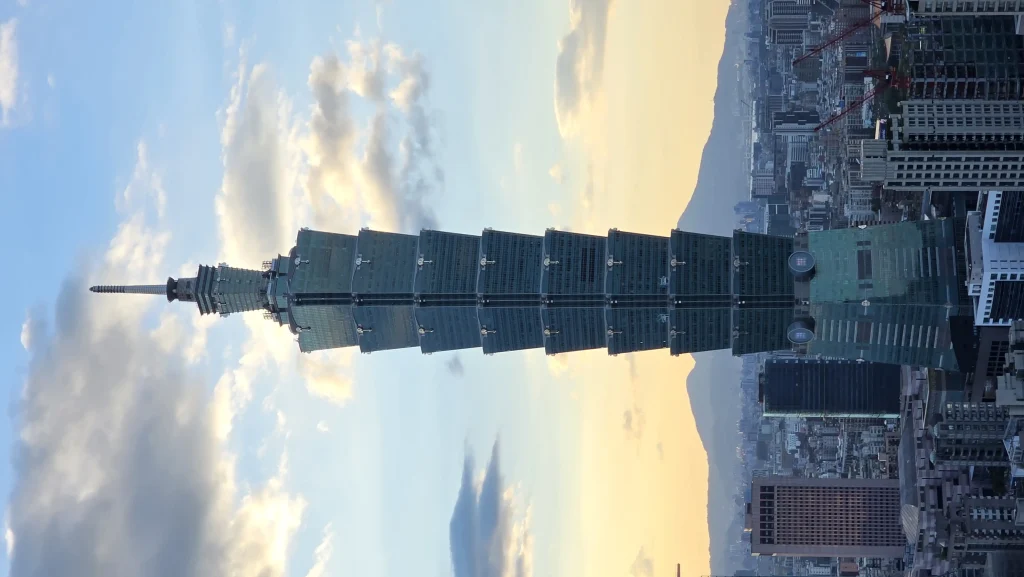
Image Credit - By Sinsyuan, Wikimedia Commons
How much was Alex Honnold paid for the Taipei 101 climb?
While the exact figure remains undisclosed, Honnold confirmed he earned less than $10 million, a sum he noted was far below Major League Baseball contracts. He considers the danger of his profession equal to or greater than mainstream sports, yet the compensation lags behind.
The nuance here defines his character. He climbed because the building existed, not for the check. The financial reward served as a byproduct of his obsession, not the source. He accepted the cash as fair trade for the intrusion of the media into his solitary practice.
Comparing the Giants
Records usually imply a slight improvement on a predecessor, but some athletes rewrite the rules so completely that the old records become irrelevant. The Alex Honnold Taipei 101 feat stands in stark contrast to previous attempts. Alain Robert, known as the "French Spiderman," set the precedent for scaling this tower. Robert used ropes and safety gear during his ascent.
Reuters archives indicate that Robert took four hours to reach the top, utilizing a safety rope for his ascent. Honnold stripped away every piece of protection. He climbed free solo. He cut the time by more than 50%, finishing in just over 90 minutes. The difference between four hours and 90 minutes highlights the gap between spectacle and skill. Robert performed a stunt; Honnold executed a high-speed athletic performance.
This achievement also draws comparisons to Honnold’s own history. The height of Taipei 101 sits at 508 meters (1,667 feet). This pales in comparison to the 915-meter (3,000-foot) vertical face of El Capitan. However, the nature of the challenge differs. El Capitan offers natural cracks and friction. Taipei 101 offers engineered smoothness and industrial hostility. Honnold adapted his granite skills to the urban monolith, proving his versatility across all vertical terrains.
The Biological Advantage
Panic is a survival response, but for a free soloist, the absence of this biological alarm is the only way to survive. Most humans experience a flood of cortisol and adrenaline when looking down from a height. Honnold’s brain operates on a different frequency. MRI scans of his brain reveal a startling anomaly. His amygdala, the center responsible for fear processing, requires massive stimulation to activate.
The 45-degree outward climb at the spire represents a nightmare for the average person. The exposure at that altitude triggers an immediate freeze response.
Does Alex Honnold feel fear?
Scientific tests show that his amygdala shows very low activation, meaning he biologically feels significantly less fear than a typical human. This allows him to assess a deadly overhang as a simple geometry problem.
Where others see death, he sees a sequence of moves. This biological trait changes the climb. While bravery implies overcoming fear, for Honnold this is an act of calm execution. The Alex Honnold Taipei 101 event showcased this unique neurology in real-time. He moved through the "death zone" with a lower heart rate than the viewers watching him from their couches.
The Viewer’s Dilemma
Entertainment derived from life-threatening risk creates a psychological conflict where boredom and terror oscillate wildly. Critics noted a strange situation during the broadcast. For long stretches, the climb looked repetitive. Honnold moved hand over hand, floor after floor. The motion became hypnotic, almost dull. This "zoning out" phenomenon lulled viewers into a false sense of security.
Then came the spire. The boredom evaporated instantly. The final section required a shift to a 45-degree overhanging structure. The sudden spike in difficulty jolted the audience. Stuart Heritage, a critic, compared the experience to a "Victorian freak show." He noted the voyeuristic guilt associated with watching a man who might die for amusement. The tension resembled watching a toddler play with a knife—a mix of horror and inability to look away.
Even those close to the event struggled to watch. Taiwan’s Vice President, Hsiao Bi-khim, admitted the broadcast induced nausea. She felt a physical reaction to the height exposure simply by watching the screen. In an interview with People during the special, Sanni McCandless, Honnold’s wife, stated she was just trying to stay calm and be in the moment, expressing anxiety about variables like the wind and heat rather than his skill. The audience carried the emotional burden that Honnold blocked out.
The Corporate Calculus
Sponsorships usually signal endorsement, but in extreme sports, they often signal a corporation's limit for liability. Clif Bar, a previous sponsor of Honnold, withdrew their support years ago. They decided the risk tolerance required for free soloing exceeded their corporate comfort zone. They refused to brand themselves with potential death.
Netflix took the opposite bet. They leaned into the danger. They marketed the Alex Honnold Taipei 101 climb specifically because of the risk. This shift in corporate strategy highlights a change in media consumption. The audience demands higher stakes. Formula One and Red Bull Stratos operate on similar principles. The entertainment value correlates directly with the implied risk of death.
Critics argue this trend encourages "rubbernecking." Viewers tune in to see the crash as much as the finish line. The Skyscraper Live event validated this theory. Millions watched, waiting for the slip that never happened. Netflix capitalized on the darker side of human curiosity, packaging the potential for tragedy as premium Sunday night entertainment.
The Spire and the Finish
The final few meters of a climb often hide the most treacherous traps, as exhaustion meets the most difficult architecture. The move from the 89th floor to the spire marked the shift from endurance to high-intensity technical climbing. Honnold had to navigate the exterior of the spire, a structure not designed for human transit.
The wind at that altitude behaves unpredictably. The heat radiating off the metal surfaces compromises grip. Honnold moved through this section with the same precision he displayed at the bottom. The risk factors added up—the overhangs, the smooth surfaces, the fatigue—but his execution remained flawless.
When he reached the top, the release of tension was palpable worldwide. The Alex Honnold Taipei 101 ascent concluded with a simple final movement rather than a bang. He stood atop the city, 1,667 feet in the air. The feat solidified his status as the greatest climber of his generation. He climbed unaided, unroped, and unmatched.
The Price of the View
The Alex Honnold Taipei 101 climb forced the world to confront the reality of high-stakes entertainment. We watched a man gamble his life against a wet weather front and a slick glass facade, while a corporation held a ten-second delay button to sanitize the potential horror. Honnold walked away with a paycheck he deems embarrassing and a record that shatters the history of the building. He proved that the hardest architecture on earth still bends to the will of a human with zero fear and absolute focus. The audience got their show, Netflix got their ratings, and Honnold got the only thing he truly wanted: the summit. The system worked, but only because he refused to fall.
Recently Added
Categories
- Arts And Humanities
- Blog
- Business And Management
- Criminology
- Education
- Environment And Conservation
- Farming And Animal Care
- Geopolitics
- Lifestyle And Beauty
- Medicine And Science
- Mental Health
- Nutrition And Diet
- Religion And Spirituality
- Social Care And Health
- Sport And Fitness
- Technology
- Uncategorized
- Videos

