

UK Social Media Ban: The Battle for Under-16s
Governments often treat digital safety like a physical border, assuming a simple fence stops the flow of traffic. But the digital world flows around barriers, making traditional blockades useless. The UK government now faces this reality as it considers blocking under-16s from platforms like TikTok and Instagram. Prime Minister Keir Starmer has launched a consultation to explore this restriction. While supporters argue this creates a necessary shield for vulnerable youth, critics see a dangerous illusion of safety. This debate splits politicians, parents, and experts. The UK social media ban forces a choice between total prohibition and better regulation.
Political Strategy Meets Public Pressure
Political announcements often serve to extinguish internal fires instead of solving external problems. A looming rebellion in the House of Lords accelerated this conversation. Over 60 Labour MPs signed a letter urging the PM to act. They want stronger protections than the current laws offer. To avoid a defeat on the Children’s Wellbeing and Schools Bill, the government signaled it is now "open" to stricter controls.
This shift marks a change in tactic. The PM previously hesitated to endorse blanket prohibitions. Now, the government watches international moves closely. Ministers plan to investigate how a UK social media ban would actually work in practice. They need to know if age checks can stop tech-savvy teenagers. The goal involves pre-empting a revolt while addressing rising parental anxiety. The announcement aims to satisfy the rebels without committing to a timeline that might fail.
The Push for a Phone-Free Childhood
Tragedies often reveal how digital tools can dismantle real-world defenses. According to reports by The Guardian, Esther Ghey has become a high-profile figure leading the charge for stricter rules, noting that her daughter, Brianna, suffered immensely due to online interactions. Ghey argues that smartphones and social apps act as portals for bullying and self-harm. She notes that algorithms specifically target vulnerable youth, keeping them isolated from real-world support. In her view, monitoring a child’s phone fails because the sheer volume of content overwhelms parents.
Supporters believe removing these platforms restores natural socialization. They want to break the cycle where digital existence replaces actual friendship. Is the social media ban just for schools? No, the proposed consultation explores a complete ban on social media access for under-16s across the entire UK. This goes beyond the classroom, aiming to cut off the "feed" that fuels anxiety and eating disorders. Esther Ghey emphasizes that vulnerable trans youth are specifically affected by this digital isolation.
Why Experts Fear a False Safety Net
Banning a visible danger frequently drives the risk into darker, unregulated corners. While emotions run high, data tells a complicated story. As noted in a shared statement published by the Molly Rose Foundation, a group of 42 organizations, including the NSPCC and Childnet, oppose a blanket ban, arguing that such measures would not be able to deliver real safety. They argue that simple prohibition creates a "false sense of security." If the main platforms become off-limits, threats do not disappear. Instead, predators and harmful content migrate to the dark web or encrypted messaging apps.
Amy Orben from Cambridge University points out the lack of concrete evidence. We do not know if age-based bans effectively improve mental health. The worry is that the government might enact a UK social media ban that looks tough but achieves nothing. Speaking to Netmums, Ian Russell of the Molly Rose Foundation suggests the focus must remain on the Online Safety Act, warning that ministers should enforce current rules rather than employing sledgehammer techniques. He believes regulation should force companies to design safer products rather than simply excluding users.
The Reality Inside Classrooms
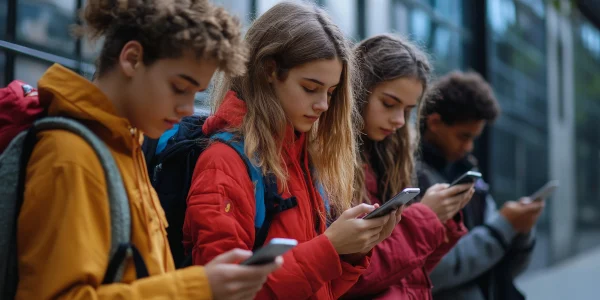
Rules written on paper rarely match the chaotic reality of a school corridor. Most schools already claim to restrict phones. Statistics show that 99.9% of primary schools and 90% of secondary schools have guidelines in place. Yet, enforcement struggles to keep up. About 58% of secondary pupils still use phones illicitly during the day. This gap proves that policies alone do not stop usage.
Ofsted will now inspect how well schools handle this issue. The government wants "phone-free" zones to be the default standard. Daniel Kebede from the National Education Union highlights the deeper issue. How do schools enforce the social media ban? Schools currently use policies like collecting phones or banning them from sight, but Ofsted will now monitor and report on how effective these measures really are. Kebede notes that algorithms warp attention spans, trapping students in loops of distraction that hurt exam performance. Teachers face the burden of policing devices while trying to teach.
The Australian Experiment
Nations sometimes rush to copy foreign policies before seeing if they actually work. The UK government looks to Australia as a testing ground. Australia recently passed legislation to ban social media for under-16s, covering platforms like TikTok, Instagram, and Reddit. Their implementation phase is set for late 2025. The UK Prime Minister wants to see the results of this experiment before finalizing a UK social media ban here.
However, the timelines are unclear. Reuters gives mixed signals, saying the ban will begin on December 10, while also reporting that from late 2025, only Australians aged over 16 will be allowed to use social media.
This discrepancy matters. If the UK waits for Australian data, legislation could take years. Critics like Kemi Badenoch argue that looking abroad is just a delay tactic. They believe the government is mimicking Conservative announcements without a solid plan for execution. A UK social media ban modeled on a system that hasn't started yet carries significant risk.
The "Dither and Delay" Debate
Consultations often act as administrative brakes designed to slow down urgent demands. The government launched a 12-week consultation to study the issue. This research will cover age assurance technology and the addictive nature of features like "infinite scroll." Technology Secretary Liz Kendall insists that current laws fall short and parents need more power. She views technology’s role as enrichment, not harm.
Opponents see this study as procrastination. Nash, who introduced the amendment to the Children’s Wellbeing Bill, says that announcements provide no immediate support. In his view, a consultation simply postpones real action. So when will the UK social media ban actually begin? There is still no fixed start date, since the government remains in the consultation stage and is waiting for evidence from similar measures in other countries. The amendment text released by the UK Parliament states that Lord Nash wants the ban implemented within twelve months of the Act being passed. He worries that each month of delay represents another failure for the nation’s young people.
Technology Barriers and Age Checks
Digital gates fail when the keys are easy to forge. A major hurdle involves verifying age. The consultation will examine how platforms can accurately identify under-16s without violating user privacy. Current age gates are easily bypassed by kids simply changing their birth year. For a UK social media ban to hold, data access blocks must be watertight.
The tech industry argues that safety should be a prerequisite for market entry. However, platforms are designed to maximize engagement. Features like "streaks" specifically exploit the teenage desire for social validation. Breaking this business model requires more than a rule; it requires technical intervention. If the UK social media ban relies on weak age checks, it will crumble immediately. The challenge lies in balancing strict verification with data protection rights.
The Illusion of Control
The desire to shield children from digital harm drives this debate, but the path forward remains blurry. Banning platforms might silence the noise for a moment, yet it risks pushing the conversation into shadows where parents cannot follow. The UK social media ban forces the country to decide if it wants to build higher walls or teach better swimming. With political pressure mounting and emotional testimonies like Esther Ghey’s leading the news, the government must move beyond delays. A law that exists only on paper protects no one. The final decision will define how a generation grows up online.
Recently Added
Categories
- Arts And Humanities
- Blog
- Business And Management
- Criminology
- Education
- Environment And Conservation
- Farming And Animal Care
- Geopolitics
- Lifestyle And Beauty
- Medicine And Science
- Mental Health
- Nutrition And Diet
- Religion And Spirituality
- Social Care And Health
- Sport And Fitness
- Technology
- Uncategorized
- Videos

