
Edward Flanagan’s Radical Vision Built Boys Town
When lawmakers criminalize failing teenagers, they successfully distract the public from the adult negligence creating those teenagers. Blaming a child for delinquency stops anyone from questioning the authorities who underfund neighborhoods and ignore abuse. Father Edward Flanagan identified this exact diversion tactic over a century ago. He refused to accept the prevailing societal lie that some children possess inherently evil souls. He blamed the exact environments authorities refused to fix.
To prove his theory, he built an entirely independent settlement in Nebraska. He designed this village to catch vulnerable youth moments before the state could lock them in cells. He threw out harsh disciplinary tactics and implemented total acceptance. According to Oxford Academic publications and recent press releases from BoysTown.org, millions of modern families now rely on the specific intervention methods he pioneered. With Pope Leo XIV officially granting him "Venerable" status in 2026, his historical rebellion requires intense reexamination. We must dissect how an immigrant priest outsmarted local segregation laws, embarrassed international governments, and constructed a youth support empire that survived massive financial and moral scandals.
The Academic History and First Defiance of Father Flanagan
Pushing a highly educated scholar into a severely neglected community immediately highlights the absolute failure of local government support systems. Born on July 13, 1886, Father Edward Flanagan experienced an intense and varied upbringing. Historical records place his exact birth location in Leabeg, County Roscommon, right near the village of Ballymoe in the West of Ireland. He eventually emigrated to the USA in 1904 after turning 18. He then embarked on a massive, international educational tour to prepare for his religious life. According to a biography from FatherFlanagan.org, he aggressively pursued his theological studies across multiple prestigious institutions:
- Summerhill College (Ireland)
- Mount St. Mary’s University (Maryland)
- Joseph’s Seminary (New York)
- Gregorian University (Rome)
- Royal Imperial Leopold Francis University (Austria)
He finally achieved his ordination to the priesthood in 1912. The church assigned him to Omaha, Nebraska. He observed the streets of the city and identified a catastrophic failure in juvenile delinquency prevention. He abhorred the cruelty of the local justice system. He publicly condemned authorities for completely neglecting youth right up until those youth committed criminal acts. He decided to bypass the state apparatus entirely.
The Radical Belief That Built Boys Town
As noted in historical records from NebraskaStudies.org and History.Nebraska.gov, he acquired a $90 loan in 1917 and opened his first boys' shelter at 25th and Dodge streets. He called this initial setup "The City of Little Men." These sources also indicate he started his grand experiment with just five boys. What did Father Flanagan believe about children? According to America Magazine, Father Flanagan believed that inherently evil children do not exist and that negative actions stem entirely from poor environments and bad training. He proved this philosophy almost immediately. By early 1918, he grew his operation to house over 100 boys, eventually sheltering more than 150 youths in his first year. He demonstrated that early intervention easily outperformed delayed criminal justice punishment.
Bypassing City Law to Build the Boys Town Empire
Moving a controversial operation straight across a municipal border instantly neutralizes the local politicians trying to restrict that operation. Father Flanagan mandated a strict inclusivity strategy for his growing shelter. He demanded total acceptance of every youth who needed help. He enforced an absolute rule of zero discrimination regarding religion, race or nationality. He operated as an early pioneer of racial desegregation long before the mainstream civil rights movement gained traction. This radical stance created an immediate legal conflict with local authorities. Omaha enforced strict city segregation laws at the time, and local officials threatened to shut down his desegregated project. He solved this legal threat via a brilliantly simple real estate transaction.
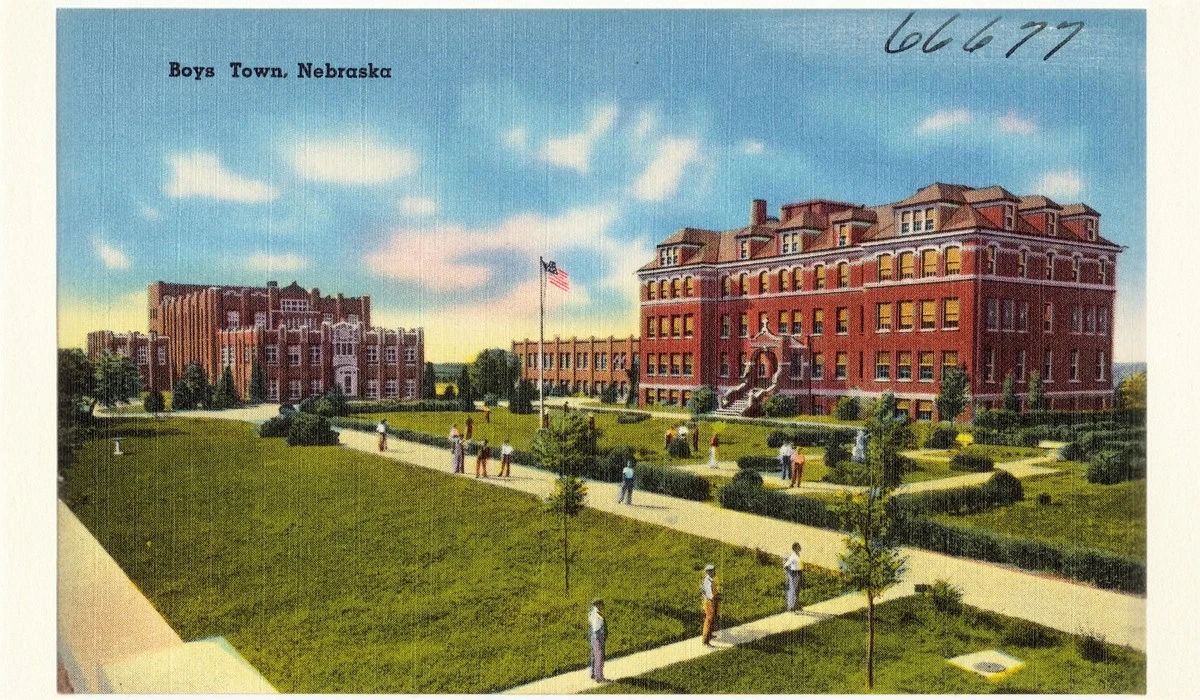
In 1921, he purchased Overlook Farm. This rural property sat completely outside the city limits of Omaha. He moved his boys to this farm and officially established the Boys Town village. The city police and local lawmakers instantly lost all jurisdiction over his operation. He secured his US citizenship in 1919 and spent the next decade formalizing his independent settlement. He successfully pushed for official government recognition, and the state granted official village status to Boys Town in 1936. He established a self-governing society where boys managed their own farm and elected their own peers to leadership positions. Archbishop Michael G. McGovern frequently discusses this time period. He highlights how this monumental charity act required courageous persistence against heavy opposition during the initial youth intake phases. The Archbishop notes the enduring emotional effect the priest holds across rigid religious boundaries.
Hollywood Glamour and the Real Father Flanagan
Securing major entertainment industry backing transforms a highly localized social experiment into an untouchable national institution. The massive success of the Nebraska village eventually attracted the attention of powerful Hollywood executives. A major studio produced and released the movie Boys Town in 1938. The movie captured the imagination of the American public and won 2 Academy Awards. Spencer Tracy played the starring role. Tracy publicly stated that he deeply appreciated his acting performance because it created a massive audience connection to the famous priest. The studio even released a sequel, Men of Boys Town, in 1941 to capitalize on the massive financial success.
How did Boys Town get famous? Historical records published by BoysTown.org indicate the 1938 Hollywood film starring Tracy brought massive national attention and financial support to the Nebraska village. The films brought immense wealth to the organization, but they also smoothed over the harsh realities the founder fought against. He spent his life battling severe poverty and hostile government neglect, while the movies presented a heartwarming, sanitized version of his daily struggles. The organization leaned heavily into this public relations victory. In 1943, they launched an iconic logo featuring a boy carrying a younger boy. They paired this image with the famous slogan, "He Ain't Heavy, He's My Brother." This branding move solidified the flawless public reputation of the institution. The country embraced the highly stylized version of his story and ignored his constant critiques of systemic inequality.
Confronting the Global Juvenile Justice Network
Exporting a successful domestic charity model forces foreign leaders to publicly acknowledge the brutal conditions inside their own government facilities. Father Edward Flanagan refused to limit his child welfare mission to the USA. He took his fight directly to international governments following the conclusion of the Second World War. In 1946, he booked a return trip to his native Ireland. He toured the country and conducted a deep inspection of the Irish juvenile justice system.
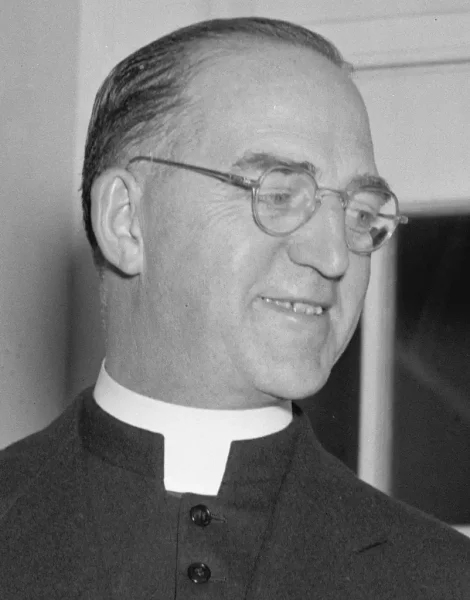
He hated what he found inside their walls. He delivered a blistering public critique of the state-run reformatories and directly shamed the politicians overseeing the facilities. He traveled the globe to inspect child welfare operations and advocate for highly vulnerable youth. He forced international authorities to examine their broken support networks. During a strenuous child welfare mission to Germany, his physical body finally gave out. He suffered a fatal heart attack in Berlin, Germany, on May 15, 1948. His sudden death shocked his supporters around the world. His followers immediately transported his body back to the United States. They buried him inside the Dowd Memorial Chapel at his beloved Nebraska village. He died fighting the exact same government negligence that he first identified on the streets of Omaha in 1917.
The Modern Evolution of Father Edward Flanagan’s Charity
Scaling a massive care facility forces modern administrators to drastically abandon old operational models to meet current psychological standards. The leadership team at the village faced a massive challenge after their founder died. They needed to expand the operation while maintaining his core philosophy. According to BoysTown.org, they completely overhauled the program in 1974. The organization notes that administrators moved the facility away from large dormitories and implemented a specialized Family-Home model. This shift provided a much more stable and personalized environment for the residents. A report by CBS News states that in 1979, the board of directors made another radical change and officially authorized the admission of girls to the campus.
Information from BoysTown.org shows the federal government continued to recognize the historical importance of the site, with authorities designating the village as a US National Historic Landmark in 1985. Records from the Smithsonian National Postal Museum also indicate the US Postal Service honored the founder by releasing a 4-cent postage stamp in 1986. Prior to that, officials inducted him into the Nebraska Hall of Fame in 1965. How many youth does Boys Town help today? The organization currently provides direct services to more than 3.5 million families annually across the country. The current Boys Town organization frequently praises his extraordinary foresight. They credit his enduring effect on their current operations directly to his unyielding belief in youth potential. They transformed a small, rebellious farm project into a massive national support network.
The Extreme Wealth and Abuse Scandals Concealed in the Village
Maintaining a flawless public image allows executives to stockpile massive cash reserves and deflect horrific legal accusations without immediate consequence. According to an institutional history blog on BoysTown.org, the institution relied heavily on its unblemished savior narrative for decades. This pristine reputation shielded the administration from outside scrutiny until 1972. As detailed in Pulitzer Prize records, reporters at the Omaha Sun published a devastating expose that year. The journalists exposed a secret $191 million endowment sitting in the organization's bank accounts. The administration actively pleaded for small public donations while hoarding this massive fortune. The resulting public outrage forced Director Nicholas Wegner to hand in his resignation. A much darker scandal hit the village during the 1980s. Federal investigators and journalists examined terrifying allegations of a child prostitution ring associated with the Franklin Community Federal Credit Union.
Accusers claimed the ring involved highly powerful political and business figures in Omaha, and rumors connected the systemic abuse directly to the village. Critics loudly accused Director Val Peter of orchestrating a coverup. The legal system produced a deeply controversial conclusion to the crisis. Prosecutors secured zero indictments for the accused ringleader, Lawrence King. A judge eventually handed down a perjury prison sentence for the primary accuser, Alisha Owens. Investigator Carol Stitt spoke out aggressively against the handling of the case. She condemned the complete inaction that followed her report submission. She blamed this obvious lack of investigation directly on the high social status of the accused abusers. The institution survived the storm, but the severe scandals permanently complicated its perfect historical narrative.
The 2026 Venerable Status of Father Edward Flanagan
A massive religious bureaucracy enforces mandatory waiting periods to ensure a candidate’s historical record withstands heavy scrutiny before granting permanent spiritual elevation. The Catholic Church operates a highly strict canonization process. Officials mandate a minimum wait time of five years post-death before anyone can initiate a sainthood cause. According to reports from LACatholics.org and ArchOmaha.org, the Archdiocese of Omaha officially initiated the cause for Father Edward Flanagan in February 2012. These same sources confirm church officials granted him the "Servant of God" title in March 2012. He spent the next fourteen years moving slowly through the strict Vatican review system.
Now, in 2026, Pope Leo XIV has officially released the declaration elevating him to "Venerable" status. This massive advancement places him alongside other notable modern figures moving through the process. He joins candidates like Cardinal Ludovico Altieri, Father Henri Caffarel, Sister Barbara Stanisława Samulowska, Mother Belén, and Giuseppe Castagnetti. Bishop Kevin Doran views this 2026 elevation as a vital message for modern society. He points out that the priest's strict morality remains highly relevant today. Doran highlights the stark contrast between modern youth homelessness and our immense national wealth. He loudly condemns the current societal tendency toward the hostile labeling of outsiders. Archbishop McGovern confirms that future beatification prayers remain ongoing at the village. The modern church views his aggressive commitment to poverty alleviation and youth support as a direct reflection of the divine love command. He stands as a prime exemplar for the Christian lifestyle.
The Final Verdict on the Omaha Experiment
Modern justice systems still prefer punishing bad behavior over fixing bad environments. Father Edward Flanagan refused to label children as inherently bad and forced early 20th-century lawmakers to look directly at their own legislative failures. He utilized rural real estate to defeat strict segregation laws. He used Hollywood fame to fund a massive social experiment. He traveled across the globe to publicly humiliate foreign governments for their abusive reformatories. The institution he built survived massive financial hoarding scandals in the 1970s and horrific abuse allegations in the 1980s. The core operational philosophy outlasted the executives who nearly destroyed it. Today, the organization delivers direct services to 3.5 million families. The 2026 elevation to Venerable status cements his legacy. Father Edward Flanagan proved that stripping away extreme punishment and applying total inclusivity actually prevents juvenile delinquency.
Recently Added
Categories
- Arts And Humanities
- Blog
- Business And Management
- Criminology
- Education
- Environment And Conservation
- Farming And Animal Care
- Geopolitics
- Lifestyle And Beauty
- Medicine And Science
- Mental Health
- Nutrition And Diet
- Religion And Spirituality
- Social Care And Health
- Sport And Fitness
- Technology
- Uncategorized
- Videos

