
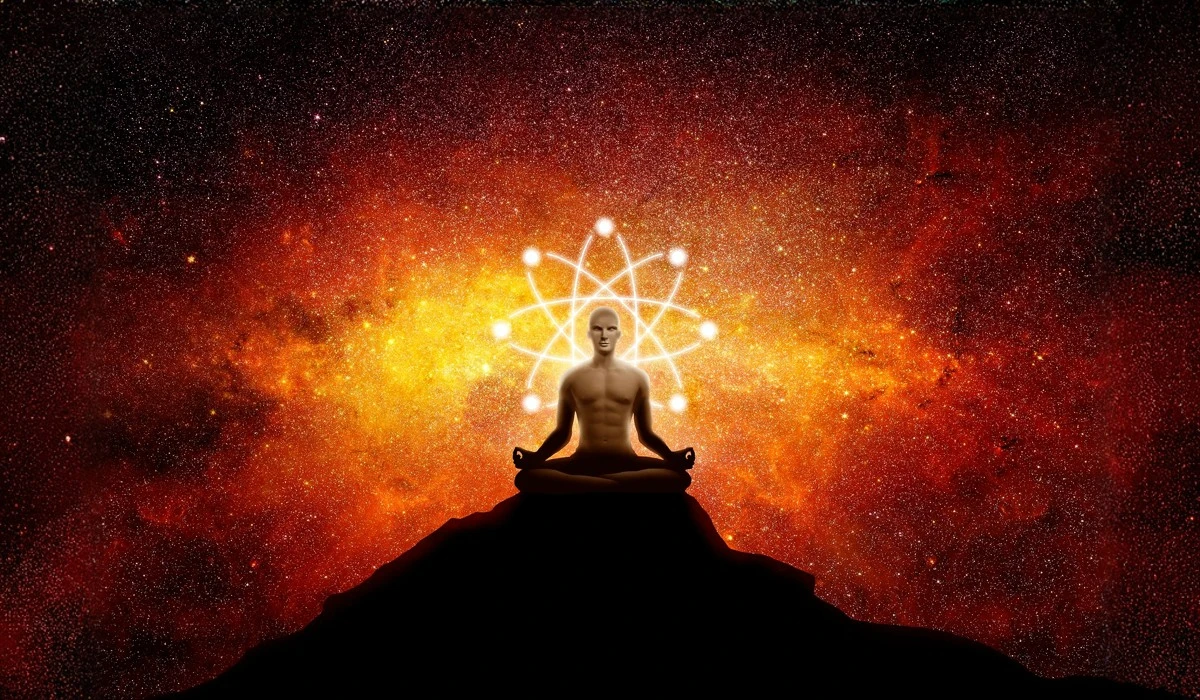
Theosophy Teachings To Stop Feeling Lost In Life
Most people feel like they are wandering through a fog when it comes to their inner life. You might buy the books, attend the seminars, and try the latest trends, yet the same old anxieties keep coming back. You feel like you are chasing a ghost. You try to fix your life by changing your surroundings, but the real driver of your happiness remains tucked away. This happens because you are operating without a map of the terrain you inhabit. You see the physical world clearly, but you miss the forces that actually shape your day-to-day experience. Theosophy provides that missing map. It offers a way to look at the world that explains why you feel out of sync and how you can find your way back.
Instead of following a rigid set of rules, you begin to see the evolution of consciousness as a natural process. Every struggle and every joy serves a specific purpose in your growth. When you understand the way the universe actually functions, you stop fighting against the current of your own life. You start to move with purpose. This ancient wisdom helps you recognize that you are part of a much larger story.
Demystifying the ancient wisdom of Theosophy
To understand the roots of this wisdom, we look back to 1875. In that year, Helena Petrovna Blavatsky, Colonel Henry Steel Olcott, and William Quan Judge formed the Theosophical Society in New York City. According to the mission statements of the Theosophical Society Adyar, the founders aimed to promote the comparative study of science, philosophy, and religion. They believed that a single truth lives at the heart of all three.
As documented by the Encyclopaedia Britannica, the name is derived from the Greek terms "theos" for god and "sophia" for wisdom. In the 3rd century, thinkers in Alexandria used this term to describe a direct, personal knowledge of the divine. It suggests that you don't need a middleman to find the truth. You can find it yourself through study and experience.
What is the main goal of theosophy? The Theosophical Society Adyar states that its central goals include investigating unexplained natural laws and the internal powers of humanity to support a universal brotherhood. This focus on "universal brotherhood" represents a recognition that all life comes from the same source, as well as being a kind sentiment. In 1882, the society moved its international headquarters to Adyar, India. This move helped bridge the gap between Western thought and Eastern spiritual traditions.
Foundational theosophy teachings for conscious living
If you want to live with more awareness, you have to look at the core pillars of this philosophy. These descriptions of how life works on every level are more than theoretical studies.
The Principle of Universal Unity
The most important idea here is that everything is connected. You are not a separate island. You are a drop in a vast ocean of life. This means that your actions affect the whole. When you hurt someone else, you are essentially hurting a part of yourself. Materials from Theosophy World, based on The Secret Doctrine, explain that a single life force or Brahma exists within every atom of the universe. This understanding helps you move away from selfish desires and toward a life of service.
The Law of Periodicity and Cycles
Everything in nature moves in a rhythm. Think about the seasons, the tides, or your own heartbeat. Life doesn't just happen randomly. It follows a predictable pattern of activity and rest. The same resources describe these rhythmic phases as Manvantara, or active life, and Pralaya, which represents a state of rest. This applies to civilizations and even entire universes. When you realize that "this too shall pass," you can handle the difficult cycles of your life with more grace.
According to Theosophy World, H.P. Blavatsky established the framework for her book, The Secret Doctrine, through three basic postulates. These postulates suggest that an eternal and infinite principle exists behind all things, governing a universe of law where souls undertake an obligatory path through cycles of incarnation.
Essential theosophy concepts to navigate your path
To really refine your life, you have to know who you are. Most of us mistake our temporary feelings for our true selves. This is where specific theosophy concepts become very practical.
Theosophy distinguishes between the "Personality" and the "Individuality." Your personality is the "mask" you wear in this lifetime. It includes your name, your job, your physical body, and your current emotions. This part of you eventually dies. Theosophy World notes that the individuality represents the immortal soul, which shares a basic identity with the Universal Over-Soul. The source further explains that this soul accumulates experience during its necessary pilgrimage through the cycle of incarnation. When you focus on the individuality, you stop worrying about temporary setbacks.
What are the basic principles of theosophy? Research in the Encyclopaedia Britannica highlights that these views include a belief in an eternal reality where human souls are seen as sparks of the divine. This means your true identity is much bigger than your daily problems. You are an eternal being having a human experience.
Ironically, we often spend all our energy trying to please the personality. We want more money, more fame, or more comfort. In reality, these things don't satisfy the individuality. True growth happens when you align your daily actions with your eternal soul. This alignment brings a sense of peace that outer circumstances cannot touch.
Decoding the sevenfold nature of human existence
Theosophy teaches that you are a detailed being with seven different layers, rather than just a body and a mind. Understanding these layers helps you figure out where your internal conflicts come from.
The Lower Quaternary: Our physical and emotional tools
The first four layers make up your mortal self. The Theosophical Society in America identifies the physical layer as Sthula-sharira and the accompanying life force as Prana. The society also describes the Linga-sharira as the vital body or field that serves as a template for the physical form. The organization concludes the lower set with the Kama, representing the emotional or desire-based body. This is the part of you that feels cravings, anger, and passion. If you find yourself constantly reacting to your feelings, your Kama is likely in the driver's seat.
The Higher Triad: The eternal spiritual core

The top three layers are your immortal part. According to records from the Theosophical Society in America, the higher triad consists of Atma as spiritual will, Buddhi as intuition, and Manas as the mind. These layers don't die. They carry your wisdom from one life to the next. Between the lower mind and the higher mind lies the Antahkarana. This is the "bridge" you build through meditation and study.
When you know these layers exist, you can navigate your internal conflicts. For example, when you feel an urge to lash out in anger, you can recognize it as a movement in your Kama body. Meanwhile, your Manas can choose a different path. You stop being a slave to your impulses.
Navigating the Laws of Karma and Reincarnation in Theosophy
While many view Karma as "what goes around comes around," Theosophy defines it as a law of equilibrium and nature's method for restoring balance. When you act, you create a ripple in the universe. Nature eventually pushes back to bring everything back to the center.
Reincarnation is the classroom where the soul learns these lessons. You don't just live once. You come back many times to gain different experiences. Between these lives, the soul enters a state called Devachan. This is a period of spiritual rest and bliss that can last for hundreds of years. It allows you to process the good things you did in your last life before you start a new one.
How does theosophy help in spiritual growth? It provides a logical basic framework for understanding life's challenges as necessary lessons for the soul's gradual perfection over many lifetimes. This perspective turns every tragedy into a teaching moment. You stop asking "why me?" and start asking "what am I supposed to learn?"
The interval between lives is often between 1,000 and 1,500 years for the average person. This gives the soul plenty of time to integrate its lessons. Ironically, we are often in a rush to succeed in one life, but the soul takes a much longer view.
The role of Universal Brotherhood in evolution
You cannot evolve in a vacuum. Theosophy teaches that individual growth is tied to the growth of everyone else. This is why the first object of the Theosophical Society is to form a nucleus of the Universal Brotherhood of Humanity. This isn't just about being "nice." It is based on the biological and metaphysical fact that we all share the same "One Life."
When you help someone else, you are literally helping yourself. If you try to climb the spiritual ladder while stepping on others, you will eventually fall. True evolution requires altruism. The Encyclopaedia Britannica notes that leaders like Annie Besant advanced this cause in India by supporting nationalism and establishing schools. She understood that you cannot have a healthy soul in a broken society.
The official emblem of the Theosophical Society Adyar features its motto, stating that no religion is superior to truth. This means that truth is more important than any organization or dogma. If a teaching doesn't lead to more compassion and brotherhood, it isn't serving its purpose. In reality, the most evolved people are often the ones who care the most about the well-being of others.
Applying Theosophy to your daily spiritual practice
Reading about these ideas is one thing, but living them is another. You can integrate theosophy teachings into your daily life through simple habits.
Developing the Higher Mind through meditation
Meditation isn't just about relaxation. In this tradition, it is about training the mind to reach toward the Higher Triad. You try to move your awareness away from daily worries and toward universal truths. Through contemplation of ideas like unity or cycles, you strengthen the Antahkarana, the bridge to your spiritual self.
The importance of self-study and discernment
You are encouraged to be an investigator. Don't just believe something because a book says so. Test these theosophy concepts against your own life. Observe how your desires affect your peace of mind. Notice the cycles in your own energy and moods.
You can also use devotional texts like The Voice of the Silence. This book describes "Seven Portals" or virtues, such as Dana (charity) and Shila (harmony). Practicing these virtues helps you shed the "lower self" so the "higher self" can shine through. Ironically, through giving up your selfish desires, you actually gain more power over your life.
Theosophy and the unseen laws of nature
There is a side to nature that our physical eyes cannot see. Writing in Quest Magazine, experts describe the philosophy as esoteric, meaning it deals with things that are concealed or unseen. For example, it teaches about the Akasha, a spiritual essence that fills all space. This is the source of all matter.
There is also the Astral Light, which acts like a giant recording of every thought and action ever made. This is what people mean when they talk about the "Akashic Records." Understanding these unseen laws helps you realize that your thoughts have real power. They aren't just "inside your head." They are forces that affect the world around you.
The teachings also mention the Masters or Mahatmas. These are people who have evolved further than the average human. The publication Quest Magazine also mentions that figures known as Mahatmas communicated with Henry Steel Olcott during the early stages of the movement. Whether you believe in them literally or symbolically, they represent the potential that exists within every human being. Modern science is only now beginning to catch up to some of these ideas, especially regarding subtle energy fields.
Advancing your path through Theosophy
As you navigate your path, remember that Theosophy is nature's method for navigation, rather than a final destination. It gives you the language to describe your inner world and the maps to find your way through the fog. Through the application of these theosophy concepts, you stop reacting to life and start creating it.
You begin to see that every person you meet is a brother or sister on the same long path. You realize that your current problems are just small cycles within a much larger, beautiful story of growth. This perspective changes everything. It turns a chaotic world into a purposeful classroom.
Take time to study, to meditate, and to serve others. Your spiritual evolution is not a race; it is a gradual awakening to the truth of who you already are. As you continue to explore these deep ideas, you will find a sense of peace and purpose that stays with you, no matter what happens in the world outside.
Recently Added
Categories
- Arts And Humanities
- Blog
- Business And Management
- Criminology
- Education
- Environment And Conservation
- Farming And Animal Care
- Geopolitics
- Lifestyle And Beauty
- Medicine And Science
- Mental Health
- Nutrition And Diet
- Religion And Spirituality
- Social Care And Health
- Sport And Fitness
- Technology
- Uncategorized
- Videos

