
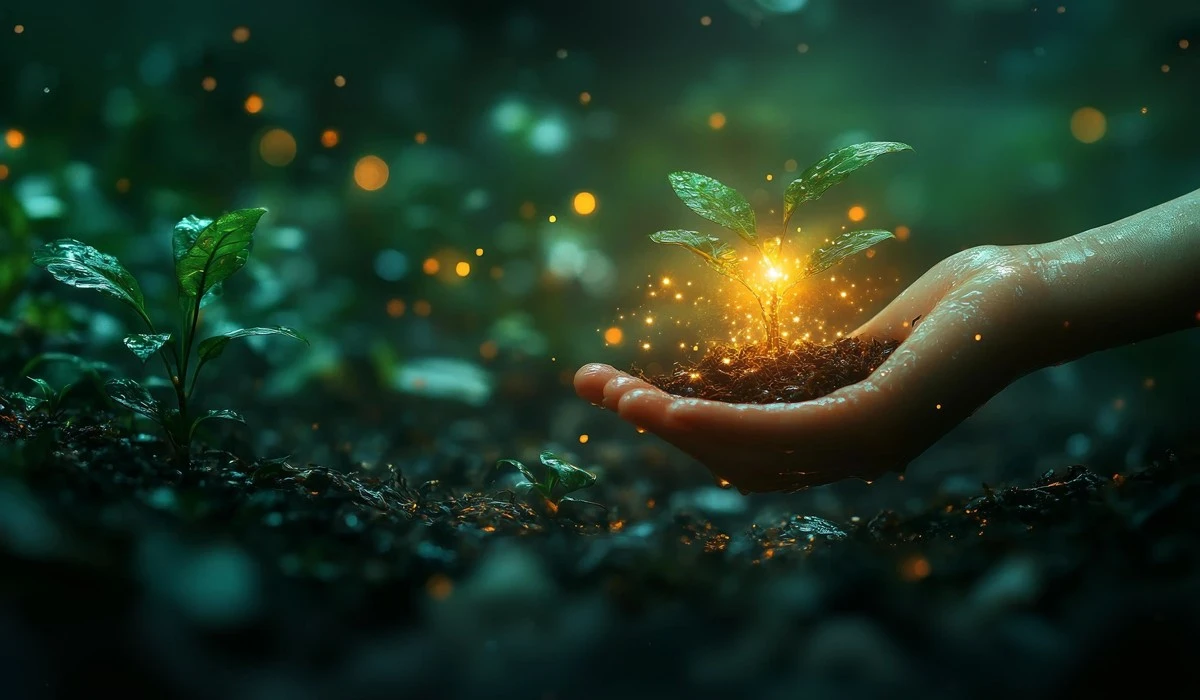
Tap Biophilia and the Healing Power for Joy Now
Modern life traps you inside four walls for ninety percent of your day. You sit under flickering fluorescent lights and breathe recycled air while staring at glowing glass rectangles. Meanwhile, your DNA still expects the rustle of leaves and the smell of damp earth. This massive gap between your lifestyle and your biological heritage creates a constant, low-level alarm in your nervous system. You feel it as a strange restlessness or a heavy fog that coffee cannot fix. Biophilia And The Healing Power Of Nature offers the only real way to turn that alarm off. Most people treat a walk in the park as a luxury or a weekend hobby. In reality, your brain requires these interactions to function at its highest level. You are a biological being currently living in a digital cage.
Scientists now recognize that your lack of greenery causes a specific type of mental exhaustion. You ignore the trees outside your window, but your subconscious mind desperately seeks them out every single second. This internal tug-of-war drains your energy and leaves you vulnerable to burnout and chronic stress. Biophilia And The Healing Power Of Nature restores the balance your ancestors took for granted. When you step into a forest, your heart rate drops and your mood lifts almost instantly. This transition happens because your body finally recognizes its surroundings after hours of sensory deprivation. Nature connectedness healing bridges the gap between the concrete jungle and the wild world you actually belong to. You visit the woods to remember how to be human and reclaim the vitality that urban living erodes.
The Savannah Hypothesis and Brain Evolution
Your brain still prefers the African Savannah over a modern penthouse or a sleek office building. Researchers Gordon Orians and Judith Heerwagen proved that humans instinctively love open spaces with scattered trees and nearby water sources. These landscapes provided our ancestors with clear views of predators and easy access to food. Today, your mind still searches for these specific visual cues to feel safe and secure. When you see a wide park or a flowing river, your brain releases a sigh of relief. This ancient preference explains why humans pay more for apartments with a view of the water. You are not just looking for a "pretty" scene; you are looking for survival signals. Biophilia And The Healing Power Of Nature utilizes these deep-seated instincts to lower your baseline anxiety levels and provide a sense of true security.
Cortisol Reduction and the Parasympathetic Nervous System
Trees release special chemicals called phytoncides to protect themselves from rot and harmful insects. When you walk through a forest, you breathe these monoterpenes like α-pinene and limonene into your lungs. These tiny molecules trigger a dramatic physiological shift in your body. Your heart rate slows down and your blood pressure drops significantly. Ironically, staying indoors keeps you in a state of "fight or flight" because your brain lacks these natural calming signals. Studies show that inhaling forest air can reduce your cortisol levels by nearly twenty-five percent. This process engages your parasympathetic nervous system, allowing your body to finally "rest and digest." What is biophilia in simple terms? Biophilia is the innate human tendency to seek connections with nature and other forms of life. Understanding this connection helps you use ecotherapy mental health techniques to reclaim your calm.
Shinrin-yoku (Forest Bathing) as a Clinical Tool
In 1982, Tomohide Akiyama created the term Shinrin-yoku to save stressed workers in Japan from total burnout. This practice involves walking slowly through the woods while engaging all five of your senses. You don't hike for exercise; you immerse yourself for healing. Dr. Qing Li discovered that a three-day forest trip boosts your Natural Killer cell activity by over fifty percent. These cells actively hunt down tumors and viruses within your body to keep you healthy. This immune boost lasts for an entire month after you return to the city. Many doctors now use this method as a formal clinical tool for patients struggling with high stress. Ecotherapy mental health practices like this prove that the woods act as a pharmacy. You find medicine in the trees that no lab can replicate perfectly.
Grounding and Sensory Re-engagement
Modern shoes with rubber soles disconnect you from the electrical charge of the earth. People now practice "earthing" or grounding by walking barefoot on grass or sand to fix this disconnection. This simple act allows you to absorb electrons that neutralize free radicals in your body. Beyond the physical touch, nature connectedness healing requires you to re-engage your ears and eyes with natural movements. You watch the way a breeze ripples through a wheat field or listen to the rhythmic sound of waves. These sensory experiences anchor your mind in the present moment and stop you from worrying about the future. Benjamin Rush, the "Father of American Psychiatry," noticed as early as 1798 that gardening helped his patients recover much faster. Digging in the soil provides a tactile reality that screens can never provide.

Attention Restoration Theory (ART)
Your brain uses "directed attention" to handle spreadsheets, emails, and traffic every single day. This type of focus requires immense effort and eventually leads to directed attention fatigue. You feel this exhaustion as irritability, poor judgment, and a total lack of focus. Rachel and Stephen Kaplan developed Attention Restoration Theory to explain how nature fixes this problem. Natural environments provide "soft fascination," which captures your attention without any effort at all. You watch a bird fly or clouds drift by, and your prefrontal cortex finally gets a chance to rest. This recovery period allows your brain to recharge its capacity for deep work and logical thinking. Biophilia And The Healing Power Of Nature ensures that your mind stays sharp by giving it the breaks it actually needs to function.
Dampening the Default Mode Network
When you sit in a quiet room, your brain often wanders into a cycle of self-criticism and worry. Scientists call this the Default Mode Network, and overactivity in this area leads to deep unhappiness. A Stanford study showed that walking in nature for ninety minutes quiets the specific brain region responsible for this rumination. You stop looping negative thoughts because the vastness of the outdoors shifts your internal focus. Can ecotherapy help with depression? Yes, ecotherapy has been shown to reduce symptoms of clinical depression by lowering blood pressure and stimulating serotonin production. This change happens because nature connectedness healing forces your brain to look outward instead of inward. You break the habit of negative self-talk simply by changing your scenery to something wild and unpredictable.
Biophilic Interior Design for Home and Office
You can bring the benefits of the outdoors into your apartment through biophilic design. Terrapin Bright Green identified fourteen patterns that improve your mood and productivity. You should incorporate fractals, which are repeating patterns found in ferns and snowflakes. Physicist Richard Taylor found that looking at these patterns reduces human stress levels by sixty percent. Use natural materials like wood and stone to create "natural analogues" that your brain recognizes as soothing. Even changing your light bulbs to match the sun’s daily progression helps your body maintain its internal clock. Warm amber light in the evening signals your brain to produce melatonin for better sleep. These small changes transform a sterile room into a sanctuary that supports your health. Biophilia And The Healing Power Of Nature turns your living space into a tool for recovery.
Micro-dosing Nature in Urban Jungles
You find nature connectedness healing in simple ways even without a national park nearby. Urban dwellers can "micro-dose" nature by finding small pocket parks or keeping hardy indoor plants on their desks. Even the sound of a fountain or a digital recording of a thunderstorm can trigger a relaxation response. Research shows that looking at a picture of a forest for forty seconds improves your concentration levels. You can also prioritize "green exercise" by running in a park instead of on a gym treadmill. These short bursts of exposure keep your stress levels from peaking during a busy work week. Ironically, the more tech-heavy your life becomes, the more you need these small moments of green. You find joy in the cracks of the sidewalk when you learn to look for it.
Cultivating Awe and Perspective
Standing at the foot of a giant redwood tree or looking at the Grand Canyon changes your perspective. This feeling of "awe" makes your own problems feel smaller and more manageable. Dacher Keltner at UC Berkeley discovered that experiencing awe makes people more likely to help others. You stop focusing entirely on your own needs and start feeling a connection to the larger world. This shift in perspective creates a "small self" that is humble and less prone to ego-driven stress. Biophilia And The Healing Power Of Nature provides these moments of wonder that keep you emotionally balanced. You find that your daily worries lose their power when you stand under a vast, star-filled sky. Nature reminds you that you are part of something much bigger than your current to-do list.
Community Gardens and Collective Healing
Community gardens combine social interaction with ecotherapy mental health benefits. You work alongside neighbors to grow food and tend to the soil, which creates a sense of shared purpose. This collective stewardship of the land reduces feelings of isolation and loneliness in crowded cities. Research proves that people who participate in community gardening report higher levels of life satisfaction. You build a support network while also enjoying the physical benefits of being outdoors and moving your body. How much time in nature is needed for health? Research suggests that spending at least 120 minutes a week in nature is associated with significant improvements in health and well-being. Meeting this threshold through a community project makes the habit easier to maintain. You heal yourself while you help your community grow and thrive together.
From Stress Resilience to Enhanced Creativity
People who regularly spend time in the wild show a fifty percent increase in creative problem-solving skills. David Strayer’s research at the University of Utah proves that a four-day digital detox in nature resets the brain. You stop reacting to notifications and start thinking deeply about complex ideas. This enhanced creativity happens because your mind finally enters a state of flow without constant interruptions. Nature connectedness healing prepares your brain to handle the challenges of a high-pressure career. You become more resilient to stress because you know how to find your center in a chaotic world. Biophilia And The Healing Power Of Nature isn't just about feeling good; it is about performing better. You unlock a higher level of cognitive function by simply walking away from your computer and into the woods.
The "Nature Pyramid" for Mental Maintenance
You should approach nature exposure like a nutritional diet by using the "Nature Pyramid" framework. At the base, you need daily micro-doses like plants in your office or a quick walk outside. The middle tier requires weekly "doses" of at least two hours in a park or forest to maintain your mood. Finally, the top of the pyramid involves an annual multi-day immersion in the deep wilderness to fully reset your nervous system. This structured approach ensures that you never run out of the mental energy needed for modern life. Using tools like the Nature Relatedness Scale can help you track how connected you feel to the world around you. This data-driven approach to ecotherapy mental health takes the guesswork out of your well-being. You build a lifestyle that prioritizes your biological needs and ensures your long-term mental health.
Overcoming Barriers to Nature Access
Not everyone can easily access a remote forest or a mountain trail due to physical limitations or location. Technology now offers a surprising solution through high-fidelity virtual reality experiences. You can wear a headset and "walk" through a digital version of a redwood forest from your living room. When developers combine these visuals with the scent of cedarwood, the brain responds as if the experience is real. Studies show that VR nature experiences improve heart rate variability, which is a key indicator of your stress resilience. This innovation allows people in hospitals or assisted living facilities to experience nature connectedness healing. Digital views provide a vital bridge for those who cannot step outside for physical reasons. You use the very technology that often drains us to find a moment of peace and restorative quiet.
Advocacy for Green Equity
Access to green space often depends on your zip code, creating a significant "nature gap" in urban areas. Lower-income neighborhoods frequently have fewer parks and more concrete, which limits their access to ecotherapy mental health benefits. Advocacy groups now work with city planners to ensure that green equity becomes a priority in new developments. Every person deserves the chance to breathe fresh air and see trees regardless of their income level. Programs like "Green Social Prescribing" in the UK now allow doctors to prescribe community gardening as a formal medical treatment. This policy shift treats access to nature as a fundamental human right rather than a luxury for the wealthy. Biophilia And The Healing Power Of Nature must remain accessible to everyone to improve public health and community well-being on a global scale.
Embracing Biophilia And The Healing Power Of Nature for a Joyful Life
You belong to the natural world as a vital part of it. Modern life tries to convince you that you can thrive in a sterile, digital environment, but your biology tells a different story. Every time you feel burnt out or anxious, your body is simply asking for its true home. Biophilia And The Healing Power Of Nature revives the joy that heavy workloads and constant screens often steal from your daily experience. You do not need a complicated plan or expensive equipment to start your recovery today. Simply step outside, find a patch of grass, and let your senses take over the healing process. Nature connectedness healing begins the moment you decide to prioritize your human needs over your digital demands. You find your best self waiting just beyond the door in the quiet strength of the trees.
Recently Added
Categories
- Arts And Humanities
- Blog
- Business And Management
- Criminology
- Education
- Environment And Conservation
- Farming And Animal Care
- Geopolitics
- Lifestyle And Beauty
- Medicine And Science
- Mental Health
- Nutrition And Diet
- Religion And Spirituality
- Social Care And Health
- Sport And Fitness
- Technology
- Uncategorized
- Videos

