
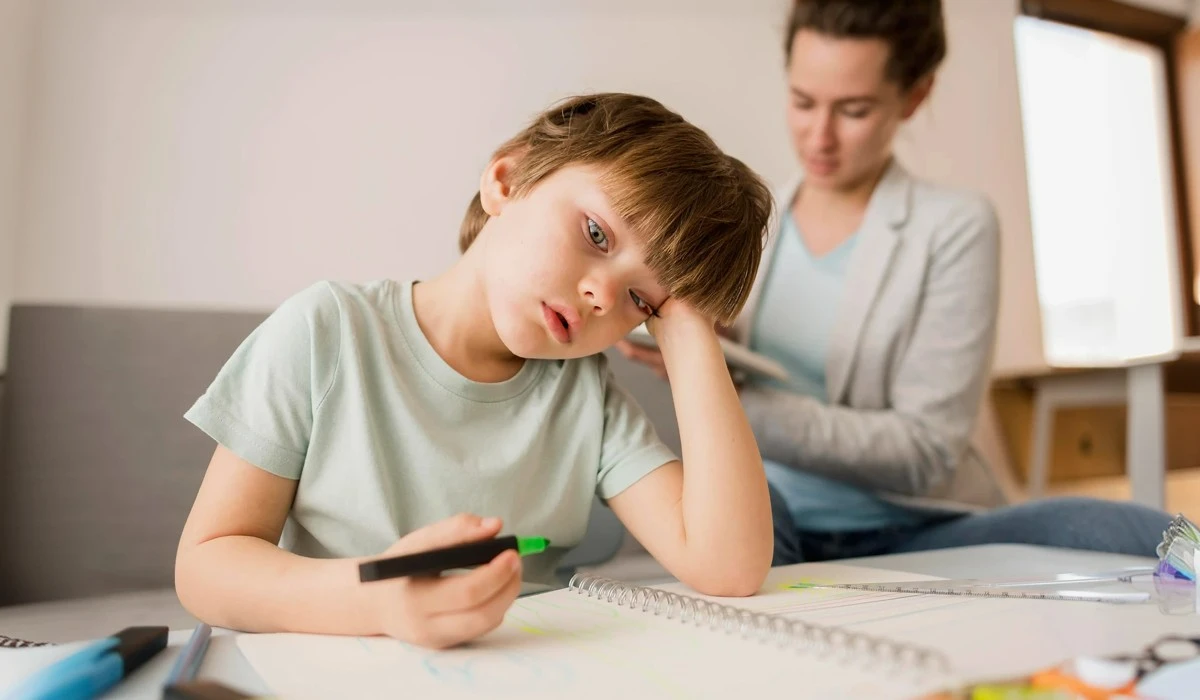
Help ADHD Kids Focus With Mindfulness For Children
Living with ADHD feels like driving a car with a hyper-sensitive gas pedal and no brakes. A child’s brain scans the room for every tiny sound or movement. They do not choose to ignore you. Their brain simply treats a humming refrigerator and your voice with the same level of importance.
Mindfulness for Children offers a way to sort this clutter. These kids' meditation exercises act as a filter. They teach the brain to prioritize one signal over the noise. Strengthening the front part of the brain gives the child the tools they need to stop and think.
This training does not require kids to sit still for hours. Instead, it teaches them to notice when their mind wanders and bring it back gently. Over time, this builds the mental strength needed for school, chores, and social life. Using Mindfulness for Children changes how a child relates to their own restless energy.
Why Mindfulness for Children works for ADHD brains
ADHD brains often struggle with a "leaky" Default Mode Network (DMN). This part of the brain handles mind-wandering and daydreaming. In neurotypical children, the DMN shuts off when they start a task. In children with ADHD, the DMN stays active, creating a constant pull toward distraction.
Can children with ADHD actually meditate? According to a study published in PMC, individuals with this diagnosis often struggle to pay attention and feel a constant urge to be active. Most children with ADHD can meditate successfully if the practice involves movement or short bursts of focus rather than forced stillness. Using these adapted techniques allows them to see results quickly.
The Science of Executive Function and Awareness
According to a report in PMC, the basis for modern secular mindfulness was established in 1979 by Dr. Jon Kabat-Zinn, who created the Mindfulness-Based Stress Reduction (MBSR) program. As noted in the Harvard Gazette, he described mindfulness as paying attention on purpose in the present moment without judgment. For a child with ADHD, "paying attention on purpose" is a physical challenge involving the prefrontal cortex and the amygdala.
Research in PMC explains that the amygdala serves as the brain’s alarm system, which is essential for identifying threats and creating fear responses. In neurodivergent kids, this alarm triggers easily, leading to emotional meltdowns. The same study indicates that mindfulness training reduces the grey matter density in the amygdala. This change lowers the intense "fight or flight" responses that parents see during homework or shifts in activity.
Rewiring the Brain for Sustained Attention
Neuroplasticity allows the brain to change based on repeated experience. Research by Dr. Susan Smalley at UCLA shows that mindfulness strengthens the Task Positive Network (TPN). The TPN is the part of the brain that handles active focus.
A study published in PMC suggests that meditation experience is associated with increased cortical thickness; therefore, when a child practices kids' meditation exercises, they may thicken the grey matter in their prefrontal cortex. This area manages planning and impulse control. Returning focus to the breath decreases reactivity in the right caudate nucleus. This specific brain region directly influences motor impulsivity and fidgeting. Furthermore, research found in PubMed notes that mindfulness training helps build a delay between a thought and an action by improving attention and cognitive inhibition.
Setting up success for kids' meditation exercises at home
A chaotic environment makes focus impossible for a child with ADHD. Their brains struggle with "thalamic gating," which is the ability to filter out background sensory noise. A ticking clock or a flickering light becomes a major obstacle to their internal calm.
To help, parents should create a space that supports the "Still Quiet Place" method. According to research by Dr. Amy Saltzman, this is an eight-week mindfulness-based stress reduction program designed to help kids access pure awareness by removing external causes of distraction. A dedicated corner with soft lighting and minimal noise helps the child feel safe and focused.
Creating a Sensory-Friendly Practice Space
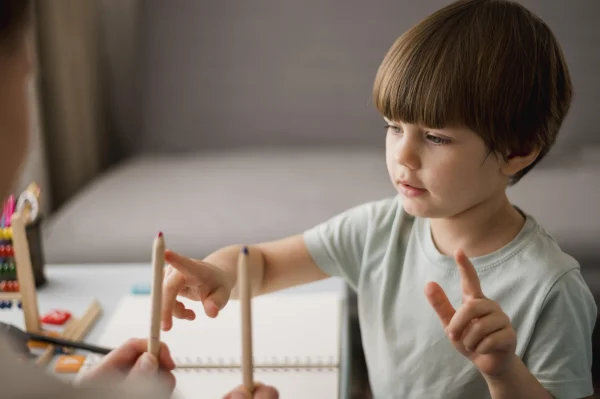
Start by removing visual clutter. A bare wall is often better than a room full of posters. Research in PubMed supports using items like a weighted lap pad or a soft cushion to provide "heavy work" sensory input, as weighted vests have been shown to improve on-task behavior in children with ADHD. This physical pressure helps ground the child’s nervous system.
According to Health.com, noise-canceling headphones can also help during the initial stages of Mindfulness for Children because they block out background sounds. They allow the child to focus entirely on the guided instructions or their own breathing. Eventually, the child learns to create this internal quiet even in noisy rooms.
Choosing the Right Time for Calm Focus
Timing determines success. Professionals recommend the "1-3 Minute Rule" for beginners. Attempting a ten-minute session usually leads to a frustration point where the child gives up.
Identify the "Goldilocks" moments in your child's day. This is usually when their energy is neither too high nor too low. Right after a physical activity or just before a meal often works best. Consistent timing helps the brain anticipate the shift into a focused state.
How Mindfulness for Children Changes Classroom Focus
Classrooms are difficult environments for ADHD students. The constant movement of peers and the pressure of timed tasks create high anxiety. Mindfulness for Children provides specific tools that a student can use without drawing attention to themselves.
How long should a child practice mindfulness? For kids with ADHD, starting with just one to three minutes works best because it prevents frustration and builds a sense of skill. Short, frequent sessions beat long, rare ones every time.
Quick Techniques for the Desk and Chair
The S.T.O.P. technique is a favorite among educators. It stands for Stop, Take a breath, Observe, and Proceed. A student can use this during a test when they feel their heart racing. It acts as a manual override for the nervous system.
Another desk-based method involves "Anchor Breathing." The child chooses a spot on their body, like their belly or nose, where they feel the breath most clearly. They focus on that one sensation for five breaths. This simple act brings the brain back from a daydream and settles it onto the current assignment.
Moving Between High-Energy and Focus Tasks
Moving from recess to math class is the hardest part of the day for many ADHD kids. Educators use kids' meditation exercises as a bridge between these states. David C. Saunders at Yale University developed the MBAT-C protocol specifically to help with these shifts.
A teacher might lead the class in one minute of "Mindful Listening." Students close their eyes and try to hear the farthest sound outside the school. Then they find the closest sound in the room. This exercise resets the auditory filtering system, making it easier to listen to instructions.
Top active kids meditation exercises to release restlessness
Hyperactive children need to move. Forcing them to sit still often increases their internal tension. Active kids meditation exercises solve this by combining physical movement with mental awareness. This approach respects the child's need for activity while training their focus.
The Mindful Movement Approach
Synchronized Mindful Walking is an effective tool. The child matches their steps to their breath. They inhale for three steps and exhale for three steps. This requires significant coordination and keeps the brain's "motor" occupied with a structured task.
Parents can also use the "Freeze Game" variant. The child dances to music and must stop instantly when it cuts out. During the silence, they focus on their heartbeat. This teaches them to notice the "energy" in their limbs and how to settle it on command.
Deep Breathing for Immediate Emotional Regulation
Deep breathing provides a direct line to the vagus nerve, which tells the body to calm down. "Balloon Breaths" involve the child imagining their belly is a big, colorful balloon. They fill it up slowly and then let the air out with a hiss.
"Square Breathing" is another visual tool. The child traces a square in the air. They breathe in for four counts, hold for four, exhale for four, and hold for four. This rhythmic pattern regulates the heart rate and stops an emotional meltdown before it takes over.
Managing impulsivity through mindful listening habits
Impulsivity often looks like "not listening," but it is actually a lack of a "pause muscle." A child with ADHD hears the words but acts before the brain can process them. Mindfulness for Children builds this delay between a thought and an action.
What is the best age to start mindfulness for kids? Formal mindfulness practices generally show the most success starting around age four or five when basic self-regulation begins to develop. At this age, kids can begin to understand the concept of "noticing" their thoughts.
Training the Pause Muscle Before Responding
The SBLA protocol (Stop-Breathe-Listen-Act) is a specific methodology designed to build the "impulse gap." It encourages children to wait for a three-second internal count before speaking in a group. This helps them navigate social situations more successfully.
In reality, most social friction for ADHD kids comes from interrupting. Practice this at home by playing a "Bell Game." Ring a bell and ask the child to wait until the very last vibration fades before they tell you a story. This builds the patience needed for real-world conversations.
Auditory Games to Sharpen Processing
A "Sound Scavenger Hunt" helps the brain distinguish between important and unimportant sounds. Ask the child to sit quietly and find five distinct sounds. They might hear a bird, a car, their own breath, a fan, and a floorboard creak.
This exercise trains the brain’s filtering systems. Over time, the child becomes better at "Mindful Labeling." They learn to say, "I feel a 'wiggle' in my legs," rather than just jumping up. Naming the impulse creates a psychological distance that allows for better choices.
Using visualization to combat ADHD distractions
Visualization uses the child’s imagination to hold their attention. Since many kids with ADHD are highly creative, this method often feels more like a game than a chore. These kids' meditation exercises give the mind an internal quiet space to rest.
Guided Imagery for Cognitive Grounding
"Hot Chocolate Breath" is a perfect example of visualization. The child imagines holding a mug of cocoa. They inhale deeply to "smell the chocolate" and exhale slowly through pursed lips to "cool it down." This visual focus makes the deep breathing more engaging.
Another tool is the "Sunshine Body Scan." The child imagines a warm light moving from their toes to their head. As the light touches each part, they release tension. This helps kids identify where they hold stress, which often contributes to physical fidgeting and restlessness.
Building Mental Focus for Better Homework
The "Mindful Jar" uses a jar of glitter and water to represent the brain. Shaking the jar mimics the flurry of ADHD thoughts. Watching the glitter settle represents the act of mindfulness. This visual metaphor helps a child understand that they have the power to settle their own mind.
You can also use physical objects for homework. A specific stone or a small toy on the desk serves as a reminder. If the child’s mind wanders, they touch the object and take one mindful breath to return to the page. This physical touch-point helps ground a wandering mind.
Building a sustainable routine of kids' meditation exercises
According to brain imaging studies cited in PMC, dopamine neurotransmission is disrupted in ADHD, which may cause core symptoms like inattention. This explains why the brain gets bored with routine quickly and why consistency is the most difficult part of any ADHD intervention. To make Mindfulness for Children work long-term, parents must keep the practice fresh and rewarding.
Gamifying the Process to Keep Interest High
Use biofeedback tools or apps that offer visual "scores" for calm breathing. Many modern tools use a "Pause" principle where slow movement on a screen reveals a beautiful image. This rewards the brain with a small dopamine hit for staying focused.
Kids are more likely to practice if they see it as a challenge rather than a chore. Create a "Mindfulness Map" where they earn stickers for every session. Once they reach a milestone, like ten days in a row, offer a non-food reward like an extra trip to the park.
Tracking Progress Without Pressure
Research by Bögels et al. shows that family co-regulation is vital. When parents practice alongside their children, the reduction in "acting out" behaviors is significantly higher. Do not just tell your child to meditate; do it with them.
Track progress by looking for small wins. You might notice the child takes a deep breath before reacting to a sibling. Or perhaps they sit for four minutes instead of three. Celebrate these moments of self-efficacy. Most clinical improvements are documented after a minimum of eight weeks of consistent daily practice.
The long-term effect of Mindfulness for Children
ADHD presents challenges, but it does not define a child's potential. By using Mindfulness for Children, we give kids a way to navigate their own minds. These tools offer a way to improve focus and build a basis for lifelong emotional health.
Integrating kids' meditation exercises into your daily rhythm turns a "motor that won't stop" into a powerful engine the child can steer. Start today with a simple one-minute breathing exercise. This small step begins the path toward a calmer, more focused future for your child.
Recently Added
Categories
- Arts And Humanities
- Blog
- Business And Management
- Criminology
- Education
- Environment And Conservation
- Farming And Animal Care
- Geopolitics
- Lifestyle And Beauty
- Medicine And Science
- Mental Health
- Nutrition And Diet
- Religion And Spirituality
- Social Care And Health
- Sport And Fitness
- Technology
- Uncategorized
- Videos

