
Focus Strategy And The End Of Context Switching
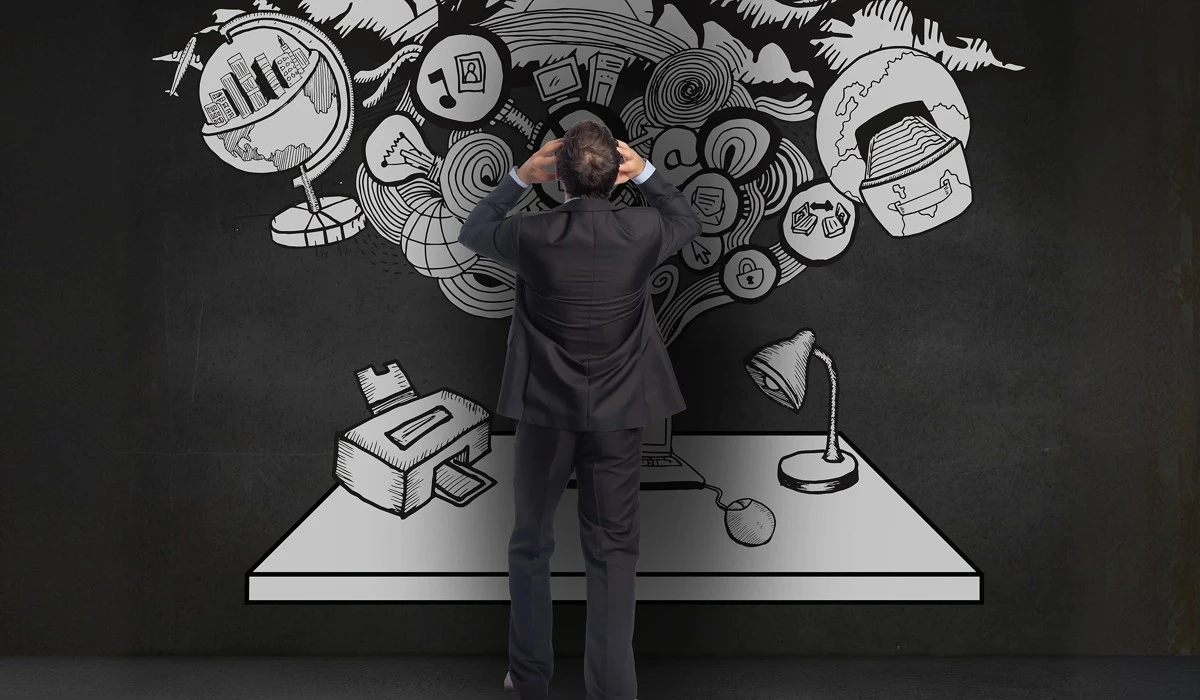
Humans now have shorter attention spans than goldfish. Every time your phone pings, a tiny bit of your brain stays behind on that text message, even after you look away. You think you’re just checking a quick note. In reality, you’re shredding your ability to think clearly for the rest of the hour. This constant switching makes you feel busy but leaves your most important projects untouched.
Feeling drained at 5:00 PM is a result of your brain frantically trying to catch up with itself all day, rather than a result of hard work. To fix this, instead of a simple "to-do" list, you require a dedicated Focus Strategy. This plan serves as the bridge between simple busywork and the high-level output that actually moves your career forward.
Learning distraction blocking focuses on clearing a path to reach deep work states instead of imposing restrictions. When you stop fighting your own environment, you finally release the cognitive power you’ve been wasting on trivial pings.
Why Traditional Productivity Fails Without a Focus Strategy
Most people think productivity means doing more things faster. They buy faster laptops and download more apps. Ironically, this often leads to more clutter. Doing twenty small tasks at once feels like progress, but it rarely yields high-quality results. This is the ultimate productivity trap. Without a specific Focus Strategy, you are likely just spinning your wheels.
As research from the University of Cambridge suggests, Michael Porter introduced a business framework centered on concentration. He proposed that firms succeed by choosing a specific industry segment and tailoring their strategy to serve it while excluding other groups. The same applies to your brain. If you try to monitor every Slack channel while writing a complicated report, you lose your competitive edge. You need to choose between productivity and quality.
The Neurobiology of Context Switching
Every time you jump between tabs, you pay a "context-switching tax." According to the American Psychological Association, switching between tasks can cause a 40% drop in your productivity. Additionally, the Brief Lab notes that the resulting 10-point drop in IQ is comparable to the cognitive loss experienced after staying up all night just because you couldn't stop checking your email.
How do I stop getting distracted while working? Achieving consistent focus requires a combination of environmental control and a rigorous distraction-blocking routine to prevent the brain from seeking easy dopamine hits. Establishing these boundaries stops the brain from leaking energy.
In a study published in ScienceDirect, Dr. Sophie Leroy explains that when attention switches from one task to another, performance suffers because the mind does not move all at once. She identifies this phenomenon as "attention residue," which makes it impossible to give your full effort to the new project.
The Myth of Multitasking
Modern knowledge workers toggle between different apps and windows about 1,200 times per day. That is a staggering amount of mental friction. We like to think we are multitasking. In reality, we are just rapidly degrading our mental clarity.
A global study suggests that fragmented attention costs the economy $450 billion every year. That is a massive price to pay for the illusion of being "connected." A Focus Strategy eliminates this waste by forcing you to do one thing at a time with total intensity.
The Mechanics of Entering Deep Work States
According to a guide by Todoist, Cal Newport defines deep work states as professional activities done in a state of distraction-free concentration. The guide notes that these efforts challenge cognitive limits and produce new value while improving skills in ways that are hard to copy. Conversely, the guide describes "shallow work" as tasks that are easy to repeat and do not create significant new value.
When you focus intensely, your brain actually changes. Research published via Semantic Scholar highlights that myelin, a fatty tissue, wraps around neural pathways to enable synchronized and rapid signaling. This insulation allows electrical signals to fire more effectively. Essentially, focusing hard makes you physically smarter at the task you are doing.
Defining the Deep Work Threshold
You cannot simply flip a switch and be focused. The human brain needs a "warm-up" period. Todoist further suggests that because focusing is a skill that requires building up, one should start with at least 15 to 20 minutes of uninterrupted effort to reach high-level concentration. Most people quit five minutes in because they feel a slight urge to check their phone.
If you let that interruption happen, the 20-minute clock resets. You never actually reach the deep state. You spend your whole day in the shallow end of the pool, wondering why you aren't making any breakthroughs.
Environmental Anchors and Rituals
Top performers use physical cues to trigger their brains. This might be a specific pair of noise-canceling headphones, a certain desk lamp, or a specific playlist. These rituals signal to your nervous system that it is time for deep work states.
Repetition of these cues builds a habit of focus. Eventually, just sitting in your "focus chair" tells your brain to shut out the world. This reduces the amount of willpower you need to get started each day.
Essential Pillars of Distraction Blocking
Distractions aren't just annoying; they are a direct threat to your goals. You must treat them with aggression. A solid distraction-blocking plan categorizes these interruptions so you can handle them before they happen.
A University of California study found that after one interruption, it takes an average of 23 minutes to get back to your original level of focus. If you get interrupted three times an hour, you literally never reach full capacity.
Digital Hygiene and Notification Management
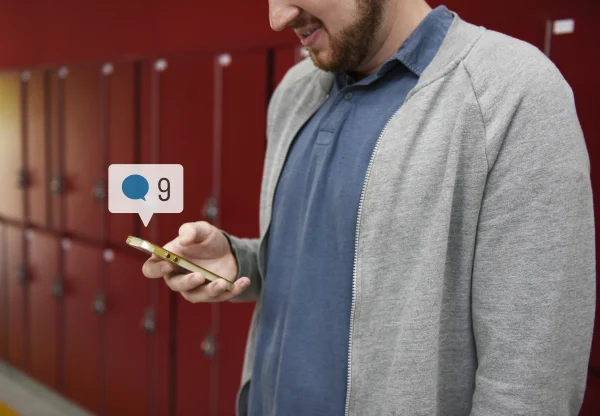
Literature reviewed by the National Institutes of Health indicates that digital notifications use variable reward schedules similar to gambling to keep users engaged. To fight this, you need "nuclear" options. This means using software that locks you out of the internet entirely during work hours.
Soft options like "Do Not Disturb" are rarely enough. Research from the University of Texas at Austin further suggests that the mere presence of a smartphone on a desk reduces available brain power, as the mind exerts energy to ignore it. Put the phone in another room. Use a system-level blocker that you cannot easily turn off.
Social and Environmental Boundaries
You must teach people how to treat your time. If you answer every message instantly, you train people to interrupt you. Instead, communicate your Focus Strategy to your team. Tell them when you are "offline" for deep thinking.
What is the best way to enter a deep work state? The most effective method is to schedule a specific block of time, remove all digital triggers, and start with a single, clearly defined task. This clarity prevents your mind from wandering toward easier, less important chores.
Designing Your Personalized Focus Strategy
No two brains are the same. Your plan must account for your specific habits and energy levels. A Focus Strategy shouldn't be a copy of someone else's routine. It should be a custom-built shield for your attention.
Start by auditing your current attention span. For 48 hours, track every time you switch tasks. You will likely be shocked at how many times you "just check" something. These are the leaks you need to plug.
Auditing Your Current Attention Span
Look for patterns in your distractions. Do you check social media when a task gets difficult? That is a sign of mental resistance. Do you answer emails because it feels like "working" without the effort of thinking? Recognizing these habits is the first step toward change.
Once you find the leaks, you can apply specific distraction-blocking techniques to those moments. If you check news sites at 2:00 PM, that is the time to have your browser blocker turn on automatically.
Mapping Tasks to Energy Levels
Your brain has a daily limit for intense concentration. A Todoist report on deep work explains that even high-level performers generally have a biological limit of about four hours of deep work per day. You must match this window to your peak biological hours.
If you are a morning person, do not spend your first three hours answering emails. That is a waste of your best brainpower. Save the shallow work for your afternoon energy slump. Use your peak hours for deep work states exclusively.
Overcoming the Mental Resistance to Focus
The prefrontal cortex is the part of your brain that handles focus. It is very hungry for energy. When you try to do hard work, your brain tries to save energy by steering you toward something easy, like Instagram. This is why focus feels physically uncomfortable at first.
Ironically, the more you avoid this discomfort, the weaker your "focus muscle" becomes. You have to learn to sit with boredom. A strong Focus Strategy accounts for this period of resistance and helps you push through it.
Navigating the Boredom Gap
When you hit a hard problem, your brain will scream for a distraction. This is the "boredom gap." If you give in, you train your brain that it can escape whenever things get tough. If you stay, you build cognitive endurance.
According to the principles of Mihaly Csikszentmihalyi, as described in notes on "Flow," this state occurs when the difficulty of a task is balanced with an individual's skill level. You can't get to Flow if you keep running away to check your notifications.
Building Focus Stamina Over Time
Focus is a skill you can practice. You can build your stamina using "productive meditation." This involves focusing on a single work problem while doing a mindless task like walking or washing dishes.
If your mind wanders, pull it back. This is weightlifting for your attention. Over time, you will find it much easier to sustain deep work states for longer periods without feeling exhausted.
Measuring the Success of Your Focus Strategy
How do you know if your plan is working? You need better metrics than just "feeling busy." Many people are busy all day but achieve nothing of substance. They are focusing on lag indicators rather than lead indicators.
A lag indicator is a project finished. A lead indicator is the number of hours you spent in a focused state. You can control your hours, but you can't always control the final result. Focus on the process.
Lead vs. Lag Indicators of Productivity
Track your "Deep Work Hours" every day. If you spent four hours with your internet blocked and your phone off, that is a successful day. Even if the project isn't done, you put in the high-quality effort required to finish it eventually.
Can you practice deep work every day? Most high-performers can sustain deep work states for 1.5 to 4 hours daily, provided they allow for adequate mental rest between sessions. Consistency is more important than a single marathon session.
The 80/20 Attention Audit
The Decision Lab explains Pareto’s Principle as the concept that 20% of activities are often responsible for 80% of results. Usually, that 20% consists of the hardest tasks that require the most focus. Use your Focus Strategy to protect that 20% at all costs.
Everything else is just noise. If you spend your whole day on the 80% of "busywork," you will never move forward. Use distraction blocking to keep the low-value tasks from bleeding into your high-value time.
Advanced Tools for Distraction Blocking
Sometimes willpower isn't enough. The world's smartest engineers are working to steal your attention. You should use the world's best tools to take it back. These tools reinforce your Focus Strategy by removing the element of choice.
Hardware is often the first line of defense. Active Noise Canceling (ANC) headphones don't just block sound; they act as a physical "do not disturb" sign to the people around you. They create a mobile sanctuary for your brain.
Hardware Solutions for Deep Focus
Consider using a physical timer. The Pomodoro Technique, as detailed by Todoist, utilizes 25-minute focused sprints followed by a 5-minute break. This keeps your brain fresh and prevents burnout. It also gives you a clear target to aim for.
Focus lights are another great tool. These are small LEDs you can put outside your office door. When the light is red, your family or coworkers know that you are in a deep work state and should not be disturbed unless the building is on fire.
Software Ecosystems for Cognitive Endurance
As noted by Freedom, software can block distracting websites and apps at the system level; Cold Turkey specifically provides a way to lock program executables during these blocks. You can't just open a different browser to get around them. They even prevent you from uninstalling the app during a block.
According to the Forest app website, the software turns focus into a game where a digital tree grows while the user stays on task. The creators state that the tree dies if the user exits the app to check a message. It sounds simple, but it creates a small psychological barrier that helps you maintain your distraction-blocking habits throughout the day.
Reclaiming Your Cognitive Freedom
A Focus Strategy acts as a shield rather than a cage. When you decide ahead of time what you will ignore, you give yourself the freedom to actually think. You stop being a reactive pawn to every notification and start being the architect of your own day.
The struggle to pay attention is the defining challenge of our time. Those who can gain control over their own minds will have a massive advantage over those who are constantly pulled away by pings and buzzes. You have the tools and the data to change how you work.
The shift won't be easy, but the rewards are massive. You will get more done in four hours than most people do in a week. You will leave work feeling energized rather than drained. Most importantly, you will finally see what you are truly capable of producing when you give a task your undivided soul.
Commit to your first 60-minute session of deep work tomorrow morning. Turn off the phone, close the tabs, and see what happens when you finally apply a real Focus Strategy.
Recently Added
Categories
- Arts And Humanities
- Blog
- Business And Management
- Criminology
- Education
- Environment And Conservation
- Farming And Animal Care
- Geopolitics
- Lifestyle And Beauty
- Medicine And Science
- Mental Health
- Nutrition And Diet
- Religion And Spirituality
- Social Care And Health
- Sport And Fitness
- Technology
- Uncategorized
- Videos

