
End Midair Panic by Overcoming Aerophobia Today
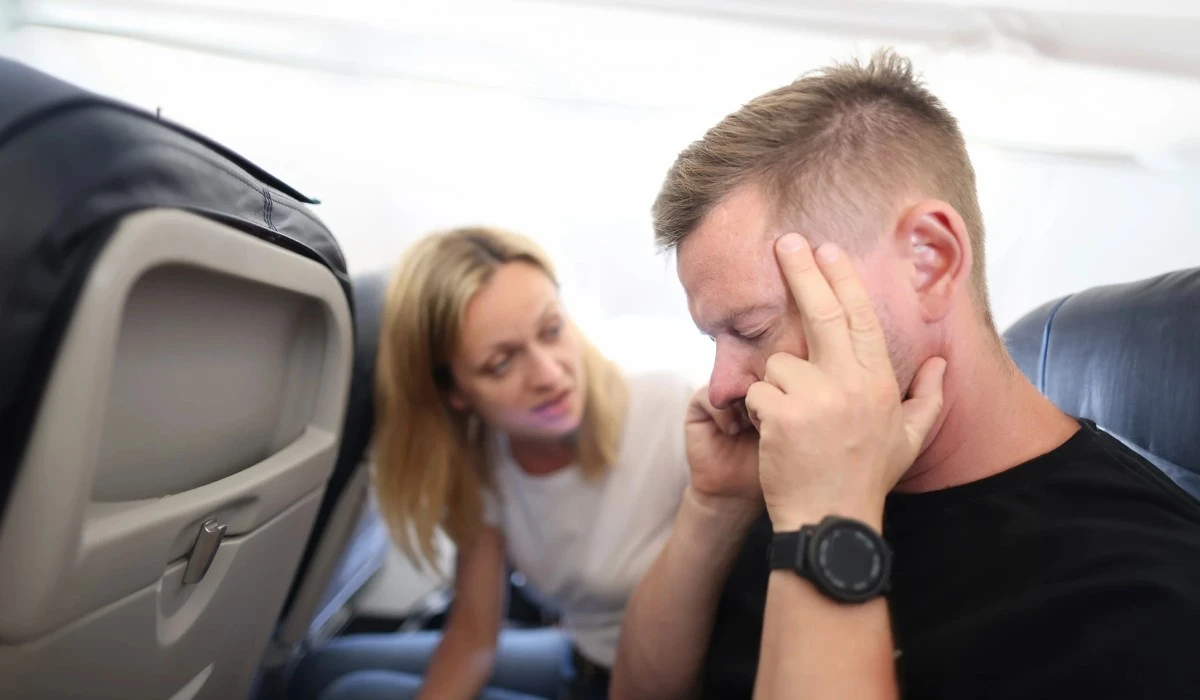
Your hands grip the armrest until your knuckles turn white. Every slight hum of the engine or tilt of the cabin feels like a warning of disaster. Your brain registers the pressurized cabin as a cage and the sky as a void. This intense physical response starts in the amygdala, a basic part of your brain that sounds a loud alarm when it senses a lack of control. You feel a desperate urge to escape, yet you remain buckled into your seat. Overcoming Aerophobia requires you to realize that your body responds to a perceived threat rather than a real danger.
When you experience this distress, you deal with a specific condition. Doctors call this flight anxiety disorder. It affects millions of people who possess perfectly logical minds but struggle with a misfiring nervous system. You can retrain your brain to see the cabin as a safe living room instead of a dangerous height. This guide provides the tools you need to stay calm and regain your freedom to travel.
Learning the Roots of Flight Anxiety Disorder
As documented in the MSD Manuals, aerophobia is a situational phobia that requires a steady fear lasting at least six months. While you might feel alone in your seat, research published in the National Library of Medicine notes that nearly 40% of people in industrialized nations feel some level of anxiety about flying. This fear often stems from a lack of control or a misunderstanding of how planes stay in the air.
The Amygdala and the False Alarm
Your amygdala acts as the brain’s smoke detector. It scans the environment for danger and, as explained by Harvard Health Publishing, starts a stress response that signals the body to release adrenaline and cortisol. During a flight, a sudden bump or a change in engine pitch tricks the amygdala into thinking the plane is falling. It ignores your logical mind and prepares your body to fight or run away. This chemical surge creates the physical symptoms of panic, like a racing heart and shallow breathing.
Differentiating Between General Stress and Clinical Phobia
You must distinguish between mild nervousness and a true flight anxiety disorder. General stress might make you prefer an aisle seat or feel jittery during takeoff. A clinical phobia causes you to avoid flying altogether or experience debilitating panic attacks. Recognizing this difference helps you choose the right level of intervention. Professional aviation phobia treatment often targets these deep-seated clinical responses rather than simple nerves.
Overcoming Aerophobia: The Role of Cognitive Restructuring
Cognitive restructuring involves changing the way you interpret your environment. You learn to catch your fearful thoughts before they spiral into a panic attack. When you examine the evidence, you strip the power away from your phobia. Overcoming Aerophobia starts when you replace your internal horror movies with boring, factual reality.
Identifying Cognitive Distortions

Your brain uses mental shortcuts called cognitive distortions to maintain your fear. You might "catastrophize," which a study in PMC7890513 describes as a cognitive process where a person predicts the worst possible result from a minor event. Another common error, as defined in PMC8068126, is "emotional reasoning," a mental habit where people use their feelings as facts about the world even when the situation doesn't warrant it. When you identify these patterns, you can stop the spiral before it takes hold of your nervous system.
Challenging the "What If" Narrative
You likely play a series of "what if" scenarios in your head during every flight. You ask what happens if the door opens or if a wing breaks. When you ask "what is," you counter these fears. What is the actual safety record of this airline? What is the plane doing right now? How long does it take to get over a fear of flying? Research published in PubMed suggests that most individuals notice a significant reduction in symptoms within a treatment window of 8 sessions over 6 weeks of consistent cognitive work. This timeline shows that your brain can learn new habits relatively quickly.
Professional Aviation Phobia Treatment Modalities
If self-help tools do not provide enough relief, professional help offers a structured path forward. Therapists use specific techniques to desensitize your nervous system. These methods have high success rates and can change your relationship with flying forever. Seeking aviation phobia treatment represents a proactive step toward reclaiming your life.
Cognitive Behavioral Therapy (CBT) for Travelers
CBT remains the gold standard for treating specific phobias. A therapist helps you face your fears in small, manageable steps. You might start by looking at photos of planes and work your way up to visiting an airport. This process, called exposure therapy, teaches your brain that nothing bad happens when you encounter your stressors. According to the Cleveland Clinic, exposure therapy achieves a success rate of over 90% for those who commit to the practice.
The Rise of Virtual Reality Exposure Therapy (VRET)
Technology now allows you to practice flying without ever leaving the ground. VRET uses a headset to simulate the sights and sounds of a real flight. You can experience takeoff, cruise, and landing repeatedly in a safe office setting. This repetition helps your brain realize that these events do not lead to danger. Dr. Barbara Rothbaum pioneered this method, proving that the vast majority of patients eventually complete a real commercial flight.
Immediate Coping Strategies for In-Flight Turbulence
Turbulence causes the most distress for anxious passengers, yet it poses no threat to the aircraft. You can use specific mental and physical tools to manage your reaction when the ride gets bumpy. These strategies ground you in the present moment and stop the adrenaline spike.
The "Jello" Visualization Technique
Imagine the air around the plane is not empty space. Instead, visualize the air as thick, cold Jello. At high speeds, air becomes a viscous substance that supports the plane. When you feel a bump, visualize the plane wiggling inside the Jello rather than falling. A plane cannot simply drop out of thick Jello any more than a grape can fall through a jar of preserves. This authoritative engineering fact helps settle your racing mind.
Sensory Grounding (The 5-4-3-2-1 Method)
Grounding techniques pull your focus away from your internal panic and back to the physical cabin. The University of Rochester Medical Center recommends using the 5-4-3-2-1 method by naming five things you see, four things you can touch, and three things you hear. Then, identify two things you smell and one thing you can taste.
This exercise forces your prefrontal cortex to work, which naturally dials down the emotional intensity of the amygdala. Does caffeine make flight anxiety worse? Yes, because research in PMC10867825 confirms that caffeine intake increases the risk of anxiety, and stimulants like caffeine increase your heart rate and mimic the physical signs of a panic attack. Avoid coffee and soda before your flight to keep your nervous system calm.
Physical Hacks to Regulate Your Nervous System Before Takeoff
You can prepare your body for a flight days before you reach the airport. When you manage your physical state, you make it harder for panic to take root. These hacks focus on the vagus nerve, which controls your body’s relaxation response.
Controlled Breathing and Vagus Nerve Stimulation
The Cleveland Clinic describes the 4-7-8 breathing technique as a natural sedative. Guidance from the American Heart Association explains that you should inhale through the nose for four counts, hold the breath for seven counts, and exhale through the mouth for eight counts. The clinic also notes that making the exhale longer than the inhale helps to activate the vagus nerve, which moves you from a "fight-or-flight" state into a "rest-and-digest" state. Practice this while you wait at the gate to ensure you board the plane in a calm condition.
Strategic Distraction and Entertaining the Brain
Your brain needs a job to do, so it doesn't spend its energy inventing disasters. Choose "high-absorption" media that require your full attention. Fast-paced movies, detailed puzzles, or immersive audiobooks work better than music or light reading. If you keep your mind busy with a task, you leave no room for the flight anxiety disorder to dominate your thoughts.
Overcoming Aerophobia by Demystifying Flight Mechanics
Fear often grows in the gap between what you see and what you understand. Learning how engineers build planes provides a logical shield against anxiety. Overcoming Aerophobia becomes much easier when you realize that physics, not luck, keeps the plane in the sky.
Understanding Lift, Gravity, and Thrust
Air acts as a fluid, much like water. According to a report by NASA, as the engines provide thrust, air moves more quickly over the curved upper surface of the wings than under them. This produces a pressure difference that creates the lift needed to push the plane upward. Gravity pulls down, but as long as the air flows over the wings, the plane remains stable. Physics makes it impossible for a plane to simply "stop" flying while it has forward motion.
The Redundancy of Safety Systems
Modern aircraft use triple-redundant systems for every vital function. This means three independent failures must happen at the exact same time before a pilot loses control. Engineers even test wings to 154% of their maximum expected load to ensure they never snap during turbulence. Can a plane engine just stop working mid-flight? The Transportation Safety Board of Canada notes that while modern engines are reliable, pilots are trained to lower the nose and maintain a specific glide speed if power is lost, allowing planes to travel long distances and land safely without an engine. Pilots train for these rare scenarios every six months in high-tech simulators.
Creating a Long-Term Maintenance Plan for Travel Freedom
Recovery does not end when you land after one successful flight. You must maintain your progress to ensure your old fears do not return. Consistency is the secret to making your freedom permanent and ending flight anxiety disorder for good.
The Importance of "Exposure Maintenance"
Your brain needs regular reminders that flying is safe. If you wait five years between flights, your anxiety may start to grow again. Try to fly at least once or twice a year to keep your habituation strong. This ongoing practice makes Overcoming Aerophobia a lasting part of your identity. Each flight reinforces the new safety memories you have worked so hard to build.
Celebrating Small Wins
Acknowledge every step of your progression. Sitting in the terminal without crying or making it through a ten-minute bout of turbulence represents a major victory. These wins build your confidence and prove that you can handle discomfort. When you focus on your successes, you shift your perspective from being a victim of fear to being an expert in your travel experience.
Reclaiming the Skies Through Persistence
You now possess the roadmap to change your life. Overcoming Aerophobia requires effort, but the rewards are worth the work. You can visit distant family, explore new cultures, and accept career opportunities that require travel. Remember that recovery is a process of small, deliberate steps rather than a sudden shift.
Aviation safety improves every year, and your ability to manage your mind improves with every practice session. Use the breathing techniques, challenge your distortions, and trust the physics of the aircraft. You deserve to see the world from above without the weight of panic holding you down. Take the first step today and book a short trip to prove to yourself that you are in control.
Recently Added
Categories
- Arts And Humanities
- Blog
- Business And Management
- Criminology
- Education
- Environment And Conservation
- Farming And Animal Care
- Geopolitics
- Lifestyle And Beauty
- Medicine And Science
- Mental Health
- Nutrition And Diet
- Religion And Spirituality
- Social Care And Health
- Sport And Fitness
- Technology
- Uncategorized
- Videos

