

Emotion-Focused Therapy: Healing Toxic Shame
Most people try to think their way out of a dark mood. You tell yourself you have no reason to feel bad. You list your accomplishments and your blessings. Yet, that heavyweight in your chest persists. This happens because your brain stores shame in the parts that do not use words. You cannot argue with a feeling that lives in your nervous system. Emotion-Focused Therapy changes this by going directly to the source of the pain. As noted by the Australian Institute for Emotion Focused Therapy (AIEFT), EFT has demonstrated effectiveness in treating anxiety, depression, trauma, and interpersonal conflict. It moves past the surface and addresses the deep sense of "brokenness" that keeps you stuck. When you access these deep layers, you stop fighting yourself. You begin to change your emotional life from the inside out.
Understanding the Anatomy of Toxic Shame
According to the EFT Cyprus Institute, dysfunctions arise from experiencing maladaptive emotions such as shame, guilt, inadequacy, and fear, which is why shame creates a physical sensation that demands your attention. You might feel a sinking in your stomach or a sudden heat in your face. It demands that you disappear or hide from the world. As observed in research by Tangney et al. (1996), shame relates to negative feelings about the self, whereas guilt is tied to specific behaviors, meaning that while guilt makes you want to fix a specific mistake, shame makes you want to hide your entire self. It convinces you that you possess a basic flaw that no amount of success can fix.
From Adaptive Warning to Maladaptive Burden
Evolutionarily, shame kept humans safe within the tribe. It served as a warning signal when a person risked social rejection. Today, this signal often survives long after the threat ends. It becomes toxic when it turns into a permanent state of being instead of a temporary warning.
People often ask, how do I know if I have toxic shame? You likely have toxic shame if you feel a constant, heavy sense of worthlessness and a desire to pull away from others, even when you have not done anything wrong. This feeling becomes a burden that prevents true connection. It lives in your body as a chronic sense of being "not enough."
How Emotion-Focused Therapy Reaches the Core
Traditional talk therapy often stays on the surface of your thoughts. You analyze your past and discuss your problems. Emotion-Focused Therapy works differently. According to ScienceDirect, the objective of this therapy is to restructure habitual maladaptive states; it asks you to feel the emotion in the safety of the therapy room because EFT focuses on accessing adaptive emotional responses. This direct experience allows you to alter the feeling instead of just talking about it for years.
Primary vs. Secondary Emotional Responses
Leslie Greenberg and Robert Elliott developed this approach in the 1980s. They found that emotions have layers. You might show anger to the world as a shield. This is a secondary emotion. Research published in MDPI acknowledges that shame is the core primary maladaptive emotion in social anxiety; inside, however, you feel this primary hurt of shame or abandonment.
Emotion-Focused Therapy helps you peel back these layers. When you identify the primary hurt, you stop the secondary reactions that keep your life in chaos. You learn to handle the root cause instead of just managing the symptoms. This process clarifies why logic fails to fix how you feel.
Breaking Isolation Through Affective Resonance
Shame grows in the dark and thrives in secrecy. According to group therapy research published in Taylor & Francis, people in pre-group settings feel alone and isolated, but as they see universality among others and share their deepest fears, the shame begins to lose its power. This process relies on a specific biological connection between you and your therapist.
The Therapist as a Co-Regulator
The therapist uses affective resonance to meet you in your pain. They tune their emotional state to match yours. This creates a neurobiological synchronization where the therapist mirrors your feelings without becoming overwhelmed by them.
This connection acts as a biological regulator. Research from the Mentor Research Institute on couples therapy models indicates that since chronic cortisol elevation suppresses empathy and causes biological disconnection, proper regulation ensures your cortisol levels drop. You finally feel "felt" at a physical level. This mirrors the healthy developmental support many people missed during childhood. It provides the safety your brain needs to open up and change.
Rewiring the Brain for Emotional Scheme Change
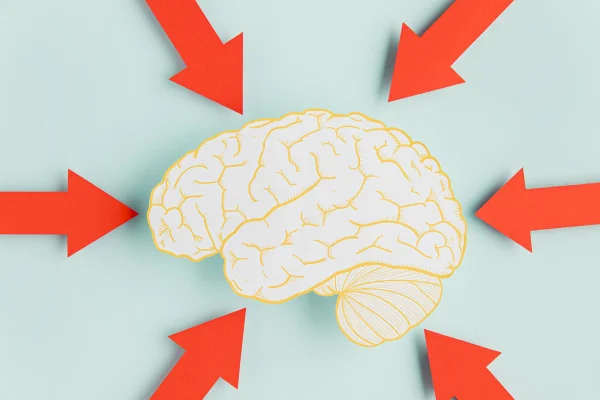
Your brain uses internal maps to navigate your life and relationships. These maps, called emotional schemes, store your memories and physical sensations. They tell you how people will react to you based on your past experiences. If your map says "people will reject me," you will act in ways that keep people at a distance.
Updating Your Internal Self-Map
As detailed by Greenberg and Iwakabe (2011), shame experiences are transformed by exposing them to new emotional experiences in therapy; you achieve emotional schema change by bringing a new, positive feeling into the session while the old shame is active. As further noted by ScienceDirect, using the therapeutic relationship to promote change means EFT facilitates corrective emotional experiences. When you experience self-compassion while feeling shame, the old neural pathways start to shift.
You physically update the way your brain stores your identity. A neuroscience model from Cambridge University Press explains that memory reconsolidation involves reactivating old memories and integrating new emotional experiences; this four-to-six-hour window opens when you recall a painful memory. During this time, the memory becomes malleable. Emotion-Focused Therapy uses this window to replace the "I am bad" script with a sense of self-worth.
Specific Techniques in Emotion-Focused Therapy
Practitioners use active tools to move the process along. They do not just sit and nod while you speak. They guide you through exercises that make your internal world visible and tangible. These techniques help you confront the parts of yourself that you usually avoid.
The Power of the Two-Chair Dialogue
As outlined in an MDPI study on tailoring interventions to access deeper emotional responses, the power of the two-chair dialogue relies on moving between two seats to facilitate a live exchange; one chair represents your "inner critic," the part that heaps shame upon you, and the other represents your "vulnerable self." Externalizing these parts allows you to finally stand up to the critic.
People often wonder, can you do Emotion-Focused Therapy on your own? While you can use some self-help tools like journaling or chair work at home, you usually need a trained therapist to provide the external validation and safety required to break deep shame loops. The presence of a resonant witness makes the difference between ruminating and actually healing.
Why Emotion-Focused Therapy Succeeds Where Logic Fails
Your logical brain and your emotional brain speak different languages. Logic uses facts, dates, and reasons. Your emotional brain uses sensations, images, and memories. You cannot use a logical fact to cure a somatic sensation. Consequently, you can know you are successful but still feel like a failure.
Moving Beyond Cognitive Insights
Top-down therapies focus on changing your thoughts to change your feelings. Emotion-Focused Therapy uses a bottom-up approach. It changes the way you feel first. Once your heart feels safe and your shame diminishes, your thoughts align with that new reality naturally.
This approach follows the rule of "changing emotion with emotion." You cannot think your way out of shame. You must feel your way into a more potent emotion, like protective anger or self-compassion. This new emotion physically inhibits the old shame response in the brain.
Sustaining Growth and Preventing Relapse into Shame
Growth happens over time as you build a new relationship with your internal world. You don't just "fix" shame once. You learn to spot the signs of it before it takes over your day. A study published in the National Center for Biotechnology Information (NCBI) found that Emotion-Focused Therapy effectively improves emotion regulation and coping strategies, helping you develop the skills to handle difficult feelings without falling back into old patterns of hiding.
Developing an Internal Compassionate Supervisor
As therapy progresses, you eventually learn to speak to yourself with the same kindness your therapist uses. You internalize their resonant voice. You may ask, ‘Is Emotion-Focused Therapy effective for long-term change?’ According to research in PubMed on real-world practice, Emotion Focused Therapy is effective for long-term change and creates lasting results because it rewires the core emotional schemes that drive your behavior, instead of just teaching you how to cope with symptoms.
You become your own source of regulation. According to MDPI literature on maladaptive emotions, when shame arises, you recognize it as a signal instead of a fact. You use the tools you learned to meet that shame with empathy. This stops the cycle of self-devaluation before it gains momentum.
A Future Defined by Self-Acceptance
The progression from toxic shame to emotional wholeness requires courage. It asks you to face the very feelings you have spent a lifetime avoiding. However, you do not have to do this work alone. Emotion-Focused Therapy provides a clear path forward through the use of affective resonance and intentional emotional schema change.
When you stop running from your feelings, they stop chasing you. Research published in MDPI notes that EFT operates on the principle of shifting negative feelings into positive ones, meaning you replace the heavy weight of being "broken" with a resilient sense of self through self-compassion. This shift alters how you work, how you love, and how you exist in the world. You deserve a life where you feel at home in your own skin. As recommended by WebMD's guidance on understanding how emotions shape relationships, reach out to a qualified practitioner today and begin the process of reclaiming your worth.
Recently Added
Categories
- Arts And Humanities
- Blog
- Business And Management
- Criminology
- Education
- Environment And Conservation
- Farming And Animal Care
- Geopolitics
- Lifestyle And Beauty
- Medicine And Science
- Mental Health
- Nutrition And Diet
- Religion And Spirituality
- Social Care And Health
- Sport And Fitness
- Technology
- Uncategorized
- Videos

