
West Nile Virus Detected in Mosquitos in the UK
Shifting Horizons: The West Nile Pathogen Reaches UK Mosquitoes, Signalling a New Public Health Era
Health officials have announced the first confirmed discovery of the West Nile pathogen (WNV) in mosquito populations within the United Kingdom. While some specialists anticipated this, the development marks a significant moment in the nation's history with vector-borne diseases. An assessment by the United Kingdom Health Security Agency (UKHSA) indicates the immediate threat for ordinary people is minimal. At present, evidence does not suggest that the pathogen is actively circulating within the UK population. However, the finding emphasizes how infectious diseases are changing, influenced by global travel and environmental shifts. The detection of WNV's genetic signature in local mosquitoes highlights the necessity for heightened vigilance and robust surveillance.
Understanding the West Nile Pathogen
The West Nile pathogen, a member of the Flaviviridae family, primarily cycles between birds and specific types of mosquitoes. Humans and horses can become infected if bitten by a carrier insect, but they are generally considered "dead-end" hosts, meaning they do not typically spread the infection further. The pathogen was initially found in Uganda in 1937. Since then, its geographic range has expanded across Africa, parts of Europe, the Middle East, Western Asia, and North America. Its arrival in the United States in 1999 led to major outbreaks and its subsequent establishment throughout the continent, demonstrating how vector-borne illnesses can establish themselves in new territories.
The UK Detection: A Closer Look
Genetic traces of WNV were identified during a specialized research project jointly conducted by two government bodies: the UK's Health Security Agency (UKHSA) and the Animal and Plant Health Agency (APHA). The genetic material was sourced from Aedes vexans mosquitoes collected in July 2023 at wetland sites near the River Idle in Gamston, not far from Retford, Nottinghamshire. Using polymerase chain reaction (PCR) testing, two pools of ten mosquitoes each tested positive. Another 198 collections from the same location returned negative results. This discovery represents the initial conclusive evidence of WNV being present in a UK mosquito. To date, further extensive testing on 30,000 additional mosquitoes and 300 birds from other suitable sites in England throughout 2023 and 2024 has not yielded any more positive results.
Assessing the Immediate Risk
Even with this new finding, health authorities are reassuring the public that the current risk level for people in Britain is minimal. Dr Meera Chand, a UKHSA Deputy Director, stated that while this is the first time WNV has been found in Britain's mosquito population, the event is not entirely unexpected given how widespread the pathogen is in Europe. The UKHSA continues to stress that there have been no locally acquired WNV infections in humans or horses in the United Kingdom. Yet, since 2000, officials have recorded seven cases of the illness linked to international travel. For UK residents, the primary risk of exposure remains travel to countries where the pathogen is endemic.
Symptoms and Impact on Human Health
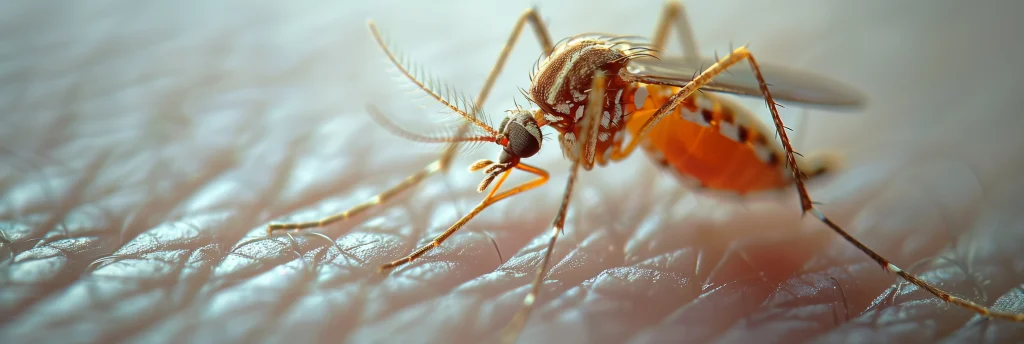
Most individuals who become infected with the West Nile pathogen will not show any symptoms at all. About one-fifth of those who are infected might develop West Nile fever, a less severe manifestation of the illness. Symptoms can include headaches, body aches, joint pain, fever, vomiting, diarrhea, or a rash. Most people with this febrile condition recover fully, though tiredness and weakness might linger for weeks or even months. In a minor fraction of instances, under 1% (roughly 1 in 150 infected individuals), WNV can lead to critical neurological conditions. This may present as encephalitis, an inflammation of the brain, or meningitis, which is inflammation of the membranes surrounding the brain and spinal cord. It can also lead to acute flaccid myelitis, a condition with similarities to polio.
Severe Neurological Manifestations
Symptoms of serious WNV neuroinvasive disease feature high fever, severe headache, stiff neck, stupor, confusion, coma, tremors, seizures, muscle weakness, loss of vision, numbness, and paralysis. Individuals over 55 years and those with particular existing health issues, like cancer, diabetes, high blood pressure, or kidney problems, or people who have undergone organ transplants, have a higher likelihood of developing severe illness if infected. Bouncing back from severe WNV disease might take many weeks or months, and certain neurological consequences could be lasting. Regrettably, approximately 1 out of 10 individuals who experience severe illness affecting their central nervous system do not survive.
Long-Term Health Consequences
Survivors of severe WNV infection may face enduring neurological difficulties. These after-effects can include depression, memory difficulties, motor impairment, tiredness, trouble recalling words, and ongoing headaches. Research suggests these alterations can considerably affect an individual's life quality and might continue for the rest of their life. Studies that compare human cases with rodent models indicate WNV can create a brain state resembling neurodegenerative conditions such as Alzheimer's and Parkinson's. This encompasses evidence of lasting virus presence, inflammation, neuron damage, and synapse loss, especially in the hippocampus, which affects memory.
Treatment and Vaccine Landscape
Currently, there are no specific antiviral treatments for humans infected with the West Nile pathogen. Care is focused on supportive therapy to relieve symptoms, which involves rest, fluids, and over-the-counter pain relievers. In severe cases involving neurological complications, hospitalization is often necessary for intensive support. Furthermore, no licensed WNV vaccines are accessible for human application. This lack of specific treatments or preventive vaccines highlights the significance of mosquito management and personal safeguarding efforts. Nonetheless, investigation into human vaccines is in progress.
Vaccine Development Efforts
Although a human vaccine is still in development, multiple WNV vaccines are available and in use for horses, which can also suffer from serious neurological conditions as a result of the infection. A Phase 1 clinical trial is underway in the United States, managed by the Infectious Diseases Clinical Research Consortium (IDCRC). The trial is evaluating the safety and immune response of a potential human vaccine, an inactivated candidate named HydroVax-001B. This study, conducted with the National Institute of Allergy and Infectious Diseases, seeks to fill the void in human WNV prevention. Successfully creating an effective human vaccine would represent a significant advancement in public health readiness.
The Role of Mosquitoes in Transmission
The primary vectors for the West Nile pathogen are mosquitoes, particularly those from the Culex genus. These insects contract the pathogen when they feed on infected birds. Following an incubation phase, the pathogen multiplies inside the mosquito and moves to its salivary glands. The mosquito can then pass the infection onto other birds, and occasionally to humans and horses, through later blood meals. The Aedes vexans mosquito, where the pathogen was identified in Nottinghamshire, is indigenous to Britain. While Culex mosquitoes are seen as the main intermediary carriers for WNV to humans, Aedes vexans also has the capability to potentially pass on the pathogen.
Climate Change: A Driving Factor
There is broad consensus among experts that climate alteration is a major element in the widening geographic distribution of mosquitoes and the illnesses they transport. Warmer temperatures, gentler winters, and changed precipitation patterns can establish more favorable conditions for mosquito populations to flourish and for pathogens to multiply more rapidly. These circumstances can lengthen the transmission period and permit vectors to persist in areas formerly too cold for them. Finding WNV within mosquito populations inside Britain is viewed by some as an aspect of this wider pattern, where illnesses previously thought of as 'tropical' are emerging further north. Dr Arran Folly, who led the project responsible for finding the pathogen, emphasized this discovery as an element of a 'broader, evolving environment' propelled by shifts in climate.
Rising Mosquito Populations and Disease Spread
Rising worldwide temperatures can speed up mosquito reproduction cycles and broaden their geographical presence. Extended warm seasons boost mosquito activeness and lengthen the times during which transmission might happen. This increases the chance for viruses such as WNV to survive winter within mosquito groups in temperate zones, possibly resulting in year-long transmission patterns down the line. Research has indicated a link between hotter temperatures and greater WNV activity in Europe. Growth of cities and alterations in land use can also play a part by forming more areas of still water, which are prime mosquito breeding locations.
Surveillance and Monitoring in Britain
Surveillance systems are already in place across Britain to monitor mosquito prevalence, behavior, and the possible arrival of vector-borne illnesses. UKHSA, in partnership with APHA, carries out ongoing research, checking mosquitoes and birds for viral indications. The Vector-Borne RADAR (Real-time Arbovirus Detection And Response) initiative was accountable for the recent WNV finding. After the Nottinghamshire discovery, authorities are stepping up disease observation and management efforts. This involves advising healthcare practitioners to think about WNV testing for patients showing encephalitis with no known cause. Persistent surveillance is vital for early detection of potential dangers. The UK also keeps an eye on invasive mosquito types, like the Asian tiger mosquito (Aedes albopictus), which can spread diseases such as dengue.
Public Health Preparedness
Discovering WNV within UK mosquito populations acts as a caution about the transforming public health situation. Professor James Logan, affiliated with the London School of Hygiene & Tropical Medicine, termed the event "serious" but stressed no urgent cause for public concern, considering the existing surveillance measures. He pointed out that this occurrence means the United Kingdom can no longer be considered impervious to certain illnesses once limited to hotter regions. Forward-thinking public health plans are vital to address these new threats. This encompasses effective vector management programs, straightforward public health announcements, and cooperation among environmental health, animal health, and human health organizations following a "One Health" principle.
Preventative Measures and Public Guidance
While the current UK danger level is minimal, awareness regarding mosquito bite avoidance is always valuable, particularly when visiting regions with known WNV circulation. Usual advice covers applying insect repellent with DEET to uncovered skin. Donning long-sleeved tops and full-length trousers can lessen skin contact, especially at peak mosquito times such as dawn and dusk. Eliminating stagnant water sources around residences and gardens is key, as these are mosquito reproduction areas. This involves draining water from plant pot saucers, pails, and making sure water containers are sealed. Employing window and door netting can also stop mosquitoes from getting inside.
West Nile Pathogen in Animals
Horses are especially vulnerable to contracting the West Nile pathogen and can suffer from severe neurological illness, which can sometimes be fatal. Equine symptoms might include stumbling, muscle weakness or spasms, incomplete paralysis, and behavioral alterations. Similar to humans, horses are viewed as incidental or dead-end hosts and usually don't pass the infection along. Vaccines are on hand for horses to guard against WNV, and their application is advised in locations where the pathogen is prevalent. Wild birds act as the natural WNV reservoir hosts, with the pathogen moving between bird groups and mosquitoes. Migratory birds are believed to be significant in the long-range dissemination of this pathogen.
The Global Picture and European Context
In numerous global regions, the West Nile pathogen maintains an endemic presence, and its geographical spread has notably increased in recent times. Europe has witnessed many outbreaks; nations such as Greece, Italy, Romania, and Russia have had significant transmission. The European Centre for Disease Prevention and Control (ECDC) keeps track of WNV activity throughout the continent. The pathogen's establishment and diffusion in North America post-1999 offered a clear illustration of its potential effects in new areas. Elements like global travel, commerce, and the transit of infected birds all play a role in its spread. The growing appropriateness of northern European climates for mosquito vectors points to a persistent northward spread of risk.
Future Outlook and Research Needs
Identifying WNV in UK-based mosquitoes calls for sustained watchfulness and investigation. Current molecular research aims to better comprehend WNV's multiplication and disease-causing mechanisms, possibly pinpointing new treatment targets. Creating effective human vaccines continues to be a primary goal. More study on the habits of local mosquito groups, their capacity as WNV carriers, and the part native bird types might play in possible local transmission cycles will be crucial. Grasping how environmental shifts will keep affecting vector populations and pathogen behavior is vital for forecasting future dangers and modifying public health approaches. A cooperative, multi-organization strategy is essential.
The Importance of Integrated Surveillance
Comprehensive surveillance programs that track human infections, animal illnesses (particularly in birds and horses), and mosquito numbers are crucial for the prompt identification of and reaction to WNV. Many European nations use such programs. These frequently include examining mosquitoes to detect the pathogen, conducting antibody surveys in birds, and requiring reports of human and horse infections. Screening blood donations for WNV is also an essential public health action in affected areas to stop transmission via transfusions. The data collected aids in shaping risk evaluations, aiming control efforts, and informing public health recommendations.
Public Awareness and Engagement
Educational campaigns aimed at the general populace are important in lessening the danger from WNV and other diseases spread by mosquitoes. Informing people about personal defense steps like employing repellents and clearing mosquito breeding spots near their homes can enable them to lessen their contact. Citizen science projects, where individuals can report mosquito sightings or provide samples, can also supply useful information for surveillance work. Unambiguous updates from health bodies regarding the present danger level and needed safety measures help sustain public trust and promote suitable responses without creating unnecessary alarm.
Looking Ahead: A New Norm?
The appearance of genetic material from the West Nile pathogen in UK mosquito populations, even as a solitary finding for the moment, indicates a change. It reinforces the notion that geographical limits are diminishing in relevance for certain infectious diseases in an interconnected world experiencing climatic shifts. While the immediate danger to human health within the United Kingdom from locally contracted WNV is still very minimal, this occurrence acts as an impetus for bolstering our protective measures. Ongoing funding for research, surveillance, and public health systems will be vital for managing this changing situation and safeguarding the populace from new vector-borne dangers. The watchfulness of scientists and public health organizations gives the UK early alerts, facilitating proactive responses.
Recently Added
Categories
- Arts And Humanities
- Blog
- Business And Management
- Criminology
- Education
- Environment And Conservation
- Farming And Animal Care
- Geopolitics
- Lifestyle And Beauty
- Medicine And Science
- Mental Health
- Nutrition And Diet
- Religion And Spirituality
- Social Care And Health
- Sport And Fitness
- Technology
- Uncategorized
- Videos

