

Stop Stress Weight Gain With Cortisol Healing
You cut calories. You run until your legs ache. You eat kale for every meal. Yet, the scale refuses to move. Even worse, your jeans feel tighter around the waist every week. Rather than blaming your willpower or a slow metabolism, consider that the real cause resides in your adrenal glands. Your body reacts to a stressful work deadline in the same manner as a physical attack from a predator.
To survive this perceived threat, your body holds onto every ounce of energy it can find. This survival state stops fat burning and prioritizes storage. You cannot diet your way out of a physiological emergency. True progress requires Cortisol Healing. Addressing the way your body handles pressure allows you to finally gain the ability to lose weight. The cortisol recovery process allows your metabolism to stop panicking and start functioning. This change turns your body from a storage vault into a functional engine again.
The Science of Stress: Why Cortisol Healing is the Missing Link
According to Johns Hopkins Medicine, the body follows a strict chain of command called the HPA axis, where the hypothalamus produces corticotropin-releasing hormone to stimulate the pituitary gland, which then signals the adrenals to make and release cortisol. As documented in the journal Nature in 1936, scientist Hans Selye realized that bodies move through three stages of stress: an initial alarm phase, a stage of resistance, and eventually exhaustion. Most people stay stuck in the resistance phase for years. This keeps your blood sugar high and your energy low. Can high cortisol cause weight gain even if I am dieting? Yes, elevated cortisol initiates fat storage regardless of calorie count because it forces the body to save belly fat as an emergency energy reserve.
According to the Nobel Prize organization, researchers Edward Kendall and Philip Hench were awarded the Nobel Prize in 1950 for their findings relating to the hormones of the adrenal cortex. Research published in PMC indicates that while cortisol helps the body manage inflammation, excessive amounts lead to insulin resistance. The study further notes that when levels stay high, the liver promotes gluconeogenesis, pumping glucose into your bloodstream. Your body then releases insulin to drop that blood sugar, which tells your cells to store the extra energy as fat. This happens even if you haven't eaten a single donut. Lowering the "alarm" signal in your brain breaks this cycle. As defined in a study published in PMC, this state leads to allostatic load, which is the physical wear and tear on organs and tissues caused by chronic pressure.
Recognizing the Symptoms: Signs Your System is Overloaded
High cortisol leaves specific marks on the body that traditional weight gain does not. The Mayo Clinic reports that you might notice a rounded "moon face" or a fatty "buffalo hump" between your shoulder blades. Your midsection changes because visceral fat cells have four times more receptors for cortisol than fat elsewhere. This leads to a very specific shape. What does a cortisol belly look like? It appears as a firm, protruding layer of fat centered in the lower abdomen rather than soft, pinchable fat. This fat is metabolically active and causes more inflammation throughout your system.
Physical Indicators of High Cortisol
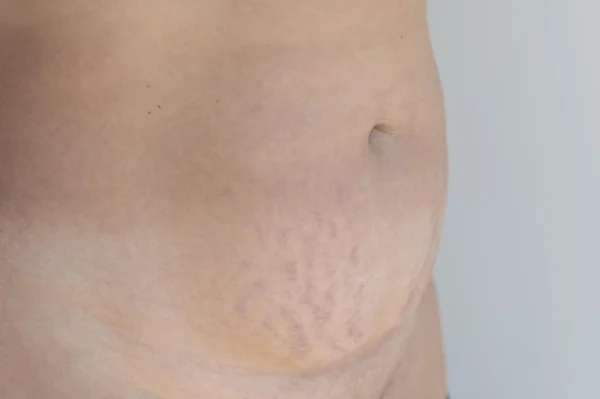
The body also struggles with skin health and muscle tone during chronic stress. As stated by the Mayo Clinic, individuals may see purple stretch marks or find that their skin thins and bruises easily. Meanwhile, your muscles begin to waste away as the body breaks down protein to create more sugar for the "fight" it thinks is coming. This process often leaves you with thin arms and legs but a heavy midsection. Balancing your hormonal output helps reverse these physical changes.
The Emotional and Cognitive Toll
Your brain feels the strain just as much as your waistline. You feel "tired but wired," unable to sleep despite being exhausted all day. You crave salt and sugar because your brain thinks it needs fast energy to survive a threat. High cortisol also inhibits the enzyme that converts thyroid hormone T4 into the active T3. This effectively slows your metabolism to a crawl. Starting the cortisol recovery process clears the brain fog and stops the intense cravings that sabotage your health goals.
Navigating the cortisol recovery process: A Realistic Timeline
Healing does not happen overnight because your body needs to feel safe before it lets go of stored fat. The cortisol recovery process follows a biological calendar that requires patience. Research published in PMC suggests that circulating cortisol concentrations reach their lowest point, or nadir, during the late evening or early night, typically between midnight and 2:00 AM. While your brain can reset some signals in 8 hours, your entire hormone system needs much longer to stabilize. How long does it take to fix cortisol levels? Most people feel initial relief within weeks, but a complete hormonal reset usually takes three to six months of steady lifestyle changes.
In the first month, you focus on "calming the alarm." This involves lowering the immediate stress on your nervous system. During the third month, your body enters the "metabolic rebuilding" phase, where it begins to trust its environment again. You move from a state of exhaustion back into a state of balance. During this time, your body stops seeing every minor task as a life-or-death event. This timeline ensures that the Cortisol Healing you achieve is permanent rather than a temporary fix.
Nutrients Over Numbers: Eating for Hormone Repair
Forget calorie counting for a moment and focus on blood sugar stability. According to research published in PMC, cortisol levels begin to increase immediately after fasting starts, meaning skipping meals activates a spike to provide energy for the brain. This spike activates an enzyme called 11β-HSD1, which creates even more active cortisol inside your fat cells. In obese individuals, this enzyme is 2.5 times more active than in lean people. Eating regular, balanced meals stops this enzyme from overreacting. Prioritizing hormone health over weight loss starts with Cortisol Healing.
The Importance of Protein-Rich Breakfasts
A high-protein breakfast within an hour of waking up stabilizes your blood sugar for the entire day. This prevents the mid-morning cortisol crash that leads to "hangry" feelings and sugar binges. Protein provides the amino acids your body uses to repair tissues damaged by chronic stress. This simple habit is a base of the cortisol recovery process.
Anti-Inflammatory Fats and Micronutrients
Your adrenals require specific nutrients to function correctly. They hold the highest concentration of Vitamin C in your entire body. Taking 1,000mg of Vitamin C daily helps reduce post-stress cortisol levels quickly. Magnesium also acts as a gatekeeper for your nervous system. A deficiency leads to a hyper-responsive stress response, making you feel anxious over small things. Adding 300mg of Magnesium Glycinate supports Cortisol Healing while keeping your system calm and resilient.
Moving Without Meddling: Exercise During Cortisol Healing
Hard workouts can sometimes backfire when your body is already stressed. If you push past 60% of your maximum effort for more than 40 minutes, your cortisol levels skyrocket. This spike suppresses your growth hormone and makes muscle building impossible. High-intensity interval training (HIIT) often makes a stressed body even more inflamed. For those in the middle of the cortisol recovery process, intense exercise acts as a threat rather than a benefit.
When HIIT Becomes the Enemy
Ironically, trying to "burn off" stress with a heavy workout can lead to more fat storage. The body sees the intense physical demand as another emergency. It responds by breaking down muscle tissue to create glucose, which then gets stored as belly fat. This creates a cycle where you work harder but look softer. Cortisol Healing requires a temporary break from high-force, high-stress exercise.
The Power of Zone 2 Cardio and Yoga
Instead, choose restorative movement like walking or light yoga. These activities keep your heart rate in "Zone 2," which burns fat without generating a massive cortisol spike. Deep, rhythmic breathing during yoga stimulates your vagus nerve. This signals to your brain that you are safe and allows your body to enter the "rest and digest" phase. This type of movement supports Cortisol Healing and helps rebuild your metabolic health without adding extra strain.
Restoring Your Internal Clock: Sleep as a Metabolic Tool
Your body thrives on a schedule known as the circadian rhythm. As previously noted, cortisol should reach its lowest point during the late-night hours. This low point allows melatonin to repair your cells and growth hormone to burn fat. If you stay awake past 10:00 PM, you often hit a "second wind." This is actually a cortisol spike that prevents the cortisol recovery process from working effectively. Proper sleep is the most powerful tool you have for weight loss.
A study published in PubMed found that evening exposure to blue light from electronic devices, such as eBooks, suppresses melatonin and shifts the body's internal clock, keeping the system alert long after you close your eyes. Warm room temperatures also contribute to this state of alert. Even mild dehydration can elevate your cortisol concentrations and ruin your sleep quality. To support Cortisol Healing, go to bed before that 10:00 PM spike occurs. Consistent wake times also help reset your internal clock. When you sleep well, your body finally feels safe enough to release the visceral fat it has been hoarding.
Targeted Supplementation and Mindset Shifts
Certain plants, known as adaptogens, help your body adapt to pressure from the environment. According to a study published in PMC, Ashwagandha can lower serum cortisol by nearly 28% in just 60 days. Another supplement, Phosphatidylserine, helps by blunting the stress response during physical exercise. These tools support Cortisol Healing from the inside out and give your adrenal glands the help they need to find balance.
Adaptogens for Adrenal Support
Plants like Rhodiola and Holy Basil help your body manage the HPA axis more effectively. Rather than just masking symptoms, they help your body return to a state of allostasis, or stability through change. These supplements make the cortisol recovery process smoother and prevent the "crashes" that often follow stressful events.
Vagus Nerve Stimulation
You can also work on your nervous system through mindset and physical cues. Dr. Stephen Porges developed the Polyvagal Theory to explain how we switch between "fight or flight" and "rest and digest." You can flip this switch manually. Deep belly breathing, humming, or even splashing cold water on your face stimulates your vagus nerve. This tells your heart to slow down and your adrenals to stop pumping out hormones. This practice is the basis of Cortisol Healing.
Your Path to Lasting Balance through Cortisol Healing
Weight gain often signals a body that feels under constant threat. This is a protective measure designed to keep you alive rather than a personal failure or a lack of discipline. When you stop fighting your biology and start supporting it, the weight begins to drop naturally. The cortisol recovery process requires a shift in perspective. You are trading quick, punishing fixes for long-term hormonal health and vitality.
Stabilizing your hormones helps you regain your energy and your mental clarity. This path leads to a version of yourself that feels calm and capable of handling whatever life throws your way. Every small choice to rest, nourish your body, or breathe deeply brings you closer to Cortisol Healing. Your body wants to be in balance. When you provide the right environment, your metabolism will reward you by functioning exactly the way it should. Start with one small change today and watch your body respond with new levels of health.
Recently Added
Categories
- Arts And Humanities
- Blog
- Business And Management
- Criminology
- Education
- Environment And Conservation
- Farming And Animal Care
- Geopolitics
- Lifestyle And Beauty
- Medicine And Science
- Mental Health
- Nutrition And Diet
- Religion And Spirituality
- Social Care And Health
- Sport And Fitness
- Technology
- Uncategorized
- Videos

