
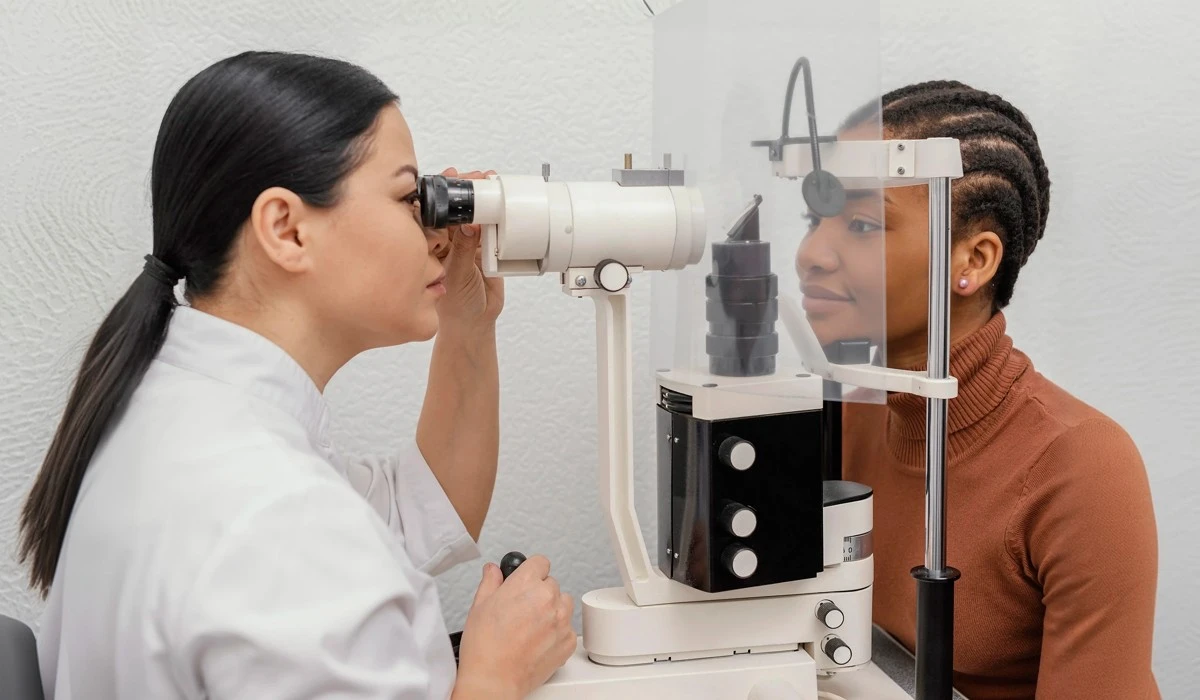
Optometry Clinical Refraction: The 20/20 Hub
While common perception links 20/20 vision to reading a chart on a wall, the process actually involves the brain's constant negotiation with light to create this clarity. Your eyes work like two cameras that never stop moving. When they fail to focus the light correctly, the world turns into a blurry mess.
Modern Optometry solves this problem by looking at how light hits the back of your eye. This process involves more than choosing a preferred lens, as a thorough understanding of how the human eye processes every light ray informs this work. Doctors use specific clinical refraction techniques to find your perfect lens.
Through the use of these methods, professionals help you see the world without strain or headaches. Clarity changes how you interact with everything around you. Doctors use these tools to build a map of your vision and look for the exact spot where light should land.
Principles of Optometry Clinical Refraction Techniques
Every eye exam starts with a search for balance. According to Aurosiksha, the clinical application of retinoscopy was introduced in 1873 by a French doctor named Cuignet to determine refractive status through the observation of light bouncing off the retina. As noted on EyeWiki, another expert named Parent refined the mathematical approach in 1880 by using lenses to quantify objective refraction. These early steps built the world of modern Optometry we see today.
The Difference Between Sight and Functional Vision
Standard sight evaluates static objects, whereas functional vision assesses performance during movement or extended reading for hours. A person might hit 20/20 on a chart but still feel exhausted after ten minutes of computer work. This happens because the eyes struggle to stay focused. Effective clinical refraction techniques identify these unseen stresses.
Doctors want to ensure your eyes work comfortably together. According to research in StatPearls, a difference in the appearance of images between the eyes leads to symptoms of eye strain and an imbalance in how the eyes focus. True clarity means your vision remains sharp from the moment you wake up until you go to sleep.
Setting the Stage with Initial Patient History
Your daily life dictates your prescription. A truck driver needs sharp distance vision for night driving, while a software engineer needs clarity at twenty inches. Doctors ask about these habits to customize the exam. You might wonder, "What is the most accurate way to check vision?" While automated machines provide a starting point, a subjective refraction performed by a licensed professional is the gold standard for accuracy. This process ensures the prescription accounts for the brain's unique interpretation of light.
Performing the Subjective Refraction Flow
Subjective refraction relies on your feedback. The doctor places different lenses in front of you and asks you to compare them. This interaction helps the doctor find the "circle of least confusion." This is the point where a blurry image becomes as small and sharp as possible on your retina.
The Art of the Jackson Cross Cylinder (JCC)
The JCC lens has a lengthy history. It stems from the 1849 Stokes lens, which used two rotating cylinders to change power. As recorded in StatPearls, Edward Jackson proposed the use of fixed-powered Stokes lenses in 1887 to determine the power of a cylindrical lens. Doctors use the JCC to fix astigmatism. They flip the lens back and forth while you look at a group of dots. You tell the doctor which side looks sharper, which helps the doctor align the lens with the exact shape of your eye.
Fogging Techniques to Control Accommodation
Your eyes have a natural muscle called the ciliary muscle. This muscle tries to "help" by focusing on things automatically. During an exam, this "help" can lead to an incorrect prescription. As explained in StatPearls, the fogging technique involves a plus power build-up to reduce sharpness, followed by a step-by-step reduction in plus power until vision no longer improves. This forces the ciliary muscle to relax. Once the muscle lets go, the doctor can find your true prescription without the eye fighting back.
Objective Assessment Tools in Modern Optometry
According to a report in StatPearls, doctors use objective tools such as autorefraction to assess refractive error in an outpatient setting before the patient provides feedback. The report indicates that these tools provide a necessary starting point to help professionals accurately identify refractive errors during the subsequent exam phases. This data ensures the subjective part of the test stays fast and accurate.
The Resurgence of Retinoscopy
Even with high-tech computers, many doctors still use the retinoscope. This handheld light allows the doctor to see the "reflex" inside your eye. Research published on EyeWiki explains that if the light moves in the same direction as the doctor's beam, it indicates hyperopia. Conversely, the study notes that "against motion" occurs in patients with uncorrected myopia. This skill remains vital for the assessment of infants or people who cannot speak. It gives the doctor a direct look at how your eye handles light.
Interpreting Autorefractor Data Correctly
Autorefractors use infrared light to measure your eyes in seconds. These machines are fast, but they have limits. According to a study in BMC Ophthalmology, the closeness of the machine often causes the eye to focus too hard. This triggers "instrument myopia," which leads the machine to suggest a stronger prescription than is actually needed. Experienced professionals in Optometry know when to trust the machine and when to rely on their own manual tests.
Refining Binocular Balance for Maximum Comfort
Your eyes must work as a team. If the prescription for your right eye doesn't match the prescription for your left eye, you will feel dizzy. Binocular balancing ensures both eyes relax at the same rate. This is the final step in most clinical refraction techniques.
Comparing Prism Dissociation and Alternate Occlusion
Doctors use prisms to split your vision into two separate images. One image sits on top of the other. You look at both at the same time and tell the doctor which one looks clearer. The doctor adjusts the lenses until both images look identical. This balances the workload between your eyes and prevents one eye from doing all the heavy lifting during the day.
Identifying Vertical Imbalance and Suppressions
Sometimes, one eye sits slightly higher than the other. This causes vertical imbalance. Your brain might try to "turn off" the image from one eye to avoid seeing double. This is called suppression. Many people ask, "Why is my eye prescription different every time?" Variations can occur due to eye fatigue, time of day, or even blood sugar levels, affecting the fluid inside the eye. Consistent clinical testing helps your doctor find the most stable median for your daily use.
Pediatric Optometry Clinical Refraction Techniques
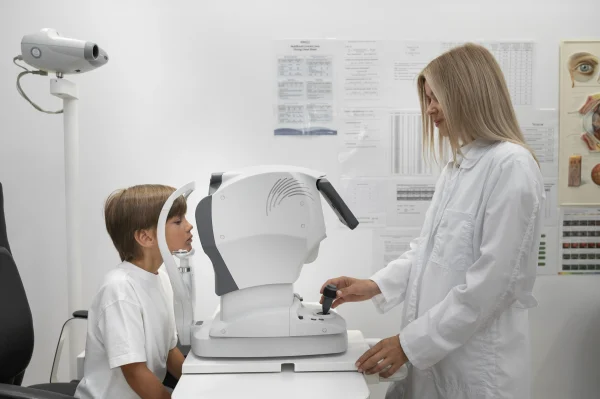
Testing children requires a different set of skills. Research in the American Journal of Ophthalmology explains that children often require specialized testing because their high amplitude of accommodation can mask their true refractive error. Doctors use specialized clinical refraction techniques to get past this barrier.
The Role of Cycloplegic Refractions
Doctors often use special eye drops called cycloplegics for children. These drops temporarily stop the eye from focusing. This allows the doctor to see the full extent of farsightedness or nearsightedness. According to Expert Review of Ophthalmology, commonly used eye drops for this purpose include cyclopentolate, tropicamide, and atropine. This test ensures the child has the best start for school and sports.
Objective Observation and Scripting for Kids
Children might not know their letters yet. Doctors use charts with symbols like apples, houses, and circles. They also watch the child's behavior and eye movements. If a child squints or tilts their head, it provides a clue about their vision. These observations help the doctor build a prescription even if the child cannot read a single word on the wall.
Troubleshooting Difficult Refractive Challenges
Some eyes present unique puzzles. High prescriptions or irregular eye shapes require extra math and specialized care. Doctors use advanced formulas to ensure the glasses work perfectly once they leave the office.
Managing High Myopia and Effective Lens Vertex Distance
When a prescription is very high, the distance between the eye and the lens matters. As defined by OpticianWorks, vertex distance is the specific measurement from the front of the cornea to the back of the lens sitting in the frame. Doctors calculate this "effective power" to make sure your glasses and contact lenses provide the same clarity. This math prevents the "fishbowl" effect that many people experience with thick lenses.
Subjective Refraction for Irregular Corneas
Conditions like keratoconus change the shape of the front of the eye. Standard lenses cannot always fix this. A common concern is, "Can a refraction test detect eye disease?" While the primary goal is measuring your prescription, an unusual or rapidly changing refraction can often be the first sign of basal conditions like cataracts or diabetes. This makes the routine check-up an essential part of preventative healthcare. Doctors use topography to map these irregularities and find custom solutions.
The Future of Optometry and Digital Refraction
Technology continues to push the boundaries of what we can see. New digital systems allow for faster and more precise measurements than ever before. This helps doctors spend more time talking to you about your eye health.
Wavefront Aberrometry vs. Standard Manifest Refraction
Standard tests measure simple errors like nearsightedness. A study in Cureus mentions that wavefront technology identifies higher-order aberrations, which are small irregularities that can have a significant effect on visual quality, particularly causing glare and halos at night. Doctors use Zernike polynomials to map these errors. The identification of these issues allows Optometry to provide lenses that reduce halos around lights and improve contrast.
The Speed of Automated Digital Systems
Digital phoropters allow the doctor to switch between your old and new prescriptions instantly. You no longer have to remember what "number one" looked like five minutes ago. You see the difference immediately. This reduces the pressure on you to make a perfect choice and makes the entire visit smoother and more comfortable. Modern clinical refraction techniques embrace this speed to provide better care.
The Human Element of Precise Vision
Technology provides the data, but the human touch provides the solution. A computer can measure an eye, but it cannot understand how a person feels while wearing their glasses. The best results in Optometry come from a blend of high-tech tools and clinical experience.
Advanced clinical refraction techniques allow your doctor to look beyond a simple number and focus on how you perceive your family, your work, and your world. Clear vision changes your confidence and your comfort.
Make sure you visit your eye doctor regularly. These exams protect your health and keep your vision at 20/20. The first step toward seeing the world with total clarity is scheduling an appointment.
Recently Added
Categories
- Arts And Humanities
- Blog
- Business And Management
- Criminology
- Education
- Environment And Conservation
- Farming And Animal Care
- Geopolitics
- Lifestyle And Beauty
- Medicine And Science
- Mental Health
- Nutrition And Diet
- Religion And Spirituality
- Social Care And Health
- Sport And Fitness
- Technology
- Uncategorized
- Videos

