

Molecular Biophysics For Healthy Aging
Imagine your body is a high-performance sports car. For decades, we’ve treated aging like a fading paint job—something you fix with a little wax and a prayer. However, the real problem is the fact that the metal atoms are literally shaking themselves apart, which is more significant than the color of the door. We’ve always been told that getting old is just a natural part of life, a slow fade into the sunset. But what if it’s actually a hardware failure that we can measure, test, and eventually fix?
This is where Biophysics enters the picture. Instead of just looking at biology as a list of ingredients, this field treats your cells like physical objects that have to follow the rules of gravity, friction, and heat. Molecular biophysics tools allow us to finally see the tiny cracks in the base of our bodies before they turn into full-blown collapses. Aging represents a series of physical parts wearing out under pressure rather than a ghost in the system.
The blueprint of decay through molecular biophysics
When we talk about getting older, we are really talking about things breaking at a scale so small that even the most powerful traditional microscopes can’t see them. As detailed in scientific reviews published in MDPI, our DNA acts as a physical molecule with mechanical and thermal properties that are constantly being pulled, twisted, and heated, which is distinct from being only a code. This research further confirms that thermal fluctuations—the tiny, persistent vibrations of atoms—actually bump into our genetic strands, impacting their structural dynamics. Over time, these tiny hits cause the physical shape of our DNA to change.
DNA stability and thermodynamic breakdown

Think of your DNA like a long, thin thread that is constantly being unspooled and rewound. As we age, the heat inside our cells makes this thread more likely to tangle or snap. Researchers use physics-based models to see exactly where these "snaps" are likely to happen. They’ve found that DNA replication actually puts a physical stall force of about 25 piconewtons on the "reading" parts of the cell. If the force gets too high, the process stops, errors happen, and the cell starts to age.
Protein misfolding as a physical error
Proteins are the workhorses of your body, but they only work if they are folded into the exact right shape. According to a study in PMC, these molecules must be folded into a specific shape to operate correctly; the study notes that the accumulation of misfolded proteins is a common event leading to functional errors. People often wonder, can molecular biophysics stop DNA aging? While it cannot halt time, it provides the precise physical measurements needed to design molecules that stabilize DNA strands and prevent structural degradation. When proteins lose their shape, they don't just stop working; they become sticky and toxic. Scientists have found that many proteins, once they are bent out of shape by stress, cannot be fixed. They become "irreversible physical errors" that eventually clog up the cell like trash in a drain.
Controlling cellular mechanics to restore youth
If the DNA is the "code," then the rest of the cell is the "body." Cellular mechanics is the most important factor in how young you feel. Your cells have a stiff internal frame that keeps them strong, rather than being simple bags of liquid. As we age, that frame starts to rust and stiffen, which changes how every single part of our bodies functions.
Cytoskeletal integrity and cell elasticity
Your skin stays bouncy because your cells are elastic. However, based on findings from the Phillip Time Lab at Johns Hopkins University, the internal scaffolding of our cells becomes rigid as we age, undergoing major biomechanical changes. For example, skin cells from older people are often 60% stiffer than those from younger people. This happens because the flexible parts of the cell frame are replaced by stiff, frozen fibers. When your cells lose their "spring," your tissues—like your heart and your skin—lose their ability to heal.
Mechanotransduction: Turning touch into health
Cells actually "feel" their way through the world. They have tiny sensors called Piezo channels that turn physical pressure into chemical signals. This process is how your bones stay strong when you walk or how your heart knows to beat faster when you run. Research published in PMC indicates that these mechanical signals play a vital role in regulating cytoskeletal remodeling and metabolic adaptation, which directly influence cellular function and longevity.
A report in MDPI adds that these mechanosensing pathways are also linked to the development of neurodegenerative diseases through protein aggregation. Many ask, does cell stiffness cause aging? Recent studies show that as cellular mechanics stiffen due to cross-linking, the cell loses its ability to divide and repair, effectively accelerating the aging process. As noted in a PMC article, biological aging eventually leads to a systemic functional decline and an increased vulnerability to various age-related diseases. Ironically, when the cell gets too stiff, it can't "hear" the signals to repair itself anymore, creating a cycle of decay.
How Biophysics identifies the biological clock
We usually measure age by birthdays, but your cells have a much more accurate clock. Applying the laws of Biophysics allows scientists to measure the "wear and tear" on a cell using a tool called an atomic force microscope. This is like a record player needle that is so sensitive it can feel the individual bumps on a cell's surface.
These tools allow us to "stress test" cells to see how much life they have left. Meanwhile, we can look at something called the Horvath clock, which tracks how our DNA changes over time. We've found that a change of just 3.2% in certain physical markings on our DNA can be the difference between a body that acts 35 and one that acts 55. This gives us a concrete number to target when we try to reverse the damage.
Targeted rejuvenation through molecular biophysics
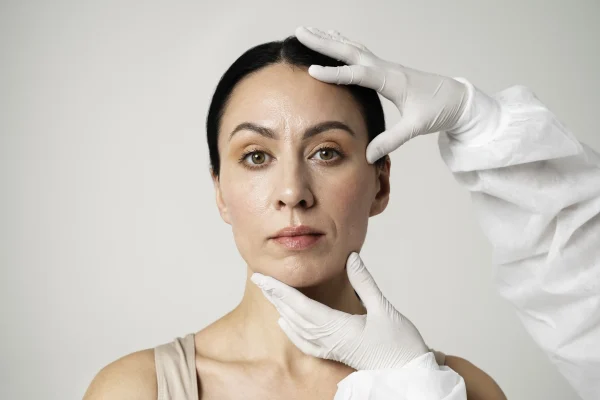
Anti-aging used to mean putting some cream on your face and hoping for the best. But with molecular biophysics, we are moving toward precision repairs. We are learning how to physically push the right buttons inside the cell to make it act young again. This approach is based on engineering rather than magic.
Nano-carriers and membrane permeability
The wall around your cell is made of fat, and as you age, that wall gets harder to get through. This is because cholesterol builds up and makes the wall stiff. To fix this, biophysicists are designing tiny delivery trucks called nanocarriers. These are designed to be exactly 50 to 200 nanometers wide. At this size, they can physically "vibrate" at the right frequency to slip through the stiff cell walls and deliver medicine directly to the center of the cell.
Enzyme kinetics and metabolic speed
Everything in your body happens because of enzymes, which are like tiny biological scissors and glue. As we age, these enzymes become less "sticky." In physics terms, their binding affinity drops. This means your metabolism slows down because the tiny machines inside you aren't grabbing their parts as fast as they used to. Understanding the physics of these movements helps us design treatments that "sharpen" these enzymes, making them clear out cellular waste much faster.
The physics of telomere preservation
Every time your cells divide, the tips of your chromosomes—called telomeres—get a little shorter. Think of them like the plastic tips on the ends of your shoelaces. When the plastic tips fall off, the shoelace starts to fray. Research in MDPI explains that cellular senescence is a stable state of cell cycle arrest often caused by telomere shortening or various physiological stresses. Furthermore, a study in PMC highlights that aging is closely associated with telomere attrition, DNA damage, and mitochondrial dysfunction. Biophysics helps us understand the physical tension that causes this fraying.
The replication of DNA involves a lot of twisting and pulling. If there is too much torque, the telomere snaps. A common query is, how do biophysicists study telomeres? Scientists use high-resolution imaging and magnetic tweezers to measure the mechanical strength of these caps, identifying ways to prevent them from snapping or shortening. Measuring these piconewtons of force assists us in finding ways to "cushion" the telomeres, allowing our cells to keep dividing long past their usual expiration date.
Mitochondrial health and cellular mechanics
Your mitochondria are the batteries of your cells. In addition to creating energy, they create physical pressure. They work by pumping protons across a thin membrane to create an electrical charge. This is almost exactly like how a dam creates electricity by holding back water.
Proton gradients as physical batteries
Nature research highlights how mitochondria create a proton gradient across their inner membranes to drive energy production, which is a process that creates physical pressure. A healthy, youthful cell has a "battery charge" of about -180 to -220 millivolts. According to Exploration Publishing, cells lose power because mitochondrial membranes eventually leak and fail to hold this electrical charge as they age. This leads to that feeling of low energy we associate with aging. A study of the cellular mechanics of these membranes reveals ways to "plug the leaks" and restore the cell's power.
Morphology and fusion-fission cycles
As described in a PMC report, mitochondria are constantly changing shape through an active network of fusion, fission, and trafficking. The study suggests that these cycles allow mitochondria to maintain functional capacity and eliminate damaged components through quality control. Research in the Wiley Online Library indicates that in older cells, these organelles often get "stuck" in a specific shape, which disrupts the balance needed to clean out cellular waste and contributes to age-related stem cell loss. MDPI research further connects disruptions in these mitochondrial fission-fusion cycles to neurodegenerative conditions like Parkinson’s and Alzheimer’s disease. Finally, a review in PubMed links mitochondrial dysfunction directly with other primary hallmarks of aging and mechanical changes. Using physics to understand how these mitochondria move and bend allows for the creation of therapies that help them keep their youthful flexibility, ensuring the cell stays clean and energized.
Future therapies driven by Biophysics
The next ten years of health won't be about just taking pills; it will be about "tuning" the body. We are entering a stage of bio-printing, where we can grow new organs on demand. According to ScienceDirect, 3D bioprinting has emerged as a flexible tool in regenerative medicine, allowing for the fabrication of functional biological structures. Research in ResearchGate adds that these advances allow for the creation of organ-like constructs suitable for transplantation. As noted in Nature, extrusion-based bioprinting specifically employs shear-thinning bioinks to achieve this.
A study in PMC further explains that these shear-thinning inks are essential for constructing cell microenvironments that improve regenerative efficiency. This allows us to 3D-print new tissue that has the perfect cellular mechanics to replace old, worn-out parts of the heart or lungs. As reported in MDPI, scientists are also using Surface Plasmon Resonance to watch drugs bind to aging markers in real-time, providing kinetic data on these molecular interactions. This lets us see exactly which treatments are working without having to wait months for results.
Embracing a Timeless Future with Biophysics
Aging has always felt like a mystery, but through the lens of Biophysics, it looks more like a math problem. We now know that our bodies break down because of specific physical forces—heat, tension, and stiffness. We’ve seen how molecular biophysics can identify the "tipping point" where a healthy protein becomes a toxic clump. We’ve learned that the secret to staying young might lie in maintaining the cellular mechanics of our scaffolding and batteries.
The more we treat the body like the incredible piece of hardware it is, the closer we get to being able to maintain it forever. We are moving away from a world where we just watch ourselves decay and toward a world where we can proactively "tune" our physical systems. Finally, research in PubMed suggests that our growing understanding of aging processes is leading to the development of therapies that could slow or even reverse changes once considered inevitable. In the end, Biophysics tells us that "old age" doesn't have to be a certainty; with the right tools and the right measurements, it could eventually become a choice.
Recently Added
Categories
- Arts And Humanities
- Blog
- Business And Management
- Criminology
- Education
- Environment And Conservation
- Farming And Animal Care
- Geopolitics
- Lifestyle And Beauty
- Medicine And Science
- Mental Health
- Nutrition And Diet
- Religion And Spirituality
- Social Care And Health
- Sport And Fitness
- Technology
- Uncategorized
- Videos

