
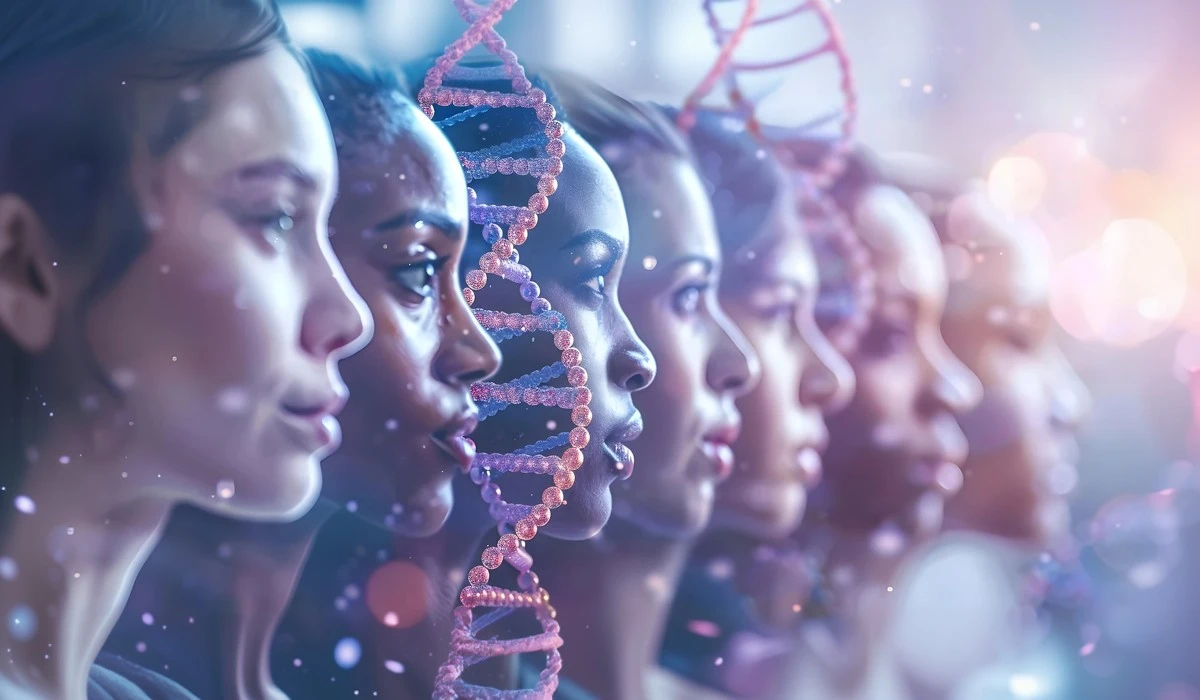
Map Family Migration Roots Via DNA Profiling
When you look in the mirror, you see a face shaped by thousands of years of travel, survival, and chance encounters. Your family stories might claim your ancestors never left their small mountain village. However, your blood often tells a different story. It carries a record of migrations and border crossings that your great-grandparents never mentioned. This biological record stays stored in your cells until you choose to look at it.
Today, DNA Profiling has moved from the high-tech crime lab to the family living room. It provides a scientific mirror for our personal histories. Genetic identity testing allows individuals to navigate around family tree obstacles to find biological facts. Instead of relying on dusty courthouse records that might have burned down a century ago, you can find the actual map of where your people started their path.
Decoding Your History with DNA Profiling
Modern science turns a simple saliva sample into a detailed map of your past. The process starts with a look at specific points in your genome where humans vary. Scientists call these points Single Nucleotide Polymorphisms, or SNPs. According to a study in the Biomedical Journal of Scientific & Technical Research, SNP analysis is considered the most relevant method currently used in DNA profiling. These markers act like tiny flags that tell researchers where your ancestors likely lived.
The Microarray Revolution
Most labs use a technology called SNP microarrays. A report in the journal Nature (PMC8202415) explains that these high-throughput chips, like the Illumina Global Screening Array, analyze over 600,000 locations in your DNA at once, though researchers can also use DNA sequence data. The lab extracts your DNA and washes it over the chip. Your genetic material binds to specific probes, lighting up like a digital switchboard to reveal your unique code.
Comparing Your Code to Global Reference Panels
As stated by the National Human Genome Research Institute, these tests estimate genetic ancestry by comparing an individual's DNA variants to the frequency of those variants in groups around the world. Research published in the journal Nature adds that this process involves evaluating a high number of variants against these global reference populations. When the lab matches your markers to these groups, it calculates your ethnic percentages. How accurate is DNA profiling for ethnicity? The Nature study clarifies that accuracy is limited by historical migrations and the mixing of populations. The report also suggests that while results are reliable at a continental level, accuracy tends to decrease when pinpointing specific borders.
How DNA Profiling Maps Human Migration
Your DNA is a time capsule that stretches back to the dawn of humanity. Every human alive today shares a common origin in Africa. As our ancestors moved across the globe, they developed unique genetic mutations. These mutations stayed within specific groups, creating a breadcrumb trail for modern scientists to follow.
Haplogroups and Deep Lineage
Scientists track these trails through haplogroups. These are large ancestral clans defined by specific mutations. You inherit your Y-DNA haplogroup from your father and your mtDNA haplogroup from your mother. For example, the R1b lineage is very common in Western Europe. Following these markers lets you see the exact path your direct paternal or maternal ancestors took out of Africa forty thousand years ago.
The Effect of Historical Admixture
History is messy, and so is our DNA. Events like the Silk Road trade or the Roman Empire’s expansion blended genetic signatures across huge distances. Scientists call this admixture. They use complicated tools like the ADMIXTURE program to see where different ethnic groups merged. Ironically, a person who thinks they are 100% of one ethnicity often finds a mosaic of many different regions in their report.
Strengthening Family Trees via Genetic Identity Testing
Genealogy used to depend entirely on paper. If a fire destroyed a town hall, your family history vanished. Now, genetic identity testing provides a permanent biological record that cannot be burned or lost. It links you to living relatives who share parts of your code, proving your connection even without a birth certificate.
Breaking Through Genealogical Brick Walls
Genealogists often hit obstacles when records stop or names change. DNA Profiling helps you find cousins who have different pieces of the puzzle. The measurement of shared DNA in centimorgans (cM) allows you to tell exactly how closely you are related to a match. A match of 3,400 cM usually indicates a parent or child, while lower numbers point to distant cousins who might hold the family stories you are missing.
Verifying Family Legends
Many families have stories about "royal blood" or a "Native American princess" in their past. Science can confirm or debunk these legends quickly. Can DNA profiling prove my nationality? DNA reveals biological ancestry and geographic origins rather than legal nationality status. While DNA indicates where your ancestors lived, it does not reveal the specific passport they carried because nationality is a legal status not recorded in the genetic code.
The Three Pillars of Genetic Identity Testing
Choosing the right test depends on what you want to find. Not all genetic identity testing is the same. Some tests look at your entire heritage, while others focus on a single branch of your tree. Understanding these differences helps you spend your money wisely and get the most useful information for your search.
Autosomal DNA for Recent Ancestry
Autosomal DNA tests are the most popular choice for general heritage. These tests look at the 22 pairs of chromosomes you inherit from both parents. They are effective for finding cousins within the last five to seven generations. This test provides the famous "ethnicity pie chart" and connects you to thousands of living relatives in a database.
Y-DNA and mtDNA for Direct Lines
If you want to go back thousands of years, you need specialized tests. A Y-DNA test follows the paternal line from father to son. Only men can take this test to trace their surname’s origin. An mtDNA test follows the maternal line from mother to child. Because these markers change very slowly, they can identify your "Clan Mother" from the distant past.
Why Precision Matters in DNA Profiling Results
You might notice that your ethnicity percentages change over time. This change occurs because science is improving, rather than your DNA being altered. As noted in the Nature study, the selection and total number of reference populations used by a lab strongly influence the accuracy of these results. An article from Wired explains that updates to these reference panels can cause ethnic percentages to shift—such as a change from Irish to Scottish—which reflects a change in lab methodology rather than genetics.
Interpreting the "Noise" in Your Report
Sometimes you will see a tiny percentage, like 1%, from a surprising place. Experts often call this "trace DNA" or "noise." The Wired article also mentions that ethnicity reports can contain statistical noise, which is particularly relevant for results appearing in low single-digit percentages. How long does DNA profiling take for results? Most commercial labs typically take between 4 to 8 weeks to process your sample and upload your digital heritage report. During this time, the lab runs your data through millions of comparisons to ensure accuracy.
Managing Privacy in the Age of Genetic Identity Testing
Sharing your genetic code is a big decision. Many people worry about who can see their data. Thankfully, modern labs take security very seriously. They use the same level of protection that banks use for your money. You have the power to decide how much of your information you want to share with other people in the database.
Understanding Data Encryption
When you send your sample, the lab separates your name from your DNA. They use a barcode system so the scientists testing the sample do not know who you are. All your results are stored using high-level encryption. In the United States, the GINA Act also protects you by making it illegal for employers or health insurers to use your genetic results against you.
Controlling Your Biological Visibility
Most platforms allow you to choose your privacy level. You can choose to be "unseen" so that no one else can see you as a match. You can also use a pseudonym instead of your real name. These tools put you in control of your genetic identity testing experience. You get the benefits of the findings without sacrificing your personal security.
Connecting Cultural Roots to DNA Profiling Data
Finding out you are 25% Scandinavian is just the beginning. The real value of DNA Profiling comes when you connect those numbers to real history. A percentage is just a statistic until you learn about the culture, the food, and the struggles of the people who passed those genes down to you.
Beyond the Percentages
Once you get your results, look for the stories behind the regions. If your DNA points to the Balkans, research the history of that area. Learn about the migrations caused by ancient wars or trade routes. This turns a dry report into a living history. It helps you understand the resilience of the people who survived long enough to eventually lead to you.
Building a Global Sense of Belonging
In reality, most of us are more mixed than we realize. Seeing your diverse roots can change how you view the world. When you realize you have cousins on three different continents, the world feels smaller and more connected. This knowledge often builds empathy and a stronger sense of being part of the global human family.
Embracing Your Roots Through DNA Profiling
Your genetic code is the most personal document you will ever own. It contains the unvoiced history of thousands of people who came before you. With the use of DNA Profiling, you can finally read that document and understand the long path your ancestors took. This technology lists percentages and settles old questions to reveal the biological truth of your heritage.
Whether you are looking to break through a genealogical brick wall or simply want to know where you came from, genetic identity testing provides the answers. It turns a mystery into a map. While science gives you the data, you are the one who decides what that heritage means for your life. Your DNA is the basic part of your story, but you are the one who continues to write it.
Recently Added
Categories
- Arts And Humanities
- Blog
- Business And Management
- Criminology
- Education
- Environment And Conservation
- Farming And Animal Care
- Geopolitics
- Lifestyle And Beauty
- Medicine And Science
- Mental Health
- Nutrition And Diet
- Religion And Spirituality
- Social Care And Health
- Sport And Fitness
- Technology
- Uncategorized
- Videos

