
Is Dark Matter and Dark Energy Expanding Space?
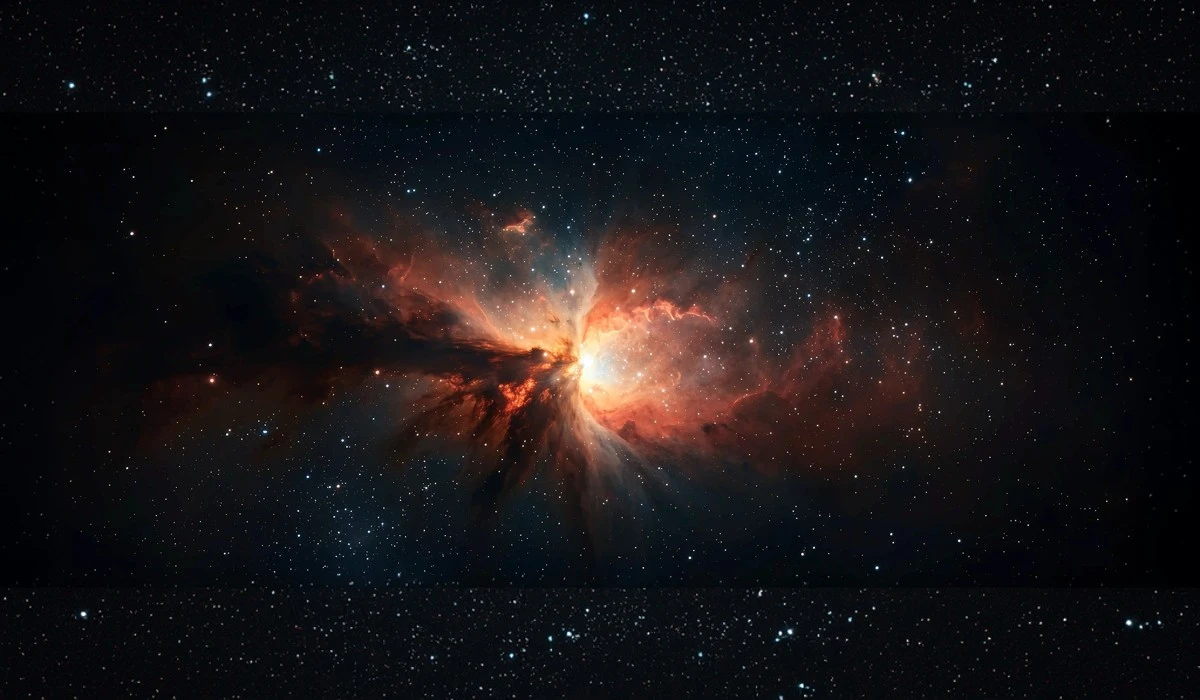
Look at the night sky and you see a tiny fraction of what actually exists. Every star, planet, and swirling cloud of gas accounts for less than five percent of the cosmos. The rest of the universe behaves like a ghost that haunts the space between the stars. Scientists call this vast majority Dark Matter And Dark Energy. These two forces dictate how galaxies grow and where they go. You cannot touch them or shine a light on them, yet they control the fate of every atom in existence. We live inside a massive cosmic structure that stays out of view but reveals itself through its heavy influence on everything we can observe. Studying these forces changes how we view our place in the timeline of space and time itself.
The universe operates under a strict set of rules that we are only beginning to decode. While the light we see tells a story of heat and life, the darkness tells a story of structure and destiny. These dark components actively shape the expansion of the void. Predicting their movements allows us to look billions of years into the past or the future. This exploration into the unknown requires us to look past the bright objects and focus on the gaps between them. In those gaps, we find the answers to why the universe exists in its current form and where it will eventually end. Our instruments now allow us to measure the heavy footprints of these rare powers with more accuracy than ever before in human history.
The Dual Nature of the Dark Universe: Defining the Dark Majority
Think of the universe as a massive stretch of rubber. According to a report by Reuters, dark matter acts as the unobservable glue that holds stars together inside a galaxy, functioning like a heavy weight on a rubber sheet that pulls everything toward the center. NASA notes that dark energy behaves like a force stretching that rubber band outward; this expansion began to speed up nine billion years after the universe began. One of the most frequent points of confusion is: what is the difference between dark matter and dark energy? In short, dark matter acts as an attractive "cosmic glue" that holds galaxies together, while dark energy acts as a repulsive force that accelerates the expansion of space itself. Without dark matter, galaxies would simply drift apart into nothingness long before stars could even form.
The Tug-of-War Over Space-Time
History shows a clear shift in who wins this cosmic battle. In the early days after the Big Bang, matter sat close together and gravity ruled the day. This density allowed the first stars and galaxies to clump into the shapes we recognize today. However, about five or six billion years ago, the distance between these objects grew large enough that dark energy took the lead. Modern universe expansion models track this handoff from gravity to expansion. Ironically, as space grows, dark energy becomes more dominant because there is simply more space for it to occupy. This shift flipped the script of cosmic history. Instead of the universe slowing down as things moved apart, it began to speed up. We now live in a time where the "push" clearly outweighs the "pull," driving everything away faster.
Visualizing the Dark: Gravitational Lensing Studies
Scientists find these obscured forces by watching how light travels across the void. Research published by NASA Hubble explains that gravitational lensing occurs when a massive object, such as a galaxy cluster, warps space and time, causing light to bend and distort. When light from a distant star passes near a heavy clump of dark matter, it follows that curve. This effect means we can map out where the dark stuff hides by looking at the distorted images of galaxies behind it. Astronomers call this technique gravitational lensing studies. It provides a way to "see" mass that does not emit any light of its own. Researchers use these curves to create detailed maps of the cosmic structure. This process proves that space acts as a flexible fabric that reacts to the weight of everything inside it, even the things we cannot see.
Weak vs. Strong Lensing Techniques
Some areas of space contain so much dark matter that they act like a thick glass lens. These regions produce "strong lensing," which creates bright rings and multiple copies of the same distant galaxy in a single image. NASA researchers state that most of the universe requires a more delicate approach called "weak lensing," which relies on observing the subtle distortion of galaxy shapes. This method looks at millions of galaxies and finds tiny stretches in their shapes that reveal the presence of dark matter.
This leads many to ask: how do scientists know dark matter exists if it is completely out of sight? Researchers confirm its existence through the specific degree of light-bending that can only be explained by a massive, non-luminous substance exerting a gravitational pull. Scientists combine thousands of these small measurements to build a full picture of the cosmic web. This data gives us a clear look at the structural bones of our universe.
The Lambda-CDM Standard Model
The best framework we have for explaining the cosmos is the Lambda-CDM model. The "Lambda" represents the dark energy that pushes space apart, while "CDM" stands for Cold Dark Matter. This model predicts how the universe grew from a hot, dense point into the vast web of galaxies we see today. It successfully matches almost every observation we make about the cosmic microwave background and the distribution of matter.
Findings from the ESA Planck mission show that dark energy accounts for 68.3 percent of the total energy density, while dark matter occupies 26.8 percent. Scientists use these universe expansion models to calculate the age and composition of our world with high precision. This framework serves as the primary map for all modern astronomy. It allows us to simulate the entire history of the universe on supercomputers to see how different levels of Dark Matter And Dark Energy would change the final outcome.
Addressing the Hubble Tension
Even with a great model, a major mystery remains regarding how fast the universe grows. This problem is known as the "Hubble Tension." When scientists look at light from the very early universe, they get one number for the expansion rate. When they measure the distance to nearby stars and supernovae, they get a significantly higher number. This gap suggests that our current universe expansion models might be missing a small but vital piece of information. Some believe that dark energy might change its strength over time rather than staying constant. Others suggest that a new, unknown type of dark matter might be interfering with our measurements. Solving this conflict is the top priority for cosmologists today. It represents a crack in our understanding that could lead to a major breakthrough in how we define the laws of physics.
Mapping Six Billion Years of History: Insights from the Dark Energy Survey
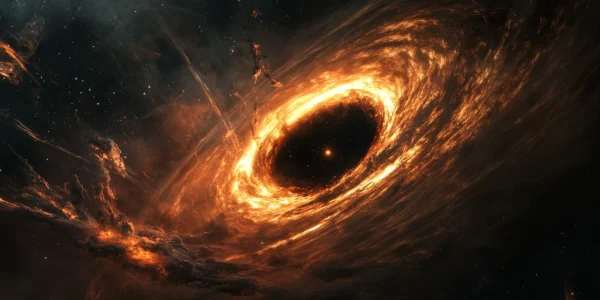
The Dark Energy Survey recently finished a massive project to map a huge portion of the sky. Using a 570-megapixel camera in the mountains of Chile, researchers captured images of nearly 390 million distant objects. They used gravitational lensing studies to see how the mass of the universe clustered together over the last six billion years. This data acts like a series of snapshots that show the universe growing up. It confirms that the large structures we see today grew exactly as gravity predicted they would. Looking so far back in time reveals the moment when expansion began to take over the cosmos. This survey provides the most detailed evidence yet that our theories about the "dark" side of the universe are on the right track. It turns abstract math into a physical map of reality.
The Stability of Dark Energy Over Time
One big question from the survey involves the nature of the "push" itself. Scientists want to know if dark energy is a simple property of space or something that changes as the universe gets older. The latest data from NASA’s Hubble observations reveals that dark energy appears to be a constant presence, suggesting it has stayed very stable for billions of years. This stability means our universe expansion models are likely very accurate for predicting the future. However, even a tiny change in its strength would mean the universe ends in a completely different way. Astronomers continue to check these numbers with higher precision every year. They look for any hint that the density of dark energy fluctuates or decays. So far, it appears to be a permanent and unchanging feature of the fabric of space that surrounds us.
Dark Matter as the Universal Scaffold: The Cosmic Web and Galaxy Halos
Think of dark matter as the solid framing of a house and ordinary matter as the drywall. You only see the walls, but the frame holds everything in place. Across the entire universe, dark matter forms a giant web of long, thin filaments. These filaments pull in hydrogen gas, which then cools and collapses to form the stars and galaxies we see. Every galaxy sits inside a massive, round "halo" of dark matter that prevents the stars from drifting away into the void. Without this structure, the universe would have no galaxies at all. Gravitational lensing studies have actually mapped these long filaments stretching between different clusters of galaxies. These maps reveal a detailed network that connects every corner of the cosmos. It shows that everything in the sky belongs to a single, massive, and highly organized system of matter.
Preventing the Great Dissipation
In the early universe, everything was hot and moving very fast. Without a heavy weight to slow things down, the gas would have spread out evenly across space. Dark matter provided the gravity needed to trap that gas before it could escape. The European Space Agency states that the formation of stars and galaxies became possible a few hundred million years after the Big Bang. The balance between Dark Matter And Dark Energy determined exactly how many galaxies the universe would hold. If gravity had been weaker, the universe would be a thin, lonely mist of gas with no stars. If it had been stronger, everything would have collapsed back into a single point long ago. We exist because these two forces reached a specific balance that allowed for stable galaxies to grow. This "scaffolding" created the perfect environment for the stars that eventually produced the chemical elements of life.
Predicting the Ultimate Fate of the Cosmos: From the Big Freeze to the Big Rip
The density of dark energy dictates how the story of our universe finally ends. If the expansion rate stays steady, we face a "Big Freeze." In this scenario, galaxies move so far apart that they eventually disappear from view. A common concern for many is: will dark energy eventually destroy the universe? If the repulsive force continues to grow, it could eventually overcome all other forces, leading to a "Big Rip" where even atoms are pulled apart. However, NASA cosmologists suggest the universe will likely continue to expand forever, eventually becoming a dark, empty place where nothing ever happens again. Under this "Big Freeze" scenario, stars eventually run out of fuel and go cold. The universe becomes a dark void where nothing ever happens again. Most scientists believe this is the most likely outcome based on current data. It suggests a very long, slow cooling of everything that exists today.
The Final Dominance of the Void
As space expands, the distance between galaxy clusters grows until light can no longer bridge the gap. Eventually, the Milky Way will sit alone in a dark sky with no other galaxies visible, even with the most powerful telescopes. Our universe expansion models show that this process is already happening. Thousands of galaxies are already moving away from us faster than the speed of light. They have crossed a boundary called the "cosmic horizon" and are gone forever. In the distant future, astronomers on Earth will think they are the only galaxy in the entire universe. They will have no way to see the neighbors we can see today. This realization makes our current time special. We live at a time when we can still see the evidence of the Big Bang and the surrounding cosmic neighbors.
Future Frontiers for Dark Matter And Dark Energy: The Euclid and Roman Space Telescopes
The next ten years will bring a flood of new information about the dark universe. New missions like the Euclid telescope and the Nancy Grace Roman Space Telescope are launching specifically to study these mysteries. Euclid will create a 3D map of the sky that covers over one-third of the entire heavens. It will use gravitational lensing studies to track how dark matter has moved and shifted over billions of years. Meanwhile, the Roman telescope will have a field of view 100 times larger than the Hubble Space Telescope. These tools will allow us to see the effects of Dark Matter And Dark Energy with ten times more precision than we have today. They will help us determine if dark energy is truly a constant or if it has obscured behaviors we have not yet detected. We are entering a golden age of cosmic findings.
Toward a Core Unified Theory
Mapping the effects of these forces is only the first step. The ultimate goal is to find the actual particles or fields that create them. NASA researchers investigate "WIMPs" and "axions" as theoretical particles that might compose dark matter, describing WIMPs as a favored class of candidates and defining axions as low-mass, low-energy particles. These findings would connect the tiny world of subatomic particles to the massive world of galaxies. They would provide a "theory of everything" that explains how the universe works at every scale. Grasping these components will finalize our universe expansion models and solve the biggest puzzles in science. New data brings us closer to knowing what the universe is actually made of. We are finally moving from simply observing the dark to understanding its core nature and its direct influence on our reality.
The Enduring Mystery of Dark Matter And Dark Energy
We spent centuries thinking the stars were the main event. Now we know they are just the glowing dust on a much larger, darker stage. The partnership between Dark Matter And Dark Energy defines every moment of cosmic history, from the first spark of light to the cold expansion of the far future. Tools like gravitational lensing studies help us read the subtle signs of these dark giants. We no longer have to guess how the universe grows; we can measure it with growing precision. Grasping these forces gives us a clear look at our origins and a roadmap for where we are headed. The dark still holds many secrets, yet our ability to predict its behavior proves that the human mind can grasp the largest structures in existence. We finally understand that forces filling the void make our life possible.
Recently Added
Categories
- Arts And Humanities
- Blog
- Business And Management
- Criminology
- Education
- Environment And Conservation
- Farming And Animal Care
- Geopolitics
- Lifestyle And Beauty
- Medicine And Science
- Mental Health
- Nutrition And Diet
- Religion And Spirituality
- Social Care And Health
- Sport And Fitness
- Technology
- Uncategorized
- Videos

