
Identify Species Using Marine Mammals Biology
You stand on a pier and spot a grey fin slicing the water. Your heart jumps, but you realize you cannot name the creature. Most people look at the surface and see only shadows. Real identification happens when you understand the physical rules governing life in the ocean. Marine Mammals must breathe air, nurse their young, and keep their blood warm in freezing currents.
These biological requirements force every species into a specific shape and behavior. Learning how their bodies work allows you to stop guessing and start seeing the details that separate a harbor porpoise from a bottlenose dolphin. This guide uses marine mammal biology to help you learn the skills of identification. Focusing on the internal traits that dictate external appearances allows you to read the water like a scientist. Knowing these details changes a blurry shape into a specific species.
Learning Marine Mammal Biology for Field Identification
Scientists categorize these animals using frameworks that date back centuries. According to the treatise On the Parts of Animals by Aristotle, written around 350 B.C.E., it was first recorded that dolphins gave birth to live young. He noted they possessed lungs instead of gills. This observation formed the basis of our understanding of how these animals function. To identify a species today, you must first recognize which branch of the family tree it occupies.
The Four Taxonomic Groups
Taxonomy provides the first set of clues for any observer. You categorize Marine Mammals into four primary groups: Cetaceans, Pinnipeds, Sirenians, and Marine Fissipeds. Cetaceans include the whales and dolphins that never leave the water. Pinnipeds represent the seals, sea lions, and walruses that split their time between sea and shore. Sirenians consist of manatees and dugongs, while Fissipeds include polar bears and sea otters.
What are the five groups of marine mammals? While taxonomists sometimes fluctuate, the five recognized groups typically include whales/dolphins, seals/sea lions, manatees, sea otters, and polar bears. Each group possesses distinct biological adaptations that dictate where they live and how they appear to observers. Knowledge of these divisions helps you narrow down a sighting in seconds.
Evolution and Convergent Traits
Marine species often look similar because the ocean demands a specific shape for speed. This process, called convergent evolution, gave different lineages the same streamlined "fish-like" bodies. Research published in Evolution: Education and Outreach indicates that Cetaceans and Sirenians returned to the sea roughly 50 million years ago during the Eocene. Pinnipeds followed later, around 25 million years ago. Despite their sleek skin, they retain land-mammal markers. They have bone structures in their flippers that resemble human hands. These internal traits explain why they move differently from sharks or tuna.
The Visual Language of Marine Mammals: Fins and Flukes
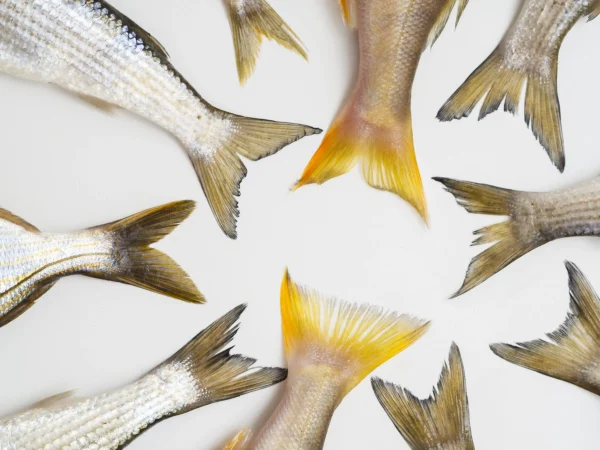
The shape of a fin provides an immediate biological ID card. These appendages steer the animal while also regulating heat and stabilizing the body during high-speed hunts. When you see a fin, look at its curvature and height. These specific traits result from millions of years of marine mammal biology adapting to different ocean environments.
Dorsal Fin Morphologies
Dolphins and porpoises often look identical to the untrained eye. However, their fins tell two different stories. Most dolphins, known as Delphinids, have "falcate" or hooked dorsal fins that curve toward their tails. Porpoises, or Phocoenids, usually have small, triangular fins that lack a curve. Some Marine Mammals, like the Northern Right Whale Dolphin, evolved to have no dorsal fin at all. This lack of a fin allows them to glide smoothly under ice or through dense kelp forests.
Fluke Patterns and Tail Structures
A whale’s tail, or fluke, is as unique as a human fingerprint. In the 1970s, researcher Michael Bigg pioneered the use of these shapes for identification. He realized that the "notch" in the center and the trailing edge of the fluke varied between individuals. Humpback whales often lift their flukes high before a deep dive. This behavior reveals pigmentation patterns on the underside. Researchers use these black-and-white markings to track specific whales across entire oceans.
Cetacean Clues: Identifying Whales by Blow and Breach
Whales reveal their identity the moment they breathe. Because they are mammals, they must expel old air and take in fresh oxygen at the surface. This creates a "blow" or spout of mist. The shape, height, and angle of this spout come directly from the animal's lung capacity and blowhole anatomy.
Mysticetes vs. Odontocetes
Whales fall into two biological categories based on their mouths. Mysticetes, or baleen whales, use fringed plates to filter tiny krill from the water. They possess two blowholes, which often create a V-shaped spout. Odontocetes are toothed whales, including dolphins and sperm whales. These animals have a single blowhole and use echolocation to find prey.
According to the NOAA Ocean Service, the primary biological distinction between a dolphin and a porpoise lies in their teeth and fins; dolphins have cone-shaped teeth and hooked dorsal fins, while porpoises have spade-shaped teeth and blunt, triangular fins. These subtle marine mammal biology details are essential for accurate identification at sea. Knowledge of whether an animal has one blowhole or two immediately tells you its taxonomic family.
Surface Profiles and Spout Shapes
According to National Geographic, if you see a spout reaching 12 meters into the sky, you are likely looking at a Blue Whale. Their massive lung volume creates the tallest columnar blow in the animal kingdom. Meanwhile, information from the Oregon Department of Fish and Wildlife clarifies that the Sperm Whale's blow is unique because its S-shaped blowhole is positioned on the front left side of its head. These asymmetrical features make the Sperm Whale easy to identify even from a great distance.
The Pinniped Puzzle: Biological Traits of Seals and Sea Lions
People often use the terms "seal" and "sea lion" interchangeably. In reality, their skeletal structures create two very different ways of life. Identifying them requires a quick look at their ears and their movement on land. These differences stem from how their ancestors evolved to move through coastal environments.
Otariids vs. Phocids
Sea lions and fur seals belong to the Otariid family. They have small, external ear flaps that you can see from a few feet away. True seals, or Phocids, have no external ears and only show small holes on the sides of their heads. This biological divide also affects how they handle sound underwater. Sea lions rely more on their ears, while true seals use their highly sensitive whiskers to feel vibrations in the water.
How can you tell a seal from a sea lion? You can identify a sea lion by its external ear flaps and its ability to rotate its hind flippers forward to "walk" on land, whereas true seals lack ear flaps and must crawl on their bellies. This difference in skeletal marine mammal biology makes them easy to distinguish once they leave the water. Watching an animal move toward the tide line gives you the answer instantly.
Locomotion Adaptations
The pelvic bone of a sea lion allows it to tuck its rear flippers under its body. This gives them the ability to run across rocks with surprising speed. True seals possess a pelvis that keeps their rear flippers pointing backward. On land, they must "galumph" by undulating their stomach muscles like a caterpillar. This skeletal limitation makes seals much slower on shore, but makes them more streamlined and effective divers in the deep ocean.
Spotting Rare Marine Mammals: Sirenians and Sea Otters
Some Marine Mammals look more like their land ancestors than others. Manatees and sea otters occupy specialized niches in shallow water. Their biology reflects a life spent hugging the coastline rather than roaming the open sea. Identifying these species requires looking at how they manage buoyancy and body heat.
The Manatee and Dugong Distinction
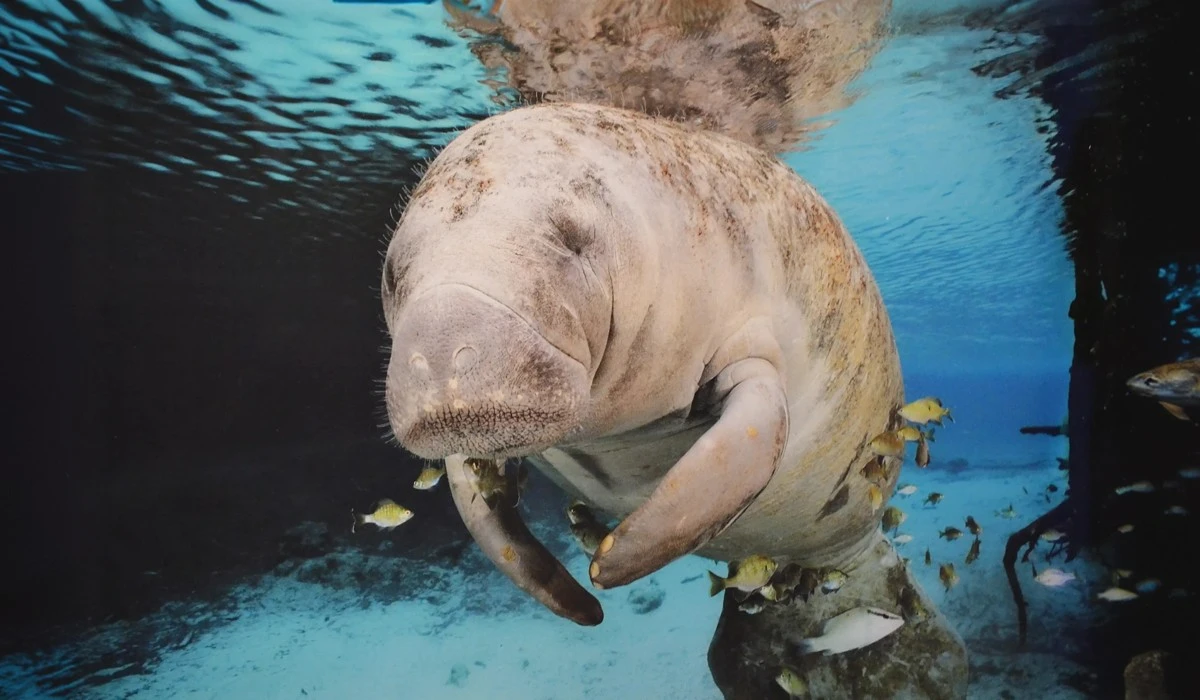
As noted in a study on PMC, Sirenians are the only herbivorous Marine Mammals because they were the first to move from land to water. To help them stay submerged while eating seagrass, they evolved incredibly dense bones. This biological trait, called pachystosis, acts like a diver’s weight belt. You can tell a manatee from a dugong by the tail. Manatees have a rounded, paddle-like tail suited for slow river movement. Dugongs have a fluked tail like a whale, which helps them navigate the stronger currents of the Indian and Pacific Oceans.
Mustelids and Ursids at Sea
Sea otters and polar bears are the newest members of the marine world. The Seattle Aquarium reports that sea otters lack a thick layer of blubber and stay warm by relying on the densest fur on Earth, which contains 1 million hairs per square inch. This fur traps a layer of air against their skin for insulation. Polar bears are classified as marine mammals because of their webbed front paws and total dependence on the sea-ice ecosystem. Their white fur actually consists of hollow, transparent tubes that trap heat from the sun.
Anatomical Indicators: Using Skin and Coloration for ID
Skin is the most visible part of an animal, yet it serves a detailed biological purpose. Coloration helps these animals hide from predators or sneak up on prey. Over time, the skin also collects scars and parasites that become permanent markers for identification.
Countershading and Disruptive Coloration
National Geographic Education describes how many pelagic species use countershading, a form of camouflage characterized by dark backs and light bellies. When a predator looks down from above, the dark back blends into the deep, dark water. When a predator looks up from below, the white belly blends into the bright, sunlit surface. This biological camouflage is a primary marker for identifying species like the Atlantic White-Sided Dolphin or the Orca.
Callosities and Scars
Some whales carry their ID cards on their faces. According to NOAA Fisheries, North Atlantic Right Whales grow rough, calcified patches of skin called callosities, which appear white or yellow because they are covered in "whale lice" or cyamids. Each whale has a unique pattern of these patches. Similarly, Risso’s dolphins are born grey but become almost entirely white over time. This happens because they accumulate scars from social interactions and squid bites that never fade.
Behavior as a Biological Marker for Identification
Identification goes beyond physical looks. How an animal moves and hunts tells you about its internal systems. Every breach, dive, and feeding lung is a result of marine mammal biology working to solve the problem of survival in environments characterized by high pressure and low oxygen.
Diving Physiology and Surface Intervals
The Mammalian Dive Reflex allows these animals to stay underwater for incredible lengths of time. During a dive, a Weddell seal’s heart rate can drop from 120 beats per minute to just 10. They also store massive amounts of oxygen in their muscles using a protein called myoglobin. This protein makes their muscle tissue appear almost black. Timing how long an animal stays down and how many times it breathes at the surface allows you to often identify its species before ever seeing its face.
Foraging Styles
Feeding behaviors are often species-specific. Rorquals, like the Blue and Fin whales, possess accordion-like pleats on their throats. These pleats allow them to swallow a volume of water larger than their own body. Humpback whales demonstrate advanced social biology through "bubble-netting." As stated by NOAA’s Stellwagen Bank National Marine Sanctuary, seeing a ring of bubbles on the surface is a guaranteed sign that Humpbacks are hunting below.
Protecting the Future of Marine Mammals
Understanding the inner workings of Marine Mammals changes how you see the ocean. Instead of seeing just a fin, you see a detailed biological system adapted for a specific life. This knowledge turns every beach walk or boat trip into a chance to contribute to science. When you can accurately identify a species, your sightings become valuable data for researchers.
The survival of these creatures depends on our ability to monitor their populations. Pollution and rising temperatures challenge their biological limits every day. Learning the details of Marine Mammals helps you become a better advocate for their protection. Your ability to distinguish a healthy animal from one in distress can save lives. Keep watching the horizon and use these biological keys to reveal the mysteries of the deep.
Recently Added
Categories
- Arts And Humanities
- Blog
- Business And Management
- Criminology
- Education
- Environment And Conservation
- Farming And Animal Care
- Geopolitics
- Lifestyle And Beauty
- Medicine And Science
- Mental Health
- Nutrition And Diet
- Religion And Spirituality
- Social Care And Health
- Sport And Fitness
- Technology
- Uncategorized
- Videos

