
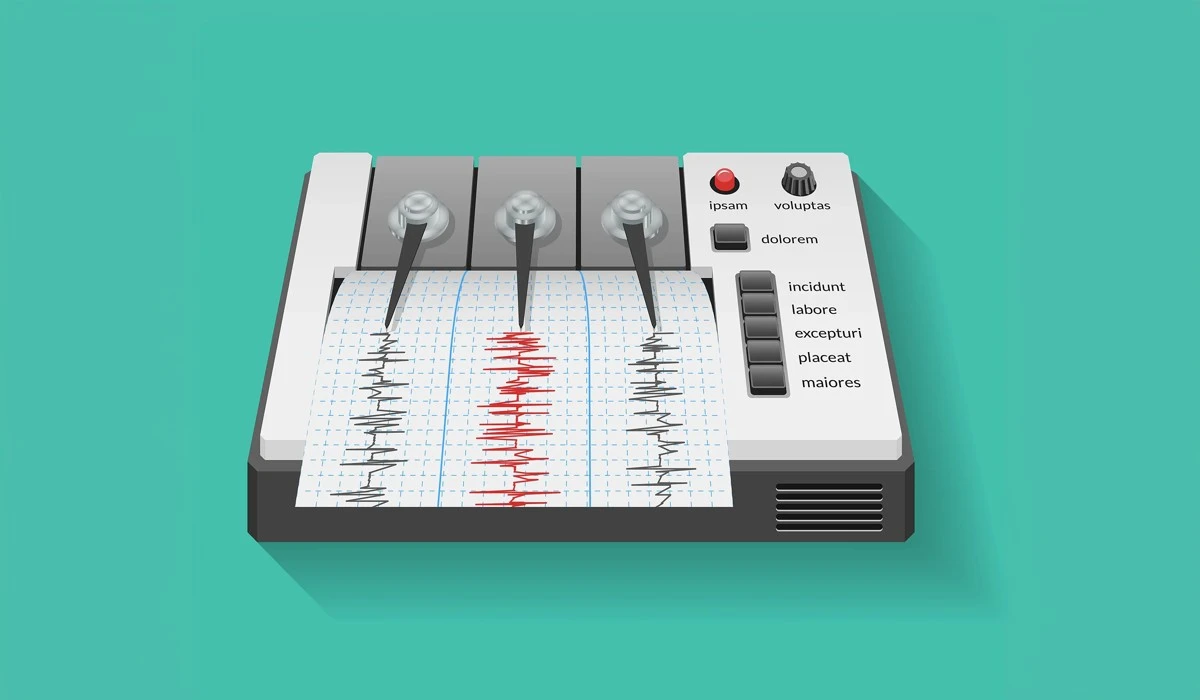
How Seismology Scales Forecast Earthquake Risk
Most people look at the ground as a solid, permanent object. In reality, the Earth behaves more like a tightly wound spring waiting to release energy. Miles beneath our homes, tectonic plates constantly grind against each other and build up massive amounts of pressure. The USGS notes that earthquakes are caused by a sudden slip on a fault, which releases vibrations that travel through the planet like ripples in a pond.
Experts in Seismology spend their lives tracking these ripples to determine the level of danger we face. They use various earthquake magnitude scales to turn physical shaking into numbers that guide our safety decisions. Knowledge of these measurements helps us stop guessing about risks and start building for reality. Analysis of the mathematics behind the movement provides protection for families and property.
The Evolution of Modern Seismology Measurement
Britannica notes that American seismologists Charles Richter and Beno Gutenberg developed the first widely known scale in 1935. They wanted a way to categorize the size of quakes in Southern California using specific instruments. The publication also mentions that for earthquakes measuring magnitude 6.5 or greater, the original methodology proved unreliable, meaning it could not accurately measure the truly massive quakes that change coastlines.
Beyond the Richter Scale: The Rise of Moment Magnitude (Mw)
Britannica reports that the original Richter scale often "saturates" during very large events, underestimating the energy of earthquakes with magnitudes greater than 6.5. As proposed in research published by the USGS, Thomas C. Hanks and Hiroo Kanamori addressed this in 1979 through the introduction of the Moment Magnitude Scale. People often wonder, what is the most accurate way to measure an earthquake? Seismologists now prefer the Moment Magnitude Scale because it calculates the total energy released based on the fault’s physical movement. It looks at the rock rigidity, the area of the fault that broke, and the distance the ground actually moved.
Understanding the Logarithmic Leap
Numbers on these scales do not grow in a straight line. Every whole number increase represents a massive jump in power. Britannica explains that each unit increase on the scale signifies a ten-fold rise in the magnitude of an earthquake, meaning a magnitude 7 quake is ten times larger in recorded wave size than a magnitude 6. However, the energy difference is even more startling as the USGS adds that a one-point jump on earthquake magnitude scales represents a 32-fold increase in the actual energy released. This means it takes 32 magnitude 5 quakes to equal the energy of just one magnitude 6 event.
Decoding Popular Earthquake Magnitude Scales

Scientists use different tools depending on where the sensors sit and which waves they record. Research published by the USGS notes that several different magnitude scales now exist to define earthquake size, meaning no single scale tells the whole story, and experts often check multiple readings to confirm a quake's size. This variety allows for more precise warnings and damage estimates.
Local Magnitude vs. Surface Wave Scales
The Local Magnitude scale works best for tremors happening close to the recording station. It measures high-frequency waves that shake buildings directly. Surface-wave scales, however, track Rayleigh waves that travel long distances across the Earth's crust. These scales help experts measure quakes happening thousands of miles away. A comparison of these different readings allows Seismology to provide a complete picture of how the energy moves through different types of rock.
Why Magnitude and Intensity are Often Confused
Caltech experts explain that magnitude measures the energy released at the source, but intensity describes what people feel in their living rooms. A massive quake deep in the ocean might have a high magnitude but cause very little intensity on land. Conversely, a small quake directly under a city can feel incredibly violent. Many homeowners ask, can a magnitude 5 earthquake cause damage to a house? According to the USGS, damage does not usually occur until the earthquake magnitude reaches somewhere above 4 or 5. However, a magnitude 5 event can still cause significant structural cracks if the epicenter is shallow or if the building sits on soft soil.
How Seismology Informs Structural Resilience
Engineers rely on seismic data to build skyscrapers that can sway without snapping. They look past the simple magnitude number to find the specific forces that act on a foundation. This data determines which materials and designs will survive the next big event.
Calculating Peak Ground Acceleration (PGA)
Peak Ground Acceleration measures how fast the earth moves during an earthquake. It represents the maximum force felt by a particle on the ground. A PGA of 0.1g, or ten percent of the force of gravity, usually marks the point where unreinforced buildings start to take damage. Engineers use this number to decide how much steel and concrete a structure needs. High PGA values require buildings to have flexible joints and strong "skeletons" to resist being thrown off their foundations.
Retrofitting Strategies Based on Historical Seismic Data
History serves as a powerful teacher for city planners. Examination of which buildings survived past quakes allows experts to identify the biggest risks in older neighborhoods. As confirmed by the USGS, modern standards like the ASCE 7-22 use specific maps to calculate the likely force a building will face over a 50-year period, based on a 1%-in-50-years collapse risk. This allows owners to strengthen older brick or concrete structures before the next tremor hits. Adding steel braces or rubber shock absorbers can turn a dangerous building into a safe haven.
Predicting Damage Risk Through Ground Motion Studies
The type of ground beneath a house changes the effect of any earthquake. Solid rock acts very differently from soft sand or wet clay. Knowledge of this relationship helps people choose safer locations for their homes and businesses.
The Role of Soil Liquefaction in Urban Areas
Certain soils lose their strength and act like liquid when they shake violently. This often happens in areas with high water tables or sandy ground near rivers. When the ground turns to "soup," even the strongest buildings can tilt or sink. This hazard rarely happens during quakes below magnitude 5.0, but it becomes a major threat during magnitude 7.0 events. Map data from Seismology identifies these "Class F" zones so builders can avoid them or reinforce the ground.
Distance vs. Depth: The Obscured Variables of Destruction
USGS reports that a deep quake often loses its strength before it reaches the surface, as the shaking felt from an event 500 km deep is considerably less than a 20 km deep event of the same magnitude. However, a shallow quake releases all its energy directly into the foundations of nearby homes. Ironically, a magnitude 6.0 quake occurring only five miles down can do more damage than a magnitude 8.0 quake happening 200 miles deep. The waves have less time to weaken as they travel through the Earth. Knowing the depth helps emergency crews predict exactly where the worst damage will occur.
Using Seismology to Forecast Secondary Hazards
Earthquakes often start a chain reaction of other disasters. One tremor can move the ocean or loosen a mountainside. Professionals use real-time data to warn people about the following threats before they arrive.
Tsunami Triggers and Sea Floor Displacements
Undersea quakes can displace massive amounts of water in seconds. Specialized earthquake magnitude scales help coastal cities predict wave heights through the measurement of vertical seafloor displacement. When a fault slips vertically, it pushes the ocean upward and creates a wave that travels hundreds of miles per hour. Rapid data analysis gives coastal residents the precious minutes they need to reach higher ground.
Landslide Susceptibility in Mountainous Terrain
Strong seismic waves weaken the grip of soil on steep slopes. High-magnitude events often cause entire mountainsides to collapse onto roads or into valleys. A common query is, how do scientists know how big an earthquake was so quickly? Rapid response systems use global networks to analyze seismic waves in real-time, allowing for instant magnitude estimation. This speed allows authorities to close dangerous mountain passes before the aftershocks cause more slides.
The Economic Value of Seismic Data Accuracy
Precision in measurement saves more than lives; it saves billions of dollars in recovery costs. When we know the exact risk level of a specific plot of land, we can spend our money more wisely. Data-driven decisions reduce waste and speed up the recovery process after an event.
Lowering Insurance Premiums with Site-Specific Data
Insurance companies use seismic maps to set their rates. If you can prove your home sits on solid bedrock or features modern retrofitting, you may qualify for lower premiums. Proving your property meets the "Risk-Targeted Maximum Considered Earthquake" standards shows the insurer that your home is a lower financial risk. This creates a direct financial reward for homeowners who invest in safety.
Protecting High-Value Infrastructure and Tech Hubs
Data centers and factories use seismic sensors to prevent industrial accidents. These systems can automatically shut off gas lines and power grids when the shaking exceeds a certain level. This prevents fires, which ScienceDirect reports often cause more destruction than the earthquake itself. Modern tech hubs also use base isolation, which uses lead-rubber bearings to cut the force of a quake by up to 75 percent. Investing in these systems protects the high-value equipment that keeps our economy running.
The Future of Urban Seismology and Citizen Science
Technology is turning every person with a phone into a potential data point. We no longer rely solely on a few expensive sensors scattered across the desert. A massive network of everyday devices is changing how we see the Earth move.
Smartphone Sensors and Crowd-Sourced Detection
Modern smartphones contain tiny sensors called accelerometers that can detect shaking. When thousands of phones in one area feel the same vibration, they send data to a central system. This creates a massive, real-time map of an earthquake's reach. This crowd-sourced Seismology provides data in regions where professional sensors are rare. It allows for faster alerts and a more detailed understanding of how different neighborhoods respond to the same quake.
AI-Driven Risk Modeling for 100-Year Quakes
Artificial intelligence now processes decades of seismic data to find patterns we missed. These programs can simulate how various earthquake magnitude scales would affect a modern city with millions of people. The use of these simulations allows planners to find the "weak spots" in a city’s bridge network or water system. This foresight allows cities to fix problems years before a real earthquake occurs.
Empowering Your Safety Through Applied Seismology
Magnitude numbers represent the physical reality of the ground beneath us rather than appearing as simple statistics on the evening news. Comprehending the math and science of how the earth moves provides the power to prepare rather than panic. We can use this data to choose where we live, how we build, and how we protect our communities.
Knowledge of Seismology turns an unpredictable threat into a manageable risk. As our tools for measuring the Earth improve, our ability to withstand its movements grows even stronger. Remaining informed about these scales ensures that when the ground finally moves, you and your property will stay standing.
Recently Added
Categories
- Arts And Humanities
- Blog
- Business And Management
- Criminology
- Education
- Environment And Conservation
- Farming And Animal Care
- Geopolitics
- Lifestyle And Beauty
- Medicine And Science
- Mental Health
- Nutrition And Diet
- Religion And Spirituality
- Social Care And Health
- Sport And Fitness
- Technology
- Uncategorized
- Videos

