

History Of Einstein: Why Time Slows Down
Imagine a sixteen-year-old boy daydreaming in a Swiss classroom. He wonders what happens if he chases a beam of light. If he catches it, does the light stop moving? Most people take for granted that a clock ticks at the same speed for everyone. Albert Einstein realized that clocks actually change their pace depending on how fast you move.
The History of Einstein shows us that the universe stretches and squishes to keep light moving at one steady speed. This realization didn't just change science. It flipped our understanding of reality upside down. We used to think time was a steady river flowing the same for everyone. Now we know time is a flexible strand that wraps around every moving object.
The intellectual spark in a Bern patent office
Young Einstein did not look like a world-changing genius at first. He struggled to find a teaching job after graduating from Zurich Polytechnic in 1900. He spent two years searching for work while his friends started their careers. Finally, he found a role at the Swiss Patent Office in 1902.
From rebellious student to visionary clerk
He worked as a "Technical Expert Class III." This job required him to look at drawings of clocks and electrical gadgets all day. This work sharpened his mind because he had to explain how things worked in simple terms. He started to visualize how signals move between distant points.
The History of Einstein tells us that his time as a clerk provided the perfect environment for his "thought experiments." He imagined trains, lightning bolts, and elevators to test the laws of physics in his head. He used these mental pictures to solve problems that math alone couldn't reach.
The 1905 breakthrough that changed everything
In 1905, Einstein published four massive papers while still working his day job. This year is now known as his "Miracle Year." One paper proved that atoms exist through an explanation of how tiny particles move in water. Another paper changed how we see light.
According to an article from Einstein Online, the origins of the theory of relativity began with the principle that physical laws remain identical for all observers in non-accelerating frames of reference. As noted by Encyclopaedia Britannica, this theory eventually produced the equation E=mc^2, effectively pairing mass with energy. This burst of creativity proved that a clerk in a small office could rewrite the rules of the entire universe.
Decoding the relativity theory origins and time dilation
Einstein realized that the speed of light never changes. It always travels at exactly 299,792,458 meters per second. If you run toward a beam of light, it doesn't look faster. If you run away, it doesn't look slower. This creates a problem for our old ideas of time.
If light stays the same speed for everyone, then time must change to make the math work.
Does time move more slowly for someone moving fast? Research published by NASA’s Imagine the Universe suggests that as an object's speed nears the speed of light, time for that object slows down relative to a stationary observer, meaning a traveler in space would age less than someone on Earth. As detailed in a report by the National Institute of Standards and Technology, researchers verified this through the placement of synchronized cesium atomic clocks on commercial jet aircraft to compare their times with those on the ground.
This means a pilot's watch actually ticks a tiny bit slower than yours. We call this "time dilation." It happens because space and time are connected. When you move through space very fast, you move through time more slowly. This is a core part of the origins of the theory of relativity that governs our modern world.
Tracing the History Of Einstein through Special Relativity
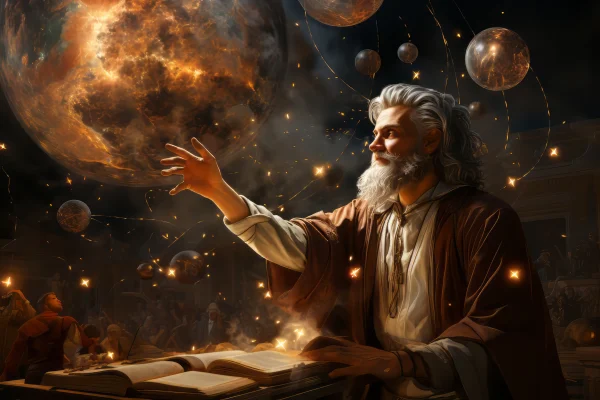
Special relativity changed how we see mass and energy. Einstein showed they are actually different forms of the same thing. His formula, E=mc^2, explains why a tiny amount of matter holds a massive amount of energy. The "c" stands for the speed of light squared, which is a huge number.
The History of Einstein teaches us that space and time do not exist separately. They merge into a four-dimensional fabric. If you move through space very quickly, you use up some of your "motion" through time. This explains why a fast-moving astronaut ages slightly slower than their twin back on Earth.
We see this in nature, too. High-speed particles called muons are created in the upper atmosphere. They usually die in a split second. However, they reach the Earth's surface because they move so fast that their internal "clocks" slow down. They live longer from our perspective because they are traveling through time differently.
Navigating the complicated history of quantum mechanics
Einstein also changed how we see the smallest parts of the universe. In 1905, he challenged the old idea that light is only a wave. Based on documentation from NobelPrize.org, he proposed that light is made up of individual packets of energy, which he called quanta. This finding is a large part of quantum mechanics' history.
The photoelectric effect and the Nobel Prize
According to the Nobel Prize organization, Einstein was awarded his Nobel Prize specifically for the identification of the law of the photoelectric effect rather than for his work on relativity. He showed that light hits surfaces like a stream of tiny "bullets" or packets of energy. He called these "quanta," and a paper in the Reviews of Modern Physics notes that these quantized packets are now referred to as photons. This showed that light behaves like both a wave and a particle.
This finding eventually led to the development of solar panels and digital cameras. Every time you take a photo with your phone, you are using Einstein's quantum findings. He moved from being a clerk to becoming the leader of a new scientific period.
The debate over a deterministic universe
Even though he helped start the quantum revolution, Einstein eventually grew uncomfortable with it. He hated the idea that things happen by pure chance at the atomic level. He famously said that God does not play dice with the universe.
Why did Einstein disagree with quantum mechanics? While he helped invent the field, he disliked the idea that the universe was governed by randomness and probability rather than certain laws. He spent the rest of his life looking for a single theory that could explain everything. This tension remains a major part of quantum mechanics history today.
How the History of Einstein changed our view of gravity
As detailed by Caltech’s LIGO Lab, Einstein expanded his theories in 1915 through the introduction of General Relativity. Encyclopaedia Britannica explains that rather than viewing gravity as a force pulling objects down, he saw it as the result of heavy objects sitting on the fabric of space and time. Imagine a bowling ball sitting on a trampoline.
The ball creates a curve that makes marbles roll toward it. The History of Einstein shows us that the sun curves the space around it, which keeps the planets in orbit. NASA’s Space Place also notes that gravity possesses the ability to slow the passage of time, meaning clocks move more slowly in strong gravity than in weak gravity.
How did Einstein prove relativity? His theory was confirmed during a 1919 solar eclipse when astronomers observed stars shifting their positions because their light was being bent by the sun's gravity. This proof made him the most famous scientist in the world. He proved that even light follows the curves of space.
The human side of a scientific revolutionary
Einstein used his fame for more than just science. He spoke out against war and racism throughout his life. In 1933, he left Germany to escape the rising Nazi Party. He moved to Princeton, New Jersey, to work at the Institute for Advanced Study.
An advocate for peace and global citizenship
He lived in Princeton until his death in 1955. He spent his later years trying to help refugees and pushing for world peace. The History of Einstein is about a man who cared deeply about the future of humanity. He even wrote a letter to President Roosevelt about the power of atoms, which he later regretted.
The iconic persona and lasting cultural influence
Einstein became a symbol of intelligence worldwide. People loved his messy hair and his habit of not wearing socks. He made science feel human and approachable for everyone. He often wrote back to children who sent him letters about their schoolwork. This persona helped bridge the gap between complicated science and the public. Today, we use his name as a synonym for "genius."
Final Lessons from the History of Einstein
We use Einstein's theories every single day in the modern world. Your phone's GPS would fail without his math. The satellites in space move fast and sit far from Earth's gravity. Their clocks tick about 38 microseconds faster every day than yours.
Engineers must adjust the satellite time to match your phone, or your map would be off by miles in a single day. The History of Einstein also predicted things we only recently saw, like black holes and gravitational waves. These waves are ripples in space that happen when stars collide.
His work in quantum mechanics history also led to the lasers we use in barcode scanners. Einstein taught us that we should never stop asking "why." He showed that even the most basic things, like time and gravity, are full of surprises. His legacy is a world where we can map the stars and the atoms with the same set of rules.
The Timeless Legacy of Albert Einstein
The History of Einstein reminds us that the world is much weirder than it looks. Time stretches, space bends, and light holds the secrets of energy. We no longer see the universe as a rigid, unchanging place. Instead, we see it as a flexible, connected web where everything depends on your motion.
Einstein started with a simple question about a beam of light and ended up changing how we see the stars. His life proves that curiosity is the most powerful tool we have for finding new things. When we look at a clock, we can remember that time is a personal experience. The universe is still waiting for us to explore its next great secret.
Recently Added
Categories
- Arts And Humanities
- Blog
- Business And Management
- Criminology
- Education
- Environment And Conservation
- Farming And Animal Care
- Geopolitics
- Lifestyle And Beauty
- Medicine And Science
- Mental Health
- Nutrition And Diet
- Religion And Spirituality
- Social Care And Health
- Sport And Fitness
- Technology
- Uncategorized
- Videos

