
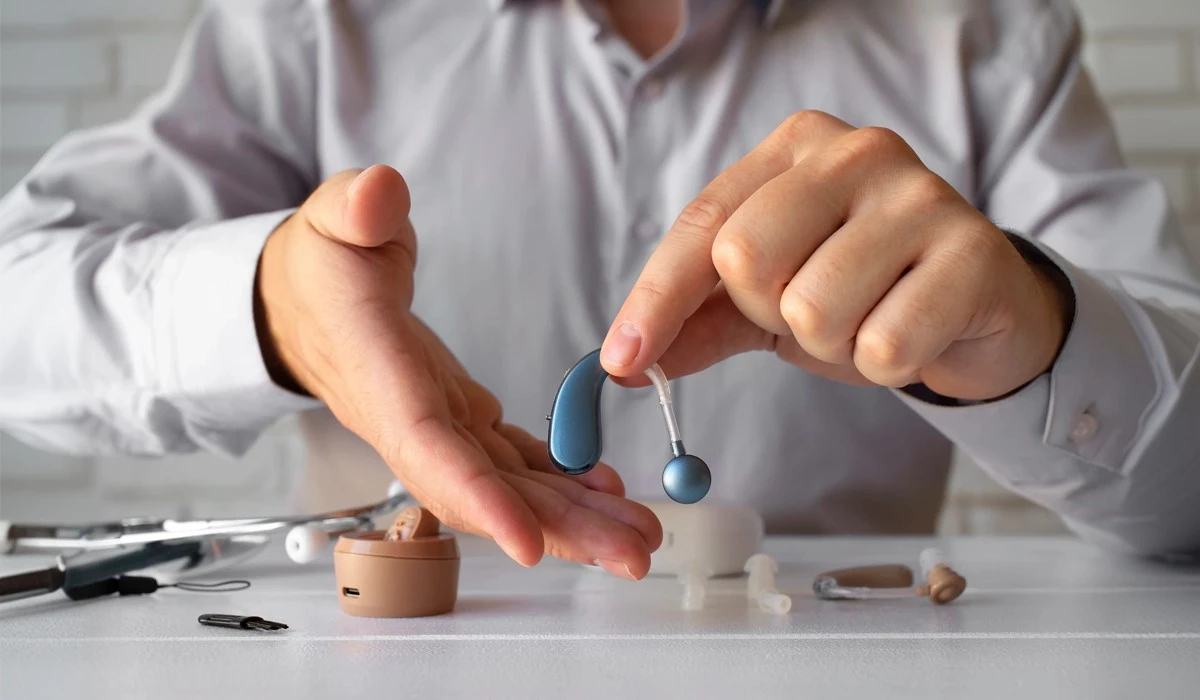
End Sound Shock With Pro Audiology Methods
You finally decide to address your hearing loss. You visit a clinic, pick out high-tech devices, and head home ready to rejoin the conversation. Within hours, your ears throb. A sharp sting develops against your cartilage. Every time you chew, the device shifts and pokes a sensitive spot. You might even find that sudden noises, like the clatter of silverware, feel like a physical blow to your eardrum.
Many people assume their ears are simply "not built" for hearing aids. They tuck the expensive devices into a bedside drawer and give up. This reaction makes sense. No one wants to endure daily physical or acoustic pain. However, the problem rarely lies with the technology itself. Instead, the issue stems from a mismatch between the device and your unique biology.
Professional Audiology provides the tools to bridge this gap. Modern hearing aid fitting procedures have come a long way since the days of bulky vacuum tubes. Today, specialists use precision measurements and medical-grade materials to ensure your devices feel like a natural part of your body. When you understand how these adjustments work, you can better advocate for the comfort you deserve.
Beyond the Box: Why Audiology Prioritizes Physical Comfort
The skin inside your ear canal is incredibly thin and delicate. It sits directly over sensitive cartilage with very little fat for cushioning. A one-size-fits-all approach to hearing health almost always fails because no two ear canals share the same shape. Even a tiny protrusion on a custom shell can cause significant distress.
Expert Audiology oversight prevents these issues before they start. Practitioners view a hearing aid as a medical prosthetic rather than a consumer gadget. They understand that if a device causes pain, you will not wear it. If you do not wear it, your brain loses its ability to process speech clearly. Comfort, therefore, is a clinical necessity for successful treatment.
Specialists look for "hot spots" where the device meets resistance. They check the canal for redness or abrasions. When specialists use high-magnification otoscopes, they see exactly where a mold rubs against the tissue. This level of care ensures that your hearing process begins with a foundation of physical ease.
Perfecting Hearing Aid Fitting Procedures for a Custom Feel
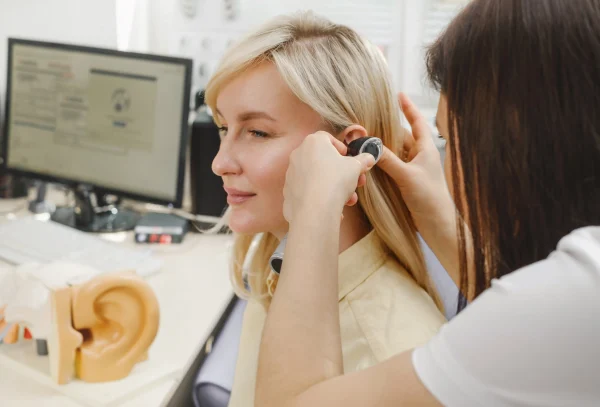
The history of modern hearing health began with Dr. Raymond Carhart after World War II. As noted in research published in PubMed, prescriptive fitting approaches have been a common practice for the past 60 to 70 years. He shifted the field from simple sound amplification to a rehabilitative science. Today, hearing aid fitting procedures involve a complicated series of steps to ensure a perfect physical match.
The process starts with choosing the right chassis and material. Your specialist considers your lifestyle, your manual dexterity, and the specific shape of your ear. They use these factors to decide between generic tips or custom-molded shells.
Earmolds vs. Domes: Finding the Sweet Spot
Many new users start with generic silicone domes. These "open-fit" tips allow air and natural sound to flow into the ear. They work well for mild hearing loss, though Audiology Online notes that verification of open fittings is necessary to evaluate the suitability of this style for the patient. However, they can slip or itch if they do not sit perfectly in the canal.
Custom earmolds offer a more stable alternative. Specialists choose from several medical-grade materials. Acrylic (Methyl Methacrylate) is a hard, durable plastic. It is chemically inert and easy for a specialist to grind down in the clinic. If you feel a sharp point, the audiologist uses a carbide burr to smooth the "hot spot" in seconds.
Medical-grade silicone provides a softer, hypoallergenic option. It is the preferred choice for children and active adults because it grips the skin. This high friction provides superior retention, though some users need a water-based lubricant to prevent the material from "pulling" the skin during insertion. Vinyl (Polyvinyl Chloride) offers a middle ground. It is firm at room temperature but softens at body temperature (98.6°F). This allows the mold to shape itself to your ear as you move throughout the day.
Identifying Pressure Points and Hotspots
Your ear canal changes shape by up to 15% when you speak or chew. This is due to the movement of your jawbone, or mandible. If a specialist takes an ear impression while your mouth is closed, the resulting device may feel too tight when you eat.
To prevent this, many hearing aid fitting procedures include the use of a bite block. This small tool keeps your jaw open while the impression material sets. It captures the ear canal in its widest state. This ensures the device has enough "room" to breathe during daily activities.
A common source of pain is the Crus-Helix, the ridge of cartilage at the top of the ear. Excessive pressure here causes a stinging sensation. If you notice this, your specialist can "step back" or thin that portion of the mold to alleviate the irritation. Communication is key during this phase. Telling your provider exactly where you feel the "pinch" allows them to make microscopic adjustments that yield massive results.
Managing Sound-Induced Discomfort and Over-Amplification
Pain isn't always physical. Sometimes, the sound itself hurts. This often happens because of "loudness recruitment." This condition makes the gap between "I can't hear that" and "That is too loud" very small.
Why do my hearing aids hurt my ears after a few hours? This is usually the result of a physical mismatch where the dome or mold is slightly too large, creating constant pressure on the cartilage. It can also be caused by an "occlusion effect" where your own voice feels like it’s echoing painfully inside your head.
Audiology professionals use prescriptive formulas to prevent this acoustic pain. A study from Audiology Online reports that over 97% of patients show a deviation from the NAL-NL2 targets that exceeds 5 dB in both ears. The report also recommends that traditional verification procedures include input signals for soft, moderate, and loud speech. Another formula, DSL v5.0, focuses on "loudness normalization." It ensures every frequency of speech is audible. While effective, DSL often requires a longer "acclimatization" period because it uses higher initial gain settings.
To protect your ears, the specialist measures your Loudness Discomfort Levels (LDL). They find the "ceiling" of your sound tolerance across different frequencies. They then program the device’s Maximum Power Output (MPO) to sit below this ceiling. This prevents "acoustic shock" from sudden loud noises. If the MPO is set too low, the sound may "clip" or distort, which leads to listening fatigue. Finding the perfect balance ensures you can hear in a noisy restaurant without flinching.
The Science of Precision: Audiology and Real-Ear Measurement (REM)
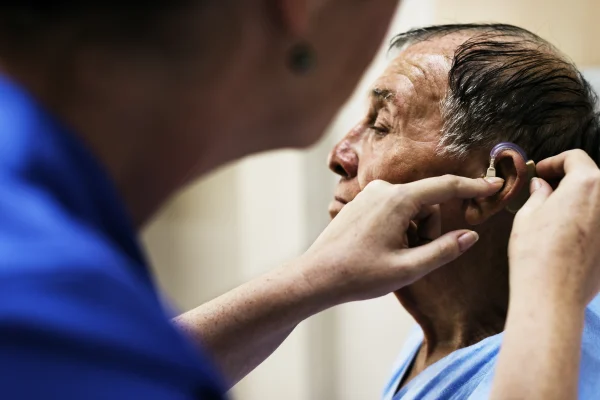
The most critical step in professional Audiology is verification. As stated in a PubMed report, real-ear measurement (REM) is the recommended method for clinical hearing aid verification. An article from Audioscan further suggests that devices verified through real-ear measures typically provide better audibility than quick-fit methods. Research in Hearing Review indicates that manufacturer "first-fit" settings are frequently 7 to 10 dB lower than the desired prescriptive value at higher frequencies. Additionally, as documented by Audiology Online, in situ fitting approaches can deviate from actual prescriptive targets by as much as 20 dB.
Why "Auto-Fit" Software Isn't Enough
Every ear canal has a natural resonance, typically peaking around 2700 Hz. This is how your ear naturally boosts certain sounds. As explained in Frontiers in Neuroscience, real-ear measurements are used to assess the natural resonance of the ear, including the Real-Ear Unaided Response (REUR).
A professional fitting must account for this lost resonance. REM allows the specialist to see the Real-Ear Aided Response (REAR) on a screen. They can see if the device is hitting the prescriptive targets from 250 Hz all the way to 8000 Hz. Research published in PubMed indicates that even when a fit appears correct, deviations from prescriptive targets can occur at high frequencies. Additionally, as noted in the American Academy of Audiology guidelines, the perceived benefit of a hearing aid decreases as the device’s performance deviates further from the target gain. Instead of simply lowering the volume when the sound is too sharp, they adjust specific frequency bands to maintain clarity and remove the discomfort.
Frequency Shaping to Prevent Acoustic Shock
High-frequency sounds like "s," "f," and "th" are essential for understanding speech. However, these same frequencies can make the sound of crinkling paper or clattering dishes feel unbearable.
Audiologists use frequency shaping to solve this. They might soften the gain between 3000 Hz and 4000 Hz. This adjustment stops the "shriek" of high-pitched noises without sacrificing your ability to follow a conversation. This level of customization is only possible through precise hearing aid fitting procedures and real-time verification.
Modifying the Hardware: Venting and Acoustic Adjustments
If you feel like you are talking inside a barrel, you are experiencing the "occlusion effect." When you block the ear canal, bone-conducted vibrations from your own voice get trapped. This can increase sound pressure levels in your ear by 20 decibels or more.
Can hearing aids cause sores in the ear? Yes, if the shell has a rough spot or if the fit is too tight, it can cause friction that leads to small sores or blisters. You should see your provider immediately for a physical examination if you notice any skin breakage.
Specialists manage this through the addition of a vent to the device. A vent is a small tunnel that goes through the earmold or shell. It allows low-frequency energy to escape and fresh air to enter.
Pressure Vents: These tiny openings (0.8mm to 1.0mm) equalize barometric pressure. They prevent the "vacuum" sensation that causes dull earaches.
Parallel Vents: These are the preferred choice. The sound path and the vent path stay separate, which prevents acoustic interference and whistling (feedback).
Vent Diameter: Increasing a vent's size by just 1mm can reduce the "barrel" effect by 4 decibels.
Finding the right vent size is a delicate balance. A vent that is too large will cause the hearing aid to whistle. A vent that is too small will make your own voice sound boomy and unnatural. Professional Audiology involves testing different vent sizes to find the "Goldilocks" zone for your specific hearing loss.
The Acclimatization Phase: Helping Your Brain and Ears Adjust
Comfort also has a neurological component. If you have lived with hearing loss for years, your brain has "unlearned" how to handle certain sounds. When you first put on hearing aids, your auditory cortex may be overwhelmed.
How long does it take for hearing aids to feel comfortable? For most people, it takes between two and four weeks for the skin of the ear canal to desensitize and for the brain to stop "feeling" the device. Consistently wearing them for shorter bursts can help build this tolerance without causing exhaustion.
Clinical studies using EEGs show that your brain actually changes its structure during this time. The "N1" peak, which represents the detection of sound, stabilizes within about two weeks. However, the "P2" peak, which represents the identification and processing of sound, can take up to twelve weeks to reach a steady state.
During this 30-day "critical window," you might "feel" the earmold in your ear constantly. This is normal. Over time, your brain learns to filter out this physical sensation, just as you forget you are wearing a watch or glasses.
When DIY Fixes Fail: Seeking Professional Intervention
You should never try to "tough out" sharp physical pain. If you notice a sore, a blister, or skin breakage, remove the device and call your specialist. Trying to fix a custom shell at home with sandpaper can ruin the device and void your warranty.
Professional Audiology relies on an ongoing relationship. Your first fitting is rarely your last. Most clinics offer a trial period because they expect you to return for adjustments. If you find that the "clatter" of the world is too much, your specialist can use frequency shaping to dull the sharp edges of the environment while keeping speech clear.
Success requires honesty. Tell your provider if you feel "plugged up" or if the device feels like it is "crawling" out of your ear. These are common issues with simple hardware solutions. Whether it is changing a vent size or modifying the shell with a carbide burr, a professional can usually solve physical pain in a single office visit.
Comfort is the Basis of Better Hearing
The goal of Audiology is to reconnect you with the people and sounds you love. This connection is impossible if your hearing aids cause you pain. Physical discomfort and acoustic shock are not "part of the process" that you must endure silently. They are signals that your devices need a more precise fit.
Modern hearing aid fitting procedures offer a path to a seamless experience. When clinicians combine high-grade materials, active jaw impressions, and Real-Ear Measurement, they create a custom solution that disappears into your daily routine. You deserve a device that provides clarity without irritation.
If your current devices are uncomfortable, do not give up on your hearing. Instead, seek out a professional who prioritizes verification and custom modification. When the fit is right, you stop thinking about the technology and start enjoying the conversation. Success in Audiology always starts with your comfort.
Recently Added
Categories
- Arts And Humanities
- Blog
- Business And Management
- Criminology
- Education
- Environment And Conservation
- Farming And Animal Care
- Geopolitics
- Lifestyle And Beauty
- Medicine And Science
- Mental Health
- Nutrition And Diet
- Religion And Spirituality
- Social Care And Health
- Sport And Fitness
- Technology
- Uncategorized
- Videos

