
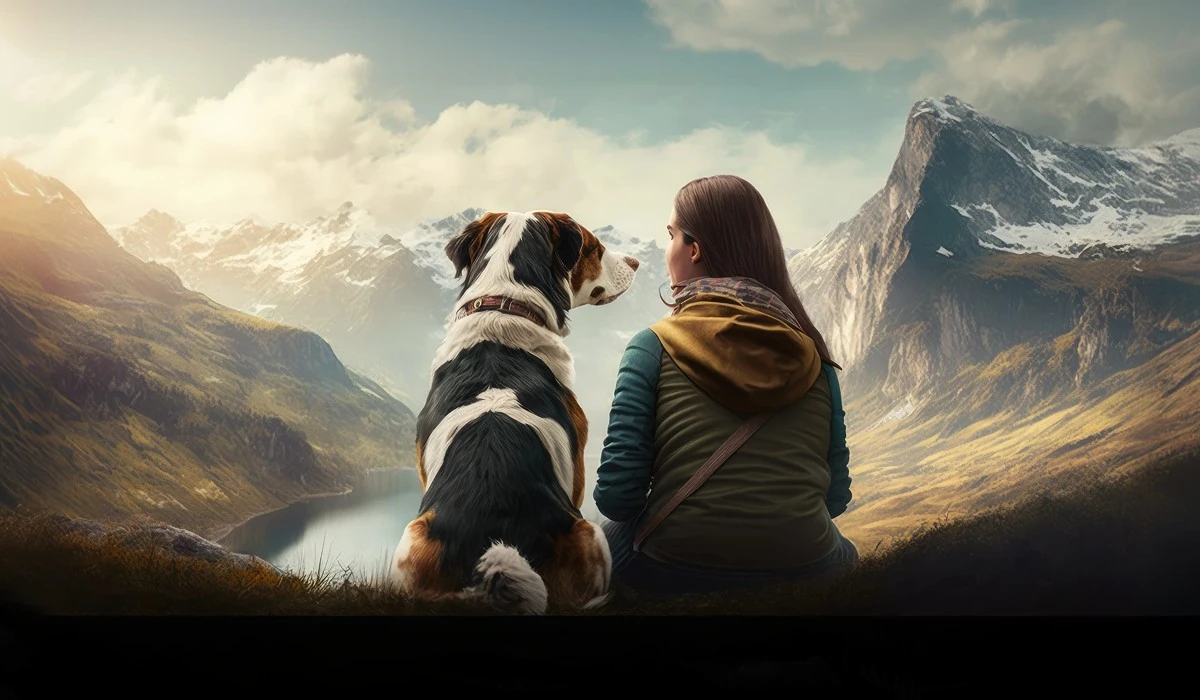
Dog Domestication Timeline: A DNA Revelation
We assume early humans proudly conquered the wild and bent fierce predators to their will. The dirt from an obscure English cave tells a completely different story. Long before farming even existed, nomadic humans and scavenging wolves struck up an accidental survival bargain. One species traded advanced protection; the other provided leftover scraps.
The true dog domestication timeline reveals a massive shift in human history. For decades, researchers stared at fossils sitting in museum drawers, totally unable to tell a large ancient dog from a small gray wolf. Now, advanced ancient dog DNA extraction proves these creatures actively shaped human culture. Ancient hunter-gatherers shared their exact meals with these animals, swapped hunting tactics, and carried them across frozen continents. The origin of man’s best friend holds a deeply buried secret about how our own species survived the harshest periods on Earth.
The Museum Drawer Mistake
Scientists spent almost a century looking right past the oldest known canine companion because bone shapes perfectly camouflage the genetic truth. According to the Natural History Museum (NHM), the story starts with a fossil excavated from Gough's Cave in Somerset, Britain, primarily between 1927 and 1931, with key finds in 1928. For decades, this bone fragment sat quietly in a museum collection. Experts assumed the fragment belonged to a wolf. When experts look strictly at skeletons, a large prehistoric dog perfectly mimics a small wolf. Visual categorization completely fails when analyzing the earliest dog fossils.
About ten years before the major modern breakthrough, an obscure research paper suggested a different identity for the fossil. Most experts instantly rejected the idea. Dr. Lachie Scarsbrook noted widespread initial skepticism regarding this early stone age dog claim. Prior specimens always turned out to be wolves upon closer inspection.
This specific dog domestication timeline remained stuck in a gray area of guesswork for a long time. Then, researchers subjected microscopic bone fragments to rigorous new testing. This ancient jawbone finally ended the agonizing limbo status between wolf and dog. Dr. William Marsh realized this tiny fragment held the ultimate key to partnership origins. The extraction provided empirical proof of a deep bond stretching back roughly 15,000 years.
How DNA Rewrote the Dog Domestication Timeline
To trace the exact moment a predator becomes a pet, scientists must look deep inside the bloodline to expose a highly disputed historical shift. Advanced genetics ended the long ambiguity surrounding the oldest known pets. Dr. William Marsh noticed a specific specimen from the fossil mammal collection held closer genetic ties to modern dogs than to wild wolves. This finding provided the first empirical proof of a distinct canine lineage in ancient Europe. The data entirely shocked the scientific community upon review.
These extracted genetics pushed the evolutionary split back dramatically. Research published in Nature indicates the canine-wolf divergence actually occurred between 20,000 and 40,000 years ago, estimating a range from 40 to 14 ka. Additionally, a study published in the PMC archive notes that dogs and wolves diverged 11,000–16,000 years ago, showing competing timelines in the scientific community. This monumental shift happened during the nomadic hunter-gatherer timeline, preceding the advent of agriculture by thousands of years.
Researchers face major hurdles when studying these prehistoric bloodlines. How did dogs evolve from wolves? Dogs evolved from an extinct lineage of Pleistocene gray wolves that began scavenging around human camps for leftover food. Over hundreds of generations, bolder camp lingerers developed tamer behaviors and shorter muzzles. They eventually morphed from wild Ice Age wolves into dedicated hunting partners.
A Shared European Bloodline
This genetic link quickly spread across the globe. DNA testing connected western European fossils directly to Central Anatolia. This widespread shared ancestry crushed the theory of a single, isolated European domestication event. Dr. Anders Bergström confirmed a massive European dog presence starting at least 14,000 years ago. These specific ancient animals made an enormous genetic contribution to the modern canines sitting in our living rooms today.
The Dietary Clues Left Behind
You can measure the raw intimacy between two different species simply by examining the chewed-up contents of their stomachs. A close look at prehistoric eating habits helps explain the dog domestication timeline. Dr. Selina Brace found astonishing evidence of identical human and dog diets. In Turkey, researchers found clear proof of shared fish consumption among both species. As noted by a Nature article, fossil records back at Gough's Cave in Britain showed humans and canines shared a similar degree of omnivory, eating the exact same ratio of meat and plants.
This dietary alignment reveals an extreme level of daily closeness. A wild carnivore hunts its own specific prey. A canine eating identical meals to a human proves they lived side-by-side around the same fire. They operated as a single, unified hunting pack.
This astonishing ancient companionship directly rivals the deep connection pet owners feel today. These early humans viewed their dogs as highly valued partners. They shared their limited, hard-earned calories with these animals during brutally cold winters.
The Alaskan Salmon Mystery
A wild inland predator eating huge amounts of ocean fish directly exposes heavy human interference in natural hunting habits. Evidence of this ancient hunter-gatherer partnership stretches far beyond Europe. In 2018, researchers found a 12,000-year-old canine tibia at Swan Point, Alaska. This bone belonged to an animal eating massive amounts of salmon protein. Ben Potter noted that wild Alaskan canines strictly hunt land prey. The act of hunting wild salmon is a highly unnatural behavior for these specific predators.
These peculiar dietary habits require a very specific explanation. Why did ancient dogs eat fish? Ancient dogs ate fish because human hunter-gatherers actively caught the fish and fed the scraps directly to their animal companions. This shared food supply proves humans heavily intervened in the animals' daily diets.
François Lanoë pointed out that this behavior strongly mirrors modern domestic dogs relying entirely on humans for their meals. This animal presence completely shifts our understanding of early American migrations from pure speculation to concrete proof. Interestingly, this specific Alaskan specimen totally lacks a genetic connection to known modern dog lineages.

The Indigenous Connection
According to a University of Alaska Fairbanks report, researchers found a secondary 8,100-year-old jawbone at Hollembaek Hill in Alaska in 2023, revealing that genetically, these ancient canines aren’t related to current dogs. The report also notes the Mendas Cha’ag people of the Healy Lake Village Council view these specific animals as highly significant mystic companions. The council officially authorized the genetic testing of the study’s new specimens. Evelynn Combs emphasized the strict necessity of tribal permission and deep respect for the indigenous land inhabitants. She noted this finding proves an unbroken ancient companionship chain.
Shrinking Teeth and the Dog Domestication Timeline
An animal heavily equipped to tear raw meat entirely loses its massive fangs when humans start doing the killing for them. Over hundreds of generations, early dogs went through intense physical mutations. Their overall body sizes varied wildly across different regions. Their muzzles grew noticeably shorter. Most importantly, their teeth shrank significantly. This specific canine evolution represents a direct, biological adaptation to human weapon use.
When human hunters utilized advanced stone tools to take down large prey, the dogs no longer needed massive, bone-crushing teeth to secure a meal. They acted primarily as fast trackers and loud guards. The humans always delivered the final, fatal blow to the prey.
Kelsey Witt Dillon explained this initial loose association offered distinct mutual benefits. Humans gained advanced warning systems and superior protection from other predators. The canines received a highly reliable supply of food and the immense safety of the campfire. The modern pet concept represents a very recent development compared to this gritty, ancient survival pact.
Breeding Dogs, Blending Human Cultures
When tribes moved an animal from one nomadic camp to another, they left a permanent genetic trail that exposes buried interactions between enemy tribes. Around 19,000 years ago, the Magdalenian culture dominated Europe. Eventually, the Epigravettian culture replaced them. Historians historically viewed these two ancient groups as entirely distinct, separated cultures. The expanding dog domestication timeline completely shatters this old assumption.
Dr. William Marsh highlighted the vast geographical distance between the various dog fossil finds. Despite clear human behavioral differences across these distances, the canine DNA revealed astonishing genetic similarities. The dogs living with these different ancient tribes were actually very closely related.
These genetic similarities raise obvious questions about tribal relations. Did ancient human cultures trade dogs? Yes, ancient human groups actively traded and interbred their hunting dogs whenever different nomadic tribes crossed paths. This shared canine DNA serves as absolute proof that supposedly isolated cultures regularly interacted and shared valuable resources.
These dogs acted as living vectors for widespread human cultural interaction. Dr. Marsh noted this heavily contradicts previous assumptions about separate cultures. These animals prove ancient humans possessed a heightened probability of interaction and interbreeding.
Identifying the True Extinct Ancestor
The wild wolf roaming the woods today has absolutely zero direct relation to the domestic creature sleeping on your modern couch. The dog domestication timeline often causes a major point of scientific confusion. Many people assume modern dogs descend directly from the gray wolves currently living in North America or Eurasia. A major 2013 UCLA study led by Robert Wayne proved otherwise. According to a UCLA Newsroom release detailing the study, researchers concluded the true, direct ancestor to all modern dogs derived from ancient wolves that inhabited Europe and are now extinct.
This specific Pleistocene predator died out completely thousands of years ago. The modern wild wolves we see today act merely as distant cousins to our domestic pets. Genetically isolated specimens create even more nuance within the historical record.
Some of the ancient Alaskan bones likely belonged to newly tamed wolves rather than definitive dogs. Kelsey Witt Dillon pointed out that finding a skeleton near a settlement burial often creates a misleading assumption of dog status. Finding out exactly where a tamed wolf stops and a definitive dog begins relies strictly on advanced genetics. Visual skeletal categorization fails completely.
The Pet Economy vs The Dog Domestication Timeline
A gritty relationship built strictly on hunting for raw survival eventually morphed into a massive, multi-billion-dollar modern luxury industry. A direct look at the early dog domestication timeline makes modern ownership statistics look totally absurd. Dr. Silvia Bello noted the advanced social structures of Ice Age hunter-gatherers sparked a very powerful initial connection. This powerful inter-species bond totally altered how humans interact with nature.
Today, that specific shift reaches incredible heights. Between 2015 and 2016, 54% of US households owned a dog. That percentage equals roughly 70 to 80 million dogs living comfortably indoors. Americans spent a staggering $62.75 billion on their pets during that exact same period.
The sheer scale of modern domestication vastly overshadows the gritty reality of prehistoric survival. Yet, Ciara Farrell points out an amazing emotional constant. The non-verbal communication modern pet owners feel today perfectly mirrors the exact same sensation experienced by early hunter-gatherers. Charles Darwin even compared his foxhound and beagle hunting routines to the direct mimicry of that ancient partnership.
An Unbroken Chain of Companionship
The dirt from ancient caves and the ancient dog DNA pulled from shattered jawbones tell a remarkable story of mutual survival. Every golden retriever, bulldog, and stray mutt carries the genetic legacy of an extinct predator that dared to step closer to a human fire. They traded their wild independence for a shared meal, forever altering human history.
The dog domestication timeline strips away the arrogant myth of human dominance. We relied heavily on their keen senses to track prey and guard our vulnerable camps through the harshest freezing climates. They relied completely on our stone weapons and leftover dinner scraps. This ancient alliance remains permanently written in their shortened teeth and shared DNA, proving man and dog forged their way through the Ice Age together.
Recently Added
Categories
- Arts And Humanities
- Blog
- Business And Management
- Criminology
- Education
- Environment And Conservation
- Farming And Animal Care
- Geopolitics
- Lifestyle And Beauty
- Medicine And Science
- Mental Health
- Nutrition And Diet
- Religion And Spirituality
- Social Care And Health
- Sport And Fitness
- Technology
- Uncategorized
- Videos

