
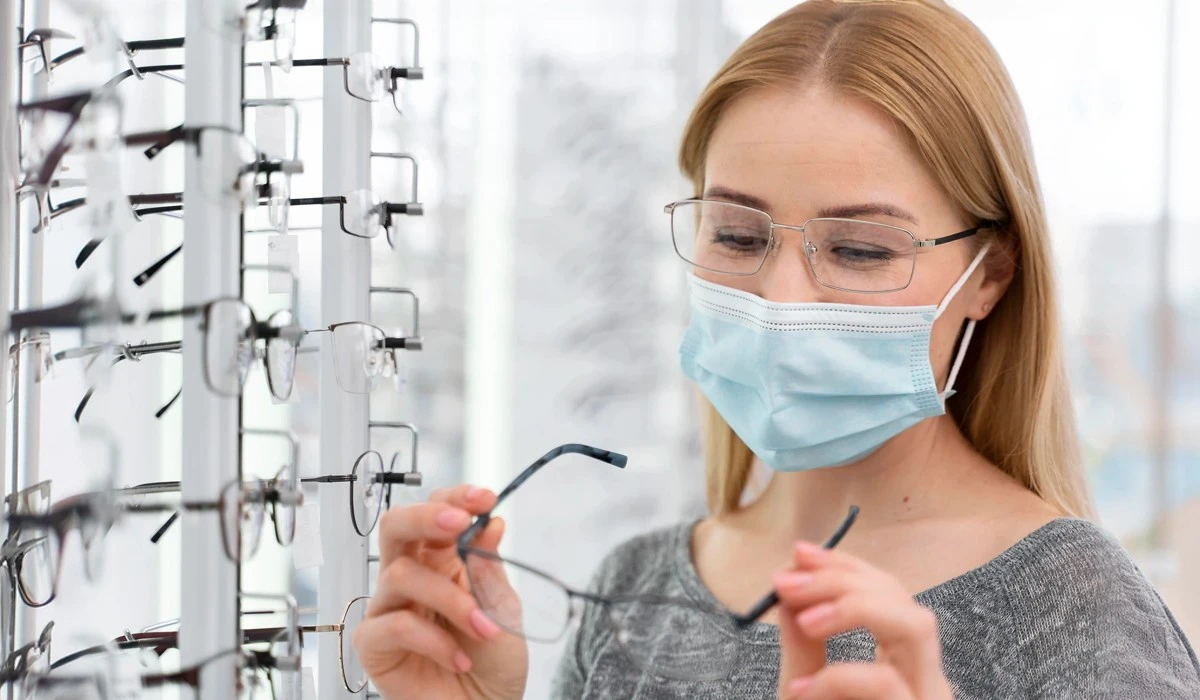
Crooked Glasses: Ophthalmic Dispensing Fits It All
People often attribute sliding frames to loose screws or oily skin, but the actual issue often involves the geometry of the frame. Your glasses fail to stay up because the physical balance between the plastic and your bone structure has collapsed.
Expert Ophthalmic Dispensing fixes this through the realignment of the frame to your unique anatomy. Learning these optical frame adjustment techniques turns a frustrating accessory into a stable medical tool. When your frames sit perfectly, they stay put, and your vision remains sharp. A stable frame ensures your pupils align with the optical center of the lens. This alignment provides the clearest possible sight and prevents eye strain. Professional Ophthalmic Dispensing turns a basic product into a custom-fitted medical device that feels weightless and secure.
The Anatomy of a Slide: Why Ophthalmic Dispensing Matters
Gravity pulls on your lenses every second. According to Optometrists.org, strong optical prescriptions typically require thicker and heavier lenses to bend light effectively, and these lenses add weight that tests the grip of the frame. Over time, the plastic warms against your skin and loses its original shape. This "frame memory" often leads to the temples bowing outward. This bowing reduces the side pressure needed for a secure fit.
Why do my glasses keep sliding down my nose? This usually occurs due to an incorrect bridge fit or a lack of tension behind the ears, which are the primary focal points in Ophthalmic Dispensing.
As explained in an article by Optical Training, the temples should never make contact with the side of the head before reaching the ears. The site also suggests that if this occurs, it creates a constant tendency for the frame to slip forward, resulting in additional pressure on the nose and behind the ears. To stop the slide, a practitioner must maintain balanced contact at only three specific points: the bridge of the nose and the two areas behind each ear. If one point fails, the stability of the system is compromised.
Effective Ophthalmic Dispensing relies on physics. When a lens slides down the nose, the distance between the eye and the lens increases. This change alters the effective power of your prescription. A +10.00D lens sliding just 5mm down the nose changes the power reaching the eye by about 0.50D. This makes your vision blurry and causes headaches.
Precision Nose Pad Calibration
The nose pads carry the bulk of the frame's weight. If they sit at the wrong angle, they poke the skin or slide right off. You must adjust the pads to match the slope of the nasal bone. This requires checking three distinct angles: frontal, splay, and vertical.
Adjusting the Splay Angle
The splay angle refers to the width of the nose as it broadens toward the face. Most noses widen as they move from the bridge toward the cheeks. The pads must be set at 25° to 30° to match this transverse angle. If the splay angle is too narrow, the back edges of the pads dig into the nose. If it is too wide, only the front edges touch. Specialized optical frame adjustment techniques allow the dispenser to flare the pads so they sit flat against the skin.
Managing Frontal and Vertical Angles
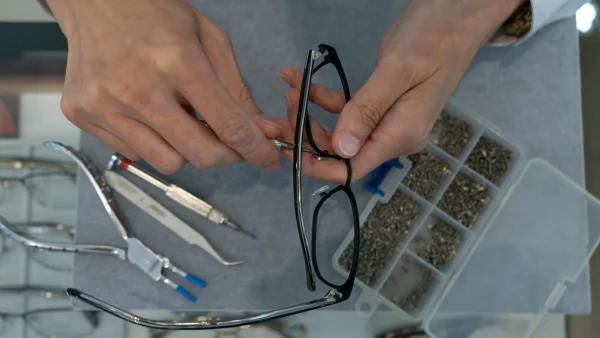
The frontal angle deals with the vertical slope of the nose. The bottom of the nose pad must flare outward at approximately 20°. This ensures the pad follows the natural curve of the nasal bone. Meanwhile, the vertical angle must sit between 10° and 15°. This angle ensures the weight is distributed vertically across the pad surface.
Proper Ophthalmic Dispensing also considers the material of the pad. Medical-grade silicone pads have a higher coefficient of friction than standard PVC. Switching to silicone often stops a slide immediately, as the material adds a "sticky" grip against oily skin. You should also check the DBL, or Distance Between Lenses. A frame with a DBL larger than the nasal bridge will always slide because the pads cannot reach the bone.
The Role of Temple Tension in Ophthalmic Dispensing
Temples do more than just sit on your ears. They provide the lateral tension that keeps the bridge from moving. This tension must be firm but not painful. If the temples are too loose, the frame falls. If they are too tight, they cause "compression headaches" by squeezing the superficial temporal artery.
How can I make my glasses tighter? Gently curving the arms inward increases the temple "wrap," which is an optical frame adjustment technique that ensures the frame grips the head securely.
Parallelism is vital here. When you look at the frames from the side, the temples must be perfectly parallel. If one temple angles higher than the other, the frame front tilts. This creates an uneven "one-sided slide." Proper Ophthalmic Dispensing requires balancing this inward pressure, also called mastoid pressure, against the side of the head.
Perfecting the Bend: The Ear-Point Connection
The most common fitting error happens at the ear. Many people think the bend should happen right at the top of the ear, but that placement causes the glasses to pop forward during facial movements. The bend must be precise to lock the frame in place.
Locating the Bend Point
Professional guidelines from The Vision Council suggest that the temple bend at the top of the ear should be made approximately one-quarter of an inch behind the ear. This positioning ensures the glasses do not pop forward and prevents the frame from sliding freely. Bending the temple too early pinches the ear and pushes the glasses down the nose.
The Mastoid Wrap
The area behind the ear is not a simple flat surface. Research from Kenhub describes the mastoid process as a pyramidal bony projection of the temporal bone located at the back of the skull. Skilled dispensers use heat to shape the temple tip to follow this bone. This distributes the weight of the glasses over a larger area. Skilled dispensers use optical frame adjustment techniques to shape the temple tip so it "hugs" the bone without pressing on sensitive cartilage.
Adjusting Pantoscopic Tilt for Stability
Pantoscopic tilt is the vertical angle of the frame front relative to your face. Ideally, the bottom of the frame should tilt slightly toward your cheeks. As noted in a report by The Vision Council, a stable frame usually requires a pantoscopic angle of 8 to 12 degrees. The organization explains that this tilt is intended for structural stability rather than just appearance.
If a frame sits too flat, it becomes top-heavy, causing it to teeter forward and encouraging the nose pads to lose their grip. Adjusting the hinges to "drop the temples" increases this tilt through specific optical techniques.
Interestingly, Ophthalmic Dispensing professionals use Martin’s Formula to calculate this tilt. For every 2 degrees of pantoscopic tilt, you must lower the optical center of the lens 1mm below the pupil. This prevents induced astigmatism and ensures the wearer looks through the clearest part of the lens.
Correcting Frame Skew and Alignment
Sometimes a frame slides because it is physically twisted. This is often called "X-ing" or a bridge skew. If the lenses are twisted in opposite directions, the nose pads will never sit flush. This situation keeps the frame from gripping the nose correctly.
Why do my glasses look crooked on my face? This is often caused by asymmetrical ears or a bent temple hinge, and both issues are corrected through standard Ophthalmic Dispensing protocols.
Squaring the Frame
You must ensure the frame sits level on the face to prevent a one-sided slide. About 70% of people have asymmetrical ear heights. This means you cannot just make the glasses symmetrical on a table. Adjusting the temple bend points at different lengths for each side keeps the bridge level on the nose and stops the frame from "walking" down one side of the face.
Bench Alignment Standards
Before the glasses ever touch a patient's face, they must pass a bench alignment test. This involves a "Four-Point Touch" diagnostic. You place the frame upside down on a flat surface. Both eye-wires and both temple tips must touch the surface at the same time. If one tip hangs in the air, the frame is "propeller-ed" and will slide during use.
Advanced Material Considerations in Ophthalmic Dispensing
Different materials react differently to adjustment. You cannot treat a titanium frame the same way you treat an acetate one. Knowing the limits of the material is a mark of professional Ophthalmic Dispensing.
Using Heat Effectively
Cellulose acetate, or Zyl, requires specific heat levels. You must warm these frames to between 130°F and 150°F. If you adjust them while cold, you create internal stress. This stress causes the material to eventually "snap back" to its sliding position. In contrast, Optyl is a thermo-elastic resin. It has a memory that returns to its factory shape if you reheat it. You must hold the adjustment in place until the material cools completely to lock in the fit.
Cold-Adjusting Metals
Titanium is incredibly strong but has low ductility. It is prone to snapping at the solder points if you bend it too sharply. Professional optical frame adjustment techniques for titanium require double-nylon jaw pliers. These tools support the bridge while you adjust the nose pad arms. Stainless steel is more flexible but still requires precision to avoid metal fatigue. Gaining proficiency with these materials ensures the frame stays adjusted for months rather than days.
The Art and Science of a Perfect Fit
Sliding glasses indicate a failed fit rather than just a nuisance. However, these issues are entirely preventable. Applying the right optical frame adjustment techniques allows for the correction of even the heaviest frames by evaluating the splay of the nose pads, the tension of the temples, and the precision of the ear bend.
Every adjustment matters. Moving a bend by two millimeters or increasing a tilt by three degrees can change everything. This precision ensures the wearer stays comfortable and sees clearly. Consistency in these methods builds trust. Patients return when their glasses feel like a natural part of their face rather than a weight they have to manage.
Expert Ophthalmic Dispensing remains the most significant ability in the optical industry. It combines the laws of physics with human anatomy. When these fixes are performed effectively, you provide a service that no online shop can match. You provide comfort, clarity, and the confidence that a frame will stay exactly where it belongs.
Recently Added
Categories
- Arts And Humanities
- Blog
- Business And Management
- Criminology
- Education
- Environment And Conservation
- Farming And Animal Care
- Geopolitics
- Lifestyle And Beauty
- Medicine And Science
- Mental Health
- Nutrition And Diet
- Religion And Spirituality
- Social Care And Health
- Sport And Fitness
- Technology
- Uncategorized
- Videos

