
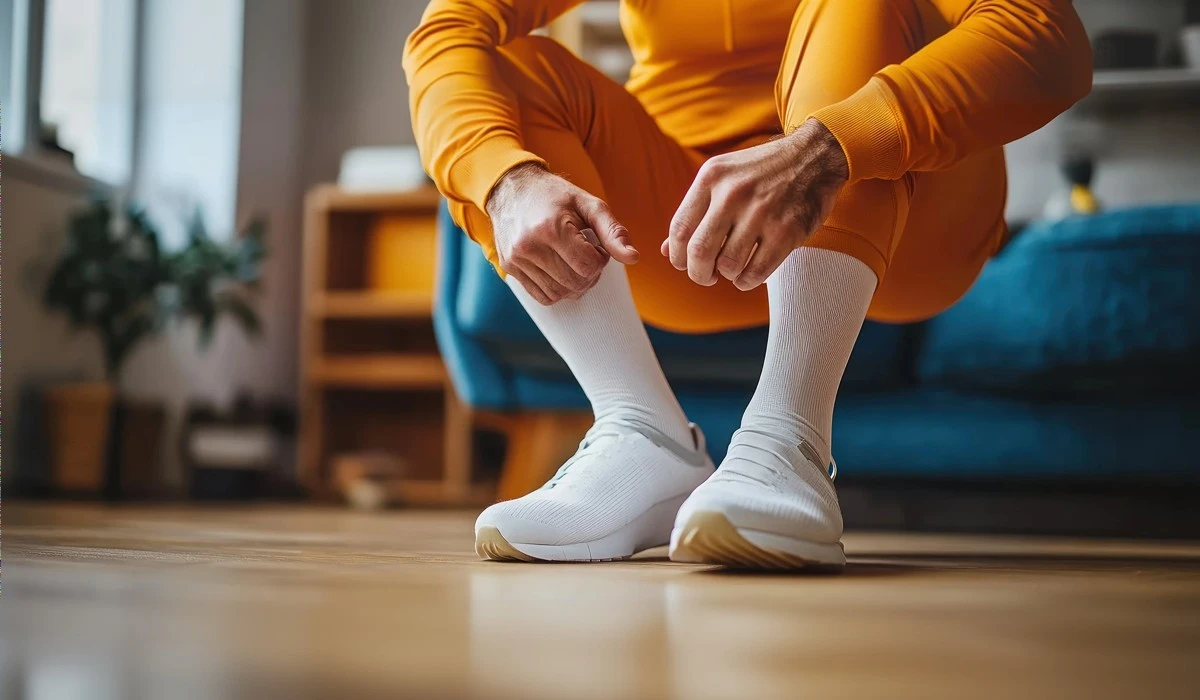
Compression Socks for Flying: Do They Work?
According to research published by the National Center for Biotechnology Information, gravity forces blood into the lowest points of the human body during a long trip. Sitting completely still at 30,000 feet causes venous stasis, allowing that stagnant fluid to pool against the vein walls. Travelers try to solve this physical trap as they slide into tight hosiery. A massive digital trend now convinces millions of passengers to board their flights wearing these garments.
Yet, this simple ward against medical disaster creates a totally different physical hazard for the flight crew working in the aisles. Choosing the wrong color of compression socks for flying turns a resting passenger into a serious tripwire. As highlighted by injury reports in People Magazine and Business Insider, cabin attendants push heavy carts of boiling water through dim spaces, unable to spot dark-clad feet jutting into the walkway. The rush to prevent a microscopic health risk directly endangers the entire cabin.
The Aisle Hazard of Compression Socks for Flying
Wearing black garments on a dark airplane floor turns a sleeping traveler’s foot into a sudden obstacle.
Kris Major spent somewhere between 17 and 25 years working as British Airways cabin crew. Throughout his extensive aviation career, he watches travelers repeatedly prioritize personal style over basic cabin safety. As explained by AFAR Magazine, long-haul flights plunge into darkness during overnight segments to help people fall asleep earlier. During this blackout period, fliers frequently slip off their shoes. They stretch their tired legs out into the narrow public pathways.
Dim overnight illumination completely camouflages dark hosiery against the shadowy airplane carpet. The flight staff realize the danger only at the final possible second. Attendants move rapidly through these extremely tight spaces to serve hundreds of people. They navigate the narrow aisles while pushing heavy metal trolleys loaded with scalding liquids, hot meals, and trash.
Poor floor-level sightlines turn an outstretched, black-socked foot into an impending disaster. A high-speed trolley collision with an unlit foot causes agonizing pain for the resting passenger. Worse, it creates a severe tripping hazard for the fast-moving crew. Major insists that travelers must keep their feet out of the aisle.
You can absolutely walk around the cabin without shoes, provided you wear clean, brightly colored compression socks for flying and maintain odor-free feet. Neon or white fabrics provide a clear, instant visual warning to the staff.
Anatomy of Economy Class Syndrome
Cramped seating bends the human leg at harsh angles and physically traps blood in the lower extremities.
The direct connection between deep vein thrombosis (DVT) and cramped long-haul air travel first surfaced in medical records back in 1954. A 54-year-old doctor developed a highly dangerous blood clot after enduring a grueling 14-hour flight. Medical researchers eventually labeled this specific travel-related condition "economy class syndrome."
The physical restriction of a standard airplane seat forces the circulatory system to work against intense pressure. Gravity continually pulls fluids downward toward the cabin floor. Your heart must pump blood forcefully against this downward drag to return it from your toes back to your chest. According to reviews by The Blood Project, passengers face the absolute peak danger for developing blood clots on ultra-long flights lasting eight to 10 hours or more, as the risk multiplies with the duration of travel.
People constantly wonder about the specific timing rules for these garments. How long should a flight be to wear compression socks? You gain significant risk reduction for DVT and dangerous swelling on flights lasting at least four hours. These specialized medical garments actively intervene in this physical struggle against gravity.
The tight fabric applies precise, graduated pressure directly at the ankle joint. This intense squeezing force physically pushes the stagnant blood upward and assists your overall circulation. Medical experts advise placing the top edge of the garment just below the knee for optimal fluid movement.
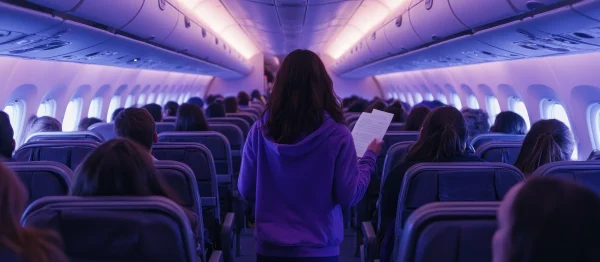
The Athletic Disadvantage at High Altitudes
Peak cardiovascular fitness surprisingly makes runners highly vulnerable to vascular blockages during total immobility.
Most people assume high levels of regular exercise automatically protect them from travel-related health emergencies. The biological reality proves the exact opposite for dedicated endurance athletes. Long-distance runners naturally develop exceptionally large blood vessels. These massive veins exist to rapidly deliver high volumes of oxygen during intense physical exertion.
These expanded biological pathways become a distinct liability inside a cramped airplane cabin. Prolonged seated immobility removes the normal calf muscle flexes that forcefully pump blood through the lower body. Without those active muscle contractions, the runner's enlarged vessels allow massive amounts of fluid to simply stagnate in the lower legs.
This heavy fluid pooling drastically increases the chance of a severe clot forming mid-flight. Healthy ambulatory individuals face very different risks compared to athletes. Frequent flyers with low baseline risks often receive conflicting advice from medical professionals. The decision to wear specialized compression socks for flying often depends entirely on personal physical conditioning rather than general assumptions about health.
The Viral Explosion of Compression Socks for Flying
Social media algorithms transform basic medical supplies into mandatory travel accessories for millions of healthy young people.
Search volumes for compression socks for flying surged by a staggering 140% over a single recent month. Young travelers increasingly view these tight garments as absolutely essential gear for any airborne trip. The internet actively drives modern travel behavior as it turns medical tools into fashion statements.
TikTok creators now command massive global audiences when they showcase flight compression hosiery. One wildly viral video features a young woman successfully wearing the tight socks on a commercial plane. That specific post quickly captured 5 million total views and generated 444,000 likes. A second highly popular video highlighting the exact same flight hosiery trend hit 4.1 million views and racked up 430,000 likes.
This digital explosion massively altered passenger habits across the globe. Millions of perfectly healthy travelers board planes fully prepared to fight off rare vascular blockages. The extreme popularity creates fresh challenges for airlines. Many fliers purchase the tight garments without understanding proper medical sizing or material construction. They simply copy the visual aesthetics promoted by online influencers.
The Tourniquet Trap and Proper Placement
According to guidance from WebMD, folding extra fabric down your calf creates a tourniquet effect that immediately restricts blood flow and causes the exact problem the garment intends to prevent.
Proper sizing entirely determines the ultimate effectiveness of specialized pressure hosiery. Passengers regularly purchase incorrect sizes and attempt to adjust the restrictive fit mid-flight. Should compression socks be knee high or thigh high? Medical professionals strongly prefer knee-high versions because thigh-high garments easily roll down and create a dangerous tourniquet effect around the leg.
Folding extra fabric over itself immediately restricts blood flow. The rolled material pinches the soft tissue and stops upward circulation entirely. You must ensure the fabric sits smoothly and securely just below the knee joint. Improper placement completely reverses the intended medical benefit of the garment.
The tightness at the ankle pushes the blood upward, but a rolled top traps that same blood in the calf. This creates isolated pressure zones that actively harm your vascular system. A simple wardrobe malfunction inside an airplane seat transforms a safety device into a physical liability.
The Statistical Reality of Blood Clots
Medical researchers struggle to accurately measure a life-threatening condition that rarely strikes the average traveler.
The American Heart Association reported 666,000 total DVT hospital admissions alongside 432,000 pulmonary embolism (PE) admissions during the 2020 calendar year. Total venous thromboembolism (VTE) fatalities reached approximately 81,000 throughout 2021. Air travel aggressively multiplies your VTE probability by 1.5 to 4 times, according to an extensive 2021 Cochrane Database review.
Post-flight DVT odds hit precisely 1 in 4,600 within four weeks of completing a four-hour flight. Pregnant flyers carry a 0.07% risk of clots compared to a 0.05% risk for non-flying pregnant women. Severe PE frequency remains incredibly rare, registering just 4.8 cases per million passengers on flights exceeding 12 hours.
The 2021 Cochrane review carefully examined 2,918 subjects across 12 separate clinical trials. The final data definitively proves the hosiery successfully reduces symptomless DVT instances. However, the available trials lack sufficient data regarding mortality rates or symptomatic DVT reduction. The numbers paint a highly complicated picture of actual passenger risk. Medical experts struggle to isolate the precise danger level for the average vacationer.
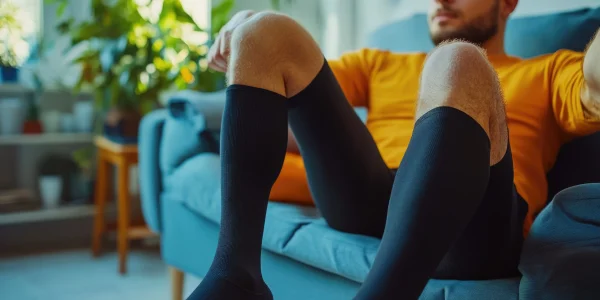
Conflicting Medical Advice for Travelers
Leading doctors personally use preventative garments while simultaneously telling low-risk patients the practice offers minimal proven benefits.
The global medical community maintains a highly ambivalent stance regarding universal hosiery usage. Dr. Joshua Beckman observes absolutely minimal benefit for healthy ambulatory individuals. He officially labels their usage acceptable but points out that the exact medical benefit for flyers remains currently unquantifiable.
The microscopic baseline danger level presents a unique statistical challenge. Researchers require massive sample sizes to establish definitive proof of widespread efficacy. Conversely, Dr. Eri Fukaya wears them daily during her own life. She strongly advocates for specialized, customized pressure variants based on individual body types.
The American Society of Hematology (ASH) Guidelines take a firm, restrictive stance on the matter. According to their published guidelines, they recommend preventative hosiery strictly for high-risk passengers embarking on lengthy flights exceeding four hours. The prominent medical organization deems the tight garments completely unnecessary for low-risk individuals without vulnerability factors completing short trips. This direct contradiction leaves ordinary travelers confused about their actual physical requirements before boarding a flight.
Bare Feet and Evacuation Realities
Taking off your shoes transforms a minor emergency into a physical trap. Your cabin footwear choices introduce entirely different physical hazards inside the airplane. Former cabin crew member Tony Kuna aggressively warns against walking around the airplane in bare feet, flip flops, or high heels. Emergency evacuation pathways quickly fill with jagged floor debris and highly hazardous materials. Inadequate footwear physically impedes your immediate escape during a crisis.
Kuna views any total barefoot state as a severe safety risk. Meanwhile, Kris Major accepts shoeless passengers as long as they wear bright socks. Travelers possess multiple physical alternative methods to actively maintain their circulation without relying on specialized gear.
Is it safe to take your shoes off on a plane? Taking off your shoes is safe during normal flight to perform basic foot exercises, though you must put them back on for landing and emergencies. You can execute regular walking breaks and drink abundant water. Simple calf muscle flexes, ankle rotations, and toe wiggles successfully keep your blood moving against gravity.
The Final Verdict on Flight Hosiery
The digital rush to buy compression socks for flying highlights a deep consumer anxiety about long-haul travel. Passengers desperately want control over the physical toll of flying across the world. The tight fabric provides genuine relief for high-risk travelers and serious endurance athletes facing long hours of immobility.
Yet the average healthy person faces remarkably low odds of developing a severe clot. You can often achieve the exact same circulatory benefits when you drink water and walk the narrow aisles. If you do choose to wear the popular garments, prioritize bright colors over stylish black. A neon ankle keeps your blood flowing properly while actively saving the fast-moving flight crew from a disastrous mid-flight collision.
Recently Added
Categories
- Arts And Humanities
- Blog
- Business And Management
- Criminology
- Education
- Environment And Conservation
- Farming And Animal Care
- Geopolitics
- Lifestyle And Beauty
- Medicine And Science
- Mental Health
- Nutrition And Diet
- Religion And Spirituality
- Social Care And Health
- Sport And Fitness
- Technology
- Uncategorized
- Videos

