
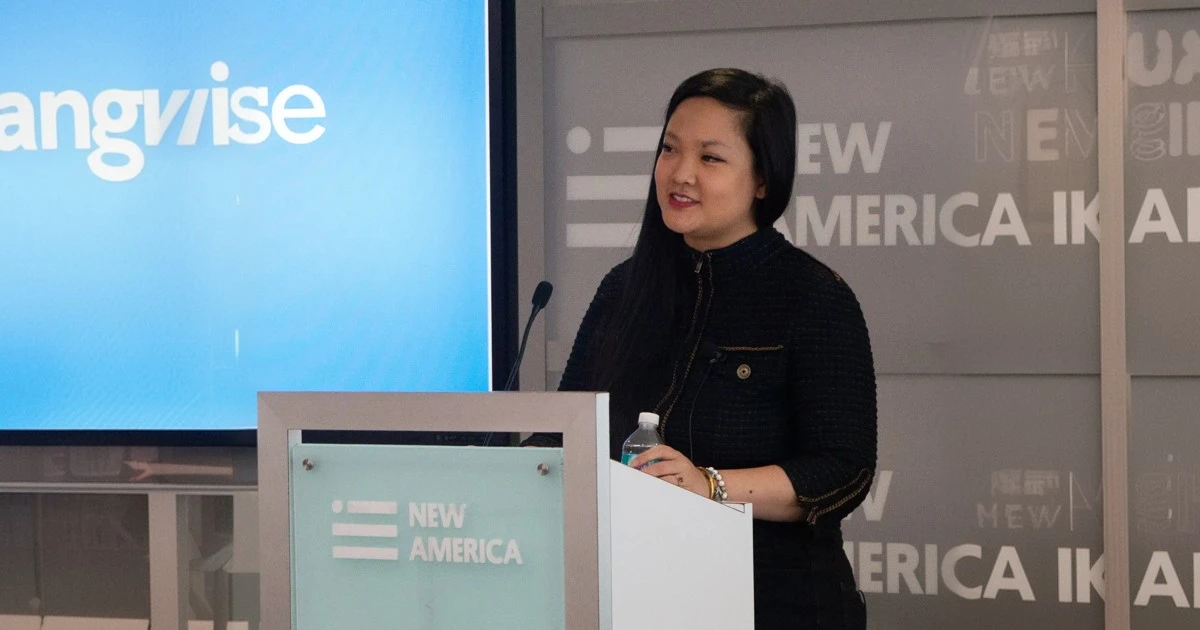
Image by New America, CC BY 2.0
Amanda Nguyen Journey To Space And Survival
When a survivor changes the legal environment of a superpower and then reaches for the stars, the world often responds by trying to erase the very merits that put her there. Amanda Nguyen faces this reality every day. She moved from the halls of Harvard to the edge of space, yet her story reveals a harsh truth about how society treats women who achieve too much. We see her as a symbol, but behind the awards and the accolades lies a story of intense personal struggle and a fight against a wave of digital vitriol.
Her life demonstrates how personal trauma can drive global change while simultaneously making the person behind that change a target for public resentment. Amanda Nguyen has spent years building a basis for justice, only to find that the higher she climbs, the more the public attempts to pull her back down. This tension defines her career, her flight into space, and her recent recovery from a serious psychological collapse.
The Basis of Rise and the Fight for Rights
Success in advocacy often creates a target on the advocate’s back that grows larger with every legislative victory. According to a profile by Blue Origin, Amanda Nguyen began her professional path with research roles at NASA in 2011 and 2013. These roles established her career foundations in the scientific community long before she became a household name. The Guardian reports that while attending Harvard University, she survived a sexual assault, an experience that revealed a broken system that forced survivors to navigate a maze of expiring evidence and confusing paperwork. Who is Amanda Nguyen? She is a social entrepreneur and civil rights activist who founded the non-governmental organization Rise to protect the rights of sexual assault survivors. Her work led to the unanimous passage of the Sexual Assault Survivors' Rights Act in 2016.
Time Magazine notes that she founded Rise in November 2014 with a clear mission to codify survivor rights into federal law. She helped pass 55 unanimous laws after finding her own rape kit was at risk of destruction. The organization operates as a volunteer-run entity, focusing on a 50-state bill of rights for survivors. People often overlook the sheer scale of the labor required to move a bill through Congress. Nguyen and her team spent years lobbying and organizing. Their efforts culminated in October 2016 when the President signed the Sexual Assault Survivors' Rights Act into law. This victory established a federal standard for the treatment of survivors and the preservation of evidence.
What is the Sexual Assault Survivors' Rights Act?
This federal law guarantees survivors the right to have their rape kits preserved for the duration of the statute of limitations and the right to be notified of the kits' status. The success of Rise brought international recognition. In 2019, the committee nominated Amanda Nguyen for the Nobel Peace Prize. This nomination validated her approach to civil rights and highlighted the global need for survivor-centric legislation. As reported by Time, she continued her advocacy in 2021 when a viral video she posted regarding violence against Asian Americans sparked a national conversation. This video initiated a movement that addressed rising hate crimes and systemic violence within the AAPI community. The publication also named her a Woman of the Year in 2022. Despite these honors, the public attention began to shift from her scientific and legal achievements to her presence in the digital space.
The Blue Origin NS-31 Mission and the Edge of Space
Reaching the edge of the atmosphere often forces a person to face the gravity of their own trauma upon landing. On April 14, 2025, Amanda Nguyen boarded the Blue Origin NS-31 flight. This mission marked a significant historical milestone as she became the first Vietnamese woman to reach space. According to The Guardian, the flight carried six women, making it the first all-female launch since 1963. This sub-orbital flight lasted exactly 11 minutes, but those minutes carried the weight of decades of history. The launch occurred on the 50th anniversary of the end of the US-Vietnam War, adding a layer of deep cultural significance to the event.
The mission utilized the New Shepard vehicle, a fully automated spacecraft developed by Jeff Bezos’s company, Blue Origin. Because the vehicle is fully automated, it requires no pilot on board. This technical specification often leads the public to underestimate the physical and mental demands of the flight.
How did Amanda Nguyen go to space?
She flew as a citizen astronaut aboard a Blue Origin rocket, representing both her refugee heritage and her dedication to scientific research. Blue Origin confirms that during the flight, Nguyen focused on specific research objectives, including microgravity wound dressing and menstruation studies. She also carried wearable ultrasound patches to gather data on human physiology in space.
Nguyen did not travel alone in a symbolic sense. VNExpress reports that she carried 169 lotus seeds, representing a specific agricultural experiment designed to test the viability of these plants in space. The lotus holds great cultural significance in Vietnam, and its presence on the mission linked the earth to the stars. While the mission lasted only a fraction of an hour, the preparation and the subsequent fallout spanned months. The shift from a human rights advocate to a space explorer created a friction point in the public eye. Many people struggled to reconcile her history of serious legal work with the perceived luxury of a private space flight.
From Refugee Boats to Interstellar Vessels
Family history often repeats itself in the shape of the transport used to escape a limited life. Amanda Nguyen’s parents fled Saigon as refugees, traveling across the ocean on crowded boats to find safety in California. She grew up with the stories of this maritime escape, which shaped her understanding of survival and exploration. During her flight, she noted the evolution of her family’s path. Her parents escaped on boats; she explored the universe on a spacecraft. This shift from maritime vessels to interstellar ships represents a massive leap in a single generation.
The timing of the flight on the 50th anniversary of the US-Vietnam War served as a powerful reminder of this history. Nguyen viewed the mission as a way to change the sky for her family. During the moon landing, her family saw bombs falling from the sky in Vietnam.
From Refugee Roots to Public Reckoning
Now, her family watches their daughter fly into that same sky as a pioneer. This refugee symbolism provides a counter-narrative to the idea of space flight as a mere playground for the wealthy. It connects the act of leaving Earth to the act of seeking a better life, a theme central to the refugee experience.
However, the public did not always see this connection. The mission cost and the ecological damage associated with rocket launches fueled public resentment. Critics often ignored her family history and focused instead on the financial aspect of the flight. This environmental and financial critique created a gap between Nguyen’s personal intentions and the public’s perception of her as a celebrity. She carried the promises she made to other survivors into the capsule, but the digital world focused on the price tag of the seat.
The Psychological Price of Public Visibility
Heavy public achievements frequently strip away a person's private safety net before they even realize they are falling. After the exhilaration of the launch, Amanda Nguyen experienced a serious psychological collapse. From April 15 to April 21, 2025, she spent seven days in confinement in a room in Texas. This post-flight period stripped her of the ability to process the shift back to Earth. The sudden shift from the weightlessness of space to the heavy pressure of public scrutiny overwhelmed her mental capacity.
In May 2025, the situation worsened. During a leadership call with Blue Origin, Nguyen entered a non-verbal state. She could not speak, as the severe emotional distress had effectively shut down her ability to communicate. This state illustrated the serious effect of the "misogynistic avalanche" she faced online. She described this period as being submerged by a sexist tidal wave that drowned out her lifelong dedication to science and human rights.
Why did Amanda Nguyen face online harassment?
The harassment stemmed from a combination of public resentment toward high-cost space tourism and targeted sexism directed at a prominent woman of color. During a conversation with Gayle King, Nguyen forecasted that the emotional shadow of this experience could potentially last multiple years. She noted that human evolution has not kept pace with modern digital hostility. The scale of the aggression she faced—reaching billions of hostile impressions—exceeded what any individual is built to handle. She found herself resurrecting survival skills from her past trauma to navigate this new crisis. The strength she gained from her 2013 assault provided the only tool she had to survive the aftermath of her 2025 space flight.
Navigating the Misogynistic Avalanche Online
Internet platforms amplify vitriol faster than they celebrate milestones, creating a wall of noise that drowns out scientific merit. A report by The Guardian describes the staggering online reach of the harassment against Amanda Nguyen. Billions of hostile impressions flooded social media, often labeling the mission a "cringe fest." This ridicule frequently targeted the behavior of the crew and the perceived vanity of the project. People used the mission as a reason to erase her academic and scientific merit, focusing instead on gender-based vitriol.
This digital aggression hurts feelings and actively erases history. Nguyen’s work with the Sexual Assault Survivors' Rights Act and her years as a NASA intern became footnotes in a narrative dominated by social media memes. The public perception of the mission as a "celebrity-packed" expense ignored the actual research being conducted on board. When the internet decides a person is "cringe," it often ignores the substance of their work in favor of a simplified, negative caricature.
Ironically, the same tools that allowed Nguyen to spark a movement for AAPI rights in 2021 now served as the weapons for her destruction. The viral nature of social media creates a double-edged sword. While it can mobilize millions for justice, it can also mobilize millions for harassment. Nguyen found that her mental capacity could not compete with the sheer volume of modern hostility. She struggled to maintain her identity as a scientist and advocate while the digital world tried to reduce her to a punchline.
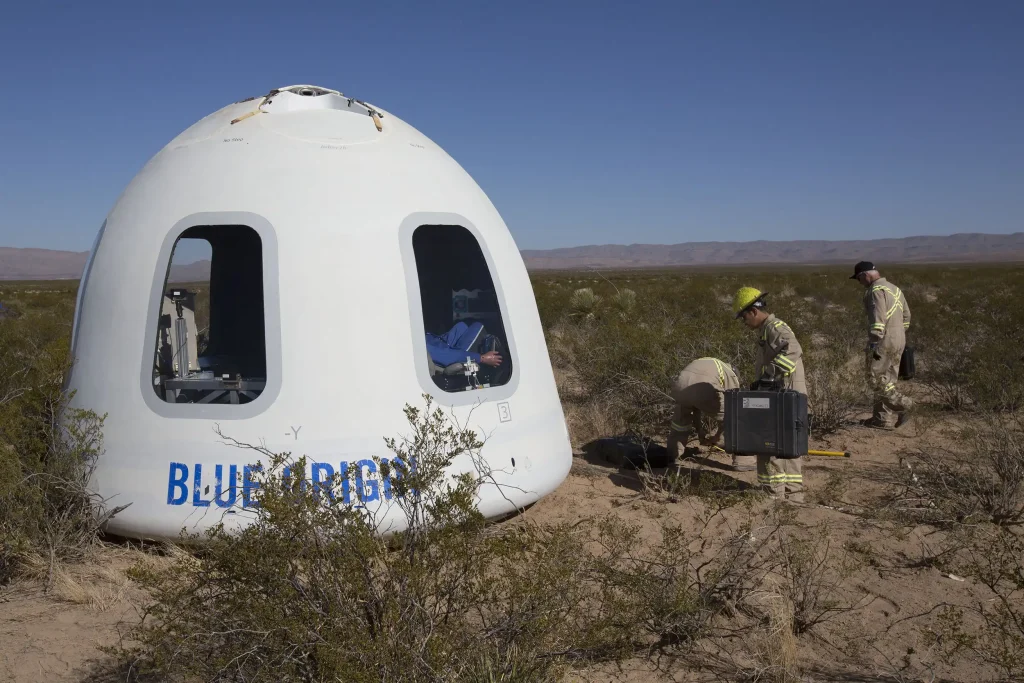
Image Credit - Wikimedia Commons
Science and Research Aboard New Shepard
Placing research tools in a celebrity-packed capsule often causes the public to ignore the data in favor of the drama. The NS-31 mission provided a platform for critical biological and physiological research instead of acting as a simple sightseeing tour. Despite the noise, Amanda Nguyen remained committed to the scientific inquiry that first drew her to NASA. The crew tested microgravity wound dressings, which could have significant implications for long-term space travel and medical care in remote areas on Earth.
Nguyen and the all-female crew conducted these studies to provide essential data for future female astronauts, addressing a long-overlooked area of aerospace medicine: menstruation studies. For decades, space research focused primarily on male physiology. They also utilized wearable ultrasound patches to monitor their health in real-time. This research serves as a serious contribution to the field of space medicine instead of just acting as headlines.
The 169 lotus seeds she carried also served a dual purpose. Beyond their cultural symbolism, they were part of an agricultural experiment to see how space radiation and microgravity affect seed viability. This type of research provides an essential base for future efforts to grow food in space. Nguyen’s focus on these projects shows her dedication to the "scientific inquiry" she cited as a lifelong passion. She attempted to balance the celebrity perception of the flight with the reality of the work being done on the ship.
Saving Five: The Memoir of Survival
Writing down a trauma usually forces the author to relive the very events they intended to leave behind. As noted in The Guardian, in March 2025, just before her flight, Amanda Nguyen published her memoir, Saving Five. AbeBooks listings confirm that the book quickly reached New York Times Best Seller status, providing a detailed look at her story from a survivor to a space traveler. The title refers to the five people who saved her life or changed her perspective during her darkest moments. The memoir served as a way for her to reclaim her story before the world tried to rewrite it.
However, the publication of the book and the timing of the flight created a collision of public and private worlds. The book details her sexual assault at Harvard and the subsequent fight for the Sexual Assault Survivors' Rights Act. By the time she went to space, she was already emotionally raw from the process of promoting such a personal story. An insider noted that there was even some remorse regarding how much of the internal capsule footage from the Blue Origin flight became public, as there was a desire for privacy over televised sentimental moments.
Reclaiming the Stars
According to Evrim Agaci, on December 28, 2025, Nguyen shared an update on her recovery status via Instagram. She noted that the "fog of grief" had finally begun to dissipate. The Guardian adds that while she had initially expected years of depression, she saw significant improvement after eight months. She credited the resurrection of her survival skills for this progress. Amanda Nguyen continues to navigate the aftermath of her history-making flight, balancing the weight of her refugee past with the potential of her interstellar future.
The path of Amanda Nguyen reveals that the path to progress is rarely a straight line. It is a series of ascents and collapses, where every new height brings a new set of challenges. She moved from the trauma of 2013 to the triumph of the 2016 Sexual Assault Survivors' Rights Act, only to face a different kind of trauma in the vacuum of space and the noise of the internet. Her 11-minute flight on the NS-31 mission was a victory for representation and science, even if the public response tried to characterize it otherwise.
She shares her "fog of grief" and her eventual recovery to provide a roadmap for others who find themselves targeted for their success. Amanda Nguyen proves that survival constitutes a constant process of reclaiming one's story rather than a single event. Her story remains a testament to the fact that while the sky has no limits, the human spirit is the only thing capable of navigating the gravity of the world below.
Recently Added
Categories
- Arts And Humanities
- Blog
- Business And Management
- Criminology
- Education
- Environment And Conservation
- Farming And Animal Care
- Geopolitics
- Lifestyle And Beauty
- Medicine And Science
- Mental Health
- Nutrition And Diet
- Religion And Spirituality
- Social Care And Health
- Sport And Fitness
- Technology
- Uncategorized
- Videos

